
Results
-
 £72.99
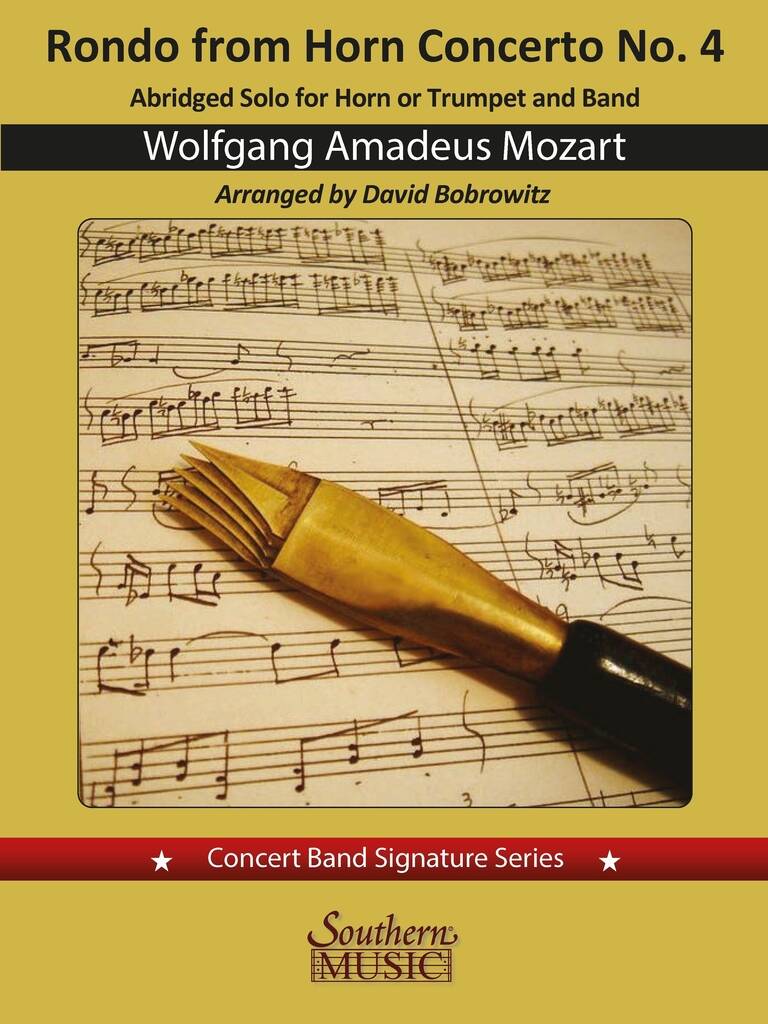
Rondo From Horn Concerto No. 4 - Wolfgang Amadeus Mozart
An abridged arrangement makes this famous concerto movement accessible to younger players who have the skills but not the endurance necessary for the entire movement or work. It comes as a solid grade 3, with emphasis on the six-eighth meter and balancing to a soloist rather than on technique. An optional solo part for B-flat trumpet is included.
Estimated dispatch 7-14 working days
-
 £71.50
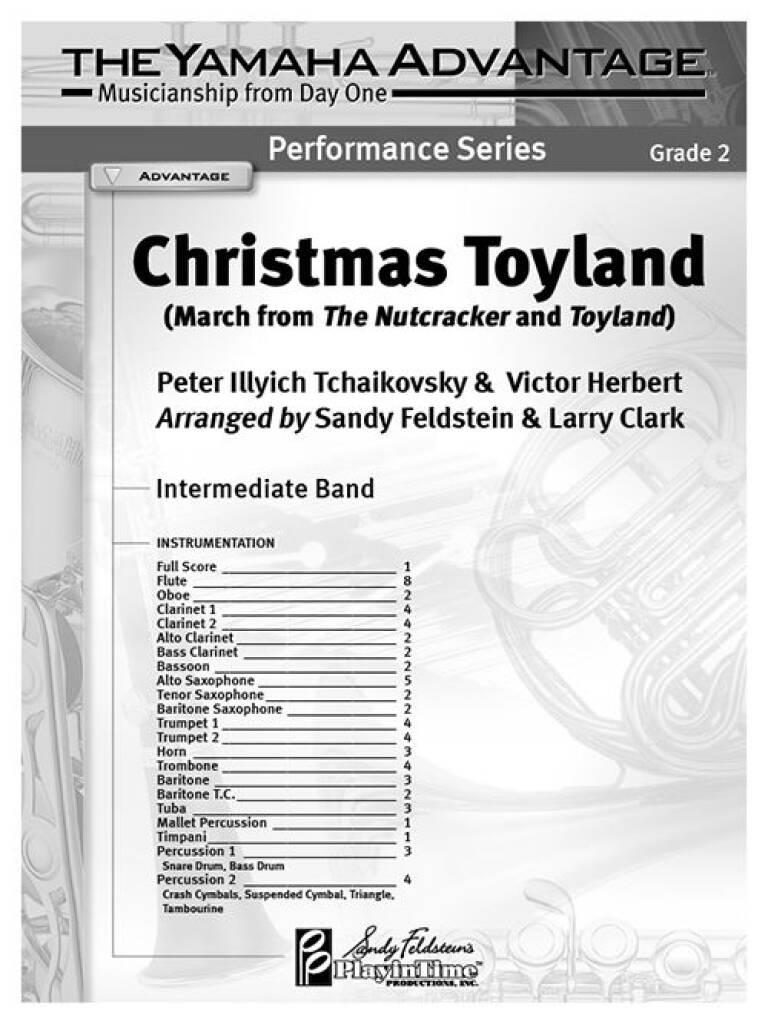
Christmas Toyland - Sandy Feldstein
This clever arrangement combines the famous March from Tchaikovsky's "The Nutcracker" with the Victor Kerbert classic, "Toyland." A perfect teaching piece to reinforce concepts of triplets and 3/4 time that will be a delightful addition to your holiday concert!
Estimated dispatch 7-14 working days
-
£60.50
Legends - Sandy Feldstein
Designed to reinforce eighth-note patterns and 3/4 time, this composition is a fun and effective festival-style piece that depicts swashbuckling adventurers!
Estimated dispatch 7-14 working days
-
 £60.99
Spirit Of Adventure - Daniel Jones
The spirit of adventure is accurately portrayed in this grade 3 tour de force. It has all the elements players and conductors love: excitement, bold sounds, and interesting harmonies; yet, it avoids the pitfalls that so often lead to failure: rapidly changing and asymmetric rhythms, phrases too long for the students to navigate, and intricate articulations.
Estimated dispatch 7-14 working days
-
 £151.99
Out of the Dark - Thomas Doss
A Miner's TaleThis work is dedicated to the miners, who often had to perform their duties under the most difficult conditions, frequently risking their lives. Many lost their lives in accidents throughout history, and many families lost their fathers. A Miner's Tale describes the beginning of a shift, marked by the signal on the wooden board. The foreman and the miners begin their arduous work underground. Suddenly, danger strikes, leading to a terrible collapse.Trapped beneath the rubble, the miners are overwhelmed by fear, despair, and loneliness. Only their camaraderie and the memory of their loved ones keep them going. In the darkest moment, in the dim light of their fading mining lamp, a vision of Saint Barbara - the patron saint of miners - appears before them. Shortly thereafter, they hear the sound of approaching rescue. Overcome with joy and relief, they begin to hum the Steigerlied" in exhaustion.Bar 3 - The signal on the wooden board announces the start of a new underground shiftBar 10 - Glck auf! (Miner's traditional greeting: "Good luck!")Bar 24 - Foreman and miners - the shift begins Bar 62 - Hardships deep underground Bar 91 - Sudden danger arisesBar 100 - Fear of never returningBar 108 - Thoughts of familyBar 121 - Resigned to fateBar 132 - Vision of Saint Barbara and rescueBar 146 - "Steigerlied" - Homecoming and church bells
Estimated dispatch 7-14 working days
-
 £68.95
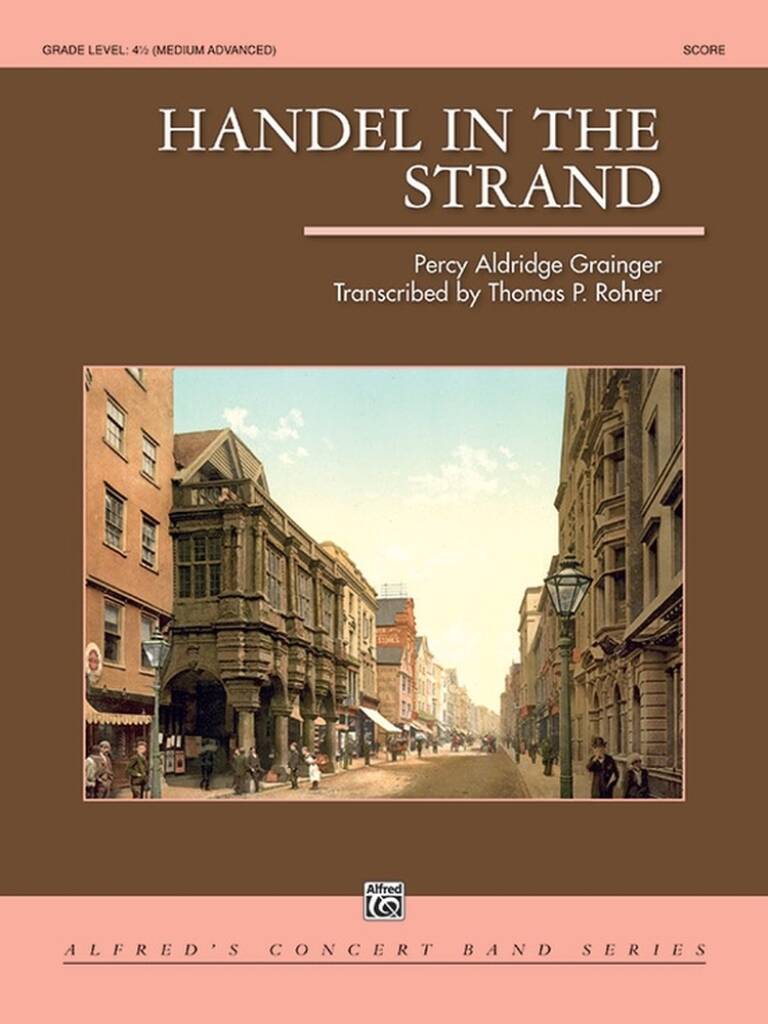
Handel In The Strand - P. Grainger
This delightful Grainger classic was written to depict a jolly old George Friedrich Handel careening down the Strand (the theatre district of London) accompanied by the English popular music of the day. Given the original instrumentation and label as a chamber piece in Grainger's original publication, this transcription is taken directly from Grainger's "four-some" edition of 1912, transposed down a step from G to F major. It is scored to best depict the light (and sometimes percussive) quality of the piano along with the lyrical flow of the strings and the general character of chamber music. Ultimately, the "room music" quality of the original shines through in this skillful transcription while depicting the spirit of the piece in a way that Grainger might have chosen. (3:35)
Estimated dispatch 7-14 working days
-
 £79.50
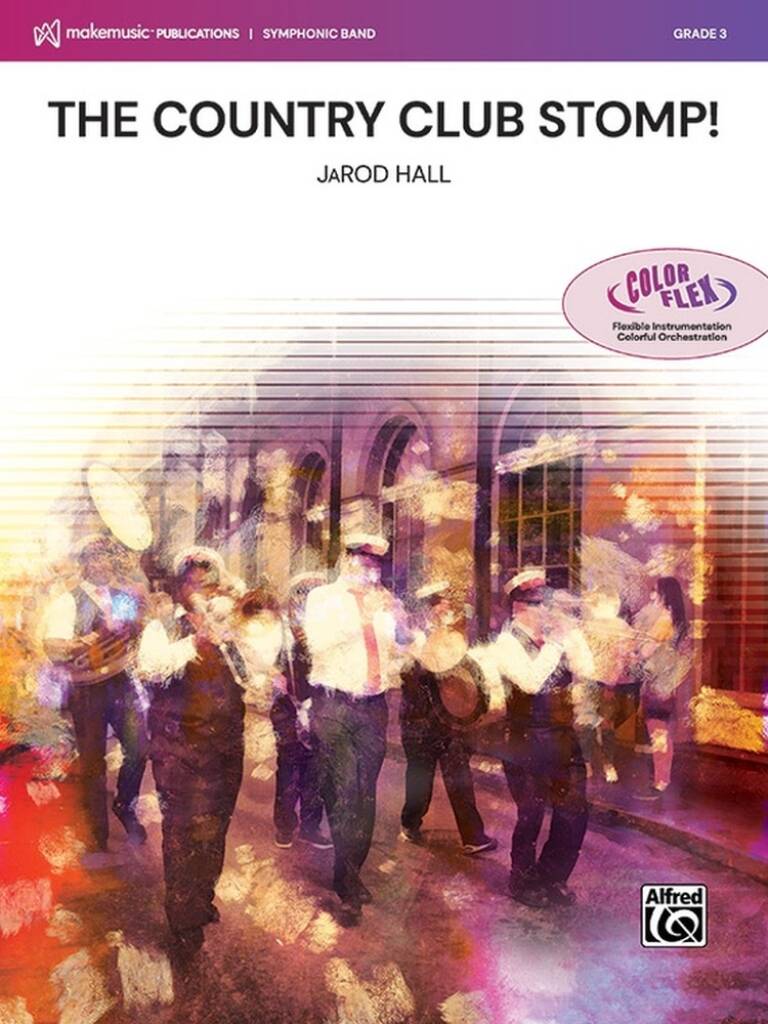
The Country Club Stomp! - Jarod Hall
Now in ColorFlex format for groups with limited instrumentation !Experience a New Orleans vibe with this exciting, parade-inspired crowd-pleaser! The Country Club Stomp! is based on an infectious rhythmic groove and spirited melody. JaRod Hall uses elements of jazz as well as a strong reference to the West African circle dances from which this music evolved. Stellar writing that is fun, catchy, and informative! (3:00)About ColorFlexConductors no longer need to choose between function and texture! Ensembles with instrumentation challenges still have numerous options to cover all parts, yet orchestration is elevated significantly to be faithful to the composer's original intent. Musicians have more opportunities to rest, and timbre once again becomes a central element of each work. So go ahead and have the best of both worlds: flexible and colorful.
Estimated dispatch 7-14 working days
-
 £58.50
As One - Chris M. Bernotas
There is no better model of coming together in unity As One than being part of a musical ensemble. This delightful concert overture by Chris M. Bernotas features optional solos that join together, uniting the full ensemble. This piece has memorable melodies and a fun groove section, making it an excellent choice for a concert or contest. (3:20) Correlates to Sound Innovations, Book 1, Level 5.
Estimated dispatch 7-14 working days
-
 £73.50
Soothsayer - Eric Rath
Soothsayer, by Eric Rath, is a study in contrast and mood. Music with a mystical and otherworldly tone portrays a soothsayer--an oracle, fortune teller, or diviner. Mostly in 3/4 time and primarily built on the octatonic scale (half and whole steps alternating), the percussionists also get to have a heyday with this one. Students not only get to show off their technical side but work to develop smooth, flowing lines and a maturity to balance the most important part at any given moment. Enjoy the ride! (2:55)
Estimated dispatch 7-14 working days
-
 £73.50
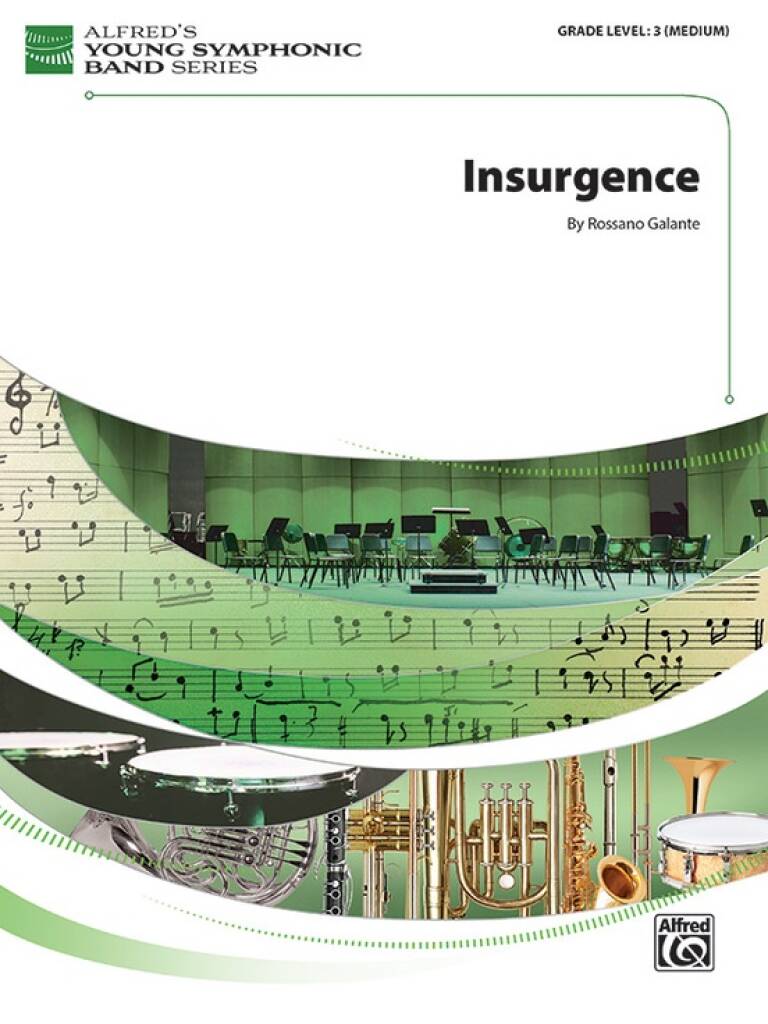
Insurgence - Rossano Galante
In a world where food is rationed based on wealth and status, people experiencing poverty have formed a task force to gain equality. Insurgence, by Rossano Galante, begins with a driving, rhythmic ostinato in the winds, low brass, and percussion. Soaring, aggressive horn lines take the lead in this post-apocalyptic setting. This theme is passed to the trumpets, then the winds, heralding their presence in this work. The piece transitions to a slightly lyrical section, capturing the pain and struggle these humans must endure during these challenging times. The piece recapitulates the main theme with the full ensemble, bringing this composition to a thunderous conclusion. (3:30)
Estimated dispatch 7-14 working days
 View Music