
Results
-
 £105.90
1238 - J. Alamá-Gil
1. 238, Music for a Celebration' consists of a fine overture followed by a slow Arabian march. This solemn and monumental piece will captivate your audience!
Estimated dispatch 7-14 working days
-
 £90.30
3 Short Stories - Marcel Peeters
This pleasant and varied suite consists of three parts: 1. 'Le Corbeau et le Renard' (The Raven and the Fox) is a humoristic evocation of the renowned fable by La Fontaine. 2. Little Romance' suggests a conversation between two lovers represented respecti
Estimated dispatch 7-14 working days
-
 £186.20
Une Vida Un Dia - Pablo C. Escande
The title a life, a day or life as one day is the basis of the musical contents of this composition. It consists of five parts and is written in a neo baroque style, combining a number of baroque music elements, such as imitative counterpoint, abundant ornamentation and tutti solo effects, with more contemporary elements such as composed rhythms, modal harmonics and dodecaphony.Part 1: Alba - Dawn. Just before the sun rises, the world is full of tensed expectation of a new beginning. At daybreak a new life is received with cries of jubilation.Part 2: La Maana - Morning. The early life has begun. Hardly conscious of its environment, the child is resting in its mother's loving embrace.Part 3: Mediodia - Midday. Now is the time! Time to work, to love and to dance in the midday sun, but also to start the fight, before strength is flowing away. Let's not waste time!Part 4: Tarde - Twilight. The day is not over yet, but time passes by. Dusk is falling, the end approaches inevitably...Part 5: La Noche - Night. The comforting dark relieves the strong anxiety of the soul. Finally the soul is released of all worldly bonds.
Estimated dispatch 7-14 working days
-
 £117.20
Pc Suite - Ennio Salvere
A popular and most interesting piece by Ennio Salvere. This suite consists of the following expressive titles: 1. 'Staring Up', 2. 'Chat', 3.'Virus!' and 4. 'Control Alt Delete'. This is a must for the better youth bands!
Estimated dispatch 7-14 working days
-
 £119.80
Clouds - Eric Swiggers
This piece was commissioned by Kunstfactor in the Netherlands. This work has been written in a contemporary but accessible idiom. The composition describes three different clouds: 1. Cumulus. Cumulus clouds are a type of cloud with noticeable vertical development and clearly defined edges. They are often described as 'puffy' or 'cotton-like' in appearance. Cumulus clouds mostly forecasts nice, sunny weather. 2. Cirrocumulus. Cirrocumulus clouds are high-altitude clouds that usually occur at an altitude of 6 km to 10 km. Although the term cirrocumulus refers to each cloud, it is typically also used to refer to an entire patch of cirrocumulus. This kind of clouds mostly forecast rainy, stormy weather. 3. Cumulonimbus. Cumulonimbus is a type of cloud that is tall, dense, and involved in thunderstorms and other intense weather. It will be no surprise that thunder and lightning are clearly audible in this third part of 'Clouds'.
Estimated dispatch 7-14 working days
-
 £140.80
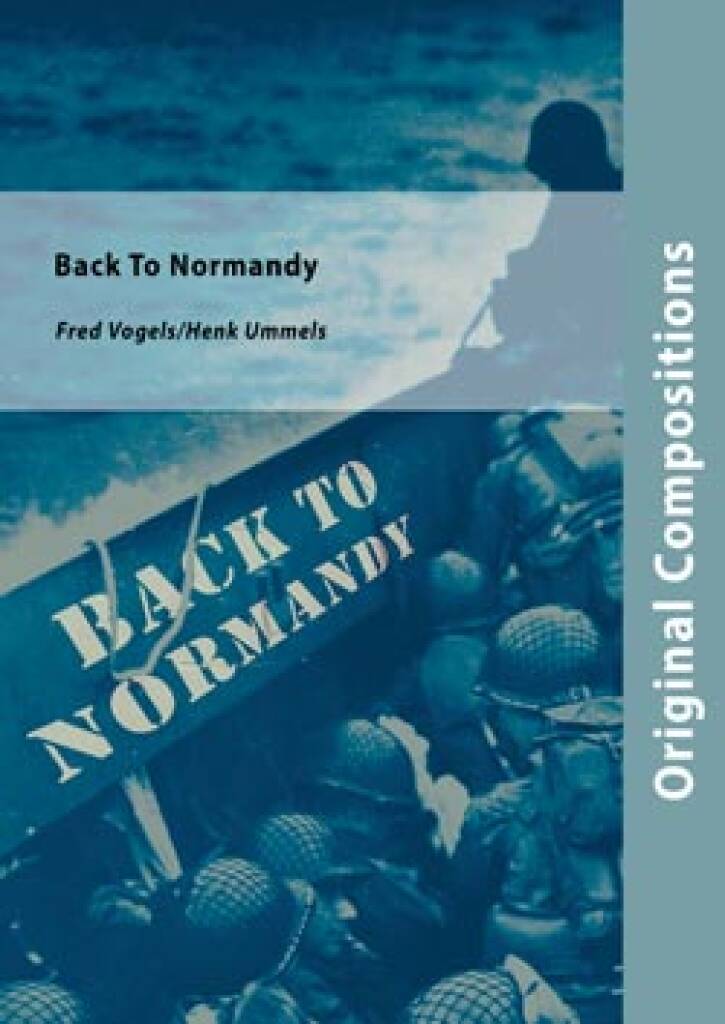
Back to Normandy - Fred Vogels
Back to Normandy is a composition for concert band on the occasion of D-Day. On D-Day (June 6, 1944) the liberation of Western Europe started at the beach of Normandy. A long campaign through Europe followed before the liberation was complete. Back to Normandy describes the first hours of the landing with the shelling of the German positions as a (musical) peak. As an introduction you will see and hear de preperations for the biggest campaign ever. Very special and unique is the fact that the music of Back to Normandy can be performed synchronously with a movie with original footage, specially made for this composition. This will without a doubt be an extra experience for the audience. So far performances like this were exclusively for professional orchestras (like George Fenton, Earth). This piece is specially suitable for concert bands that want to offer their audience something special and also want to honour the liberators. The movie to practise for the concert is on Youtube (meassures and metronome are visible/audiblematen). On the Back to Normandy forum you can get more information or have an exchange of views about this project or D-Day in general. You can download the complete movie here (1, 7 GB). Interaction with the composer is certainly appreciated.
Estimated dispatch 7-14 working days
-
 £64.40
Heroes of the Air - Rui Silva
Heroes of the Air (Bravos do Ar) is a musical work that was written to celebrate the 100th Anniversary of the Military Aviation in Portugal. It was premiered on May 14, 2014 at the opening ceremony for the occasion of the inauguration of the evocative monument at Air Base n.1, Sintra. The author imbued by the spirit of the pioneers of Portuguese aviation, builds this work with elements where the bravery, courage, and perseverance mark the character of this festive fanfare.
Estimated dispatch 7-14 working days
-
 £110.40
Mars 1488 - Eric Swiggers
Mars 1488 was commissioned by the Commander of the Naval Forces on the occasion of the 65th anniversary of the Marine Band of the Royal Netherlands Navy in 2010. The title refers to the year 1488, in which the 'Dutch Fleet' was founded. It was premiered at the annual corps concerts at De Doelen in Rotterdam on 1 and 2 December 2010.Since then, this march has been much loved by both the Marine Band and the public and has been performed frequently at home and abroad.March 1488 has been available from Molenaar Edition since 2024 for both concert band and fanfare band.
Estimated dispatch 7-14 working days
-
£271.60
Ljodgata - Torstein Aagaard-Nilsen
The old Norwegian name Ljodgata means the main road. This road (or path) has existed since the iron age. In 12 century christians walked from Oslo to Nidaros (Trondheim) to visit the Cathedral containing the tomb of King Olav the Holy. Part 1 The Tomb and the Church is a musical picture of religious activities in the area. The tomb of King Rakne, one of the largest graves in the northern Europa is now a monument in the area, even if Hovin Church has been a symbol of christianity sincethe 1400 century. Part 2 The Woods of Trandum Pictures the military acitivities that has been going on for more that 250 years. During the 2nd World War, an execution of innocent people took place in the woods. Part 3 Jetset Picture of the present.The international airport at Gardermoen has made the village Jessheim become a town. People now live moderne city lives.
Estimated dispatch 7-14 working days
-
 £174.10
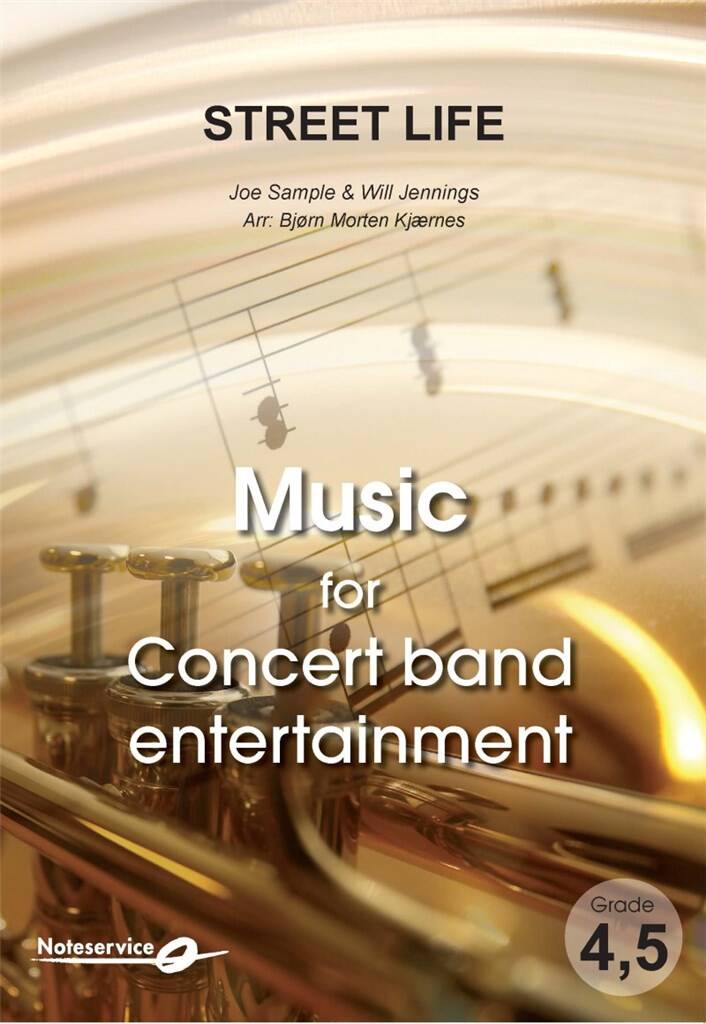
Street Life - Sample
Randy Crawford led R&B veterans the Crusaders on the transatlantic hit "Street Life" (1979). A specially re-recorded version was featured in the soundtrack for the films Sharky's Machine and Jackie Brown. The composer Joseph Leslie "Joe" Sample (February 1, 1939 September 12, 2014) was an American pianist, keyboard player, and composer. He was one of the founding members of the Crusaders. but he enjoyed also a successful solo career and guested on many recordings including Miles Davis, George Benson, Jimmy Witherspoon, B. B. King, Eric Clapton, Steely Dan, Joni Mitchell, and the Supremes. Sample incorporated jazz, gospel, blues, Latin, and classical forms into his music. This arrangement can be used with a singer, but then need some attention to balance and please take away most melody lines. Electric Bass, Piano and Guitar are optional. If you would like to add an improvisation, please repeat bar 54 -62 without melody as many times you want. (Look at the piano part for chords).
Estimated dispatch 7-14 working days
 View Music