
Results
-
 £94.99
As the Deer - Martin Nystrom
As the Deer is a well-known praise and worship song by Martin Nystrom. Written in 1984, this song is based on Psalm 42:1.. "As the hart panteth after the water brooks, o panteth my soul after thee, O God.
Estimated dispatch 7-14 working days
-
 £84.99
Bread and Games - William Vean
'Panem et Circenses', Bread and Games were essential for keeping the citizens of ancient Rome in check. While the bread was meant for the poorest among the Romans, the Games were Popular Pastime Number One for everybody.There were different kinds of games, such as chariot races (especially popular with female spectators), or wild-beast fights, where lions, tigers, bulls or bears were set on one another or even on human beings. Most popular, however, were the Gladiator fights. In 'Bread and Games' William Vean depicts one of the many fights in the antique Colosseum. 1. Entrance of the Gladiators: By powerful bugle-calls the attention of the peoplewas asked for, after which the Gladiators entered the Arena at the sound of heroic marching-music.2.Swordfight: We can hear that the fights were not mere child's play in this part.On the contrary, they were a matter of life and death and were fought accordingly.3.Mercy of the Emperor: Sometimes a wounded gladiator could be fortunate, depending on the mercy of the audience. Waving one's handkerchief meant mercy, a turned-down thumb meant no pardon. The Emperor had the right to take the final decision, but he usually complied with the wish of the majority of the public. 4.Lap of Honour: Gladiators were mainly selected among slaves, convicted criminals, or prisoners of war. Consequently, winning was very important, as it would mean fame, honour and sometimes even wealth. A lap of honour, therefore, was the winner's due reward.
Estimated dispatch 7-14 working days
-
 £279.99
Analecta Varia - Harrie Janssen
Harrie Janssen composed Analecta Varia in memory of Henk van Lijnschooten (1928-2006). He has been of great influence on the Dutch music for wind instruments. As a conductor and as a member of the jury, but above all as a prominent composer. Consists of eight sound studies that can also be performed separately. In each part a particular orchestral aspect is the central point. The eight parts 1. Choral: ensemble in monophonic texture. 2. Air: relatively free line patterns combined with a constant pulse. 3. Pavana: constant rhythmicity culminating in an orchestral tutti. 4. Lullaby: dissonant harmonyabove an organ point in a filigree instrumentation. 5. Chaconne: color and virtuosity combined with a rigid pasacaglian theme. 6. Interlude: antithesis woodwind/brass and followed by a synthesis of the before. 7. Fugue: ensemble in a polyphonic texture. 8. Epilogue: final canto in a preponderating strong dynamic, where a constant euphony has to be pursued.
Estimated dispatch 7-14 working days
-
 £60.99
Little Voyage - Brian Connery
This work from Brian Connery gets out everything from the simple musical elements that can be found in a grade 1 piece for concert band. The musical development is anything but forced; rather it's fresh, spontaneous and contagiously happy. Are you ready for this Little Voyage?
Estimated dispatch 7-14 working days
-
£140.80
Summer Dances - Adam Gorb
'Summer Dances' is a joyful work in three short movements celebrating my favourite season where people are happiest outdoors. Each movement is a celebration the first movement 'Summer Day' celebrates the open air, with a bold and arrogant melody in 10/8 time, whose rhythm dominates the movement. The next movement 'Summer Night' could be described as a 'Beach Habanera' led by a sensuous trumpet melody. The movement ends with an ambiguous harmonic build-up, which is resolved at the start of the finale 'Summer Party' with a folk like theme that is passed round the ensemble, building up, (with suggestions of the first movement theme) to a riotous and festive ending. Summer Dances was commissioned by HAFABRA Music, Louis Martinus in collaboration with Biblioservice Gelderland/Music department MUI, Arhnhem, the Netherlands. Regarding interpretation suggestions: Movement 1) Lively but not too fast very much a piece for the full ensemble, up until the final six bars when things become more subtle and intimate maybe sunset.... Movement 2) Very laid back and sexy. The movement should be thought of as a wonderfully promising 'first date' or 'wedding night', with great possibilities with the unresolved chord at the end of the movement.... Movement 3) As fast as is comfortably possible. The start should be delicate and chamber music like, but increase in general excitement, particularly from figure 31. Something should be saved up for a true fortissimo at 34.
Estimated dispatch 7-14 working days
-
 £44.99
Fire & Fury - David Shaffer - Band - David Shaffer
As the title implies, here is an exciting and powerful composition for very young players. Written in minor and using a single tempo throughout, this piece provides nice feature spots for your horns/saxes, as well as trumpets. Theclarinet parts are all written below the break and these players will enjoy the menacing-sounding trills. (Grade 1.5)
Estimated dispatch 7-14 working days
-
 £44.99
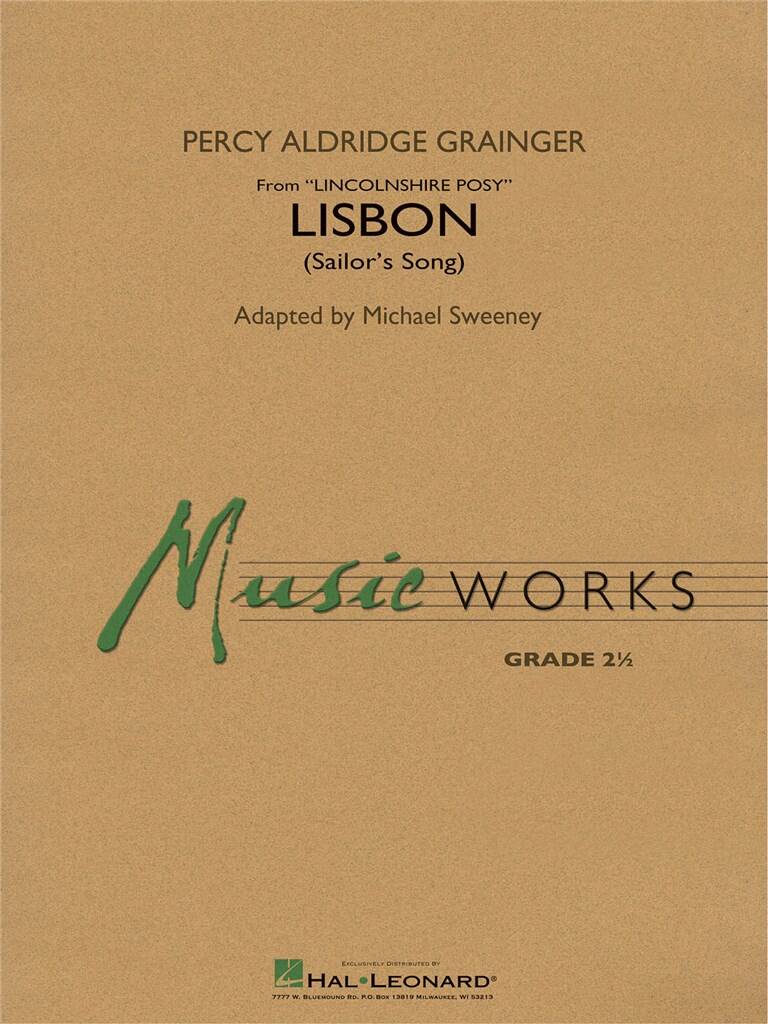
Lisbon (from Lincolnshire Posy) - Percy Aldridge Grainger
The opening movement of Grainger's Lincolnshire Posy is the brief yet engaging Lisbon and has been arranged here for young players and reduced instrumentation. Even with minor simplification and modest ranges, the character andauthenticity shines through in this skilled adaptation. Dur: 1:30
Estimated dispatch 7-14 working days
-
£139.99
Algemiz - Ferrer Ferran
Algemesi is a town situated on the banks of the river Sucron, in the south of Valencia in Spain. Algemiz by Ferrer Ferran was inspired by two historical events connected with the town. When the Iberian peninsula was under the rule of the Romans a bloody battle took place between the armies of the generals Pompey and Sertorius known as The Battle of Sucron. Much later in the 13th century, Don Jaime 1, king of Aragon who had been defeated by the Maures d'Almenara, decided to lead an expedition to Sucron to evaluate the resistance of the Arab forces and conquer Alegmesi. This story of this expedition is told in The Dance of the Conquerors.
Estimated dispatch 7-14 working days
-
 £49.95
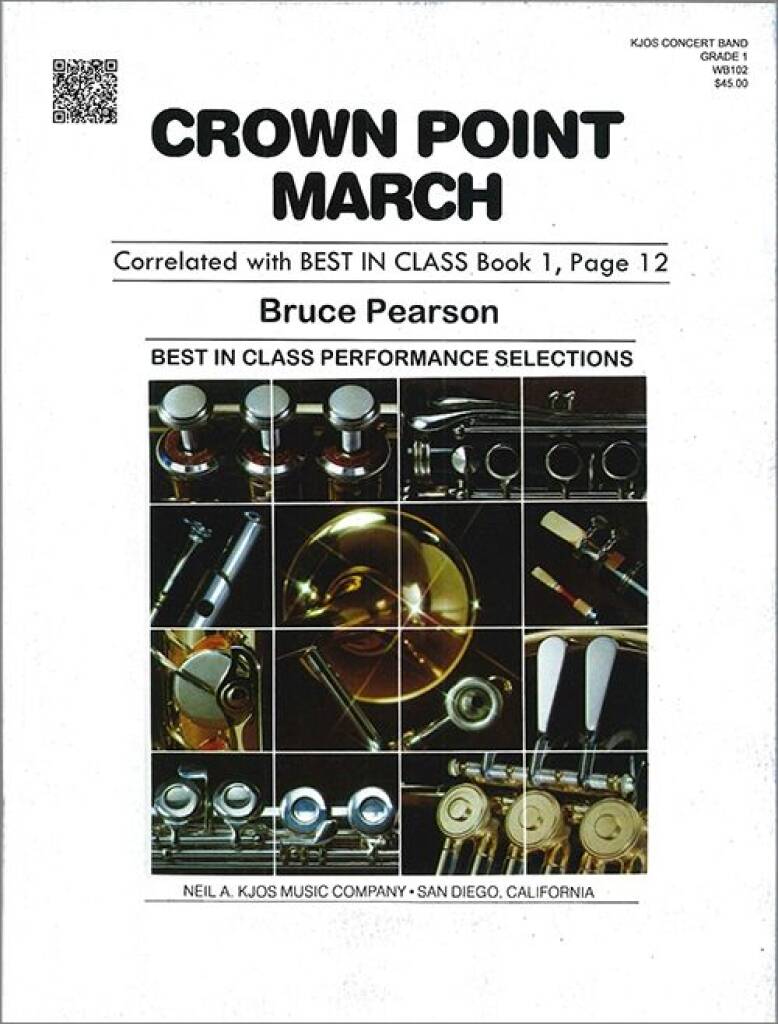
Crown Point March - Bruce Pearson
This mainstay of grade 1 band literature features solid scoring and memorable melodies. Stirring strains of trumpets and flutes carry the main melody after the opening fanfare. This march offers easy and advanced snare drum parts that can be played simultaneously. A must for every young band library!
Estimated dispatch 7-14 working days
-
 £286.40
Poeme du Feu - Ida Gotkovsky
Major Albert Fasce, head of the musical department of the French Army, wrote about Pome du Feu:The Pome du Feu by Madame Ida Gotkovski is probably one of the original compostitions for symphonic band which has been most successful in recent years. I have had to conduct this work at concerts with different orchestras, and in particular at Budapest, and each performance was greeted by enthusiastic ovations. Moreover, it is quite rare in contemporary music to achieve, at the same time, the satisfaction of the musicians and success with the public. This is significant. This magnificent work is written remakably for wind instruments. There is no major technical difficulty, but the character of this work calls for meticulous placing and a certain orchestral glow. There is a "key" to be found in the first movement, which is in some way the rhythmic genesis of the work. The metronome marking of the first movement should be absolutely respected, and proper interpretation of the accents and the articulations are imperative. The fortissimi and rallentandi should not be exaggerated. As far as the little "trick" is concerned, this lies in the execution of the double crochets which should be considered in two ways: the first, a rhythmical one for those which arise from the rhythmic genesis, and the second more melodic for those arising in passages.Finally, to unseal the rhythmic origin of the double crochets, it is necessary to proceed by recurrence, starting from the four double crochets of the finale.These four double crochets must be executed very rhythmically in the different times. For the first, they arise:1: from the second bar of the first movement2: from the bar three bars before A for the second3: from the bar from G to the fourth time for the third.These double crochets must be played rhythmcally, while diminishing, however, those three bars before A.All this is of great importance, otherwise the whole execution will be in contradition with the spirit and the rhythmic inspiration of the work. Moreover, this beautiful work could very well support a ballet.As Head of Broadcast Music I must express all our gratitude to Madame Gotkovski for her contribution to constituting a real repertoire for wind ensemble. This articular and sometimes unappreceated band possesses unsuspected riches. This magnificent work is now in the repertoire of Musique de l'Air de France.
Estimated dispatch 7-14 working days
 View Music