
Results
-
£202.99
The Wind Rises - Joe Hisaishi
This beautiful, lyrical melody is so colorful in the film, without having an imposing image. "The Wind Rises" (2013) does not dominate the visual, and perhaps is an ideal form of film music considering this is director Miyazaki's final production. Chamber ensembles with solos and strings are frequently used in the soundtrack, so the sound is mellow and soft. As you listen more and more, you still recognize the tradition of Ghibli music.When I arrange, I try not to visualize the image of a film. I may think of characters and story line but is it important to write music that alone is appealing and fascinating. Trying not to "overstate" the film is not needed here. If you can bring out the most appealing parts of the soundtrack, excess can be forgiven. Of course, I have not changed the musical elements of the original.I asked Mr. Tomoki Ubata (band director at Ina Gakuen Sr. High School) whom I have worked with numerous times to assist with layout. He came up with a heartwarming medley with two main parts; leading boy Jiro's gift for aeronautical design and his romance with the heroine, Natsuko.The following themes are contained in the arrangement:1. Nahoko (A Rainbow) Beginning2. Caproni (An Aeronautical Designer's Dream) C3. A Journey (An Encounter at Karuizawa) H4. The Falcon I5. Prototype 8 N6. A Journey (A Parting) & A Journey (A Dream of Flight) PIt is quite remarkable, looking back on 30 years of Studio Ghibli's achievements.(Kazuhiro Morita)
Estimated dispatch 7-14 working days
-
 £69.99
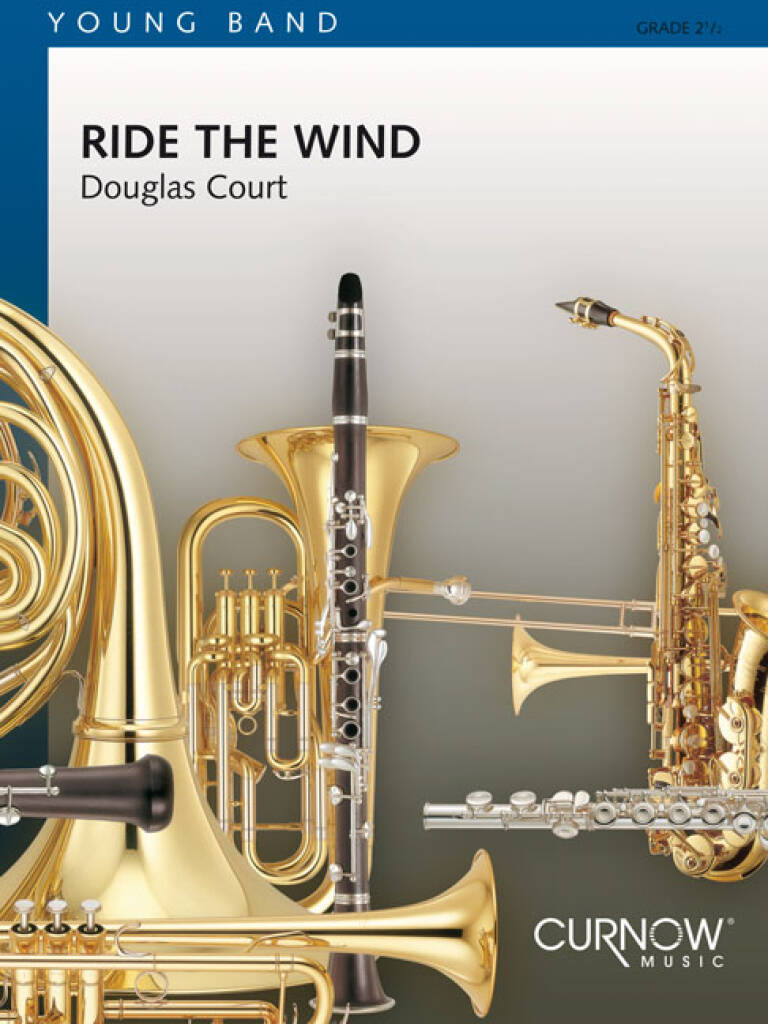
Ride the Wind - Douglas Court
This energetic and descriptive piece takes us musically to Newport, Rhode Island, where a bright and breezy day lures some of the world's great sailing yachts out for a romp on the waves. Douglas Court's wonderful depiction of a joyous adventure on the water will thrill your audience and be a bright spot in your next concert. Lighthearted, but with plenty of solid musical concepts to work on, it'll be an educational experience for the band and great fun for the audience. Wind in the hair and salt-spray on the face----- everyone will love this sparkling overture!
Estimated dispatch 7-14 working days
-
 £129.99
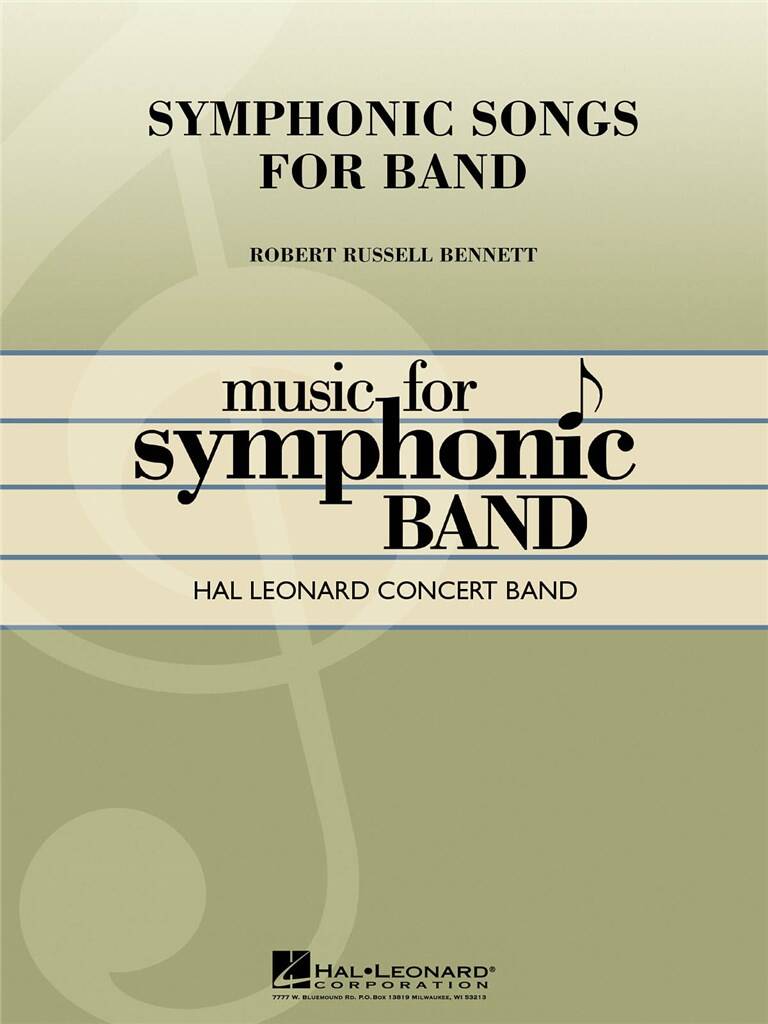
Symphonic Songs for Band (Deluxe Edition) - Robert Russell Bennett
This enduring perennial - one of a pair of Bennett works popularized by Frederick Fennell's influential Eastman Wind Ensemble - is at last available in a Deluxe Edition including full score. Celebrating the golden anniversary of the work's 1957 premiere, this new publication allows conductors to rehearse with maximum effectiveness and appreciate fully the mastery of Bennett's scoring technique. Prepared by Bennett biographer George Ferencz, the score includes introductory notes and a complete errata list for the original set of parts. (14:30) Recorded by the Keystone Wind Ensemble - Jack Stamp, conductor
Estimated dispatch 7-14 working days
-
 £140.80
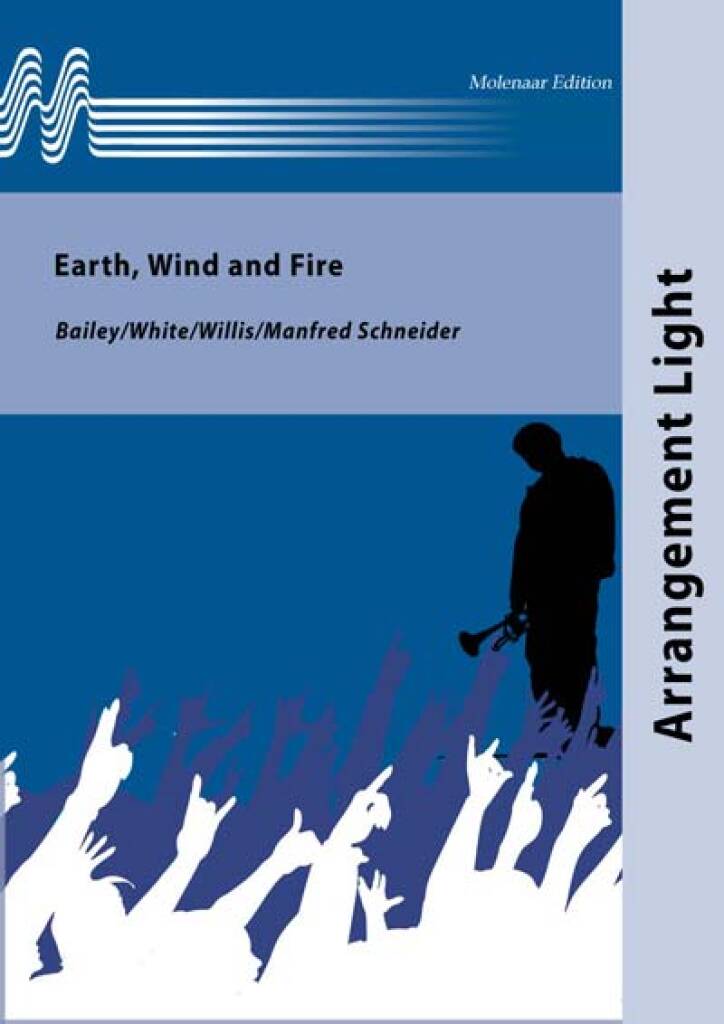
Earth, Wind and Fire
The American soul music group Earth, Wind and Fire, set up in 1970 by singer and drummer Maurice Whitney, started a real international career from 1975 onwards. Especially the brass players were focused at the spectacular shows which brought a fusion of jazz and funk music. Manfred Schneider made a thrilling arrangement for symphonic band using the success songs Fantasy, I'll Write A Song For You and Boogie Wonderland.
Estimated dispatch 7-14 working days
-
 £202.99
My Neighbor Totoro - Selection for Concert Band - Joe Hisaishi
There have been countless interpretations, both positive and negative, of "My Neighbor Totoro". However, I was simply moved by this film's portrait of family love, respect for the environment, exciting adventure of childhood, and people's loving kindness. It touched my heart with its abundant colorful images.To reflect its simplicity and unsophisticated character, this version is by no means an "elaborate" arrangement. With the tune from The Path of Wind as the introduction, this work is a medley of familiar tunes of the following scenes:1. Stroll,2. The Village in May,3. Traveling Soot,4. The Path of Wind,5. Catbus,6. My Neighbor Totoro(Yo Goto)
Estimated dispatch 7-14 working days
-
 £168.50
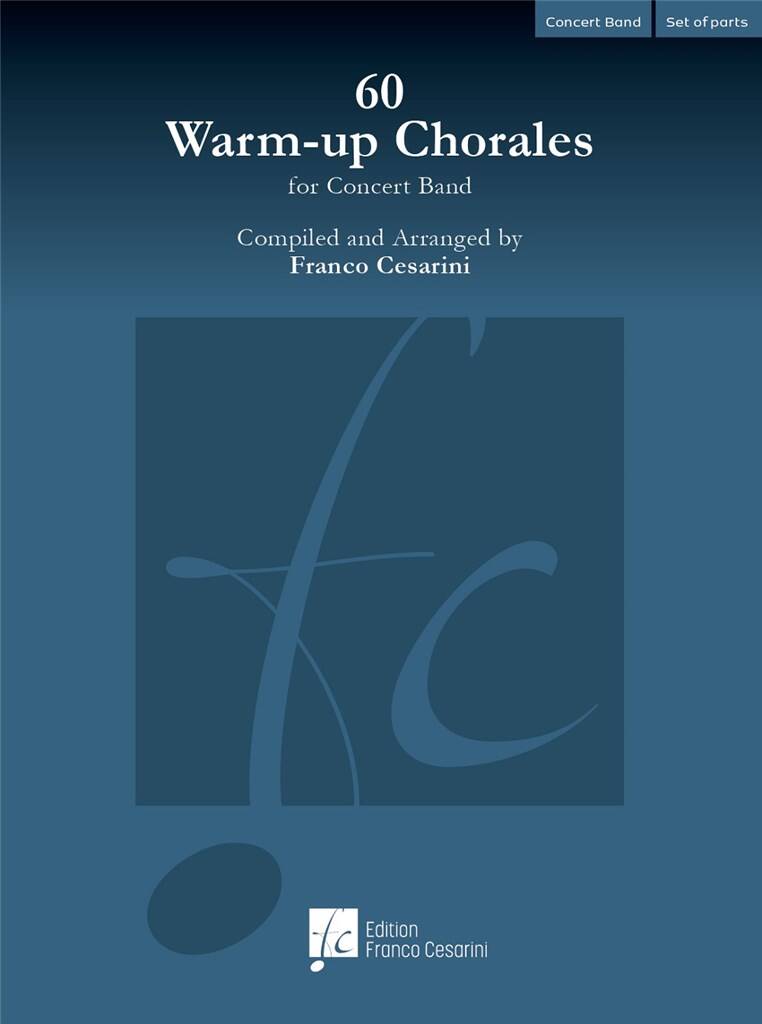
60 Warm-up Chorales for Concert Band
During his experience as a band conductor and teacher of wind orchestra conducting at university, Franco Cesarini has dealt with the topic of warm-ups very frequently. Throughout these long years of conducting he has had the opportunity to try many existing methods, evaluating their advantages and disadvantages.After a long time, he has decided to compile a collection of chorales for warm-ups, which are organized according to the criteria that he considers most effective.While working on his60 Warm-up Chorales for Concert Band, Franco Cesarini has always borne in mind that amateur musicians play for pleasure.He feels that it is extremely important that they have satisfaction at every moment of the rehearsal and not to start the rehearsal with needless "punishing" exercises. Nobody is really motivated to start playing with scales, long notes, or tricky rhythmical exercises. There is often a distinguished absentee in band rehearsals, namely music itself!Although this publication does not foresee a specific tempo for the chorales, they should often be performed rather slowly but without dragging.Dynamics are not indicated, so that the conductor has the opportunity to draw the attention of the musicians to his gestures and to make them react according to his indications.Timpani and bell parts have been added with the aim of not leaving the percussionists completely inactive during the warm-up phase, but can also be omitted.The chorales are written in four parts (SATB) and are also playable in smaller groups. The four voices can be played in different combinations of woodwinds or brass quartets or in mixed combinations.The collection includes ten chorales for the following keys: D flat major, A flat major, E flat major, B flat major, F major and C major.With his 60 Warm-up Chorales Franco Cesarini would like to convey the message to play the chorales in a musical way, thus raising the musicians' awareness of phrasing, the right interpretation of cadences, rubato and agogic.Above all, never do anything without putting the musical aspect in the foreground. 60 Warm-up Chorales for Concert Band: A perfect collection to warm-up and improve tuning of a concert band!
Estimated dispatch 7-14 working days
-
 £202.99
Gloriosa - Symphonic Poem for Band Movement 1 - Yasuhide Ito
A new acquisition by Bravo Music, this fresh printing of the 1990 masterwork by Yasuhide Ito features a newly engraved score, improved parts, good availability and value. This stirring and powerful homage to early Christianity in Japan profoundly and eloquently states the case of cross-cultural conflict and resolution.I. OratioThe Gregorian chant "Gloriosa" begins with the words, "O gloriosa Domina excelsa super sidera que te creavit provide lactasti sacro ubere." The first movement Oratio opens with bells sounding the hymn's initial phrases. The movement as a whole evokes the fervent prayers and suffering of the Crypto-Christians.II. CantusIII. Dies FestusCommissioned in 1989 and premiered in 1990 by the Sasebo Band of the Maritime Self-Defense Force of Kyushu, southern Japan.Gloriosa is inspired by the songs of the Kakure-Kirishitan (Crypto-Christians) of Kyushu who continued to practice their faith surreptitiously after the ban of Christianity, which had been introduced to that southern region in the mid-16th century by Roman Catholic missionary Francisco Xavier. The worship brought with it a variety of western music.Though Christianity was proscribed in 1612 by authority of the Tokugawa Shogunate in Edo (today Tokyo), Kakure-Kirishitan continued advocating sermons and disguised songs. Melodies and lyrics such as Gregorian chant were obliged to be "Japanized". For example, the Latin word "Gloriosa" was changed to "Gururiyoza." This adaptation of liturgy for survival inspired Ito to write this piece in order to reveal and solve this unique cultural mystery.The composer explains:"Nagasaki district in Kyushu region continued to accept foreign culture even during the seclusion period, as Japan's only window to the outer world. After the proscription of Christianity, the faith was preserved and handed down in secret in the Nagasaki and Shimabara areas of Kyushu region. My interest was piqued by the way in which the Latin words of Gregorian chants were gradually `Japanized' during the 200 years of hidden practice of the Christian faith. That music forms the basis of Gloriosa."Gloriosa, fusing Gregorian chant and Japanese folk music, displays the most sophisticated counterpoint yet found in any Japanese composition for wind orchestra.
Estimated dispatch 7-14 working days
-
£209.99
Gloriosa - Symphonic Poem for Band Mvt 2 & 3 - Yasuhide Ito
A new acquisition by Bravo Music, this fresh printing of the 1990 masterwork by Yasuhide Ito features a newly engraved score, improved parts, good availability and value. This stirring and powerful homage to early Christianity in Japan profoundly and eloquently states the case of cross-cultural conflict and resolution.I. OratioThe Gregorian chant "Gloriosa" begins with the words, "O gloriosa Domina excelsa super sidera que te creavit provide lactasti sacro ubere." The first movement Oratio opens with bells sounding the hymn's initial phrases. The movement as a whole evokes the fervent prayers and suffering of the Crypto-Christians.II. CantusIII. Dies FestusCommissioned in 1989 and premiered in 1990 by the Sasebo Band of the Maritime Self-Defense Force of Kyushu, southern Japan.Gloriosa is inspired by the songs of the Kakure-Kirishitan (Crypto-Christians) of Kyushu who continued to practice their faith surreptitiously after the ban of Christianity, which had been introduced to that southern region in the mid-16th century by Roman Catholic missionary Francisco Xavier. The worship brought with it a variety of western music.Though Christianity was proscribed in 1612 by authority of the Tokugawa Shogunate in Edo (today Tokyo), Kakure-Kirishitan continued advocating sermons and disguised songs. Melodies and lyrics such as Gregorian chant were obliged to be "Japanized". For example, the Latin word "Gloriosa" was changed to "Gururiyoza." This adaptation of liturgy for survival inspired Ito to write this piece in order to reveal and solve this unique cultural mystery.The composer explains:"Nagasaki district in Kyushu region continued to accept foreign culture even during the seclusion period, as Japan's only window to the outer world. After the proscription of Christianity, the faith was preserved and handed down in secret in the Nagasaki and Shimabara areas of Kyushu region. My interest was piqued by the way in which the Latin words of Gregorian chants were gradually `Japanized' during the 200 years of hidden practice of the Christian faith. That music forms the basis of Gloriosa."Gloriosa, fusing Gregorian chant and Japanese folk music, displays the most sophisticated counterpoint yet found in any Japanese composition for wind orchestra.
Estimated dispatch 7-14 working days
-
 £129.99
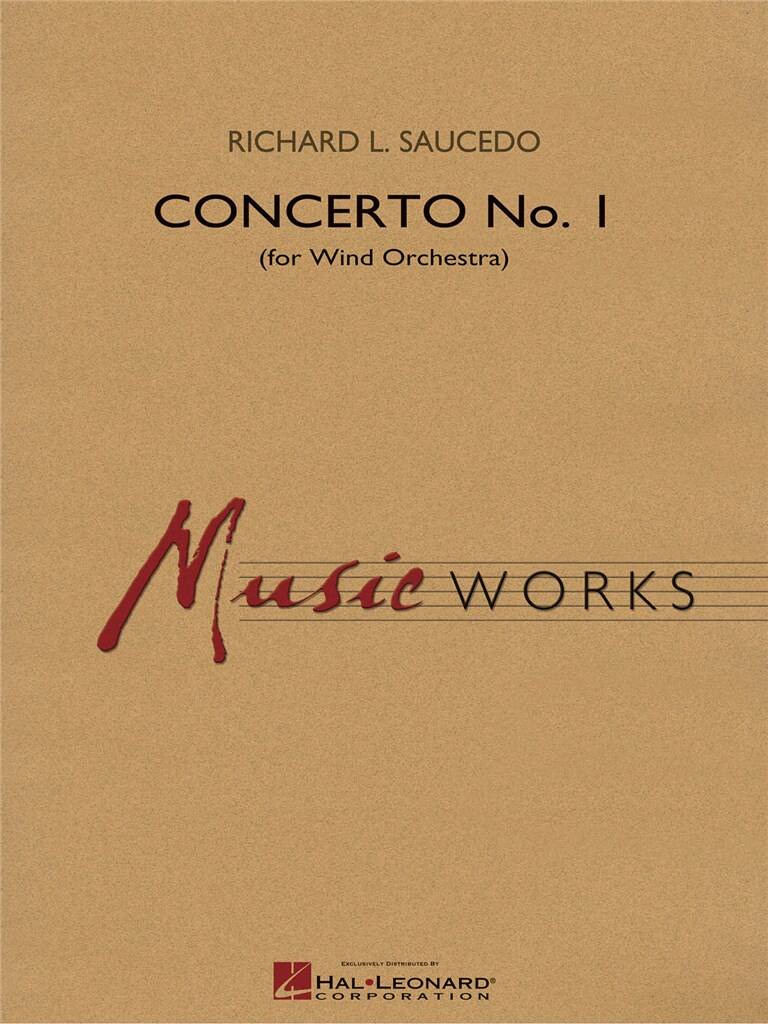
Concerto No. 1 (for Wind Orchestra) - Richard L. Saucedo
Commissioned for the 2016 South Carolina All-State High School Band, Concerto No. 1 is a spectacular showcase for the entire ensemble rather than just a single soloist. Throughout this dynamic work the entire ensemble is featured,although there are also concerto type moments for solo instruments as well as chamber groups. The horns are also featured prominently throughout the piece. Dur: c. 8:45 (Recorded by the 2016 South Carolina Senior All-State Band,Richard L. Saucedo conducting)
Estimated dispatch 7-14 working days
-
 £60.99
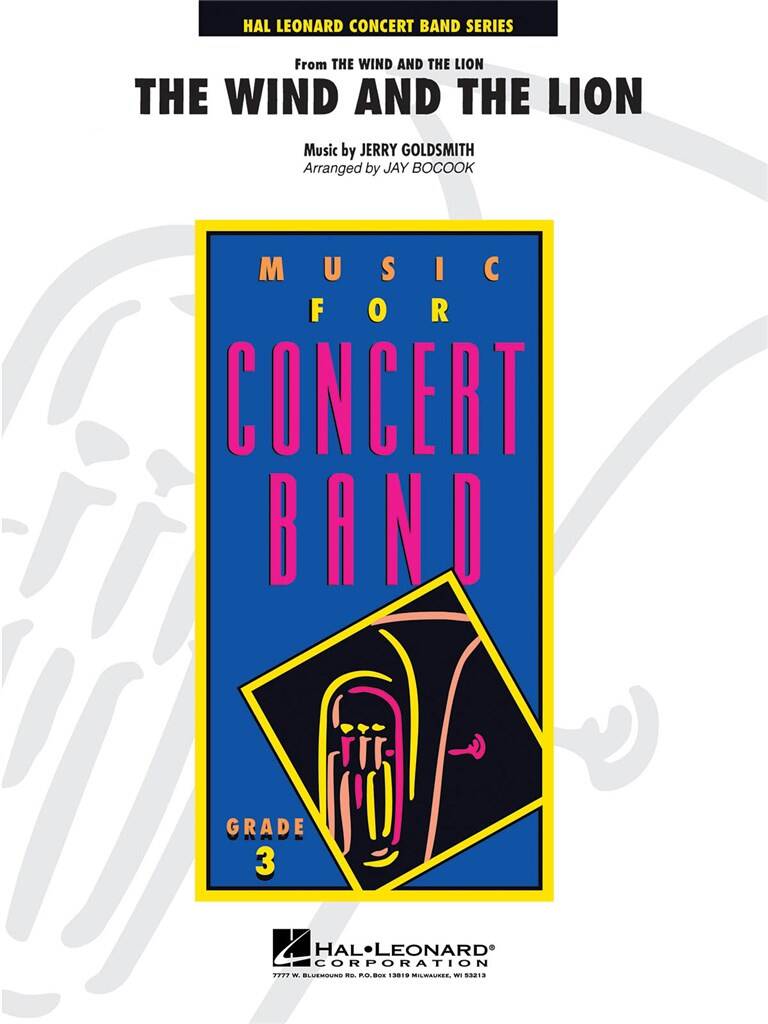
The Wind and the Lion - Jerry Goldsmith
From this Sean Connery film comes one of Goldsmith's most evocative scores, tastefully arranged for band by Jay Bocook. Jay's version features the Middle Eastern thematic material with aggressive percussion, and haunting horn calls.
Estimated dispatch 7-14 working days
 View Music