
Results
-
 £66.95
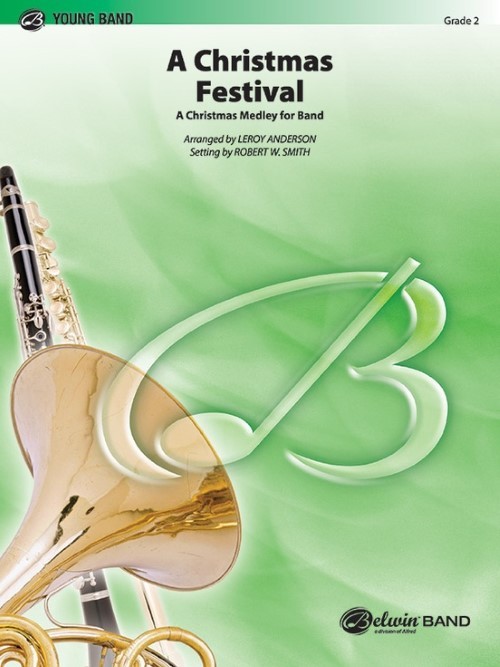
A Christmas Festival (Concert Band - Score and Parts) - Anderson, Leroy - Smith, Robert W.
All of the challenging key signatures and complex rhythms in this Leroy Anderson classic have been removed to accommodate young band players. All that's left is the charming melodies in the charismatic Anderson setting. We are pleased that A Christmas Festival is finally available in an accessible arrangement. Includes: Joy to the World * Deck the Halls * God Rest Ye Merry, Gentlemen * Good King Wenceslas * Hark! The Herald Angels Sing * The First Noel * Silent Night * Jingle Bells * O Come, All Ye Faithful. Duration: 4.30
Estimated dispatch 7-14 working days
-
 £84.99
Famous Folksongs Wind Band Set (Score & Parts)
In 'Famous Folksongs' we are taken on a musical trip around the world, from France to the USA and from South America to the Middle East. Dagmar Kildevann arranged eight word famous folk songs in very different ways. From traditional (Lolo mi boto) to modern (Le coq est mort) and from swing (Sur le pont) to rock (Michael row the boat). Bon voyage, have a pleasant journey! Oh, and by the way, don't forget your passport! 10:00
Estimated dispatch 7-14 working days
-
 £59.40
New Century (Concert Band - Score and Parts) - Grainger, Percy Aldridge - Kreines, Joseph
We are pleased to be able to make this wonderful Grainger music available to the bands of the world. This short work features a simple tune, richly harmonized with stately chords and decorated counter-melodies. VERY NICE!
Estimated dispatch 7-14 working days
-
 £274.99
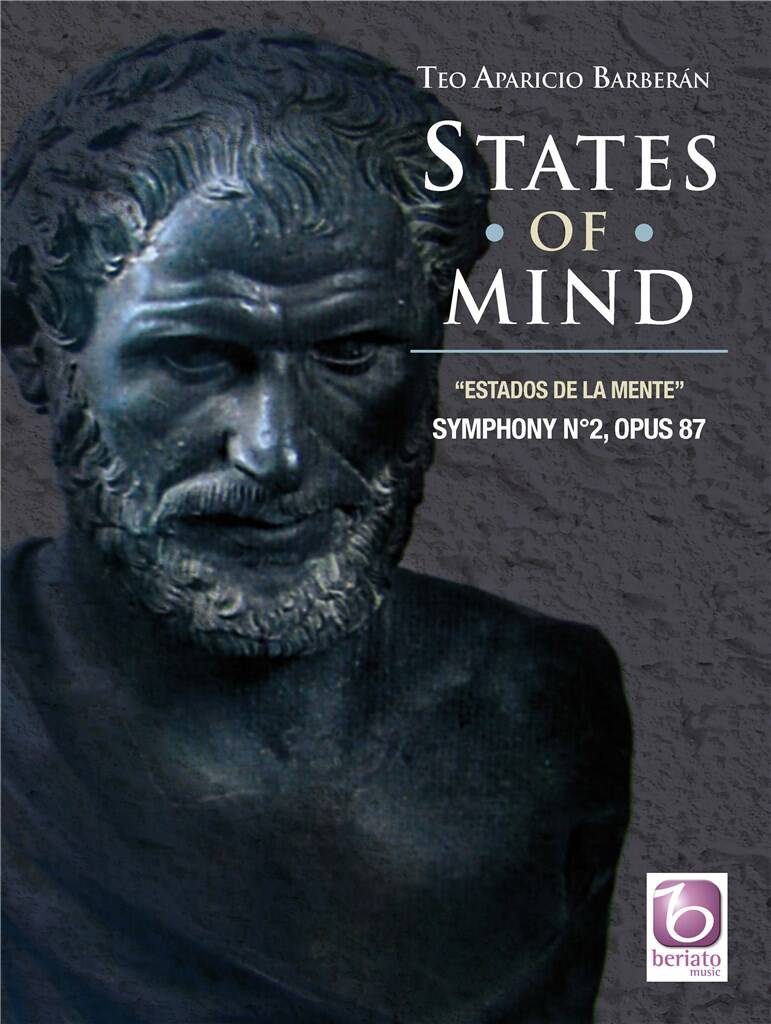
Symphony No. 2: States Of Mind, Opus 87 - Teo Aparicio-Barberán
I- Logos (reason)II- Pathos (emotion)III- Ethos (credibility)The ancient Greeks believed that music shaped the character of man. In Egyptian temples, music was an essential part of the magical rites to alter the course of nature or to treat illness.And today we know that sound can actually alter matter. The secret of music lies in harmony and mathematics, as many great musicians and experts have always known.One of the most important qualities of music is that it enables the listener to focushis attention inwards instead of on what is around him. It is indisputable that music can inspire emotion. Music leads us into a universe of emotions that are difficult to put into words. In short, music reaches into corners of our soul and thoughtsthat words cannot reach and makes it possible to more clearly describe these different States of mind.The composer of this symphony also believes that each "musical argument" must be constructed so that it will induce the desired reaction in thelistener.Music: more than wordsIn recent times, most orchestral symphonies have been based on a story, a text or something similar so that their composition must be structured accordingly.The intention of this work by Teo Aparicio-Barbern is quitedifferent. The composer describes the three elements of the argument as the only formal structure of the work. Since certain philosophers in world history were able to subdivide grammatical argument, why shouldnt that also be possible for the musicalargument?Since ancient times the power of the spoken word has captivated mankind. How can an argument move people and mobilise the masses? Where does the power of words come from today? The answer lays not so much in what people say but in how theysay it.Rhetoric is one of the oldest humanist disciplines in Western civilisation. Aristotle, in the 4th century BC, called it the art of persuasion. Indeed, the terms rhetoric and persuasion are mutually interchangeable.More than 2000 years agoAristotle structured his rhetoric according to the following three elements: the logos, the pathos and the ethos.Logos (words, reason) is the reasoning that gives freedom to the structure of the text by expressing what one wishes to say usingspecialist terms. With logos we create arguments to receive public approval and to defend our ideas.Pathos, the second element, refers to the effective use of public psychology. Pathos can be considered as the capacity to induce the desired emotionalresponse in the public, by creating an emotional connection with the public so that they accept our message.The third element, ethos (credibility), refers to the character of the speaker and is perhaps the most important of the three elements.Aristotle based his concept of ethos upon his belief that truth and justice will always have the upper hand over anger. He believed that what was true and good was easier to prove and was more persuasive.This second orchestral symphony from thecomposer from Enguera follows these three parameters of the argument according to Aristotle. Each movement tries to summon a different state of mind in the listener so that the message itself can be better understood and appreciated. Apart from thesethree general concepts the music is only structured, as Claude Debussy would say, in a "formative way".The first movement, logos, is based on a scherzo melody that undergoes various changes in rhythm and harmony. The arguments are presented by meansof conventional techniques of composition. The second movement, pathos, is characterised by suggestions of sound. It is subdivided into two large parts. The first part is based on a five seven sequence with five sounds that are repeated in differentenvironments, structures and dynamics. The second part, which is largely tonal, brings out more directly the emotional overtones that each argument must have. The third movement, ethos, is a faithful rendition of the composers personality. In thislast part, clear rhythmic sequences stand out, there are large dynamic contrasts and lots of tone variation. In addition, and this is quite in keeping with the composers earlier work, the harmony in States of Mind is handled in a manner that is bothoriginal and efficient, as a result of which Aparicio-Barberns message is well understood by the listener.This second symphony by Teo Aparicio-Barbern is devoted to "my dear Henrie Adams, a guiding light in this eternally dark musical world. Thankyou for everything."
Estimated dispatch 7-14 working days
-
£244.99
Zenith of Maya - Satoshi Yagisawa
By 200 B.C. the Mayan civilization was expansive, from the Yucatan Peninsula well into Central America. Their highly advanced technology still amazes us today, including their discovery of an accurate calendar derived from detailed astronomical observations and the use of the "0" in sophisticated mathematics.I. Royal ceremony and sacrifice of renewalThe first movement describes Mayan civilization at its zenith. An initial theme heralds admiration for a great king. A graceful choral then captures the magnificent setting of the Mayan world. After a folk melody for the populace, the agitated scene of a sacrificial ceremony is portrayed. The regal theme appears again in the coda, concluding in brilliance. This great civilization vanished in 10 A.D., leaving only remnants of a remarkably prosperous world. Thousands of ruins large and small remain locked in a dense world of jungle, with huge crumbled cities having lain forgotten for eight centuries.II. Glorious ruins still ariseII characterizes this civilization from glory, to destruction, to the present with its buried ruins. To begin, stone cities wait silently cloaked in jungle, steadfastly eluding discovery. As time passes slowly, the music reflects back to the glory of the Maya. Though wishing to turn back the hands of time for this incredible civilization, its fate and the gravity of its loss are carried forward in the profound silence of eternal loss. Finally, in the present, we marvel at the thousands of elegant remains, with a choral of praise for those with remarkable wisdom and strength, in a spectacular conclusion.(Satoshi Yagisawa)
Estimated dispatch 7-14 working days
-
£159.99
Fantasia Per La Vita E La Morte - Bert Appermont
The mystique surrounding life and death formed the starting point of this composition. I wanted to write a work without a story, mixed up in a kind of musical quest for a new world of sound, original rhythm sequences, melodies filled with suspenseand distinct orchestral tones.The indirect cause was the birth of my first child which took place during this time, followed by the death of a close family member. At such a moment you experience just how close life and death are to each other, anddespite one being the antithesis of the other, they are incredibly similar. Both radical events are passages into new worlds and have great emotional impact. Moreover, the work was commissioned by "New Life", an orchestra that lost one of itsmusician in a plane crash, which also led me to believe that this approach would be appropriate.I would prefer not to comment on which passages in the composition concern life (birth) and which refer to death. It seems to me that it is moreinteresting to question traditional conceptions and leave it open for the listener. If you think that a passage is about birth, and this idea then shifts, it is this that raises fascinating questions, on both a musical and metaphysical level.Music isin an indirect but incredibly persuasive way in which to express the endless striving and seeking of mankind. Music can even touch eternity, as it were, and give us the feeling that we can transcend death. This endless search (and also longing) canbe heard throughout the work; as much in the sound fields and accent shifts in the first part as in the enormous tension curves and compelling themes of the second part. The semi-tone functions in this way as a guide or something to hold on to,running through the whole work and upon which much of the musical material is based. Traces of profound love resound with quiet simplicity in the slow section's melodious solos, after which the work contemplates life and death one last time, musesupon joy and sadness, on the possibilities and limitations of people and on the why of all things.I would like to dedicate this work to my dearest daughter Paulientje, to Meterke and to Johan de Jong of the "New Life" orchestra. May it fare themwell, here or in another dimension...
Estimated dispatch 7-14 working days
-
 £106.95
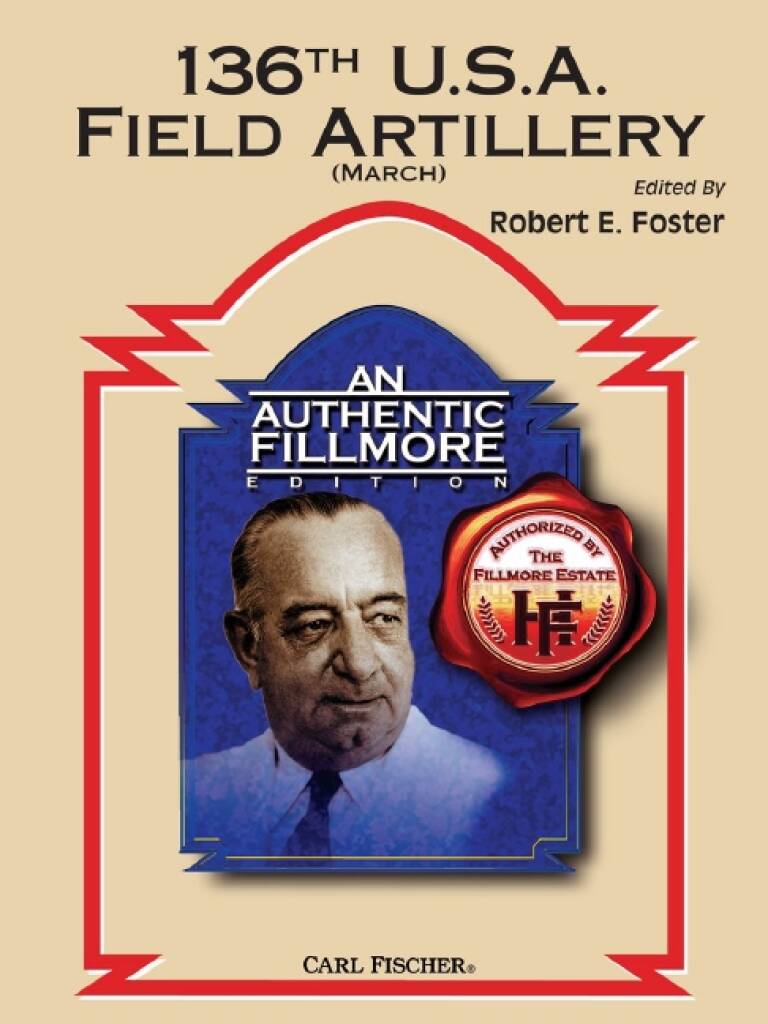
136th U.S.A. Field Artillery - Henry Fillmore
Editor Robert Foster has uncovered another forgotten Henry Fillmore march and restored it to its rightful place in band repertoire. This may be one of the best Fillmore marches we have heard that is for the most part still unknown. Written to stir patriotism during World War I, all of the wonderful Fillmore trademarks are present in this exceptional march. It is tuneful, exciting and well-scored, presented in a full score edition for the first time, exactly as Fillmore intended it to be.
Estimated dispatch 7-14 working days
-
 £138.00
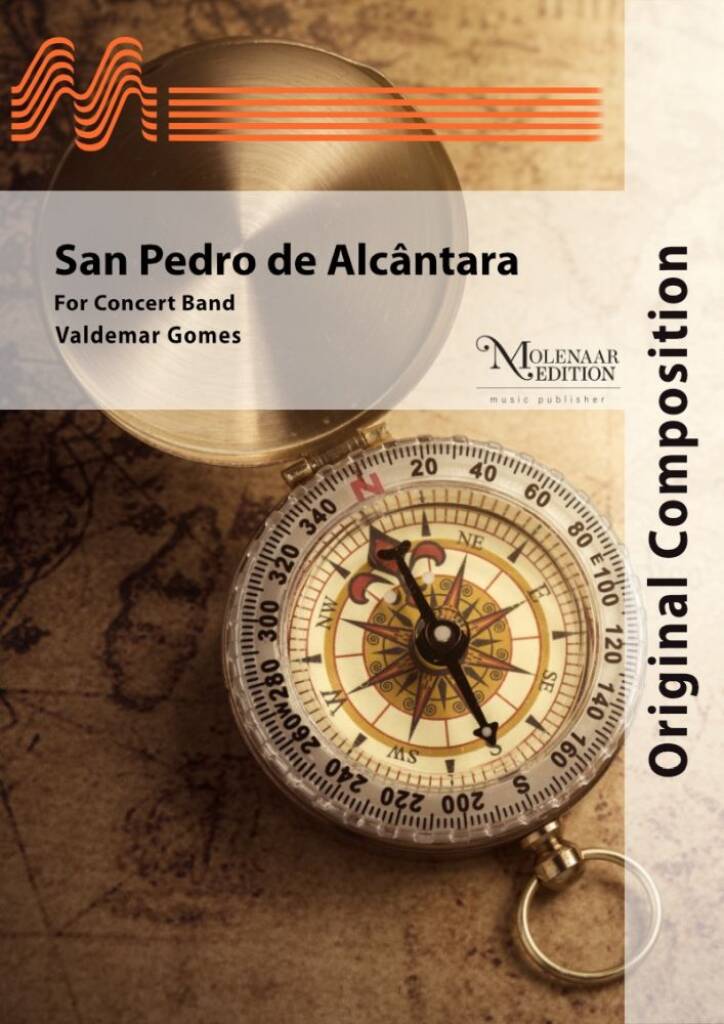
San Pedro de Alcntara - Valdemar Gomes
The Spanish war galleon with 64 cannons, built in Cuba between 1770 and 1771 for an English shipowner in the service of the King of Spain left Peru for Cadiz in 1784 with a huge cargo of copper, gold, silver and other valuables on board. There were also more than 400 people on board, including passengers, crew and Inca prisoners after a revolt. The Atlantic crossing went smoothly, passing Portugal to take advantage of favourable winds. The shipwreck off Peniche was the result of human error, apparently due to French maps with dramatic errors in the position of the islands of Berlengas and neighbouring islets. On 2 February 1786, the sea was calm and the night clear, but they hit the rock formation Papoa and the hull immediately broke in two. The bottom sank quickly, while the deck remained afloat for some time. 128 people lost their lives, including many Indians who were trapped in the basement. This shipwreck is considered one of the most important in maritime history.What the composer wants to convey, and what can be felt as one listens, is first of all the sound of power, of hope, of the glory of conquest, of the splendour of wealth. This is followed by the perception of the maritime environment, the harmony with the softness of the ocean, the gliding of the hull in the foam of the sea on sunny, blue days. But along with this tranquillity, you soon hear a rhythmic chain that makes you feel a representation of the hustle and bustle, of the busy crew, of the hard work of a sailor, of the desperation of an exotic people imprisoned in a dark, damp cellar. A distinct rhythm that reminds us of the "salero" of Andalusia, with its Arab influences and its people, the soothing of the resignation of others who are forced to submit. Then we clearly hear a crescendo that makes us imagine the agony of the collision that precedes the shipwreck. The breaking of the hull, the water flooding everything, the despair, the clash of bodies on the rocks, the tragedy to come. Before the "grand finale", in which the return of musical softness reminds us that the story is over. The supremacy of nature over human greed. The waves, though gentle, sweep the wreckage, the lives and the treasures of the New World to the bottom of the sea.
Estimated dispatch 7-14 working days
-
£202.99
Porco Rosso - Joe Hisaishi
From the 1992 Japanese animated film about an Italian World War I flying ace who, for a wartime misdeed, was transformed into an anthropomorphic pig. The flamboyant post-war story of Porco Rosso (Crimson Pig) battling air pirates is full of intrigue and romance, and the film's diverse and lush soundtrack is one of the more rare Studio Ghibli scorings. Mr. Tomoki Ubata, (band director at Ina Gakuen Sr. High School) assisted with medley design as we both became intrigued with the music.The sixth song, Kyouki ~ hishou (insanity & soaring), appearing on Joe Hisaishi's album "My Lost City", is often performed for his concerts. Due to its complexity I am sure this is one of Hisaishi's favorites. I also added the French chanson "Le Temps des cerises" (Antoine Renard) that Madame Gena sings in the film. This is my favorite of all chansons; I was happy to include this bittersweet, beautiful melody.The following themes are contained in the arrangement:1. Le Temps des cerises2. Jidai no kaze (Wind of the Times)3. Mammaito4. Pikkoro no onnatachi (Women of Piccolo)5. Porco e Bella6. Kyouki ~ hishou (Insanity & Soaring)7. Tooki jidai o momomede (Seeking for Far Times)You can hear how the story folds without a screen.(Kazuhiro Morita)
Estimated dispatch 7-14 working days
-
 £27.95
Light Music (Concert Band - Score only) - Wiffin, Rob
The title Light Music alludes to different things. Most of the music in the suite is light in nature, and is in the inherently British tradition of 'light music' - original pieces which are often descriptive but essentially melodic. In another sense the music depicts various aspects of light itself. The title itself is a trick of the light!The first movement, Lightscape, portrays shifting patterns and types of light, highlighting some details and obscuring others. It is sometimes vibrant, dancing and full of movement, and sometimes tranquil.The second movement, At the going down of the sun, considers the light of the sun as it sets. Because of the nature of his career, the composer has written a fair amount of ceremonial music and this movement is close to that genre once again. There is, in the title, a reference to the familiar Remembrance line 'At the going down of the sun and in the morning we will remember them' from the poem For the Fallen by Robert Laurence Binyon (1869-1943) written in September 1914, a few weeks after the outbreak of the First World War. While the music is not a setting of these words - or in any way referential - there is an echo of the words 'We will remember them'.The suite finishes with Set Alight which starts off with a few combustible bars as the flame catches and then the fire is under way.Duration: 11.30
Estimated dispatch 7-14 working days
 View Music