
Results
-
 £47.52
Mark of Triumph
A magnificent contest overture combining sensitive scoring with memorable melodies. The opening fanfare and processional leads to an andante section featuring lyrical solo passages that are not technically demanding. A variation of the opening theme brings the band to a powerful and triumphant conclusion.
Estimated dispatch 7-14 working days
-
£248.99
Missa Brevis Wind Band Set (Score & Parts)
Missa Brevis, written for choir and wind band, was commissioned by the Conseil D?partemental pour la Musique et la Culture de Haute-Alsace (Dir.: Philippe Pfisterer) in Guebwiller (France), in celebration of the millennium of Pope Leon IX's birth in ?guisheim (France). The composer conducted the first performance on June 23, 2002. It was performed live for the French television channel France 2. The mass movements Kyrie, Gloria, Credo, Sanctus, Benedictus, and Agnus Dei are very suitable for the Catholic as well as the Protestant liturgy. For this mass, various ways for performing in diverse variable strengths are possible. An instrumental performance is possible if the brass represents the choir parts. In this option, it is desirable for the brass to be positioned separately from the rest of the band (on a gallery, for example), so that the idea of two choirs is approached. In a performance with a large choir, the brass can work very well as a support. In that case, the dynamics of the brass should be adapted somewhat, since these are actually intended for an instrumental performance. You can also leave out the brass entirely for the benefit of the choir. For the accompaniment of smaller choirs, you can opt for a small ensemble from the band. This can also be a quartet, put together as desired. For the performance of this mass, the obvious choice is one of the above options. However, as an alternative, a performance with a combination of these options (vocally/instrumentally) is also possible - not just from an artistic point of view (variation), but also from a practical starting point - for example in the case that the choir has rehearsed only two movements. With a full strength, the conductor can vary the instrumentation to his or her liking. Then the brass can also play a role in the accompaniment (instead of supporting the choir). The following combinations are possible: 1. clarinet choir (from Eb Clarinet to Bass Clarinet) 2. clarinet choir + saxophones 3. brass (flugelhorns, horns, euphoniums, bass section) 4. brass (2 trumpets / 2 trombones) 5. double reeds (optional + flute, optional + string bass) 6. tutti 7. all winds 8. all brass In a performance by brass band and choir, it is usually advisable to leave out option 1 (choir + brass + band). The choir sings self-reliantly, accompanied by a full brass band. In an instrumental performance, you can consider a combined quartet (two cornets and two trombones) + brass band. Choral parts available separately. 0:20:00
Estimated dispatch 7-14 working days
-
£64.35
Ode and Jubilation
As the title implies, there is a dichotomy of spirit within the contrasting sections. But, there is also a mutual thematic development which makes this composition unique. After beginning with a lyrical introduction in which the trumpet invokes an expressive solo passage, the work then progresses with an energetic rhythmic pattern which offers and leads to a joyful spirit of celebration. A recapitulation of the original theme forms a variation to the end. This distinctive composition was selected by the Mid-Atlantic Arts Foundation to receive the NJSCA Fellowship award. Very nice!
Estimated dispatch 7-14 working days
-
£60.99
Our Maestro (Concert Band - Score and Parts)
A great new march from our own ?maestro? Wim Laseroms. The powerful introduction introduces a cheerful melody which leads into a brilliant bass solo. Following a beautiful lyrical passage, with the melodic line mainly in the descant, the trio section introduces a new cantabile theme featuring a dynamic variation. The work is brought to a brilliant conclusion with a rousing melody. This march would be a great opener to any concert or contest situation. 04:10
Estimated dispatch 7-14 working days
-
 £27.95
RONDE FOR ISOLDE (Novello Symphonic Band) Extra Score - Bedford, David
Extra Score only. This is a continuous set of variations on the famous Ronde tune by sixteenth century composer, Tielman Susato. To add spice, Bedford takes a sequence of chords from Wagner's opera Tristan und Isolde and allows a slower section to use these chords to provide yet another variation, hence the title. Duration: 11 mins.
Estimated dispatch 7-14 working days
-
£137.95
RONDE FOR ISOLDE (Novello Symphonic) - Bedford, David
Score & Parts. This is a continuous set of variations on the famous Ronde tune by sixteenth century composer, Tielman Susato. To add spice, Bedford takes a sequence of chords from Wagner's opera Tristan und Isolde and allows a slower section to use these chords to provide yet another variation, hence the title. (Grade 4) Duration: 11 mins.
Estimated dispatch 7-14 working days
-
£144.99
Ross Roy (Concert Band - Score and Parts) - De Haan, Jacob
Jacob de Haan was commissioned to compose this concert piece by the "St. Peters Wind Symphony" from Brisbane, Australia. "Ross Roy" is the monumental late 19th century villa where St. Peters Lutheran College was founded in 1945. The villa has always remained the school symbol. In this composition, Jacob de Haan sees the "Ross Roy" as a metaphor for the years spent at school (a monument in time), where one's personality is formed. So, the opening theme the artist calls the Ross Roy theme initially has monumental characteristics.The rhythmic motion, which strides along in the lower register and percussion at the beginning of the next section is typical of "Tempo di Marcia". This movement, accompanied by repetitions of sound, is a metaphor for the structure and discipline in school. This is the introduction to a march theme, symbolic of "passing through" the classes up to the final examinations.Then, the Ross Roy theme is dealt with again, now in a playful, humorous variation. As if the composer is saying there should also be time for a smile in school. The same theme can be heard in major key and a slower tempo in the following section, expressing pride and self-confidence. This is also the introduction to the expressive middle section that represents love, friendship and understanding.We then return to the march theme in a slightly altered construction. The oriental sounds, constituting the modulation to the final theme, are symbols of the diversity of cultures in the school. The characteristic final theme first sounds solemn, but turns into a festive apotheosis. It is no coincidence that the final cadence is reminiscent of the close to a traditional overture, for the school years can be considered the "overture" to the rest of one's life. The premiere of "Ross Roy" was conducted by Jacob de Haan in Brisbane, on August 22, 1997.Duration: 9:20
Estimated dispatch 7-14 working days
-
£67.32
Shield of Liberty
This brilliant and challenging march is the perfect choice for your next performance. Features trombones in the opening two strains, a delightful woodwind variation in the trio, and a robust and powerful final chorus which will have toes tapping all throughout the audience. Lots of excitement from start to finish. Truly exceptional!
Estimated dispatch 7-14 working days
-
 £109.99
Te Deum Wind Band Set (Score & Parts)
Gro?er Gott, wir loben dich is a well-known German hymn, written by Ignaz Franz in the 18th century but based on the 4th century Te Deum laudamus. After a radiant introduction by the brass section, the first variation on the chorale appears. Subsequently, the song is rendered in its original form. Then three more variations follow. The result is a solemn work that is very fitting within the context of a church service, but is also suitable for many other occasions. 0:08:30
Estimated dispatch 7-14 working days
-
 £58.95
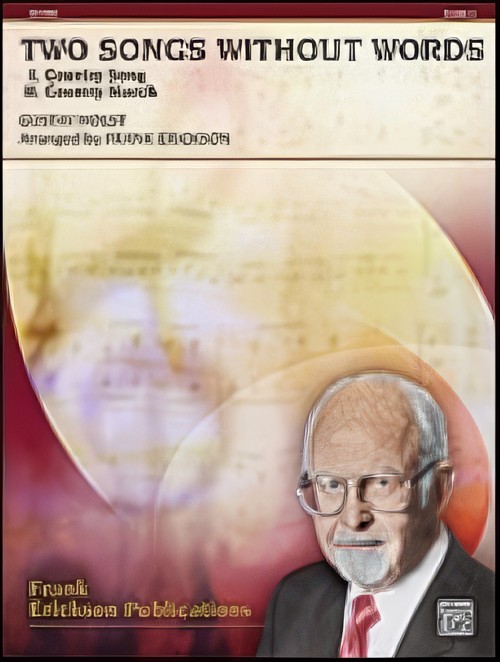
TWO SONGS WITHOUT WORDS (Concert Band) - Holst, Gustav - Erickson, Frank
Two Songs Without Words was composed in 1906 and was dedicated to Ralph Vaughan Williams and is similar in style to his two suites for band. The Country Song opens with the principal theme as an unaccompanied clarinet solo, followed by its repetition in the full woodwind section. The main theme returns in a "maestoso" setting before fading into a quite closing. Marching Song is characterized by a distinctive running sixteenth note figure. The principal melody, first played by the low woodwinds, is punctuated by these same running sixteenth note fragments. Both themes are again repeated with much variation before the tempo picks up into a short coda-style ending.
Estimated dispatch 7-14 working days
 View Music