
Results
-
 £141.99
Pulcinella - Philip Sparke
Pulcinella was commissioned by the Taiwanese euphonium player Tzu-Hsiang Lin. Lin is a renowned soloist and teacher and a Besson Euphonium Artist. He teaches euphonium at Taipei National University of the Arts, National Taiwan University of Arts, Shih Chien University and National Kaohsiung Normal University. Lin gave the premiere of Pulcinella in both its concert band and brass band versions in January 2021. Pulcinella continues Sparke's series of euphonium solos named after characters of the Italian commedia dell'arte and opens with a long and expressive minor melody for the soloist over a brooding accompaniment. This is taken up briefly by the full band and is extended by the soloist after a change of key. A cadenza, accompanied by fragments of the main melody leads to a complete change of mood, tempo and tonality, introducing a Vivo section starting with a perky syncopated tune for the soloist. The band then uses elements of this new tune to introduce a change of key, where the soloist introduces a more lyrical second subject over a pulsing accompaniment. The band then takes this up and changes key to reintroduce the original Vivo melody, which leads to a short and acrobatic coda to bring the work to a spectacular close.
Estimated dispatch 7-14 working days
-
 £76.99
Stars on Fire - Marc Jeanbourquin
"To be born under a lucky star", "To have stars in your eyes", "To be someone's lucky star", as well as "To be all fired up", "To set the world on fire" and "To be on fire with love" - all of these are expressions that inspired Marc Jeanbourquin to compose Stars on Fire. Indeed, combining fire and stars could only produce a piece full of positive energy, of good vibrations, with a sparkling theme that is heard right from the first bars all the way up to its explosive finale. This makes Stars on Fire an ideal piece to open a concert.
Estimated dispatch 7-14 working days
-
 £119.99
Rosa Gallica - Jacob de Haan
Rosa Gallica has been written to commemorate the centenary of the First World War. The work focuses largely on France as a lot of the fighting took place there. With the title Rosa Gallica (French rose), the composer wishes to emphasize the poetic image of the rose. The stem represents the years gone by such as those taken up by the First World War - and the thorns refer to the conflict and the pain that the victims had to endure. The rose itself forms the picture of beauty and symbolises opening up to a peaceful world. The piece depicts France from the end of the 19th century through to its role at the heart of the First World War and beyond. A spectacular anddramatic new work by Jacob de Haan.
Estimated dispatch 7-14 working days
-
 £119.99
Sea of Hope - Jacob de Haan
Sea of Hope is an optimistic work about new land arisen from the former Zuiderzee (the Netherlands). In the introduction, the sea is conveyed in all its glory and ferocity, through a melody that keeps you wondering whether it makes you happy or sad. Then, finally, there is a glimmer of hope, when the water is dammed up and the land partly reclaimed (by conversion into polder land). The town of Dronten, for instance, develops into a place where one day two people meet up and fall in love. This love is reflected in the slow, passionate middle movement. New life in the town is celebrated joyfully: the zest for life clearly shines through this part of the work, followed byoptimism and celebration in the closing bars.
Estimated dispatch 7-14 working days
-
 £82.95
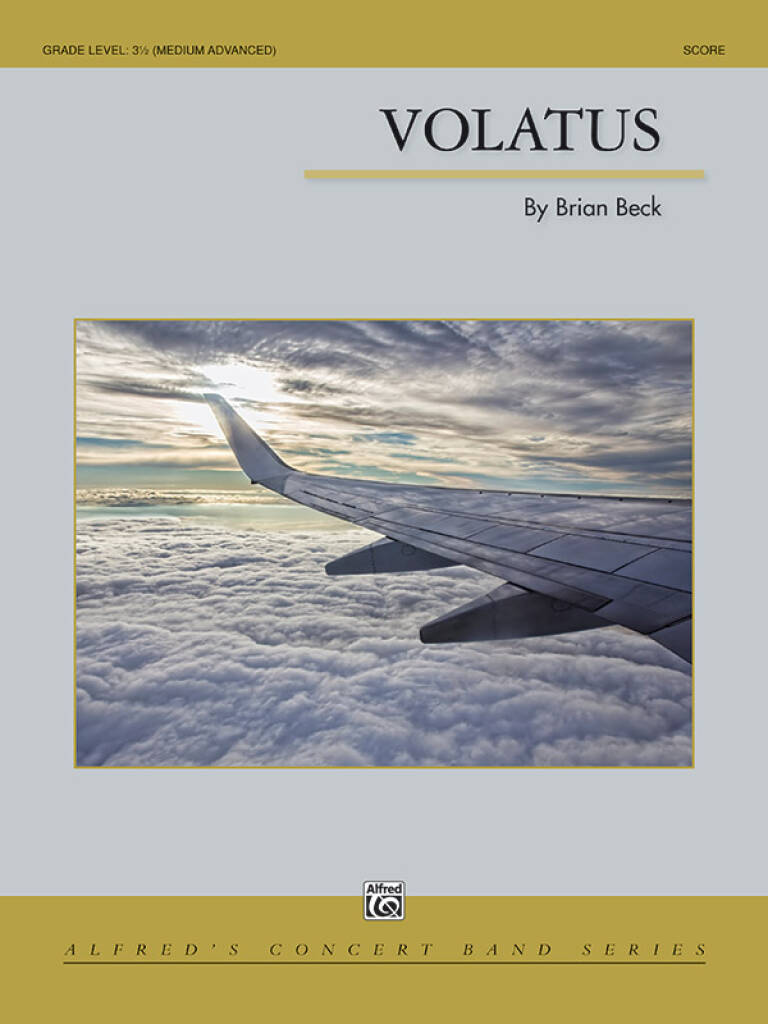
Volatus - Brian Beck
From the Latin word for flight, Volatus captures the art of soaring above the clouds. The higher one climbs, the more there is to see. Lift-off begins with stately brass motives and sparkling percussion, then it is up, up, and away with woodwind flourishes. With angular harmonies, driving rhythms in mixed meters, and static percussive effects, this piece has something for everyone to enjoy. (2:40)
Estimated dispatch 7-14 working days
-
 £84.99
Theme from "Star Trek" - Alexander Courage
Who doesn't know the famous introduction "To boldly go where no man has gone before" at the beginning of each Star Trek sequel? Many generations grew up with Star Trek - one of the most iconic Sci-Fi series ever written. The original theme is as iconic as the opening line. A great warm up for the next Star Trek series in 2017, arranged by Thomas Doss.
Estimated dispatch 7-14 working days
-
 £209.99
Dunamis - André Waignein
Major Yvon Ducene wanted a new lush and colourful composition for his Guides military band, with Andr Waignein as its composer. Early in 1979 the composer began his assignement and in October of the same year, the finished full score was on the music stands of this prestigious military band of the Belgian Army.The introduction (Grave) mirrors an atmosphere full of serenity in which the theme, played by the oboes and the English horn is predominant and immediately holds the listener spell-bound. It is taken up again as central element of the slow movement.The Allegro breaks away from the quiet passion of the introduction. Here, the band can really show its capabilities to thefull. Based on a very precise rythm, an idiom of sudden desperation and adversity develops which, fused with a crushing agression, culminates in a kind of eruption, soom calmed down by a Lento : peace and quiet has returned thanks to a melody by the horns and soon taken over by the clarinets. In the meantime, the saxophone - an instrument full of human emotion - express the main spatial dimension in contemporary psyche. Following a harmonic transition the brass-players take up the theme again in forte whilst the basses and the woodwinds interwine in technical arabesques.The movings of the mind and the heart get an audible and almost touchable shape in the ensuing Allegro, a movement characterized by a rhythmic dialogue in which the whole orchestra participates and where the exposition contains a wealth of sound and technical contrasts. The Lento finally uses the central theme of the slow movement again, with some occasional references to the two allegros. The last page is of unprecedented grandeur. All the instruments display their most beautiful sound which were named by Jacques Ferschotte, when speaking about Honneger, "harmonies d'intensits" harmonies of the unmeasurable.
Estimated dispatch 7-14 working days
-
 £59.95
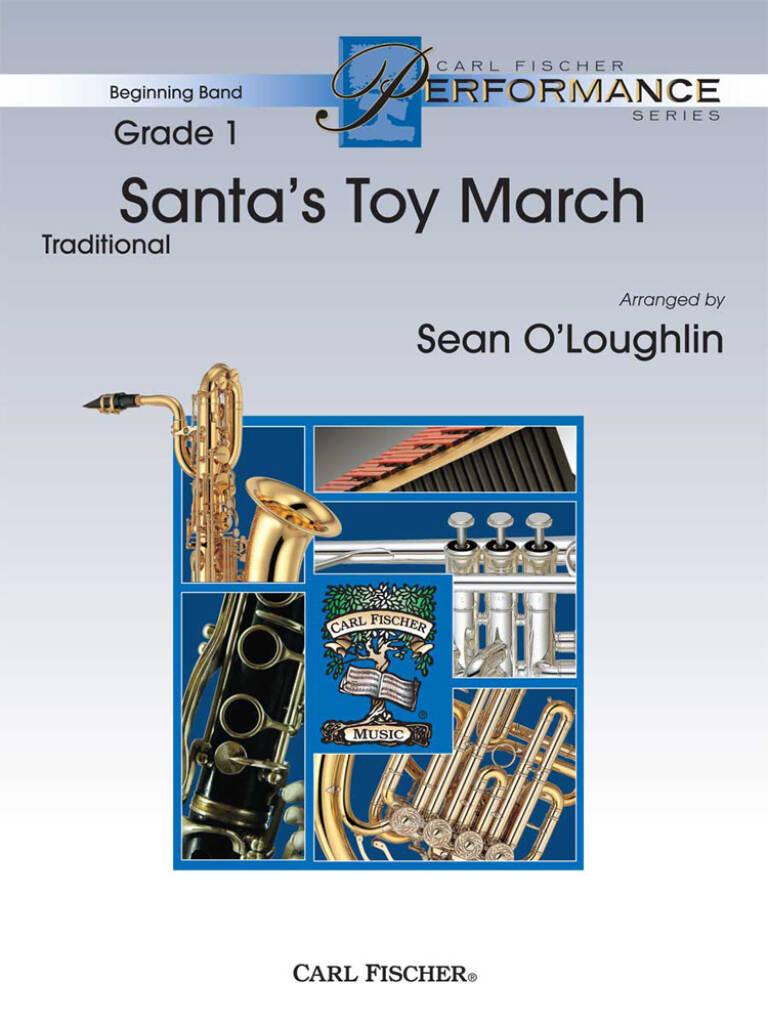
Santa's Toy March
Santa's Toy March is a joyful and exciting addition to any holiday program for the beginning concert band. Several well known holiday favorites set the stage for the parade of toys to follow. You will hear the Toy March from The Nutcracker, Jolly Old St. Nicholas and Up on the Housetop. This arrangement also features the percussion section quite a bit, so let them shine! Finishing up with a triumphant march, your group will play the group of toys right into Santa's bag for their journey to children on the Nice list.
Estimated dispatch 7-14 working days
-
£123.95
Alexander's Ragtime Band - Irving Berlin
One offerving Berlin's most popular songs is given the big band treatment by Jerry Nowak. It starts out with an up tempo swing, dense with harmony, and leads to a jazz ballad in the middle of the piece. This is then followed by a swing roll-off and a catchy Dixieland treatment of the tune by a brass quintet. It finishes up with the full band swingin' at the end. Great for pops concerts and for community bands.
Estimated dispatch 7-14 working days
-
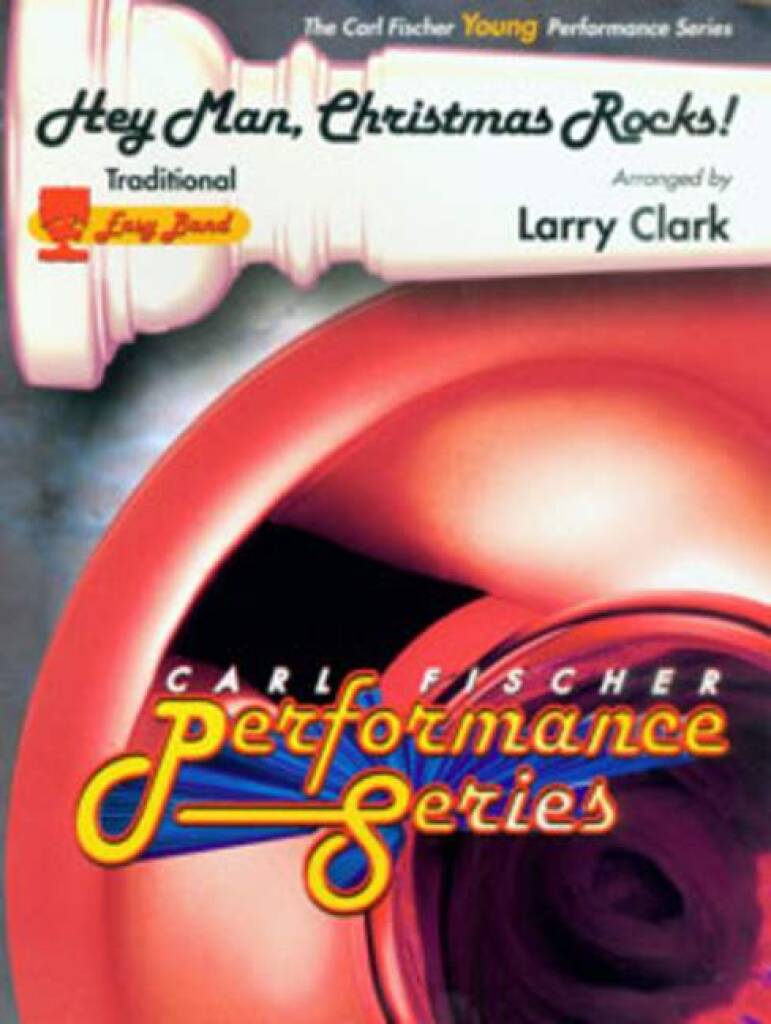 £78.95
Hey Man, Christmas Rocks!
Three different rock styles (Hard Rock, Shuffle and Latin Rock) are used to juice up three familiar popular Christmas tunes (Jolly Old St. Nicholas, Up On the Housetop, and Jingle Bells) in this fun-filled Christmas medley. The scoring is expert and the infectious verve of the piece will make it the highlight of any Christmas program. Duration: 3'40"
Estimated dispatch 7-14 working days
 View Music