
Results
-
 £108.10
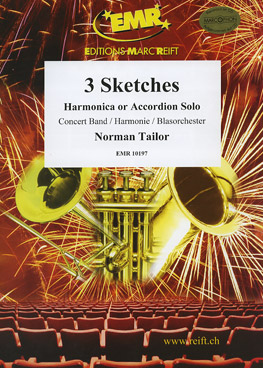
THREE SKETCHES (Harmonica or Accordion Solo with Intermediate Concert Band) - Tailor, Norman
Duration: 3:15
Estimated dispatch 7-14 working days
-
 £53.60
Three Traditional Irish Tunes (Flexible Ensemble - Score and Parts) - Stahli, Urs
8 Part Flexible Ensemble and PercussionIncludes:John Ryan's PolkaMy Love is Like a Red, Red, RoseThe Dark Island
Estimated dispatch 7-14 working days
-
 £57.42
We Three Kings
Faithfully transcribed from John's CBS album, "Turned on Christmas,'' recorded with London's Royal Philharmonic Orchestra.
Estimated dispatch 7-14 working days
-
 £44.55
We Three Kings (Concert Band - Score and Parts)
This celebrated Ukrainian carol ("Carol of the Bells") has been a favorite for generations! All of its excitement and vitality is expertly presented in Jeff Taylor's colorful and imaginative arrangement.
Estimated dispatch 7-14 working days
-
 £64.95
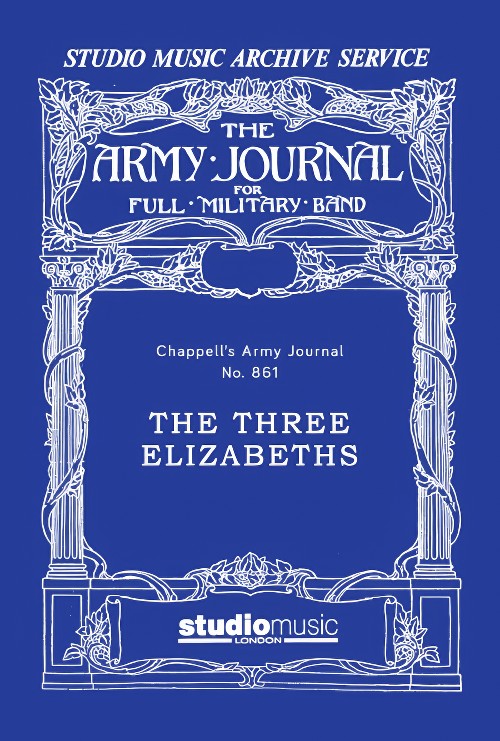
The Three Elizabeths (Military Band - Score and Parts) - Coates, Eric - Duthoit, W. J.
Army Journal 723Includes:I. Halcyon Days (Elizabeth Tudor) Duration: 7:00II. Springtime in Angus (Elizabeth of Glamis) Duration 7:20III March - Youth of Britain (The Princess Elizabeth) Duration 5:10.Total Duration: 19:30.Each set includes Conductor (Condensed Score); 2 x Solo B flat Clarinet; 2 x 1st B flat Cornet; 2 x Basses and 1 each of all other parts as originally published. We are unable to supply parts not included in the original sets.
Estimated dispatch 7-14 working days
-
 £242.99
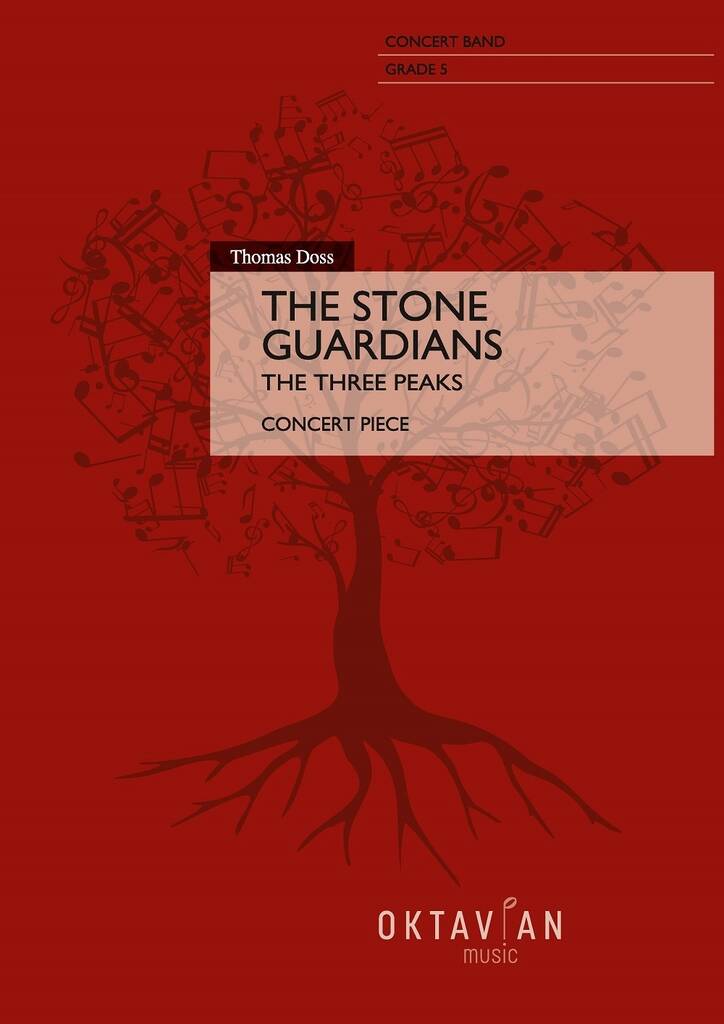
The Stone Guardians - Thomas Doss
The Three Peaks (Italian: Tre Cime di Lavaredo) are a prominent massif in the Dolomites on the border between the Italian provinces of Belluno in the south and South Tyrol in the north.The imposing rock formations formed over 200 million years ago and represent one of the most recognizable landmarks of the Dolomites and South Tyrol (I).Due to their exceptional beauty, the Dolomites with the Three Peaks are dignified as a UNESCO World Heritage Site since 2009.The 'call' of the Three Peaks attracts numerous visitors every year, who will experience an unforgettable and impressive spectacle of changing colors from cool gray to glowing red.The Three Peaks tower over the eventful contemporary history of Tyrol and South Tyrol like stone guardians.
Estimated dispatch 7-14 working days
-
 £54.99
Gold Rush! - Nancy H. Seward
This arrangement of three popular songs from 1849 provide contrast with three keys, three tempos, and three styles, as well as variety in dynamics, tone color and meter. Interesting percussion parts and a trombone glissando will make this piece fun for the band as well as fun for the audience.
Estimated dispatch 7-14 working days
-
 £274.99
Symphony No. 2: States Of Mind, Opus 87 - Teo Aparicio-Barberán
I- Logos (reason)II- Pathos (emotion)III- Ethos (credibility)The ancient Greeks believed that music shaped the character of man. In Egyptian temples, music was an essential part of the magical rites to alter the course of nature or to treat illness.And today we know that sound can actually alter matter. The secret of music lies in harmony and mathematics, as many great musicians and experts have always known.One of the most important qualities of music is that it enables the listener to focushis attention inwards instead of on what is around him. It is indisputable that music can inspire emotion. Music leads us into a universe of emotions that are difficult to put into words. In short, music reaches into corners of our soul and thoughtsthat words cannot reach and makes it possible to more clearly describe these different States of mind.The composer of this symphony also believes that each "musical argument" must be constructed so that it will induce the desired reaction in thelistener.Music: more than wordsIn recent times, most orchestral symphonies have been based on a story, a text or something similar so that their composition must be structured accordingly.The intention of this work by Teo Aparicio-Barbern is quitedifferent. The composer describes the three elements of the argument as the only formal structure of the work. Since certain philosophers in world history were able to subdivide grammatical argument, why shouldnt that also be possible for the musicalargument?Since ancient times the power of the spoken word has captivated mankind. How can an argument move people and mobilise the masses? Where does the power of words come from today? The answer lays not so much in what people say but in how theysay it.Rhetoric is one of the oldest humanist disciplines in Western civilisation. Aristotle, in the 4th century BC, called it the art of persuasion. Indeed, the terms rhetoric and persuasion are mutually interchangeable.More than 2000 years agoAristotle structured his rhetoric according to the following three elements: the logos, the pathos and the ethos.Logos (words, reason) is the reasoning that gives freedom to the structure of the text by expressing what one wishes to say usingspecialist terms. With logos we create arguments to receive public approval and to defend our ideas.Pathos, the second element, refers to the effective use of public psychology. Pathos can be considered as the capacity to induce the desired emotionalresponse in the public, by creating an emotional connection with the public so that they accept our message.The third element, ethos (credibility), refers to the character of the speaker and is perhaps the most important of the three elements.Aristotle based his concept of ethos upon his belief that truth and justice will always have the upper hand over anger. He believed that what was true and good was easier to prove and was more persuasive.This second orchestral symphony from thecomposer from Enguera follows these three parameters of the argument according to Aristotle. Each movement tries to summon a different state of mind in the listener so that the message itself can be better understood and appreciated. Apart from thesethree general concepts the music is only structured, as Claude Debussy would say, in a "formative way".The first movement, logos, is based on a scherzo melody that undergoes various changes in rhythm and harmony. The arguments are presented by meansof conventional techniques of composition. The second movement, pathos, is characterised by suggestions of sound. It is subdivided into two large parts. The first part is based on a five seven sequence with five sounds that are repeated in differentenvironments, structures and dynamics. The second part, which is largely tonal, brings out more directly the emotional overtones that each argument must have. The third movement, ethos, is a faithful rendition of the composers personality. In thislast part, clear rhythmic sequences stand out, there are large dynamic contrasts and lots of tone variation. In addition, and this is quite in keeping with the composers earlier work, the harmony in States of Mind is handled in a manner that is bothoriginal and efficient, as a result of which Aparicio-Barberns message is well understood by the listener.This second symphony by Teo Aparicio-Barbern is devoted to "my dear Henrie Adams, a guiding light in this eternally dark musical world. Thankyou for everything."
Estimated dispatch 7-14 working days
-
£84.50
Journey Of The Magi - Gene Milford
Journey of the Magi is a fantastical piece based on the well-known Christmas carol We Three Kings of Orient Are. After an introduction reflecting the nobility and Eastern origins of the travelers, there are three contrasting settings of the carol's verse and two of the chorus. The royal caravan then fades in to the distance as the three Kings continue their journey and search.
Estimated dispatch 7-14 working days
-
 £228.70
Pulsar - The Metamorphosis of a Star - John Brakstad
4th July in 1054 AD one of the most spectacular events was witnessed in the Cosmos. A massive star blew out; a supernova explosion.From the Earth it appeared as a new, bright star; the most brilliant in the sky. It was visible for three weeks, also in daylight, before it then faded away.But what was left of it is spectacular. Today we call it the "Crab Nebula".And in the very centre of the Nebula lies the remnant of the star; the core crushed by the force of gravity.This is a rotating neutron star, a pulsar, just 20 kilometres across, but so dense that it weighs more than our sun.As the neutron star spins, ejected particles stream out from its poles at almost the speed of light.These jets create powerful beams that sweep around as the star rotates.When the beams sweep across the Earth, they can be heard as regular pulses. We call them pulsars.In this piece there are three percussion parts. In addition there is an "optional part" to replace the marimba and vibraphone written in the three original percussion parts if desired. This fourth part is shown in the full score.
Estimated dispatch 7-14 working days
 View Music