
Results
-
 £207.00
Das Liebesverbot - Richard Wagner
This young, comic opera, composed in 1835 on one of Wagner's own libretti, based on a play by Shakespeare, was unsuccessful at the Magdeburg theatre in 1836 and even the composer considered it a "sin of youth". After attempting in vain to have his first opera, "Le Fate", performed in Germany, Richard Wagner decided that his lack of success was due to the overwhelming competition of Italo-French music. He listened to Bellini, and became aware of the objective reasons for the great success of this music, comparing the warmth of life of Italian music to the frozen and meticulous German style. Hence he composed " Das Liebesverbot " with the sole aim of giving intense pleasure tothe public, without worrying about succumbing to the clichs of French and Italian music. That is why, when we listen to this music without knowing the name of the composer, we find ourselves in an embarrassing situation. We could easily attribute the work to some French composer, Meyerbeer, or Auber, for instance, but then the melodic ease and constructive linearity would bring Rossini to mind. By paying closer attention, however, we notice a boldness, an aggressiveness and a wealth of ideas that, together with clever orchestration, reveal the touch of the great German musician. " Das Liebesverbot " deserves to be performed more often, and we feel sure that the transcription for band will be an excellent vehicle of diffusion for this symphony.
Estimated dispatch 7-14 working days
-
 £113.30
Caleidoscopio - Lorenzo Pusceddu
The incommunicability between different cultures and worlds and the confusion that this generates lie at the heart of this work: the fanfare-like themes that characterise the introduction, together with the "Arabian" melodies of the Presto, represent these differences. The bare theme of the Andante, while offering a glimpse of hope, also describes the impossibility of a meeting and the pain this situation causes. The empty fifth and dissonance of the minor second are elements that feature throughout this work. In the Coda, moreover, all these ideas reappear "kaleidoscopically", amidst a convulsive and excitingly chaotic atmosphere.
Estimated dispatch 7-14 working days
-
 £113.30
Moderate Dances - Angelo Sormani
This piece is a tribute to dance music, especially passionate, intense and meditative dance music. "Moderate Dances" is divided into three movements: a "Tango", a "Slow Waltz" and a "Bossa Nova". Each movement and each dance has its own particular characteristics but, when combined, these different rhythmic beats and times give the piece a feeling of completeness and uniformity. The Tango started to flourish in the suburbs of Buenos Aires in around 1880. There is still some doubt as to its origins, which may be Cuban (Habanera) but are probably African. It was most popular in Argentina and Brazil: here the male protagonist was originally the "gaucho" with his inseparable guitar, later to be replaced by the proud, elegant "compadre". By around 1910 the Tango had spread to Italy and France. New clubs opened, where the upper classes could watch and dance the Tango. Here the dance also underwent some rapid transformations. The exaggerated and extravagant gestures and body movements disappeared. Slow, gliding steps replaced the old rotational movements. The women's red ankle-boots and the partners "staring into each other's eyes" accentuated the erotic nature and sensuality of this dance. So much so that, in 1913, the German government banned soldiers from dancing the Tango. Those who broke the law were immediately discharged from the army. From a strictly musical perspective, the basic instruments were a flute, a harp (the diatonic harp typically played by the Indians of Paraguay) and a violin, or flute, guitar and violin or even clarinet, guitar and violin. These instruments were easy to transport, ideal for playing at parties, in the streets and in courtyards. The musicians played by ear, frequently improvising: there were no scores, no records, which is the main reason why it is impossible to trace the Tango back to its exact origins. However, the Tango's evolution (and growing popularity) was once again fostered by its fundamental ability to absorb "other" cultures, languages and sounds. And it was the arrival of the "bandoneon" (an accordion-like instrument that was invented in Germany and brought to Rio de la Plata by some immigrant), which replaced the flute, that marked the beginning of the Tango's huge success outside Argentina. A number of talented composers, above all the great Astor Piazzola (1921-1992), transformed the bandoneon from a simple accompanying instrument to a solo instrument that was to become the distinguishing feature of the 20th century Tango. The Slow Waltz originated from the Waltz, the typical dance of the Bavarian and Tyrolese peasants in the 1700s. It was composers like Johann Strauss, father and son, who carried the Waltz to its zenith in the 1800s, creating the sensual and melancholy yet joyful and charming dance we are all familiar with. When the Waltz first became popular in Germany, the members of respectable society were shocked at the closeness of the dancing partners, who had always previously danced apart. The main difference between the Waltz and Slow Waltz is that the latter has a slower, more expressive rhythm: the men wear tails and the women wear ball gowns decorated with beads and feathers and couples dance in graceful rotational movements. "Bossa Nova" is the title of the last movement in the piece. Jobim, the great Brazilian musician, described this musical genre as a combination of modern Jazz and Samba. Bossa Nova means "new wave". This was the name of the artistic and musical movement that evolved in Brazil in the late Fifties and was extremely popular throughout the Sixties. The songs are usually about love or social matters, drawing inspiration from the slums of Rio De Janeiro and the lives of their inhabitants. Bossa Nova, with its original compositions and the artistic talent of its musicians, also became hugely popular in the United States and Europe, and top Jazz musicians (Ella Fitzgerald, Stan Getz, Bob Cooper, Charlie Bird, Sonny Rollins, Dexter Gordon, Dizzy Gillespie) started to include Bossa in their repertoires.
Estimated dispatch 7-14 working days
-
 £82.95
Simple Suite for Band - Tyler S. Grant
This spectacular four-movement suite is an ideal showpiece for developing bands. Featuring a variety of meters and key signatures, this piece may be performed in full or as individual excerpts. Movements include Intrada, Dance, Song and March. This suite is both exciting and achievable at any time of the year.
Estimated dispatch 7-14 working days
-
 £33.50
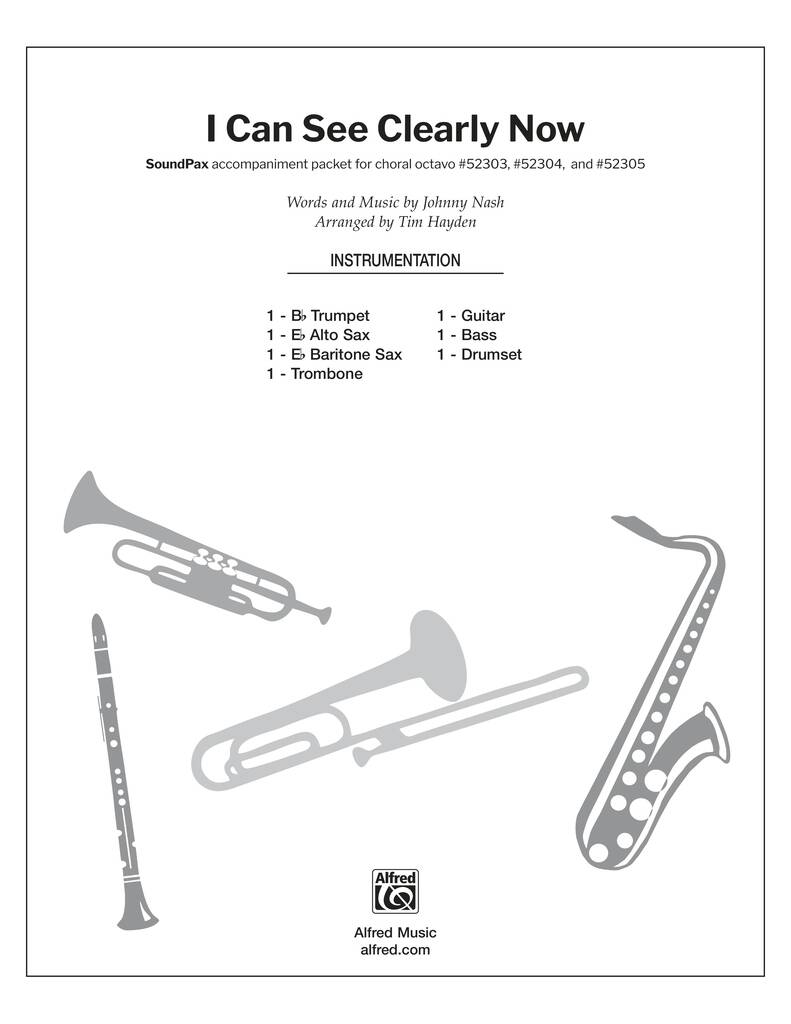
I Can See Clearly Now - Johnny Nash
Welcome a "bright, sun-shiny day" with this fresh take on the chart-topping classic. This arrangement leaps to life with a funky groove that maintains its momentum from start to finish. Fun interplay between voices and some bluesy responses are a blast to sing and lead to a full-throttle celebration of "blue skies" ahead. This pop staple is a surefire way to deliver positivity on any program. Raise the roof with optional SoundPax parts for horns and rhythm section!
Estimated dispatch 7-14 working days
-
 £103.20
Eternal Harmony - Kevin Houben
In memory of Ralph Lenssen - dedicated to the Royal Wind Orchestra St. Philomena Chevremont on the occasion of its 125th anniversaryEternal Harmony is a restrained yet powerful tribute in which memory, connection, and musical tradition come together. The work was composed in memory of Ralph Lenssen and dedicated to the Royal Wind Orchestra St. Philomena Chevremont, which celebrates an impressive musical legacy with this anniversary.At the heart of the composition lies an intensely lyrical melody that runs like a guiding thread throughout the piece. This musical core is continuously illuminated, deepened, and transformed, giving rise to a rich and layered sound world.Throughout the work, an expressive journey unfolds, filled with subtle and enchanting turns. The wind orchestra is used in all its facets: from intimate, transparent passages to full, sustained soundscapes. This interplay creates a spectrum of contrasts in which musicality, balance, and tone color take center stage.Warm harmonies and organically flowing chord progressions contribute to an atmosphere of serenity and reflection. At the same time, the music builds toward moments of intensity and emotional depth, in which the orchestra reveals its full sonic richness.Eternal Harmony is thus more than a composition: it is a musical remembrance, a quiet dialogue between past and present, and a tribute to both a cherished individual and an orchestra that has embodied music and community for 125 years.
Estimated dispatch 7-14 working days
-
 £159.20
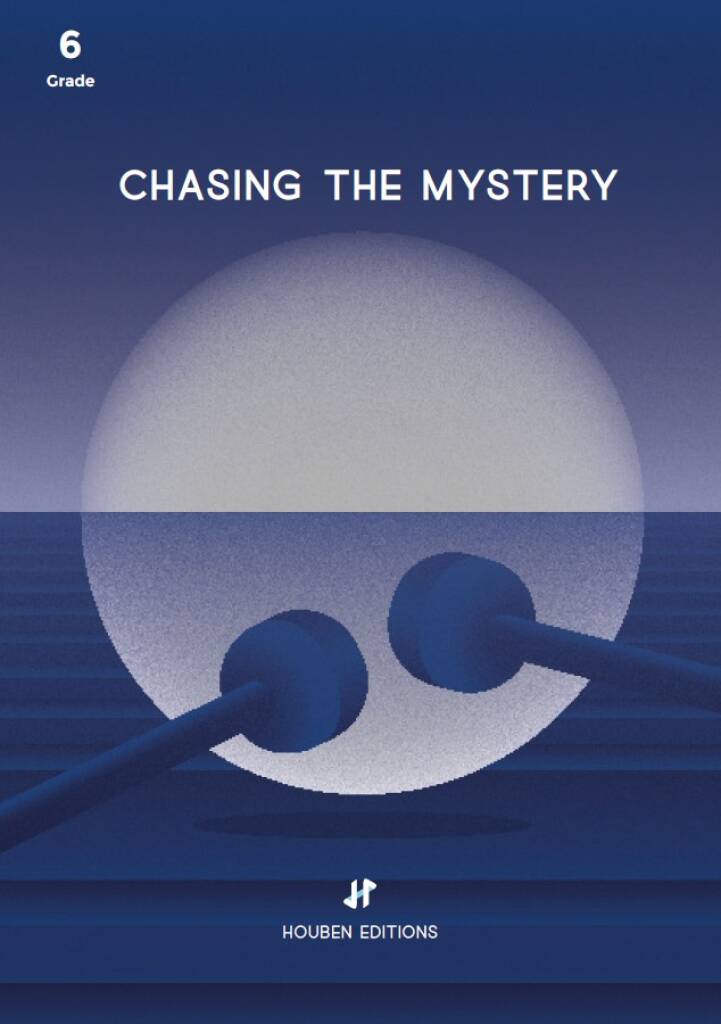
Chasing the Mystery - Kevin Houben
Commissioned by KU Leuven on the occasion of the 600th anniversary of KU Leuven.Chasing the MysteryKevin HoubenDedicated to the Wind Orchestra Universitair Harmonieorkest (UHO) of KU Leuven.Chasing the Mystery is the final movement of the triptych Beyond the Horizon of Thought.On the occasion of KU Leuven's 600th anniversary in 2025, the university commissioned Kevin Houben to compose a new work tailored to the Universitair Symfonisch Orkest, the Universitair Harmonieorkest and the Leuvens Universitair Koor. Maud Vanhauwaert, writer-in-residence during the 2023-2024 academic year, provided a poetic libretto.With Beyond the Horizon of Thought, Kevin Houben created not only a unique anniversary composition for more than 250 student musicians. The composition also conveys a universal message that perfectly reflects the spirit of the celebrating university: keep searching, keep developing yourself and keep hoping - even in turbulent times.From a compositional perspective, the work is built around themes and motifs with a clear symbolism. Kevin Houben explains: "I use a technique in which letters are converted into musical notes - a method also used by great masters such as Bach, Bartk and Shostakovich. This musical signature forms the basis of the melodic structure. In this way, 'KUL600' is represented by the notes D - G - E - F (re - sol - mi - fa)."The composition is conceived as a triptych: three movements that flow seamlessly into one another and are performed by different orchestral formations, yet together form a single whole. The work opens with the symphony orchestra, where the thematic 'KUL600' cells are introduced and explored. In this movement, Awakening the Wonder, several highlights establish a musical connection with the following movements.In the second movement, The Urge of Search, the choir sings a cappella to the poem Het is het by Maud Vanhauwaert, in which she reflects on the tireless quest for knowledge that has characterized the university for 600 years. Classical Gregorian techniques and traditional voice leading enter into dialogue with contemporary techniques, as the singers alternately whisper, call out and proclaim.Finally, the wind orchestra introduces the third movement, Chasing the Mystery. With a searching and anticipatory character, the orchestra presents the thematic cells in soloistic fashion, based on the main melody of the choral movement. References once again appear to the rhythmic 'KUL600' cells, which ultimately culminate in a grand apotheosis. A solitary soprano saxophone opens the finale with the 'KUL600' theme in its most intimate and meditative form. The expanded choir then joins the orchestra for an impressive final chord, musically preparing KU Leuven for the next 600 years.Beyond the Horizon of Thought premiered on Wednesday 23 and Thursday 24 April 2025 at LUCA Campus Lemmens, and was also performed on 9 May 2025 at Concertgebouw Brugge on the occasion of the 600th anniversary of KU Leuven. More than 250 musicians from the Universitair Symfonisch Orkest (USO) conducted by Edmond Saveniers, the Leuvens Universitair Koor (LUK) conducted by Kevin Hendrickx, and the Universitair Harmonieorkest (UHO) conducted by Erwin Scheltjens shared the stage.Cover illustration design: Grotezk Studio.
Estimated dispatch 7-14 working days
-
 £60.99
Hip, Hip, Jorge! - Jorge L. Vargas
This percussion leads the party in this sensational Latin work with a catchy title and even catchier melody that will keep your kids practicing and your audience dancing. Based on the son clave rhythm, this work is full of syncopations and salsa rhythms and covers a wide variety of dynamics and articulations. All sections enjoy amazing parts. A must-have in every library!
Estimated dispatch 7-14 working days
-
 £65.99
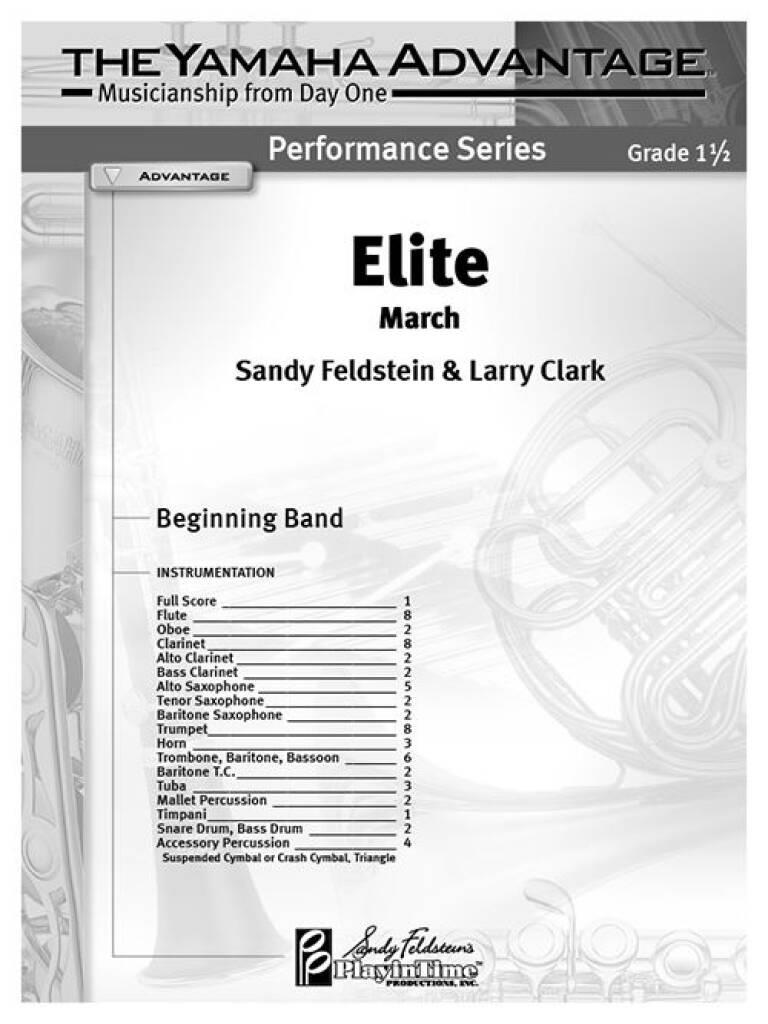
Elite - Sandy Feldstein
This traditional-style March is perfect for introducing this pivotal and historically important style to your Band. The form of this composition includes the traditional modulation to the subdominant at the Trio.
Estimated dispatch 7-14 working days
-
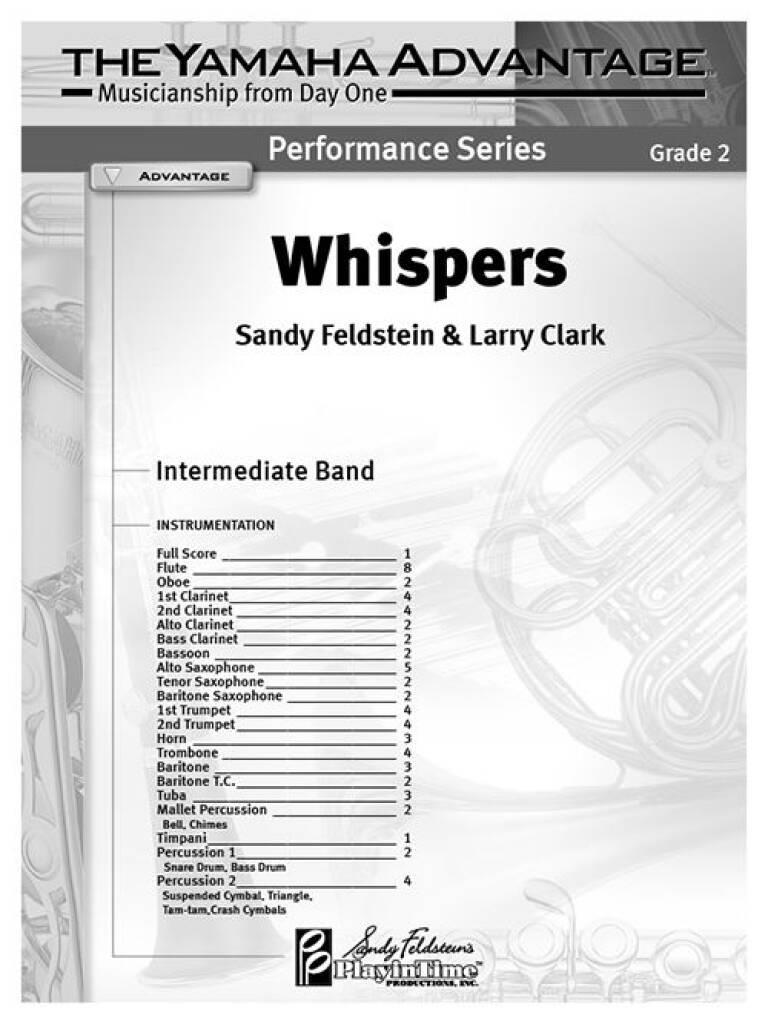 £71.50
Whispers - Sandy Feldstein
This stunning lyrical composition is the perfect vehicle to teach musicianship, elegant phrasing, balance, blend and beauty of tone. Anyone who hears this piece will be captivated by its sweeping melodies and cinematic character. This surprisingly accessible grade 2 work makes an impressive-sounding addition to a winter concert.
Estimated dispatch 7-14 working days
 View Music