
Results
-
 £112.50
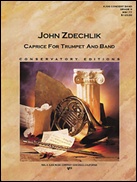
CAPRICE FOR TRUMPET AND BAND (Concert Band) - Zdechlik, John
Caprice for Trumpet and Band was written in 1994. It was commissioned by Robert E Foster, Conductor of the University of Kansas Symphonic Band. The premier performance was presented on March, 9 1995 in Lawrence, Kansas at the 61st annual conference of the American Bandmasters Association. The soloist was William Campbell, Professor of Trumpet at The University of Kansas. It was the intent of Robert Foster and the composer to produce a work which was challenging for a professional trumpet player yet also playable by an outstanding college student. The piece consist of two contrasting themes in the allegro section followed by a lyrical middle section. Then the first two themes return in altered fashion.Duration: 7:30 American Grade 5
Estimated dispatch 7-14 working days
-
 £118.99
Davy Crockett (Concert Band - Score and Parts)
In writing this piece, Gino Bergamini was inspired by the figure of Davy Crockett, hunter and pioneer in the colonisation of the western part of North America. The piece is built entirely on the smooth succession of intriguing themes and characterised by sharp rhythms. The themes, after a short elaboration with an expressive and meaningful style, return in a finale with rich sonority to recreate the fascinating atmosphere of that mythical hero Davy Crockett. 06:00
Estimated dispatch 7-14 working days
-
£135.95
FANTASIE BRILLANTE (Trumpet Solo with Intermediate Concert Band) - Hunsberger, Donald
Scored for trumpet soloist Wynton Marsalis, Donald Hunsberger's band accompaniment arrangement of Fantasie Brillante No. 3 in Jean-Baptiste Arban's collection of Fantasias and Variations possesses a breadth of musical styles that demand strict formal analysis in addition to interpretative and technical requirements. The opening section features a flowing melodic passage followed by a technical passage with a return to the style of the opening melody. The theme is then stated which leads into three variations that employ variants in triplet groupings, quadruple 16th-note groupings, and finally, the ever-present triple tonguing, once again a primary technical resource utilized in this and others of the Fantasias.
Estimated dispatch 7-14 working days
-
 £214.95
JOURNEY THROUGH A JAPANESE LANDSCAPE (Percussion Solo with Concert Band - Score and Parts) - Musgrave, Thea
Concerto for Solo Marimba and Wind Orchestra. The four movements of Journey through a Japanese Landscape are based on a series of haiku which represents an emotional journey through the four seasons. The three haiku chosen for each of the seasons provide a setting and an event; thus, the gently undulating spring sea is the background for the free, improvisatory character of the skylark. The summer grasses have buried the glorious dreams of ancient warriors and after a violent storm, a distant memory of a march is heard. An autumnal fog envelops a colossal Buddha and a lonely watcher sounds one gong after another while a cricket acts as a grave keeper. Glass wind chimes introduce the frozen winter landscape. The march returns, then sleet and snow build to a big storm. Out of the silence that follows, echoes of the first movement suggest the return of spring and so, rebirth. (Grade 4) Duration: 23:00
Estimated dispatch 7-14 working days
-
£49.95
JOURNEY THROUGH A JAPANESE LANDSCAPE (Percussion Solo with Concert Band - Score only) - Musgrave, Thea
Concerto for Solo Marimba and Wind Orchestra. The four movements of Journey through a Japanese Landscape are based on a series of haiku which represents an emotional journey through the four seasons. The three haiku chosen for each of the seasons provide a setting and an event; thus, the gently undulating spring sea is the background for the free, improvisatory character of the skylark. The summer grasses have buried the glorious dreams of ancient warriors and after a violent storm, a distant memory of a march is heard. An autumnal fog envelops a colossal Buddha and a lonely watcher sounds one gong after another while a cricket acts as a grave keeper. Glass wind chimes introduce the frozen winter landscape. The march returns, then sleet and snow build to a big storm. Out of the silence that follows, echoes of the first movement suggest the return of spring and so, rebirth. (Grade 4) Duration: 23:00
Estimated dispatch 7-14 working days
-
£144.99
Jungle (Concert Band - Score and Parts)
In this fascinating piece we experience an exciting adventure in the jungle. The entrance into the "green hell" turns out to be very dangerous with wild monkeys and the roaring of elephants accompanying our way through the dark forest. There seems to be something lurking behind every tree and all of a sudden, a horde of savage cannibals appears. A wild hunt sets off and we escape at the last second by jumping from a cliff into the savage water below. Exotic birds welcome us in a new landscape and from somewhere in the distance we can hear a bamboo flute playing. This is a journey of no return.... The effects (elephants, wild monkeys, exotic birds and rain) should be produced with much creativity - individual ideas are always desirable and welcome. 08:00
Estimated dispatch 7-14 working days
-
 £184.95
PARTITA for Concert Band (Darrol Barry) (Prestige Concert Band - Score and Parts) - Barry, Darrol
This work is cast in four movements: Introit; Impromptu; Elegy (31.12.04); Finale. Grade 5. (Recorded on QPRM150D, CHIVALRY, Royal Northern College of Music Wind Orchestra) PARTITA FOR CONCERT BAND is cast in four movements: Introit - begins majestically with brass, saxes and percussion carrying the main theme from which most of the following ideas originate. It is repeated by the woodwinds and moves via a solo side drum into the piu mosso. New ideas are introduced by trombones, the horns and euphoniums leading to the central idea played by oboe. This leads, in turn, via full band to the closing movement. 2. Impromptu -once again the opening theme is the basis of the whole movement, using most of the composer's tricks, augmentation, retrograde, inversion and fugato, it moves along in a very confident style. A muted solo trumpet links into the third movement. Elegy (26/12/04) - this movement was prompted by the devastating events of Boxing Day 2004, the Asian Tsunami. The movement opens bleakly until a solo flute gives us the main theme over a troubled accompaniment. The opening mood returns but timpani and tam-tam herald return of the main theme for the full band. The opening theme is heard again as the music subsides but never settles. Finale - this spirited 6/8 vivo opens up with percussion and horns and trumpets announce the main idea, punctuated with short chords from the lower band. A new four bar theme is heard over a bass tread, the theme overlaps itself and quavers swirl up and down the band. Material from the first movement is heard transformed by the energy of the finale and the music surges towards a sudden close. Performance time: 15:35
Estimated dispatch 7-14 working days
-
£44.95
PARTITA for Concert Band (Darrol Barry) (Prestige Concert Band - Score only) - Barry, Darrol
This work is cast in four movements: Introit; Impromptu; Elegy (31.12.04); Finale. Grade 5. (Recorded on QPRM150D, CHIVALRY, Royal Northern College of Music Wind Orchestra) PARTITA FOR CONCERT BAND is cast in four movements: Introit - begins majestically with brass, saxes and percussion carrying the main theme from which most of the following ideas originate. It is repeated by the woodwinds and moves via a solo side drum into the piu mosso. New ideas are introduced by trombones, the horns and euphoniums leading to the central idea played by oboe. This leads, in turn, via full band to the closing movement. 2. Impromptu -once again the opening theme is the basis of the whole movement, using most of the composer's tricks, augmentation, retrograde, inversion and fugato, it moves along in a very confident style. A muted solo trumpet links into the third movement. Elegy (26/12/04) - this movement was prompted by the devastating events of Boxing Day 2004, the Asian Tsunami. The movement opens bleakly until a solo flute gives us the main theme over a troubled accompaniment. The opening mood returns but timpani and tam-tam herald return of the main theme for the full band. The opening theme is heard again as the music subsides but never settles. Finale - this spirited 6/8 vivo opens up with percussion and horns and trumpets announce the main idea, punctuated with short chords from the lower band. A new four bar theme is heard over a bass tread, the theme overlaps itself and quavers swirl up and down the band. Material from the first movement is heard transformed by the energy of the finale and the music surges towards a sudden close. Performance time: 15:35
Estimated dispatch 7-14 working days
-
 £99.95
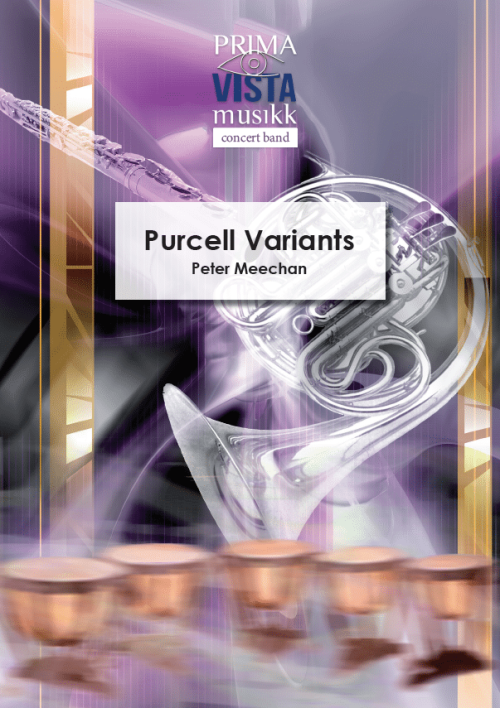
Purcell Variants (Concert Band - Score and Parts) - Meechan, Peter
Purcell Variants is based on Purcell's Queen Mary's Funeral Music, which consists of four canzonas, two elegies and an anthem.The first movement begins by sounding some of Purcell's original music in the trombones and horns, underpinned by a timpani roll with the woodwind articulating the beginnings and endings of the phrases. This leads into a cadenza for trumpet and alto saxophone before the movement heads in different directions, leading us to its mysterious end, where the original music is sounded this time in the 'stabs' of the clarinets and alto saxophone.Originally composed for the funeral of Queen Mary in 1695, Purcell's original funeral music was used later that same year for Purcell's own funeral - he died aged only 34. The second movement is an elegy, inspired by this story. After an introduction (a disjointed last post), the main melody of the movement is introduced by the solo euphonium, with other solo roles for flute, oboe and alto saxophone. This is then taken over by the trumpets who lead us into the middle section of the movement. This is a quasi funeral march, inspired by the image of Purcell's coffin being taken to its final resting point. The main melody returns in the flute, oboe and alto saxophone, this time more elaborated. The movement ends with a snare drum fading away - perhaps a metaphor.The Finale is a fast and furious movement combining thematic material from the two previous movements with new rhythmical ideas. This takes us through to the final passage - the triumphant return of Purcell's original theme.Duration: 13.00
Estimated dispatch 7-14 working days
-
£144.99
Ross Roy (Concert Band - Score and Parts) - De Haan, Jacob
Jacob de Haan was commissioned to compose this concert piece by the "St. Peters Wind Symphony" from Brisbane, Australia. "Ross Roy" is the monumental late 19th century villa where St. Peters Lutheran College was founded in 1945. The villa has always remained the school symbol. In this composition, Jacob de Haan sees the "Ross Roy" as a metaphor for the years spent at school (a monument in time), where one's personality is formed. So, the opening theme the artist calls the Ross Roy theme initially has monumental characteristics.The rhythmic motion, which strides along in the lower register and percussion at the beginning of the next section is typical of "Tempo di Marcia". This movement, accompanied by repetitions of sound, is a metaphor for the structure and discipline in school. This is the introduction to a march theme, symbolic of "passing through" the classes up to the final examinations.Then, the Ross Roy theme is dealt with again, now in a playful, humorous variation. As if the composer is saying there should also be time for a smile in school. The same theme can be heard in major key and a slower tempo in the following section, expressing pride and self-confidence. This is also the introduction to the expressive middle section that represents love, friendship and understanding.We then return to the march theme in a slightly altered construction. The oriental sounds, constituting the modulation to the final theme, are symbols of the diversity of cultures in the school. The characteristic final theme first sounds solemn, but turns into a festive apotheosis. It is no coincidence that the final cadence is reminiscent of the close to a traditional overture, for the school years can be considered the "overture" to the rest of one's life. The premiere of "Ross Roy" was conducted by Jacob de Haan in Brisbane, on August 22, 1997.Duration: 9:20
Estimated dispatch 7-14 working days
 View Music