
Results
-
 £72.99
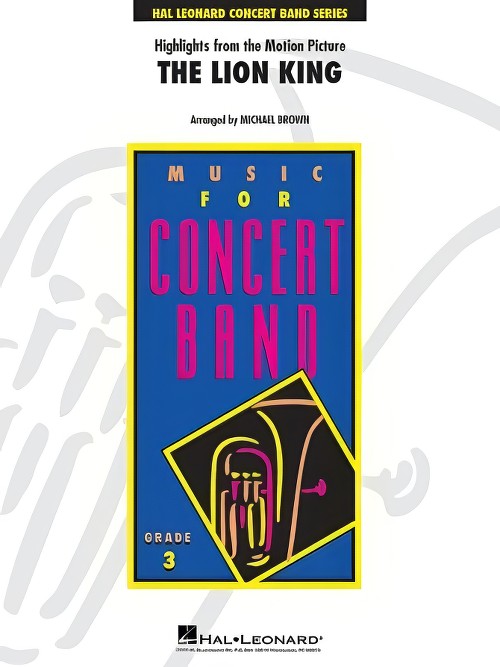
The Lion King, Highlights from (Concert Band - Score and Parts) - Brown, Michael
The Lion King saga continues with the 2019 live-action movie that features stunning visuals, and of course the familiar musical numbers. This medley includes Never Too Late, which was composed for the new film, along with the favorites I Just Can't Wait to Be King, Hakuna Matata, Can You Feel the Love Tonight, and Circle of Life.
Estimated dispatch 7-14 working days
-
 £119.99
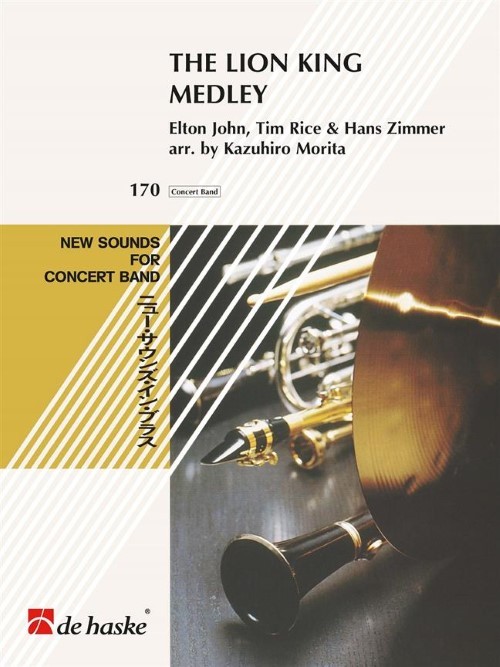
The Lion King Medley (Concert Band - Score and Parts) - Morita, Kazuhiro
This medley from The Lion King includes: Circle of Life; I Just Can't Wait to be King; Can You Feel the Love Tonight; King of Pride Rock.Duration: 9.00
Estimated dispatch 7-14 working days
-
 £77.00
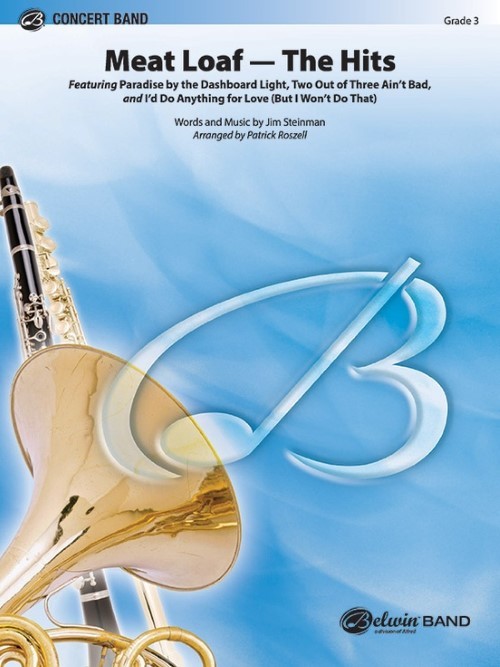
Meat Loaf - The Hits (Concert Band - Score and Parts) - Steinman, Jim - Roszell, Patrick
He's big and over the top in his music and his performances. Three memorable hits written by Meat Loaf's longstanding songwriter Jim Steinman including, "Paradise by the Dashboard Light," "Two Out of Three Ain't Bad," and "I'd Do Anything For Love But I Won't Do That," compose this feel-good medley. Like his performances, go big and over the top, but be sure to have fun!Duration: 6:00
Estimated dispatch 7-14 working days
-
 £74.00
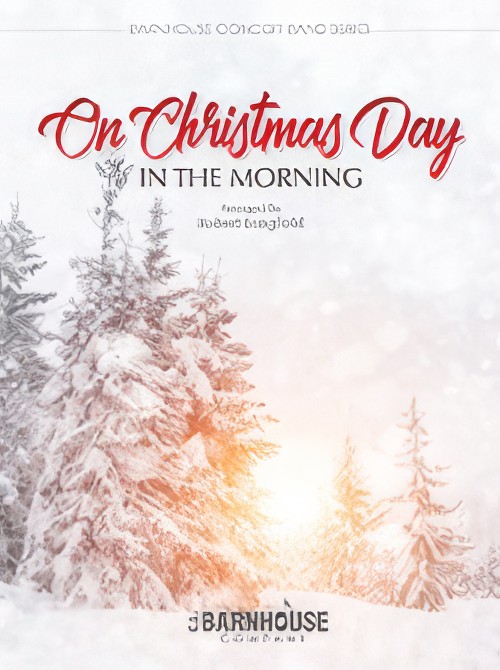
On Christmas Day (In the Morning) (Concert Band - Score and Parts) - Longfield, Robert
On Christmas Day is an exciting Christmas work from the pen of Robert Longfield. "On Christmas Day" features two classic traditional English Christmas carols which are cleverly woven together. "I Saw Three Ships" is subjected to several variations before it serves as counterpoint to "The First Noel." Delight the members of the audience and the band with this fresh holiday selection! Duration: 3.30
Estimated dispatch 7-14 working days
-
 £49.95
To Cross the Sleeping Green (Concert Band - Score and Parts) - Gassi, Vince
Inspired by Isaac Rosenberg's poem "Break of Day in the Trenches," this poignant and patriotic work was written to commemorate the 100th anniversary of the end of World War I.
Estimated dispatch 7-14 working days
-
 £75.00
I Will Sing with the Spirit (Concert Band with Optional Choir - Score and Parts) - Rutter, John - Noble, Paul
This well-known piece by John Rutter is set in a subtle Latin mode, to which the arranger has enhanced by adding castanets, maracas, claves, and congas. The arrangement is written for combined band and chorus, but may be performed by band alone, featuring a variety of instruments carrying the melody and its harmonies. It is written one-half step (one semi-tone) lower than the original presentation to better accommodate band instruments.
Estimated dispatch 7-14 working days
-
 £60.99
The Banks of Green Willow (Concert Band - Score and Parts) - Butterworth, George - Longfield, Robert
Written by British composer George Butterworth in 1913, this classic work is based on two folk songs - The Banks of Green Willow and Green Bushes (the latter also appearing in works by Grainger and Vaughan Williams). Butterworth died in World War I at the age of 31, and this composition remains his most popular, regarded as an anthem for Unknown Soldiers. Here is a masterful setting for winds adapted by Robert Longfield.Duration: 3:50
Estimated dispatch 7-14 working days
-
 £85.00
The Armed Man (L'Homme Arme) (Movement I from The Armed Man: A Mass for Peace) (Concert Band - Score and Parts) - Jenkins, Karl - Longfield, Robert
Welsh composer Karl Jenkins dedicated his landmark mass The Armed Man to the victims of the 1998-1999 war in Kosovo. More recently it is been associated with remembrances of 9/11. The French Renaissance song L'homme arme serves as the basis for the first movement of the mass, beautifully adapted here for standard concert band instrumentation. With its relentless pulse and haunting strains, this is a dramatically emotional and riveting work!Duration: 6:00
Estimated dispatch 7-14 working days
-
 £72.99
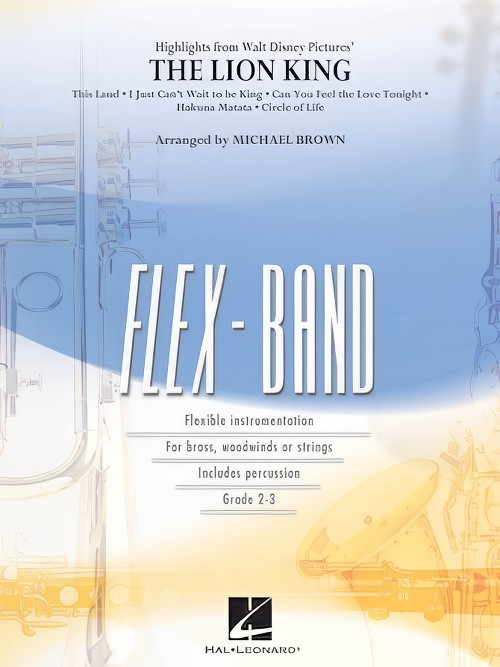
The Lion King, Highlights from (Flexible Ensemble - Score and Parts) - Brown, Michael
Originally released as an animated film in 1994, then adapted as a stunning musical for Broadway in 1997, The Lion King remains one of the most powerful and beloved productions to come out of the Disney studios. Scored for flexible instrumentation this medley includes: This Land, I Just Can't Wait to Be King, Hakuna Matata, Can You Feel the Love Tonight? and Circle of Life.
Estimated dispatch 7-14 working days
-
 £195.00
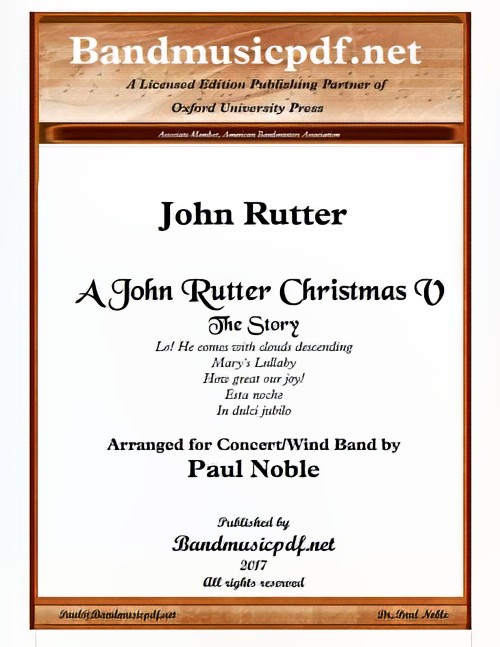
A John Rutter Christmas V - The Story (Concert Band - Score and Parts) - Rutter, John - Noble, Paul
After arranging a number of John Rutter's magnificent compositions for Concert/Wind Band, he invited me to create a medley of his most popular Christmas carols for band. I am pleased to present A John Rutter Christmas to the world of band music, with the hope that conductors, players, and audiences alike will enjoy this outstanding music. Somehow, John Rutter's carols shout Christmas without a word being spoken! - Paul Noble
Estimated dispatch 7-14 working days
 View Music