
Results
-
£179.99
Amazonia - Jan Van der Roost
This major concert work cosists o five movements.1st movement: La Laguna del ShimbeSituated high up in the Andes mountains in Northern Peru are the Huaringas, a group of lagoons in isolated and mysterious surroundings. The water has healing powersand for centuries traditional healers have settled there in small villages. From far the sick come to the Huaringas to be treated in nightly rituals, in which the hallucinating juice of the San Pedro cactus gives the prophet a look inside hispatient. The biggest lagoon is the "Laguna del Shimbe", one of the countless wells of the immense Amazon stream.2nd movement: Los AguarunasFurther downstream in Northern Peru we come across the rain tribe of Los Aguarunas. It's a proud, beautiful andindependent race, which has never succumbed to domination, not even from the Incas. They live from everything the forest has to offer: fish, fruit, plants, ... . They also grow some crops and live as semi-nomads. They take their fate into their ownhands and after having made contact with modern civilisation, they have integrated new elements into their lives without betraying their own ways.3rd movement: MekaronMekaron is an Indian word meaning "picture", "soul", "essence". The Indians are theorigina inhabitants of the Amazon region. They either live in one place as a group or move around a large region. They all have their own political system, their own language and an intense social life. At the same time they are master of music andmedicine. "Everywhere the white man goes, he leaves a wilderness behind him", wrote the North American Indian leader Seatl in 1885. As a result of these contacts with the whites, the disruption of most Indian societies began. (In this century alone,80 tribes have vanished completely).4th movement: KtuajThis is the name of the initiating ceremony of the Krah tribe in the Brazilian state of Goias, in which young boys and girls enter adult life. They are cleansed with water, painted with redpaint and covered with feathers, after which the ritual dance holds the entire tribe spell-bound.5th movement: Paulino FaiakanIn 1988 the Indian chiefs Faiakan and Raoni Kaiapo came to Europe to protest against the building of the Altamira dam inBrazil. As a result of the dam the Indians would be driven from their traditional land and enormous artificial would be created. The project was supported financially by, amongst others, the European Community. In February 1989 the Indian tribesaround Altamira held a protest march for the first time in their history together. Amongst other things they paid tribute tot Chico Mendez, who, murdered in 1988, was the leader of the rubber syndicate and a fierce opponent of the destruction of theBrazilian rain forest. Brazilian and world opinion was awakened. The building of the dam was -albeit temporarily - stopped.
Estimated dispatch 7-14 working days
-
 £72.99
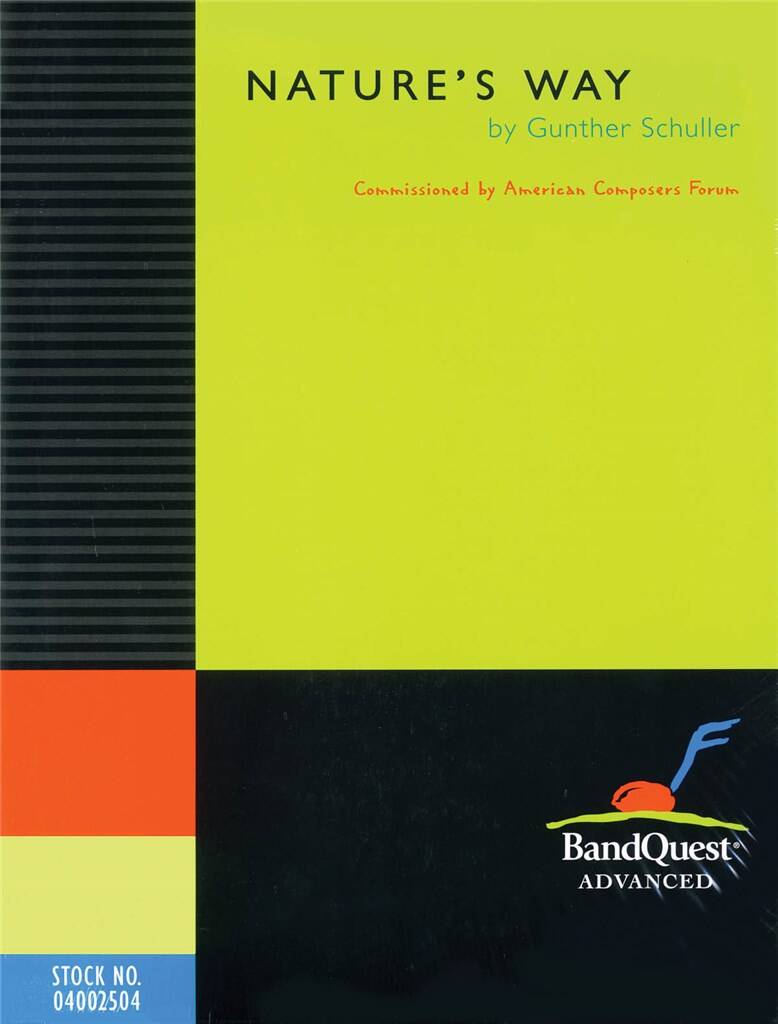
Nature's Way - Gunther Schuller
From the composer: Nature's Way for intermediate level band was commissioned by BandQuest, a project initiated by the American Composers Forum. Their mission is for major composers of national reputation to write works of high quality that take into consideration the (still comparatively limited) levels of musical development--both technical and conceptual--typical of such ensembles. I eagerly accepted the commission and the challenges implied thereby--that is, to reign in my creative imagination to some extent and limit the technical/conceptual demands to a more moderate level than is to be found in my previous compositions for band. Nonetheless, since the process of rehearsing, studying and performing a work created specifically for the school student market is--and must be, in my view--primarily educational, it was very clear to me that my work would (and should) challenge the players at least to their top levels, and even a little beyond that. Thus Nature's Way in no way represents a compromise of my personal style, nor my long held concepts of form, continuity, texture, and instrumentation. I have known for a long time that young, inquisitive minds are eager to learn from new experiences, from previously never encountered challenges, that is to say, to be pushed--gently--to rise above their present levels of achievement. That's what education is all about. BandQuest, an exciting series of new music and accompanying curricula for band, is a program published by the American Composers Forum. The series was started as a response to feedback from music educators that there is a pressing need for new, fresh band music. The heart of this program is new works written by a diverse group of leading American composers who have created challenging pieces that are a true departure from standard middle school repertoire. Every BandQuest project includes a residency component in which the composer works collaboratively with a middle school as they create their new piece. Many BandQuest pieces are accompanied by an interdisciplinary curriculum designed to assist students as they learn the music and to integrate each piece with non-music studies. Visit www.bandquest.org to learn more about this innovative series, and email [email protected] to request a free downloadable audio catalog.
Estimated dispatch 7-14 working days
-
 £33.50
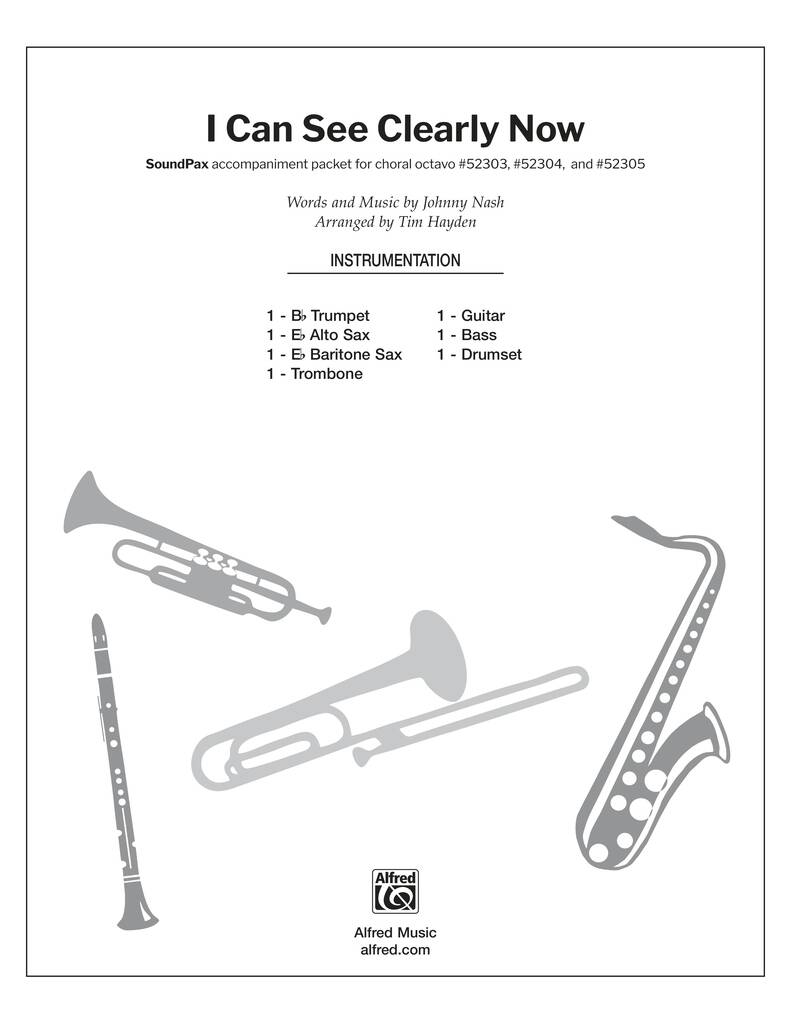
I Can See Clearly Now - Johnny Nash
Welcome a "bright, sun-shiny day" with this fresh take on the chart-topping classic. This arrangement leaps to life with a funky groove that maintains its momentum from start to finish. Fun interplay between voices and some bluesy responses are a blast to sing and lead to a full-throttle celebration of "blue skies" ahead. This pop staple is a surefire way to deliver positivity on any program. Raise the roof with optional SoundPax parts for horns and rhythm section!
Estimated dispatch 7-14 working days
-
 £62.95
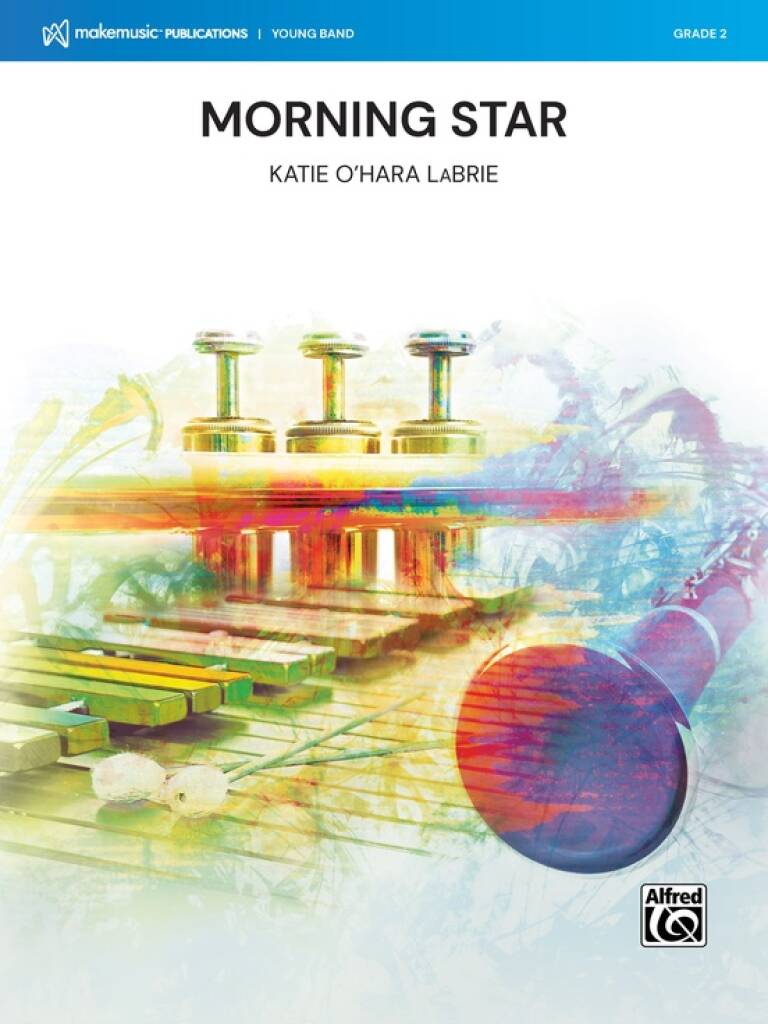
Morning Star - Katie O'Hara LaBrie
This musical reflection reminds listeners to take a brief pause each day to appreciate the beauty that surrounds us. Morning Star by Katie O'Hara LaBrie showcases flowing melodies gracefully passed between sections while rich harmonies provide a warm foundation. Ample percussion is included, providing a sparkle that is sure to let the stars shine. (2:00)
Estimated dispatch 7-14 working days
-
 £118.99
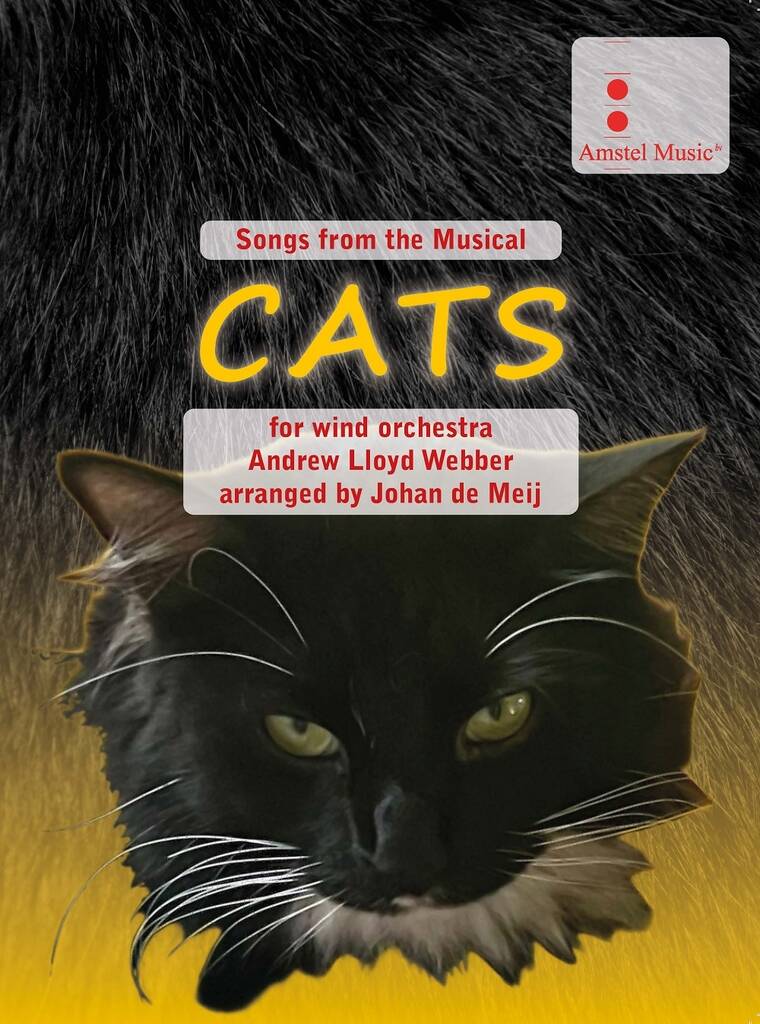
Cats - Andrew Lloyd Webber
The Musical CATS, with music by Andrew Lloyd Webber is based on the 1939 poetry collection Old Possum's Book of Practical Cats by T. S. Eliot. It became Lloyd Webber's third great success, after the musicals Jesus Christ Superstar and Evita. He began setting Eliot's poems to music in 1977, and the compositions were first presented as a song cycle in 1980. Producer Cameron Mackintosh then recruited director Trevor Nunn and choreographer Gillian Lynne to turn the songs into a complete musical. CATS became one of the longest-running shows in West End and Broadway history. It received its world premiere at the New London Theatre in 1981, where it played for 21 record-breaking years and almost 9,000 performances. The following year, CATS opened at New York's Winter Garden Theatre, its home for the next 18 years, garnering seven 1983 Tony Awards, including Best Musical. The show returned to Broadway in 2016, where it had a successful pre-tour run at the Neil Simon Theatre. CATS has been presented in over 30 countries, translated into 16 languages, and seen by more than 73 million people worldwide. Lloyd Webber's magnificent musical score includes the poignant hit song Memory, which has been recorded by over 150 artists, from Barbra Streisand to Liberace to Barry Manilow. It took 7,486 chandelier crashes for Lloyd Webber's The Phantom of the Opera to take over from CATS as the longest-running show in Broadway history in January 2006.
Estimated dispatch 7-14 working days
-
 £50.50
Piata! - William Owens
This spirited, Latin-flavored piece captures all the excitement of a lively party with a colorfully decorated Piata as its centerpiece. Despite using limited ranges and rhythms, William Owens has written melodies and rhythms that are incredibly engaging, capturing the spirit of children as they seek to capture the prizes within! Challenge your motivated percussionists with the advanced part, or take advantage of the more accessible one. Either way, it sounds great!
Estimated dispatch 7-14 working days
-
 £110.99
Hymn at Twilight - Philip Sparke
Although specifically describing the uncertainty of approaching night and an evening prayer, Hymn at Twilight is actually about the human emotions of doubt, insecurity, hope and resolve. This solemn piece opens quietly and introduces a recurring four-note rising figure. Optimism, anxiety and resignation alternate, with the flute taking centre stage. Brass and woodwind take up the chorale. The piece ends in a mood of sanguine optimism.
Estimated dispatch 7-14 working days
-
 £119.60
In Flanders Fields - Guillaume Détrez
"In Flanders Fields" is a play recounting the Battle of Vimy Ridge (France) which took place from April 9 to 12, 1917. The introduction refers to the thousands of graves found at the site of Notre-Dame de Lorette. Then begins the episode of preparation and fierce battle. Thanks to the Canadian Expeditionary Force that came as reinforcements, the battle was won and the site secured at 6 a.m. (brass choir accompanied by 6 bells). The title of this work also refers to a poem by John Mac Rae located at the entrance to the memorial museum."In Flanders Fields"By Col. John McCrae,In Flanders Fields The poppies blowBetween the crosses row on rowThat mark our place; and in the skyThe larks, still bravely singing, flyScarce heard amid the guns below.We are the dead, short days agoWe lived, felt dawn, saw sunset glow,Loved and were loved and now we lieIn Flanders Fields.Take up our quarrel with the foeTo you, from failing hands, we throwThe torch, be yours to hold it high.If ye break faith with us, who dieWe shall not sleep, though poppies growIn Flanders Fields
Estimated dispatch 7-14 working days
-
 £134.99
Medelpadia - Jan Van der Roost
In this varied suite, named after the Swedish region Medelpad, folk dances in a Swedish fashion take stage in diverse tempi, styles and atmospheres. For Medelpadia, Van der Roost used a combination of an existing theme and newly composed music with a folk-like feel. Fascinating folk music in a well-composed framework!
Estimated dispatch 7-14 working days
-
 £52.95
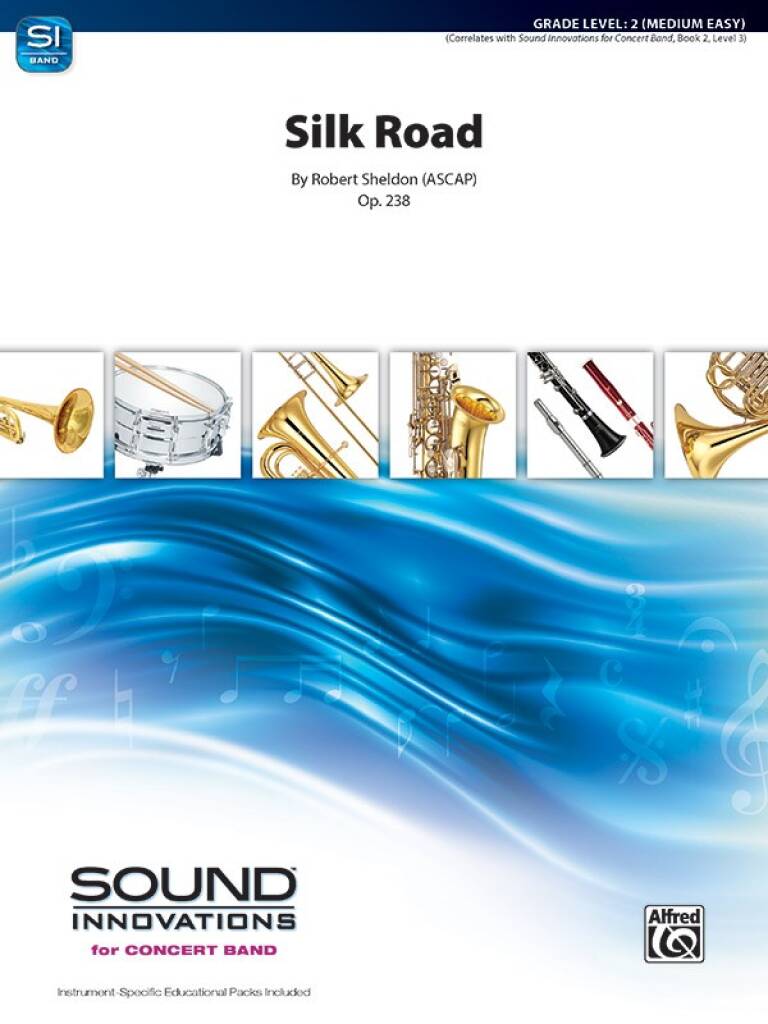
Silk Road - Robert Sheldon
Take a journey on the Silk Road, the ancient trade route that linked the Far East with the Western world in this imaginative piece by Robert Sheldon. Exotic harmonies combine with driving rhythms and colorful percussion to create a soundscape of shifting sands and faraway lands. A solo alto saxophone references the sound of a Turkish sorna to open the piece, leading to the persistent rhythm and modal melodies. Finger cymbals, shakers, and hand drums help to represent the culture of this remote part of the world. (2:19) Correlated to Sound Innovations, Book 2, Level 3.
Estimated dispatch 7-14 working days
 View Music