
Results
-
 £84.99
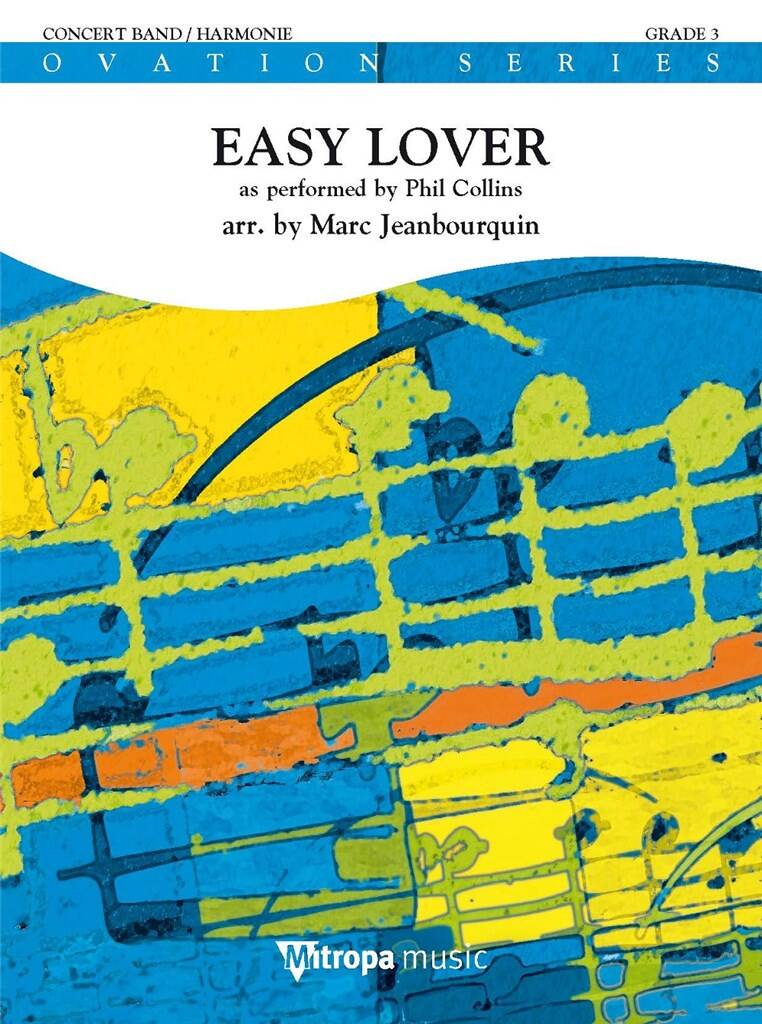
Easy Lover
This song, performed by Phil Collins and Philip Bailey, was a smash hit in most of Europe and North America. The peculiar video - a video making a video of making a video stood out from the crowd and helped elevate the song to a No. 1 and all-time hit. Collins' legendary songwriting talent and longstanding career in the music industry has made him a name known by all generations. An ideal song for any concert!
Estimated dispatch 7-14 working days
-
 £60.99
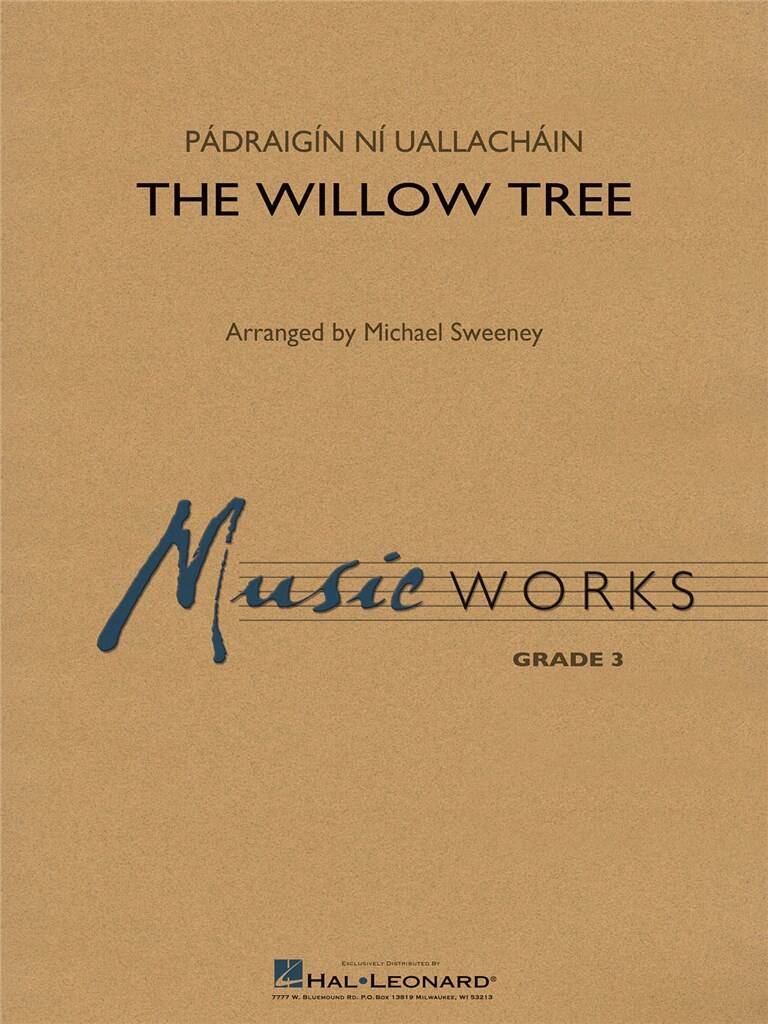
The Willow Tree - Pádraigín Ní Uallacháin
Although this haunting tune has the flavor and sentiment of a traditional Irish folk song, it was composed in 1995 by multifaceted artist Pdraign N Uallachin. Her inspiration for the song was the idea that when we are happy or sad, the elements and the natural world are aligned with our feelings. From the wistful lyrics of the song; Down by the river there's a tall willow tree, who weeps all night for you and me. This evocative setting for band follows this sentiment through peaks and valleys of sound and emotion. Dur: 3:10
Estimated dispatch 7-14 working days
-
 £71.50
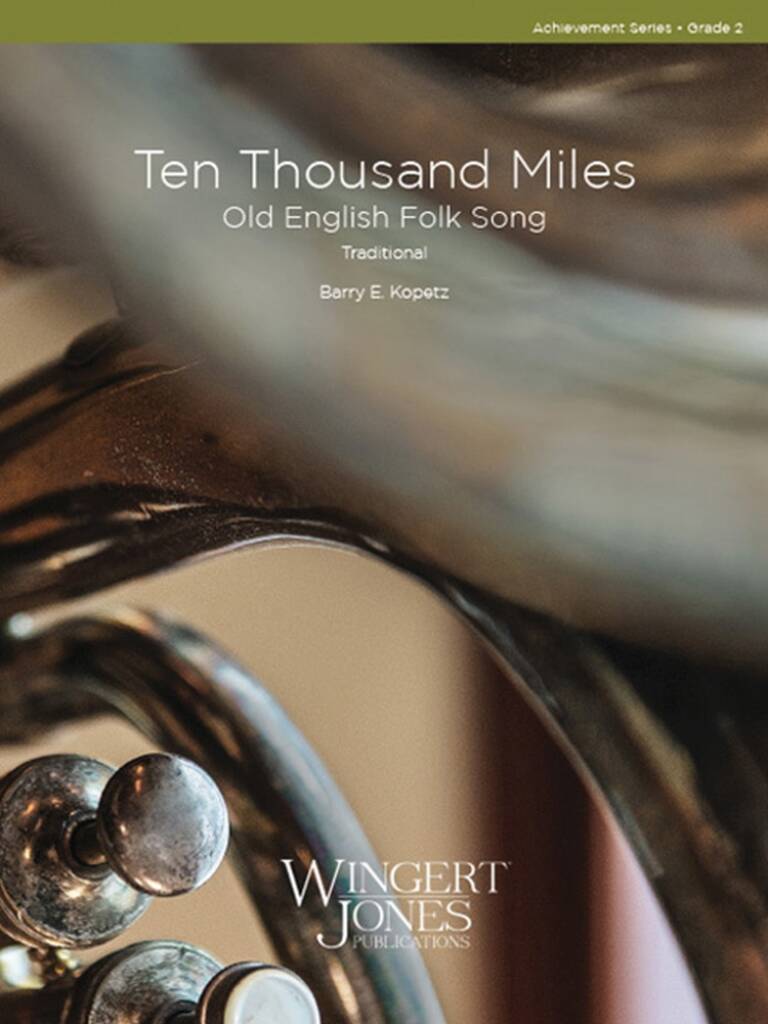
Ten Thousand Miles - Barry E. Kopetz
The folk song Ten Thousand Miles, also known as The Turtle Dove, captures the essence of the Aeolion mode in a warm, somber, yet flowing melodic line. Appearing in numerous versions, the song is a musical gem that has been passed down in various forms from one folk singer to another. The song may have originated as a 17th century broadside; though many well-known composers have used it as inspiration, this version for band is completely fresh in conception.
Estimated dispatch 7-14 working days
-
 £76.99
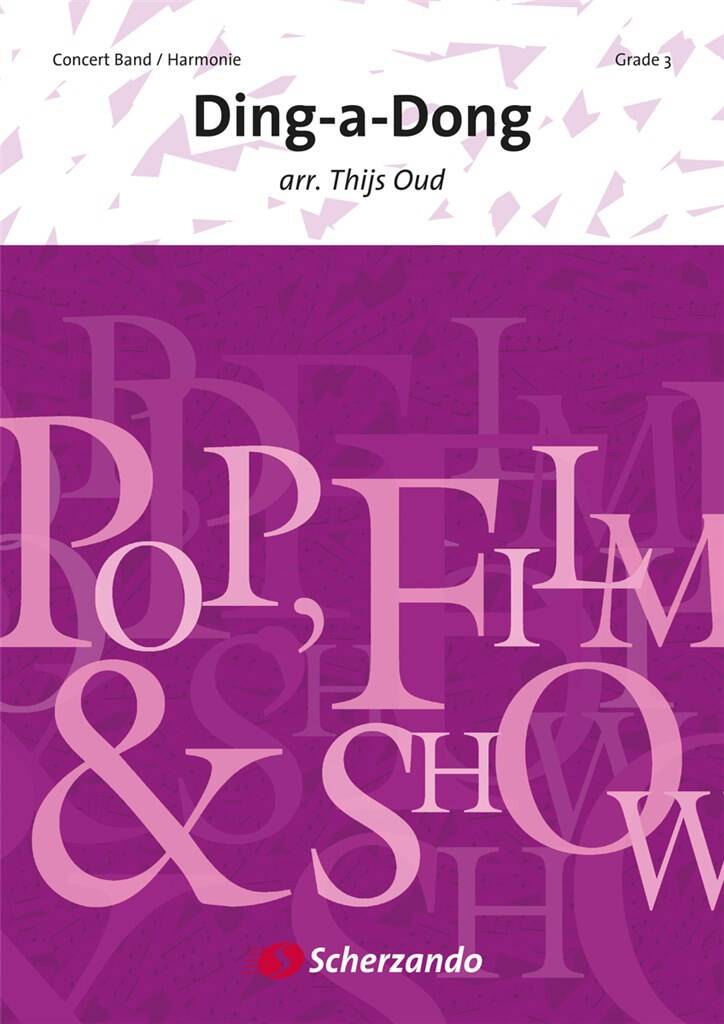
Ding-a-Dong
The group Teach-In, from the Netherlands, won the Eurovision Song Contest in 1975 with the song Ding-a-Dong. It was the fourth time that a Dutch entry had won the prestigious festival but since then no Dutch artist has even come near first place again. The original Ding-a-Dong was performed, in keeping with tradition, with the accompaniment of a large orchestra. This sparkling arrangement of the catchy song provides a cheerful note in every concert. The melody will certainly stay in the audience's memory long after the performance.
Estimated dispatch 7-14 working days
-
 £122.50
New Sounds in Disco!
Four unforgettable disco songs come together in one stunning medley. Up fi rst is the 1979 dance floor hit I'm in the Mood for Dancing by The Nolans. Next the medley quiets down with a charming love song, Lovin' You, a song Minnie Riperton dedicated to her daughter. You Can't Hurry Love was a huge success for The Supremes in 1966 and Phil Collins repeated their success in 1983 making the song immortal. This exciting medley ends with Olivia Newton-John's hit-song Xanadu, from her 1980 musical of the same name.
Estimated dispatch 7-14 working days
-
 £84.99
Consolation
Wer nur den lieben Gott lsst walten was composed by Georg Neumark in about 1641 and was subtitled 'Trostlied' literally meaning consolation song. Songbooks at the time showed the popularity of this song and it is still well-known today partly due to Johann Sebastian Bach's use of the melody for one of his own chorals. In Jan de Haan's arrangement the choral is heard twice, once, alternating with the original motif from the introduction and a second time, without interruption, reflecting the composer's original intention - a song of consolation.
Estimated dispatch 7-14 working days
-
£184.99
Rubicon - Bert Appermont
The Rubicon is a river in Northern Italy which Julius Caesar crossed with his army in 49 BC in defiance of the leaders of Rome, who feared his power. A civil war against rival Pompey ensued, which culminated in Caesar seizing power as the absoluteruler of Rome. The phrase "crossing the Rubicon" therefore refers to any person committing himself irrevocably to a risky, decisive and irrevocable of course of action.The work consists of three parts that deal with this important moment in history.Part 1 (Meditation) symbolises Caesars request to the Gods to assist him in his difficult choice. In a slow introduction we hear the melancholy and beseeching sounds of the duduk (alternatively, this part can be played by a soprano saxophone)and of the soprano solo singer over the bourdon accompaniment. The soprano solo singer then sings "dona tibi pacem" (give him rest) in a melodious and probing theme.In Part 2 (Battle of Pharsalus) trumpets and trombones resound alternately ina stately Roman fanfare, producing a stereophonic effect. This develops into a martial theme in which Caesars impressive army goes to battle against the army of rival Pompey. While the theme of Caesars army fades away, Pompeys theme emerges as anaive dance in six-eight time. His army is definitely in the majority and it believes it can easily defeat the enemy. Suddenly trumpets and trombones clash on two sides of the orchestra: Caesars army advances and attacks. A fierce battle ensues inwhich the two themes are played alternately as well as simultaneously. Thanks to his shrewd battle tactics, Caesar manages to win this legendary battle after all: his theme resounds ever louder in trumpets and horns until everything dies out andchanges into a kind of reconciliation between the soldiers of the two armies. The melancholy "dona tibi pacem" from part 1 now serves as a reconciliation theme.Caesar is now the sole ruler of the New Roman Empire, which would be destined to leave itsmark on our Western civilisation to this day. The third part is a sparkling succession of dance music (Dance) with many Greek and Roman elements in which Caesars victory is praised and celebrated. It is common knowledge that the culture(arts, gods, etc.) of the Romans drew heavily on Greek culture. I have therefore used an authentic Greek theme (the Seikolos song) several times in this part (bar 17 in the euphonium, bar 60 in the base section, bar 68 in the sopranosaxophone) to suggest the music of that era and to evoke the right atmosphere. After a gradual increase in tempo in the entire orchestra, the opening melody gloriously resounds once more, surrounded by virtuoso dance music. The work ends withbombastic brass fanfares in which Caesars theme triumphs once more.NOTE FOR THE CONDUCTOR:The Armenian duduk and the monochord that are used in the introduction give a special tone to the music, but could be substituted (soprano saxophone instead ofthe duduk) or left out (monochord). The soprano solo is also doubled within the orchestra and could therefore also be left out if necessary, although it does provide the work with an extra dimension. The male voices in the introduction and the finalecould possibly be replaced with a synthesizer with choral setting.As a visual and acoustic element in part 2, the trumpets, the e-flat cornet, the small drum and trombones can be stood up and placed at two sides of the orchestra (bar 80).Seen fromthe point of view of the conductor, put the trumpets, the e-flat cornet and the small drum in the left section and the trombones in the right section of the orchestra. This also helps to create a visual contrast between the two themes of the secondpart. The players can be seated again at bar 97 or bar 121. The soprano soloist can be placed in or in front of the orchestra, depending on what gives the best result. For the conclusion of the work the soprano solo can be sung from afar (from thewings) to create additional atmosphere.This work was composed especially for the "St Joseph" brass band from Pey/Echt (Belgium) with conductor Mark Prils.
Estimated dispatch 7-14 working days
-
 £60.99
Free Mind - Marc Jeanbourquin
For Free Mind, a light and dynamic piece, Marc Jeanbourquin drew inspiration from a gospel song, namely "Oh, Freedom", a post-Civil War African-American freedom song. In these times of crisis, the composer wanted to retain a positive and energetic spirit to symbolise the hope for better days. The four notes of the theme "Oh, Freedom" occur throughout the work and are brightened up by lively percussions, giving Free Mind a sparkling character that will lift the opening of a concert with enthusiasm.
Estimated dispatch 7-14 working days
-
 £94.99
Beauty of Nature - Jacob de Haan
This attractive work is about the Dutch province of Drenthe, a region where the beauty of nature flourishes. In Beauty of Nature, the composer reminisces about childhood holidays spent here with his parents. From bird sounds, via the regional song of Drenthe, and a children's song to wonderful tutti passages, this is a joyful piece of music for players as well as the audience.
Estimated dispatch 7-14 working days
-
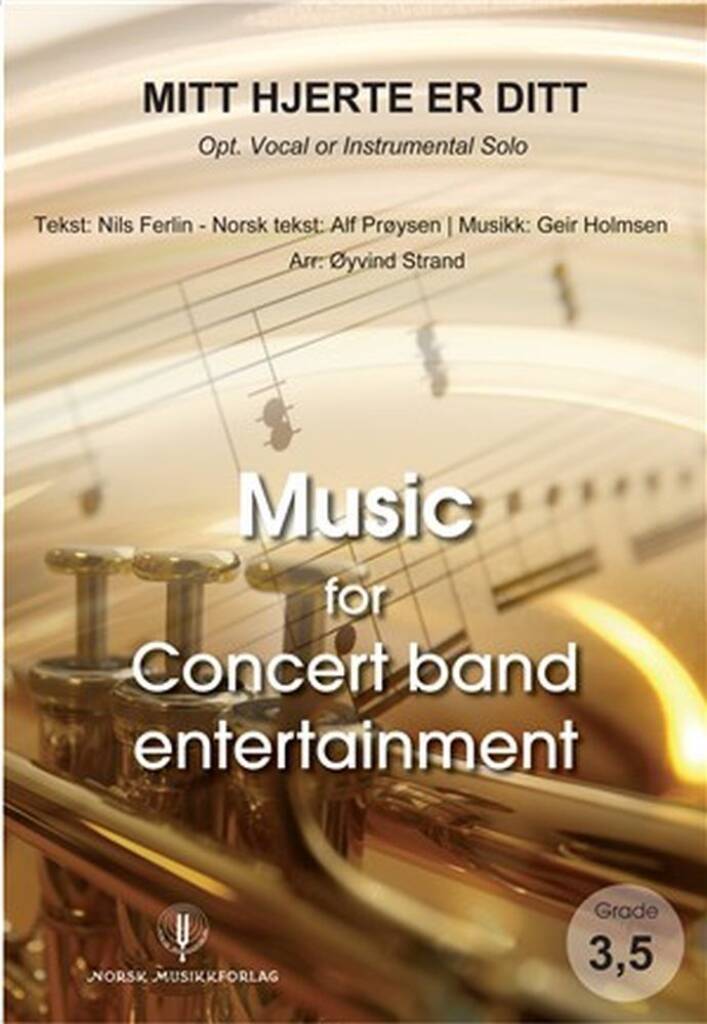 £127.30
Mitt hjerte er ditt - Geir Holmsen
"Mitt hjerte er ditt" ("My Heart is Yours") is primarily known with this Norwegian lyrics and melody from Maj Britt Andersen's recording of the song, first released in 1992. Andersen's husband, Geir Holmsen, composed the new music for this recording, a version that has since been performed by numerous other artists, including Anna of the North on "Hver gang vi mtes" in 2022.The lyrics are Alf Prysen's Norwegian translation of Nils Ferlin's Swedish text, originally written to a Swedish folk tune.This is an arrangement written for a vocal soloist and wind orchestra, but it can also be played with instrumental soloists or purely instrumentally. The song has only two verses, so the middle section of this arrangement is an orchestral verse where the melody begins in the lower instruments.
Estimated dispatch 7-14 working days
 View Music