
Results
-
 £65.00
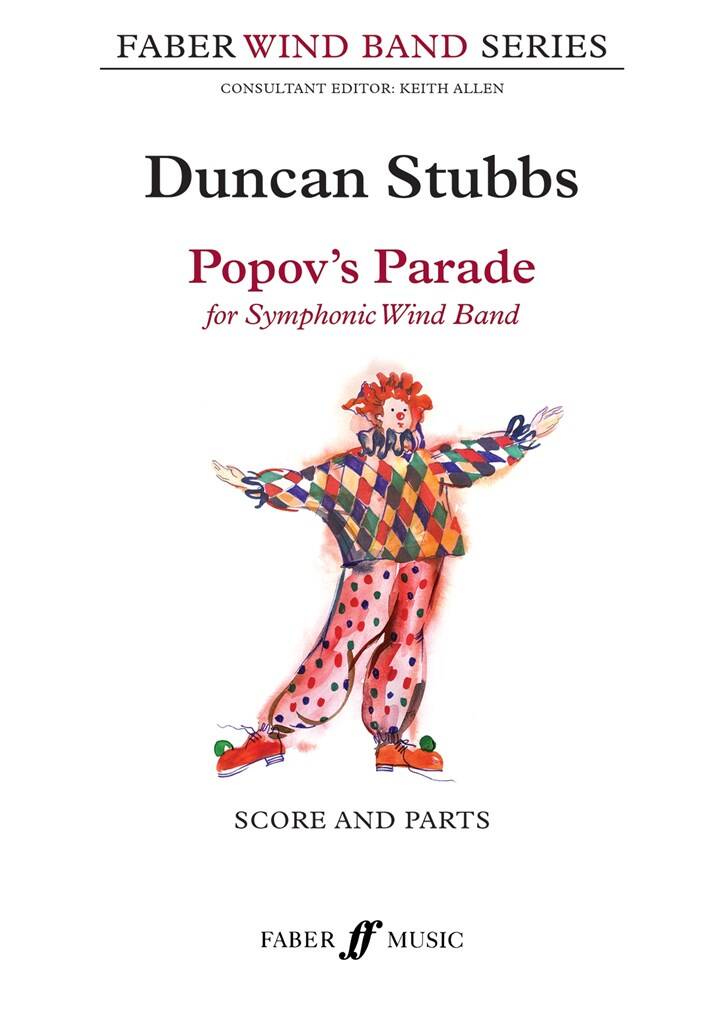
Popov's Parade - Duncan Stubbs
Combining references to 20th-century Russian music with slapstick humour, 'Popov's Parade' is a humble tribute to a great international artist, Oleg Popov, one of the world's best-known clowns. The quote from Schubert's March Militaire parodies Stravinsky's use of this same fragment in his own Circus Polka. Suitable for intermediate level (Grade 3/4) Symphonic Wind Band.
Estimated dispatch 7-14 working days
-
 £60.99
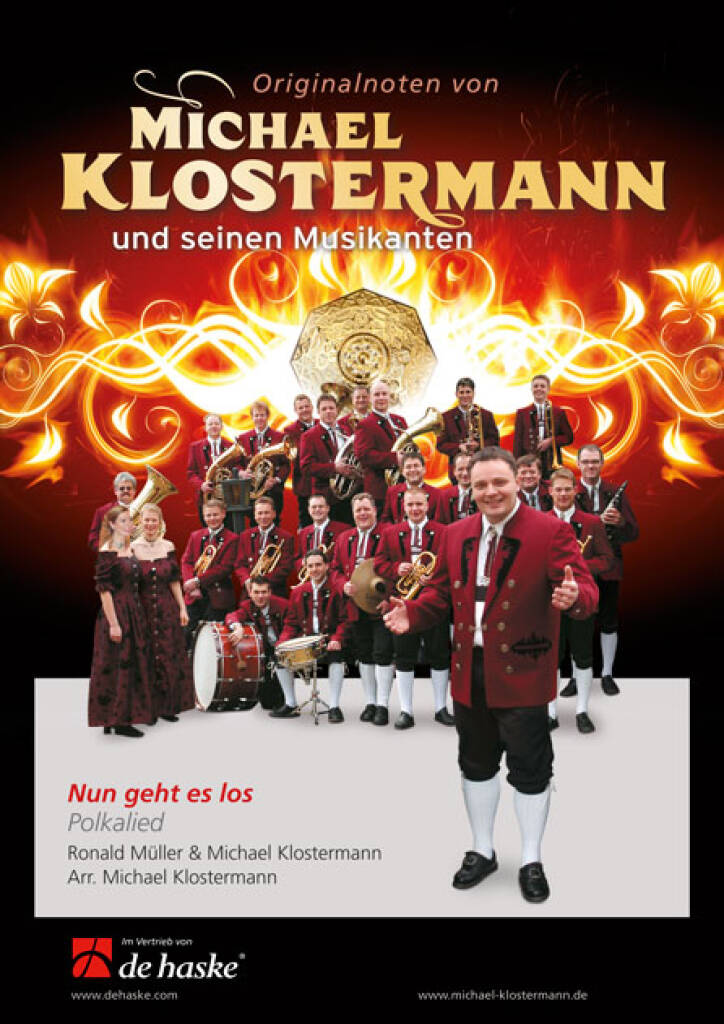
Nun geht es los - Michael Klostermann
Nun geht es los, meaning "off we go," is a spirited polka taken from the most recent CD of concert band music released by well known band leader, Michael Klostermann and his musicians. Amongst a marvellous selection of polkas, waltzes and marches, Nun geht es los (Let's get started) stands out as an exceptional piece. Ideal to play as a concert opener!
Estimated dispatch 7-14 working days
-
 £115.60
The Polka'phone - Fredrick Schjelderup
"The Polka'phone" is a jolly little xylophone duet inspired by traditional polka music. The duet fits every occasion and suits young percussion players. The piece can also be performed by one soloist, using the Xylophone 1-part.The Xylophone 1-part can be played one octave up if the players use the same instrument during the performance.
Estimated dispatch 7-14 working days
-
 £104.50
ljen A Maygyr - Johann Strass Jr.
Strauss wrote this stirring polka to celebrate the Austro-Hungarian Agreement of 1867, which stipulated self governance and representative governance for the Hungarians. (3:05)
Estimated dispatch 7-14 working days
-
 £137.00
Miracle on Prince Street - Gary P. Gilroy
This spectacular tour-de-force was written in memory of the composers mother and was inspired by her charitable deed one Christmas eve. The resplendent writing includes unpredictable changes of style that range from solemn hymn statements to careening passages of wild abandon, humor, and stylistic references to the polka music the composer heard as a child. All of this is topped by virtuosic solo and section writing that features every section. A remarkable work for upper-level bands.
Estimated dispatch 7-14 working days
-
£149.40
Dancing Trolls [Norwegian Dance] - Øystein Olsen Vadsten
"Dancing Trolls" is a sequel to "The Battle of the Hats", which was published in 2015. Like "The Battle of the Hats", "Dancing Trolls" is a piece of music based on Norwegian traditional dances. This time around,its the reinlender dance which takescentre stage.The music is composed by ystein Olsen Vadsten who keeps the strong melodic and tempo, which is dear to this kind of dance. Admittedly given a make-over with a more rhythmic accompaniment and more excitingharmonization.This makes it a fun piece, both to Listen to and play. The reinlender dance derives from the Rhineland in Germany,and is also known as the German Polka.To the conductor:Because this is a dance form whichisdependent on the right "swing", it is of great importance to keep as close to the metronome mark as possible. A steady groove, primarily specified by the drum set, is also essential for a good result. Remember to keep a good balance between themelody carrying instruments and the accompaniment. Good luck and have fun with this "crazy" little tune.
Estimated dispatch 7-14 working days
-
 £84.99
Scherzpolka - Thomas Doss
In the somewhat sarcastic Scherzpolka (Joke Polka), the composer does not intend to make fun of Alpine traditions and music but rather of the typical social attitude that does not always do justice to the valuable folk music and culture. Imagine a band that has to play in a beer tent for hours. During the performance the guests treat the musicians to one beer after another. Gradually, the players and the conductor lose control over their instruments and their interpretation of the music. Finally, the performance comes to an end: the Scherzpolka is actually the last piece. There are no limits to the creativity in both the visual and musical aspects during a performance of theScherzpolka!
Estimated dispatch 7-14 working days
-
 £66.00
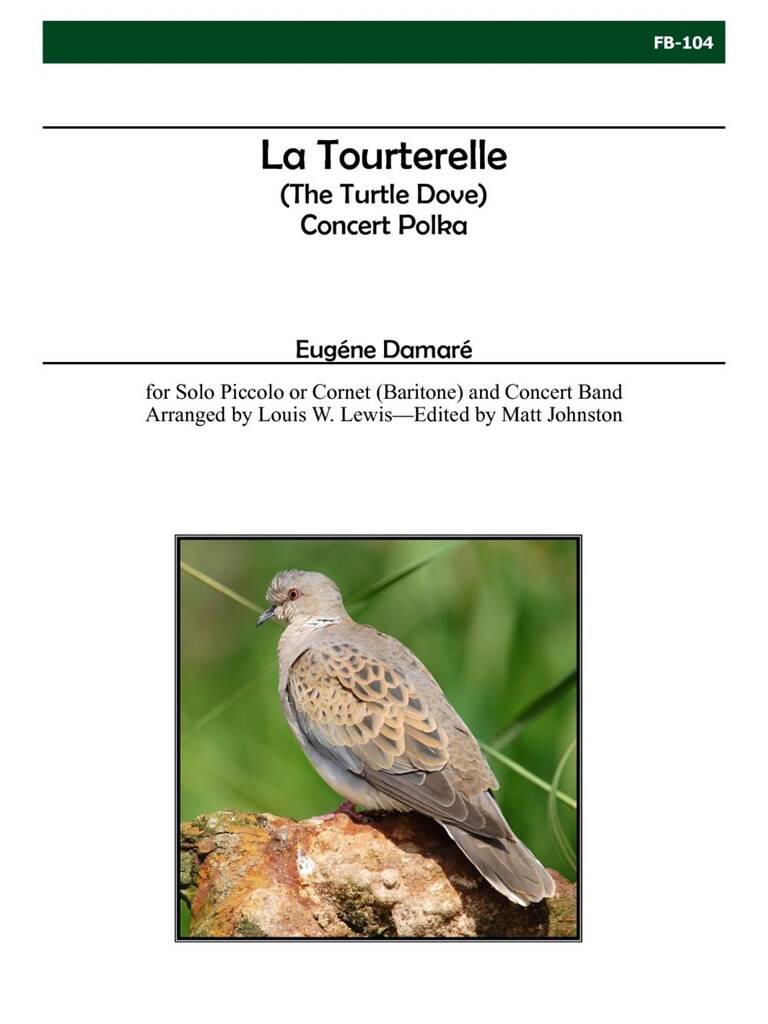
La Tourterelle - Eugène Damare
A delightful polka from the "Golden Age" era which features the piccolo in all its glory. This arrangement by Louis W. Lewis will delight any audience and is a great way to introduce the smallest member of the flute family to the audience. Instrumentation: Solo D-flat (or C) Piccolo or Solo Cornet (Baritone), C Flute 1/2, Oboe 1/2, Bassoon, E-Flat Clarinet, Clarinet 1, Clarinet 2/3, Alto Saxophone 1/2, Tenor Saxophone, Baritone Saxophone, Cornet 1, Cornet 2, Cornet 3/4, Horns 1/2, Horns 3/4, Trombone 1/2, Trombone 3/Bass Trombone, Baritone (T.C. and B.C.), Basses (Tuba), Percussion (Snare Drum, Bass Drum, Triangle)
Estimated dispatch 7-14 working days
-
 £138.00
Around the Whiskey Jar
Around the Whiskey Jar is a Medley based on 5 traditional Irish tunes (Star of the County down, She moved through the fair, Maurice Manley's Polka, Down by the Salley Gardens, What should we do with the drunken Sailor). The idea of the composer was to feature some not that popular Irish melodies and to recreate, as much as possible, an Irish Tavern atmosphere. Bodhran drum, Singing parts and Fiddle-like sections are featured in this piece to make the ambiance lively, genuine and wild. Hey !!
Estimated dispatch 7-14 working days
-
£113.30
Rumanian Folk Dances - Béla Bartók
Bla Bartk (1888 - 1945) showed from the beginning of his career an interest in popular music. He began studying music at the age of five and eventually focused on composition and piano. He collected a lot of popular songs, especially during his studies in Hungary, but also music from Romania and Slovakia. This had a lot of influence on his style. In his compositions, Bartk uses many Hungarian popular themes and rhythms, and even his own original works always refer to the same rhythmic and melodic folk character. At the beginning of the twentieth century, Bartk detached himself from romanticism and began to delineate his style on harmonic procedures based on diminished and augmented intervals, on bitonality, and on marked percussiveness, characteristics that are at the core of popular music.The Romanian Dances are a collection of seven folk dances, originally composed for piano (1915, the first six) and then transcribed for a small symphonic orchestra (1917). Of purely modal language, like almost all Bartk's music, each dance comes from a different area of Romania (Stick Dance, Sash Dance, In One Spot, Horn Dance, Romanian Polka, Fast Dance of Belnyes, and Fast Dance of Nygra).
Estimated dispatch 7-14 working days
 View Music