
Results
-
 £134.99
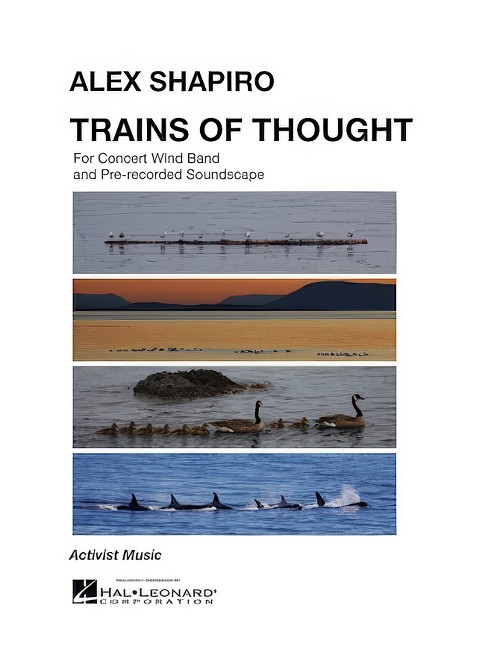
Trains of Thought (Concert Band - Score and Parts) - Shapiro, Alex
Evocative train sounds allow listeners' own trains of thought to wander freely, in this emotionally captivating electroacoustic tone poem. As with other signature Shapiro works like Immersion and Liquid Compass, an expansive palette of shifting textures and density creates striking, unexpected contrasts. A remarkably seamless wash of acoustic and digital sounds offers new meaning to the term "prerecorded track," as the piece picks up steam and arrives at a forceful, abrupt end. To perform the piece, you'll need an audio system capable of playing the prerecorded audio tracks from a laptop computer via a small digital audio interface connected to an audio mixer. Download information is provided in the score. Duration: 7:15
Estimated dispatch 7-14 working days
-
 £58.50
Forge Ahead! (Concert Band - Score and Parts) - Mier, Shirley
Beginning with a celebratory fanfare, followed by a hushed yet animated melody in the clarinets, the music intensifies, growing in excitement and volume while exploring different themes and sounds as various instrument groups are highlighted. After a moment of reflection and remembrance, the original melody returns in a new key, with a new melody joining in counterpoint as the music drives ever faster toward its exhilarating conclusion.Duration: 4:15
Estimated dispatch 7-14 working days
-
 £84.99
Millennium Fever Wind Band Set (Score & Parts)
The new millennium inspires curiosity, optimism, and fear of the unknown. Belgian composer Johan Nij composed Millennium Fear to capture the uncertainty of this monumental event. The piece combines dynamic sounds, feverish rhythms, and surprising sound textures in the dialogues between different instrument groups. The piece expresses the thoughts and feelings many have toward the new millennium. 0:02:35
Estimated dispatch 7-14 working days
-
 £274.99
Stone Age (Concert Band - Score and Parts) - Doss, Thomas
Stone Age, Middle Age and New Age are the three distinct sections of this single movement work at the highest level. Whilst Stone Age has a menacing and ancient atmosphere, an old German song can be made out in Middle Age - vocals, guitar, recorder or even bagpipes can be incorporated into the melody, which gradually gives up merry Celtic dances. In New Age, the 'present', the Celtic sounds finally connect with untamed, rousing dance rhythms.Duration: 18:30
Estimated dispatch 7-14 working days
-
 £59.95
Wheels (Concert Band - Score and Parts) - Holmes, Chris
A four movement work based on wheels! Includes:Big Dipper - the little carriage slowly climbs before hurtling off on its journey. Then another climb takes it even higher and off it goes again, even faster - the high woodwind instruments hint at the screams and shouts of the the passengers, before the carriage comes to a rest and everybody gives a sigh of relief.London Eye - the giant white wheel turns slowly and silently, taking the passengers high above London's River Thames, with views over the Houses of Parliament and the whole of the capital's skyline - breathtaking!Wagon Train - horses are pulling the heavy wooden wagons, slowly trundling across the American plains, taking the settlers to their new homes in the West.The No. 57 Bus - the bell sounds, and off the bus goes - the music changes when the bus comes to a stop to let passengers on and off - "ting ting" and off it goes again - another change in the music, another stop - a run home, and two final rings on the bell - a good trip!Duration: 9.00
Estimated dispatch 7-14 working days
-
 £11.95
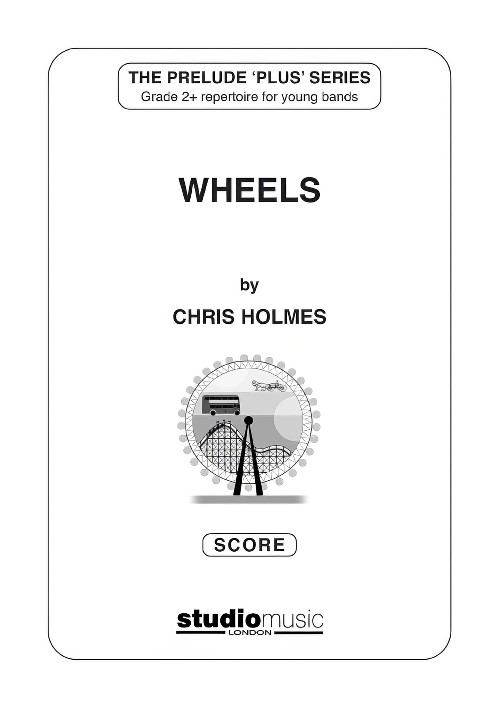
Wheels (Concert Band - Score only) - Holmes, Chris
A four movement work based on wheels! Includes:Big Dipper - the little carriage slowly climbs before hurtling off on its journey. Then another climb takes it even higher and off it goes again, even faster - the high woodwind instruments hint at the screams and shouts of the the passengers, before the carriage comes to a rest and everybody gives a sigh of relief.London Eye - the giant white wheel turns slowly and silently, taking the passengers high above London's River Thames, with views over the Houses of Parliament and the whole of the capital's skyline - breathtaking!Wagon Train - horses are pulling the heavy wooden wagons, slowly trundling across the American plains, taking the settlers to their new homes in the West.The No. 57 Bus - the bell sounds, and off the bus goes - the music changes when the bus comes to a stop to let passengers on and off - "ting ting" and off it goes again - another change in the music, another stop - a run home, and two final rings on the bell - a good trip!Duration: 9.00
Estimated dispatch 7-14 working days
-
 £53.95
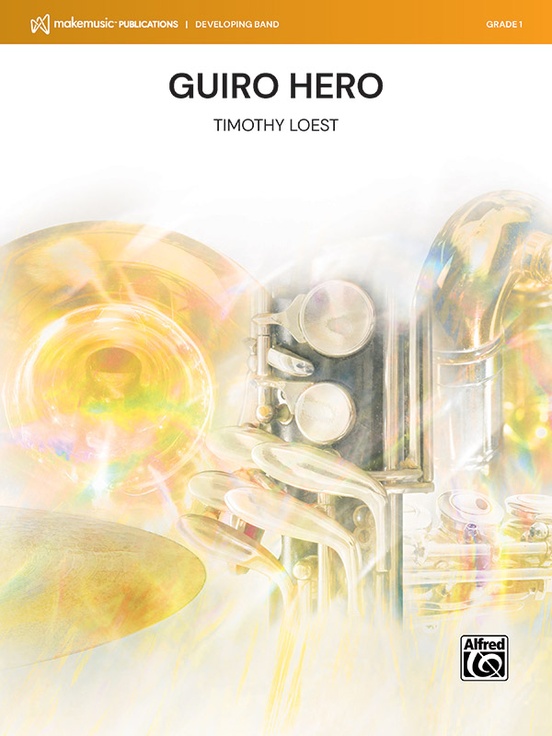
Guiro Hero (Percussion feature with Concert Band - Score and Parts) - Loest, Timothy
Celebrate Latin music's colourful sounds and infectious rhythms in this lighter work by Timothy Loest, who puts the guiro front and centre. Your audience will smile with each tap and scrape, and your students will gain an appreciation for world music. There's a new superhero in town, Guiro Hero!Duration: 2.15
Estimated dispatch 7-14 working days
-
 £60.99
A Caribbean Sailing Trip (Flexible Ensemble - Score and Parts) - Schaars, Peter Kleine
With this composition in a rumba style, Peter Kleine Schaars invites us to enjoy a relaxed sailing trip in the waters of the Caribbean. The feeling of freedom on the boat is mirrored by an extensive melody surrounded by a palette of colourful harmonies the shades of the water while the clever percussion sets the course of the ship. Who wouldn't dream of such an adventure? Although the musical themes and accompaniments have been constructed from combinations of rhythmic cells that occur less often, the composition sounds very natural and flowing. Assuming the rhythmic cells 1 to 8 are part of the basic skills of your band, in this composition, the accent rather lies on cells 9 to 13. The instrumentation is created in such a way that these new cells occur in all parts, so that all musicians of the band become familiar with this rhythmic development.Duration: 2.30
Estimated dispatch 7-14 working days
-
 £60.99
San Francisco Swing (Flexible Ensemble - Score and Parts) - Schaars, Peter Kleine
In the 1980s and 1990s there was a new surge of interest in the old swing of the 30s and 40s. The epicentre of this swing revival lay in the American state of California, Los Angeles and San Francisco in particular. Based on the rules of the old swing in which each beat has a ternary subdivision but with more contemporary sounds and harmonies, Peter Kleine Schaars composed this work San Francisco Swing. Through the frequent use of the rhythmic cells 22 and 24 in all parts of this composition, each band, irrespective of its experience with swing music, will be able to give a swinging performance!Duration: 3.00
Estimated dispatch 7-14 working days
-
 £60.99
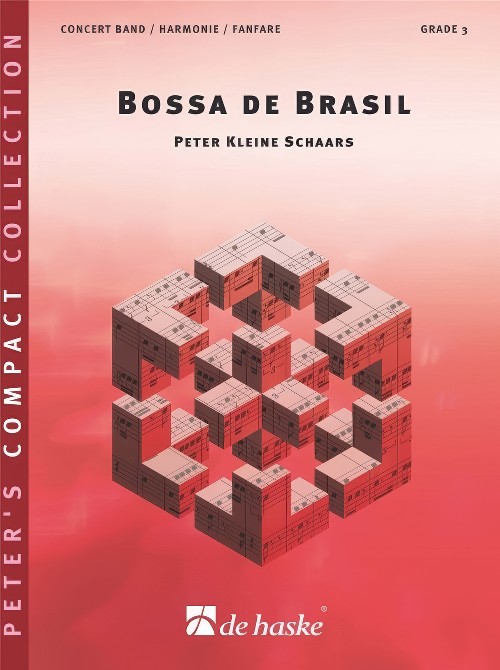
Bossa de Brasil (Flexible Ensemble - Score and Parts) - Schaars, Peter Kleine
In late 1950s Brazil, a new music style influenced by jazz arose out of the samba: the bossa nova. This composition by Peter Kleine Schaars sounds just like a bossa nova should sound: catchy, warm, relaxed and with a touch of sensuality. Starting with a small group of players with only one soloist and minimal accompaniment, this bossa nova leads to a style-conscious grand orchestration for the whole ensemble, in which all voices participate equally. In addition to the rhythmic cells 2 and 4 of the Brazilian 2-4 clave, the cells 7 and 10 in particular are featured.Duration: 2.45
Estimated dispatch 7-14 working days
 View Music