
Results
-
 £109.60
Ancient Tales - Kevin Houben
Ancient Tales Commissioned by Fanfare Ellona Ell (NL) in honor of their centennial anniversary 2023 Ancient Tales was written by composer Kevin Houben in honour of the 100th anniversary of Fanfare Ellona, an authentic village association from Ell that values fun and fellowship. The piece is a musical representation of some of the legends and sagas that took place in and around the rural village of Ell, which probably owes its name to the many alder trees that defined the landscape around the 15th century. The somewhat mysterious opening of this work refers to the story of the sunken church in the Weerbroekskuil, where, according to the legend, bells are heard ringing on Christmas night and spirits in the form of lights are seen flying above the swamp. Presented here is the chorale that Houben composed for this work, which is woven like a thread throughout the composition in the form of melodic cells and motivic developments. Subsequently, the work continues with cheerful, energetic passages that are alternated with lyrical and more quiet sections. With some surprising melodic twists and metrical variations, Houben gives a nod to the turbulent history the citizens of Ell knew at the time of the 80-year war when the peasant country was plagued by marauding soldiers and gangs of thugs. By building the Ellerschans the people of Ell showed their resilience, to which the composer refers by constantly returning to cheerful and danceable themes which, thanks to the refreshing choice of metre, give the whole a cheerful character. Ancient Tales is a charming and energetic composition that triggers the enjoyment of playing of many orchestra members and will appeal to a wide audience. Moreover, the work offers every group of instruments sufficient challenge, making it suitable as a competition piece. Hence, Ancient Times was selected by Vlamo as compulsory test piece for the VLOF 2024.
Estimated dispatch 7-14 working days
-
 £129.90
Trassvisa hennes Tora - Alf Prøysen
In 1988, Egil Monn-Iversen composed this melody for Alf Prysen's lyrics from 1964 for the performance "N seile vi p Mjsa" at Det Norske Teatret ("The Norwegian Theatr"). It was through this musical arrangement that the song gained the popularity and recognition we know today.The song tells the story of a girl who is alone at a party, and when she finally meets true love, it turns out to be impossible.
Estimated dispatch 7-14 working days
-
 £233.99
Colores - Jan Van der Roost
Colores is Spanish for 'colours' - a word which this composition seeks to reflect and build itself upon. Musical colours, timbres, sounds, soft and sharp color tones, sonorous effects ... they are all present in this work. It is an abstract composition: completely lacking a story, scenario or any programmatic inspiration to guide the notes. The music speaks for itself. All sections are featured within a hugely varied work that demands a lot from the players. Pull out all the stops to produce the best possible result!
Estimated dispatch 7-14 working days
-
 £252.50
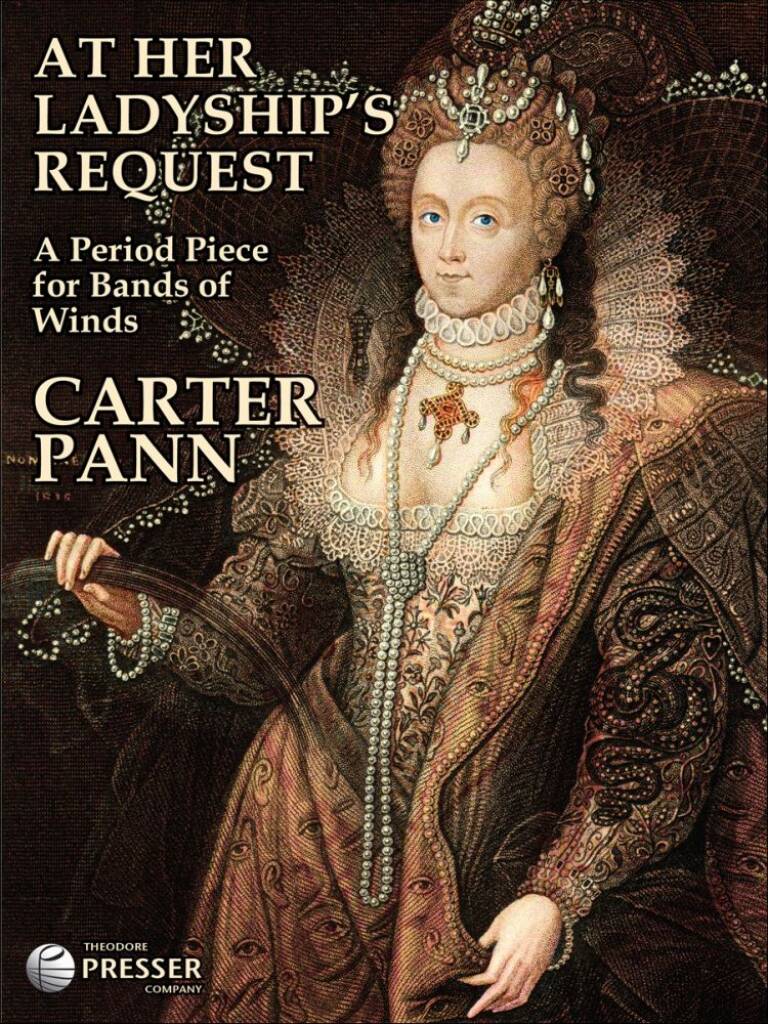
At Her Ladyship's Request - Carter Pann
"Armed with a prodigious gift for forging musical identities, "Lord Carter Nicholas Pann" presents an offering inspired by the Elizabethan Era and an appreciation for the works of Percy Grainger. Pann's suite tells a story of palace intrigue.
Estimated dispatch 7-14 working days
-
 £184.99
Einstein - Thomas Doss
Theoretical physicist and Nobel prize winner Albert Einstein (1879 1955) developed the theory of relativity, one of the basic tenets of modern physics: who doesn't know his formula E = mc2? This impressive, exciting work from Thomas Doss tells the life story of Einstein using spectacular effects to enforce the musical ideas. This is a daring and original choice for a contest and surely a guaranteed success as a main piece for your concerts.
Estimated dispatch 7-14 working days
-
 £149.99
Mystic River - Thomas Doss
The mysterious river Traun, which emerges from several springs in the Totes Gebirge (the so-called 'Dead Mountains') of Styria (Stiermarken-Austria), flows in full splendor and beauty through the loveliest lakes. The Traun meanders through the Salzkammergut like a crystal ribbon along the Ho llengebirge. This piece is like an exciting musical voyage along the river telling the story of a rich history, from the earliest Celtic settlements to the construction of important power plants. It offers different and versatile passages for all instrument groups, making Mystic River the ideal contest work or the main piece in a challenging concert programme.
Estimated dispatch 7-14 working days
-
 £64.99
This Is Me (from The Greatest Showman) - Benj Pasek
From the songwriting team who brought us Dear Evan Hansen and La La Land, the movie musical The Greatest Showman is based on the true story of P.T. Barnum with Hugh Jackman in the title role. This arrangement of the powerful anthem from the film is a dynamic showcase for the concert stage.
Estimated dispatch 7-14 working days
-
£53.95
I'm Seventeen Come Sunday - Percy Aldridge Grainger
Based on Percy Granger's choral and brass setting, this British folk song is cast for developing band by Michael Story. The delicate clarinet introduction grows in intensity with the addition of the entire woodwind family and finally the entire ensemble. Teaching opportunities are presented with introductory multi-meter. Careful attention to all articulations will guarantee a musical performance. This compelling addition to the young band repertoire allows this cherished composition to be enjoyed by a wider array of ensembles. (2:15)
Estimated dispatch 7-14 working days
-
 £134.99
Cambrinus - Matthias van Nispen tot Pannerden
The name Cambrinus, a corrupted variation on 'Jan Primus' (John the First), refers to the flamboyant John I of Brabant, who was the Duke of the Dutch provinces Brabant and Limburg, in the second half of the 13th century. This piece of music tells the story of this notable man, starting with the Battle of Worringen in 1288, where he scored a glorious victory, followed by an exuberant celebration in which he also contemplates about the suffering he and his men have caused. The works offers exciting energetic musical scenes with lots of action, as well as beautiful romantic and heroic themes offering plenty of opportunities for your band to unfold all its qualities.
Estimated dispatch 7-14 working days
-
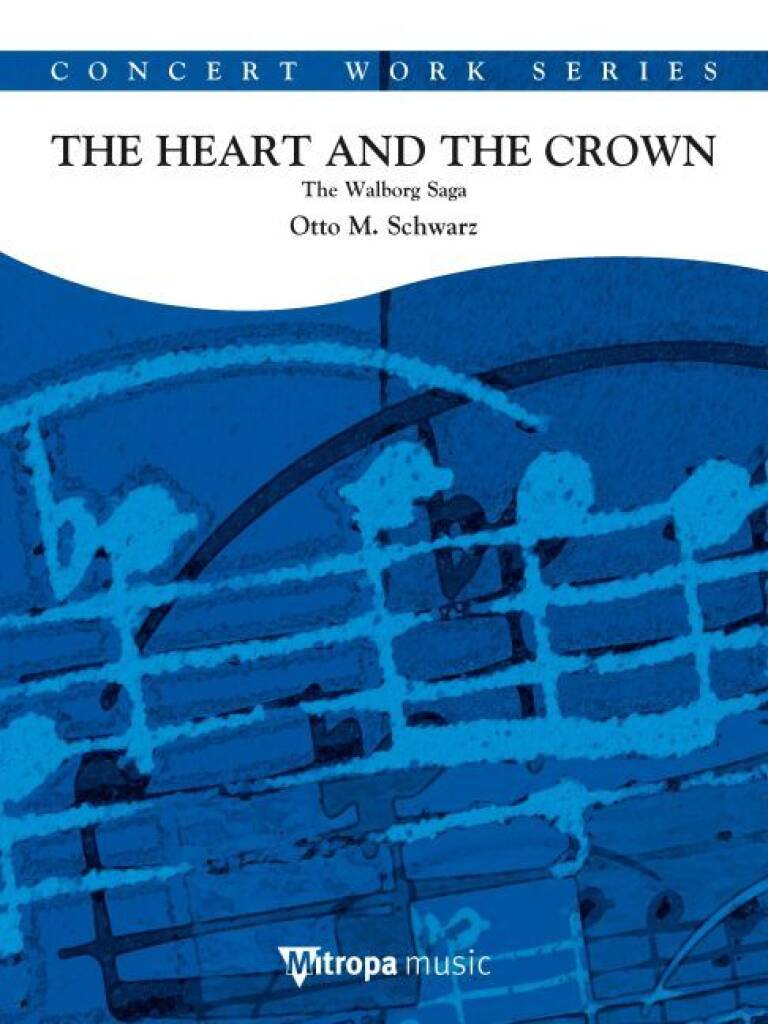 £202.99
The Heart and the Crown - Otto M. Schwarz
The river Maas and the town of Oh en Laak in the Dutch province of Limburg are inextricably linked with one another. Thousands of years have passed with wars and other dramatic events. One story is about Josina Walburgis von Lwenstein-Wertheim-Rochefort, who was forced by her father to enter the Thorn convent. However, when she met Count Herman Frederik Hendrik van den Bergh it was love at fi rst sight, and the two were secretly married... How will it end? This programmatic epic piece is full of beautiful expressive musical pictures, lots of brass and rhythmical sections.
Estimated dispatch 7-14 working days
 View Music