
Results
-
 £69.99
O for a Thousand Tongues (Concert Band - Score and Parts) - Court, Douglas
Charles Wesley has given the church some of its most popular and eloquent hymns that have shown the ability to stand the test of time. O for a Thousand Tongues Sing was written to celebrate what Wesley referred to as his 'second birth'. Wesley marked this day as the day he responded to the love and grave of God.Duration: 2.45
Estimated dispatch 7-14 working days
-
 £104.99
10 Weihnachts und Adventslieder (Concert Band - Score and Parts)
10 Hymns for Christmas and Advent
Estimated dispatch 7-14 working days
-
 £139.99
Spirit of Independence (Concert Band - Score and Parts) - Van der Roost, Jan
Spirit of Independence' was commissioned by the Koninklijke Fanfare 'Onafhankelijkheid' ('Independence') from Wiekevorst (Belgium) on the occasion of its 25th anniversary. The piece depicts an enthusiastic amateur music club, practicing and making music together in an attentive and companionable atmosphere. The conductor has the good habit of trying to improve the sound of the fanfare by means of practicing chorales and hymns. Jan Van der Roost has used these facts in the dynamic concert piece 'Spirit of Independence': a chorale-like middle section is surrounded by music bubbling full of energy.Duration: 9:15
Estimated dispatch 7-14 working days
-
 £73.25
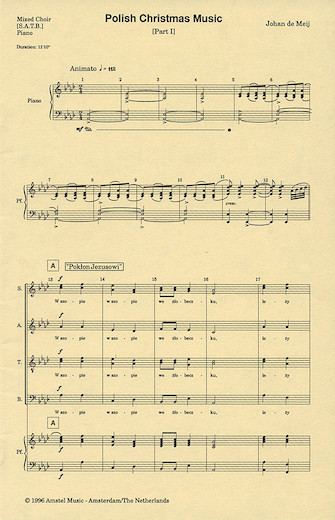
Polish Christmas Music - Part I (SATB Choral Octavo - Pack of 25) - De Meij, Johan
For many centuries Poland has bosted a very rich tradition of Christmas Carols. Some hymns belong to church music, while others definitely do have a folk music character. Johan de Meij has used both these elements in this suite. You can hear the songs: Poklon Jezusowi; Mizerna, cicha; Aniol pasterzom mowil; Gdy sliczna Panna and Jam jest dudka. Duration: 11.15
Estimated dispatch 7-14 working days
-
£3.95
Polish Christmas Music - Part I (SATB Choral Octavo) - De Meij, Johan
For many centuries Poland has bosted a very rich tradition of Christmas Carols. Some hymns belong to church music, while others definitely do have a folk music character. Johan de Meij has used both these elements in this suite. You can hear the songs: Poklon Jezusowi; Mizerna, cicha; Aniol pasterzom mowil; Gdy sliczna Panna and Jam jest dudka. Duration: 11.15
Estimated dispatch 7-14 working days
-
 £148.00
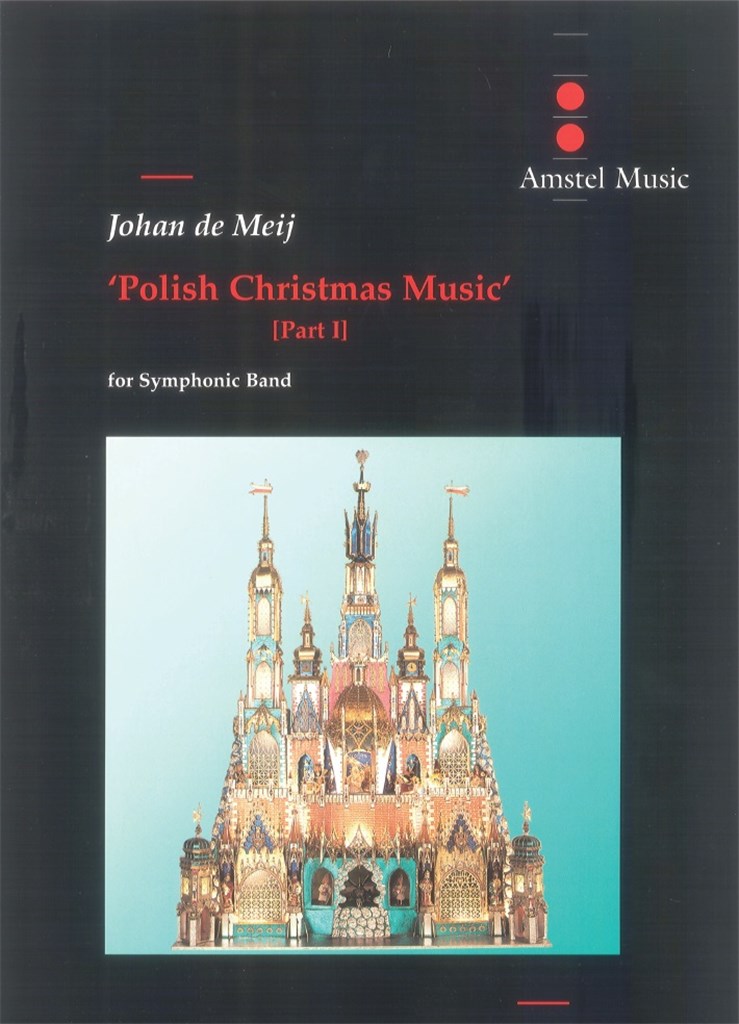
Polish Christmas Music - Part I (Concert Band - Score and Parts) - De Meij, Johan
For many centuries Poland has bosted a very rich tradition of Christmas Carols. Some hymns belong to church music, while others definitely do have a folk music character. Johan de Meij has used both these elements in this suite. You can hear the songs: Poklon Jezusowi; Mizerna, cicha; Aniol pasterzom mowil; Gdy sliczna Panna and Jam jest dudka. Duration: 11.15
Estimated dispatch 7-14 working days
-
 £84.99
Holy, Holy, Holy (Concert Band - Score and Parts) - Dykes, John Bacchus - Curnow, James
The music for the beloved hymn Holy, Holy, Holy (also known as Nicaea) was composed by the English composer John Bacchus Dyke in 1861 and was first published that year in the book Hymns Ancient and Modern. The beautiful melody is not only suitable for use in church services but also makes an ideal reflective concert work.Duration: 3:30
Estimated dispatch 7-14 working days
-
 £73.50
Psalm 46 (Concert Band - Score and Parts) - Zdechlik, John
Psalm 46 is based upon the chorale melody from A Mighty Fortress is our God, the best known Martin Luther hymn which was composed sometime between 1527 and 1529. The hymn's words paraphrase Psalm 46. Zdechlik's setting is divided into four major sections with a wide variety of styles and meters that draw to a powerful heroic conclusion. The work, originally published in 1971, is dedicated to Mr. Leon Titus and the Concordia College Band, St. Paul, Minnesota.Duration: 9:30
Estimated dispatch 7-14 working days
-
 £23.99
Introitus (SATB Choral Octavo - Pack of 25) - De Haan, Jacob
The Latin word "Introitus" means 'entry'. Originally, this was a psalm sung to accompany the entrance of a bishop, priest or celebrant into the church. Later it was incorporated into the mass with alternating sung and spoken text, reflecting the mood of the liturgy. Jacob de Haan's Introitus, in which he has arranged the hymns Puer natus est nobis and Lobt Gott, Ihr Christen alle gleich, is a wonderful introduction to the Christmas season and can be performed with any instrumental combination with mixed choir and organ ad libitum. Duration: 4:00
Estimated dispatch 7-14 working days
-
 £84.99
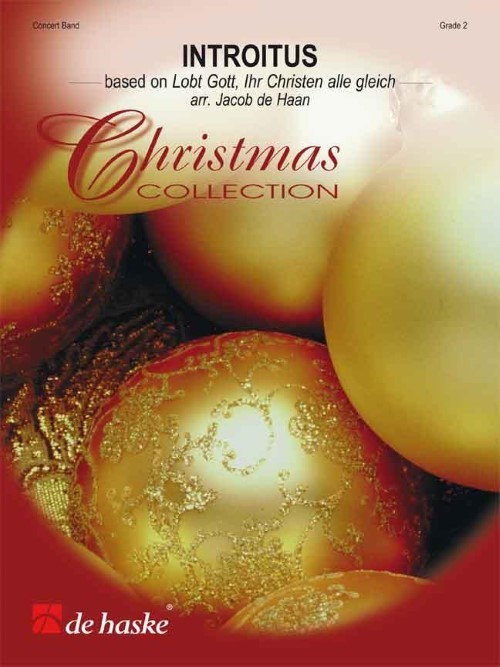
Introitus (SATB Choir with Concert Band - Score and Parts) - De Haan, Jacob
The Latin word "Introitus" means 'entry'. Originally, this was a psalm sung to accompany the entrance of a bishop, priest or celebrant into the church. Later it was incorporated into the mass with alternating sung and spoken text, reflecting the mood of the liturgy. Jacob de Haan's Introitus, in which he has arranged the hymns Puer natus est nobis and Lobt Gott, Ihr Christen alle gleich, is a wonderful introduction to the Christmas season and can be performed with any instrumental combination with mixed choir and organ ad libitum.Duration: 4:00
Estimated dispatch 7-14 working days
 View Music