
Results
-
 £154.99
Achnaton - Jan Bosveld
The Egyptian pharaoh Amenhotep IV, better known as Achnaton, was the second son and successor of Amenhotep III. He reigned the New Kingdom from 1353 until 1336 BC. Achnatons lack of interest in the economic well-being of Egypt ushered ina revolutionary period in Egyptian history. His harsh reign induced much suffering under the population. During this period when it was customary for a pharaoh to have many wives, he had taken his cousin Nefertete to reign as queen at hisside. An elegant and very beautiful woman, she used her influence to ease the turmoil caused by Achnaton. Combined with her grace, her presence at public functions led to a greater popularity among her subjects than the pharaoh enjoyedhimself. Being mostly preoccupied with religious questions, he declared that all the other gods did not exist. There was only one god, the Aten, and it was the sun itself. It was now necessary to change his name: 'Amenhotep' meaning 'the god Amun is satisfied', because he didnt want to be associated with Amun or any of the other deities. He renamed himself 'Achnaton' which means 'servant of the Aten' -- a much more appropriate title! In the sixth year of his reignAchnaton also moved the capital to a brand new city called Achet-Aton ('the Horizon of the Aten') which was where Tel el-Amarna stands today. He did this to further isolate himself from the 'old' religion, since the previous capital Thebes was thecentre of worship of Amun. This new religion created an up rise among the population and high priests. In spite of Nefertetes influence, the falling economy and religious conflict resulted in the decline of the Egyptian empire. Hoping toforget it ever happened, people later tried to eradicate all traces of Achnaton and his successors rule by smashing their statues, mutilating their mummies, and ruining their relief carvings. From that moment on he was remembered as the'heretic king'. This composition was partially funded by the 'Prins Bernhard Cultuurfonds'.
Estimated dispatch 7-14 working days
-
£84.99
Bahn frei - Eduard Strauss
Eduard Strauss, the third son of Johann Strauss the Elder, was born on March 15, 1835, in Vienna. Originally, Eduard looked for employment in the diplomatic service, but he also studied music theory. He became a harpist in the Strauss orchestra in 1855. In 1862, he joined his two famous brothers Johann Jr. and Josef as a conductor of the family orchestra. Like that of his two brothers, his musical output was prolific: he wrote over 320 separate dances and marches. Apart from the exuberant Bahn Frei (Track Clear), which he wrote in 1869, and a handful of other fast polkas (he excelled in this particular dance form), his music is not as well known as that of his brothers.
Estimated dispatch 7-14 working days
-
 £90.30
Goyescas - E. Granados
The pianist and composer Enrique Granados y Campina (Lrida 1867) studied composition with Pedrell in Barcelona. He went to Paris in 1887 to study the piano with de Beriot. In 1901 he founded his own piano school in Barcelona. Granados and his wife died on their way back from America when the passenger ship 'Sussex' was torpedoed by a German submarine in the Channel on 24 March 1916. As a composer he became the founder of the specific Spanish national music. He was most of all inspired by the Spanish capital and more precisely by the Madrid of Francisco Goya. In 1911 he composed two piano albums 'Goyescas', inspired by paintings and tapestries of the painter Francisco Goya y Lucientes (1746-1828), famous for his brillant originality and bizarre imagination. Later on he developed this music into an opera, based on a libretto by Fernando Periquet.
Estimated dispatch 7-14 working days
-
£81.90
Kuda, kuda v udalilis - Pyotr Ilyich Tchaikovsky
The aria 'Kuda, kuda v udalilis' is sung by Lensky, fianc of Olga and friend of Onegin in the second act of Tschaikowsky's opera Eugene Onegin: Lensky challenged Onegin to a duel in response to Onegin's advances on Olga. Now, on the morning of the duel, Lensky looks back on his happy youth as he waits for Onegin to arrive. He realizes that he will probably die in the duel and that he does not particularly care if he does. The only great loss in his death would be that he would never see Olga again.
Estimated dispatch 7-14 working days
-
 £186.20
Concerto for Alto Saxophone and Band - Ronald Binge
Ronald Binge was born on 15 July 1910 at Derby, England. He studied harmony and counterpoint on his own and tried his hand at arranging and composing during the many years he worked as a pianist and musician in movie theatres. In 1934 he met the conductor of Italian descent Annunzio Paolo Mantovani (1905-1980) and started writing numerous arrangements for the symphony orchestra of this very popular conductor. In fact, Binge is the inventor of the famous 'Mantovani Sound' (with echo effects by the strings) which charmed and pleased millions of music lovers and television spectators all over Europe in the fifties and sixties. In 1952 he scored a hit with ' Elisabethan Serenade'. Binge also wrote classical music and even a series of wind band compositions such as the most popular 'Cornet Carillon'. Ronald Binge died on 6 September 1979 at Ringwood. He dedicated his Concerto for Alto Saxophone (1956) to the famous American saxophone virtuoso Sigurd Rascher (1907-2001), the pioneer of the classical saxophone. At the request of the Dutch wind band publisher Pieter Jan Molenaar, Binge wrote a version for symphonic band. Unfortunately both the editor and the composer died some time later in 1979 and could not attend the premiere of this version by the Dutch Royal Marine Band conducted by Jaap Koops and with Johan Perik as soloist. The concerto consists of three parts. In the dynamic and quick 'Allegro Spirituoso' one can hear the melody alternately with the soloist and the accompanying band. The second part is more lyrical, though passionate as well and it is better known as it is often performed on itself under its title 'Romance'. The final part 'Rondo Allegro Giocoso' is written in rondo form as its title indicates and it allows the soloist to demonstrate his virtuosity in a very lively dialogue with he band.
Estimated dispatch 7-14 working days
-
 £94.99
Ballad for Band - Morton Gould
Morton Gould's Ballad For Band for Symphonic Band. Score and parts.Born in Richmond Hill, New York, on 10 December 1913, Morton Gould was recognised early on as a child prodigy with theability to improvise and compose. At the age of six he had his first composition published. He studied at the Institute of Musical Art (now the Juilliard School), but his most important teachers were Abby Whiteside (Piano) andVincent Jones (composition).Gould enjoyed an illustrious career. In addition to gaining a Pulitzer Prize for 'Stringmusic', he was Musical America's 1994 Composer-of-the-Year and recieved a Kennedy Center Honor inrecognition of lifetime contributions to American culture.A long-time member of the American Society of Composers, Authors, and Publishers, Gould was elected president of ASCAP in 1986, a post he held until 1994.In 1986 he was elected to the American Academy and Institute of Arts and Letters. He also served on the board of the American Symphony Orchestra League and on the National Endowment for the Arts music panel.
Estimated dispatch 7-14 working days
-
 £91.20
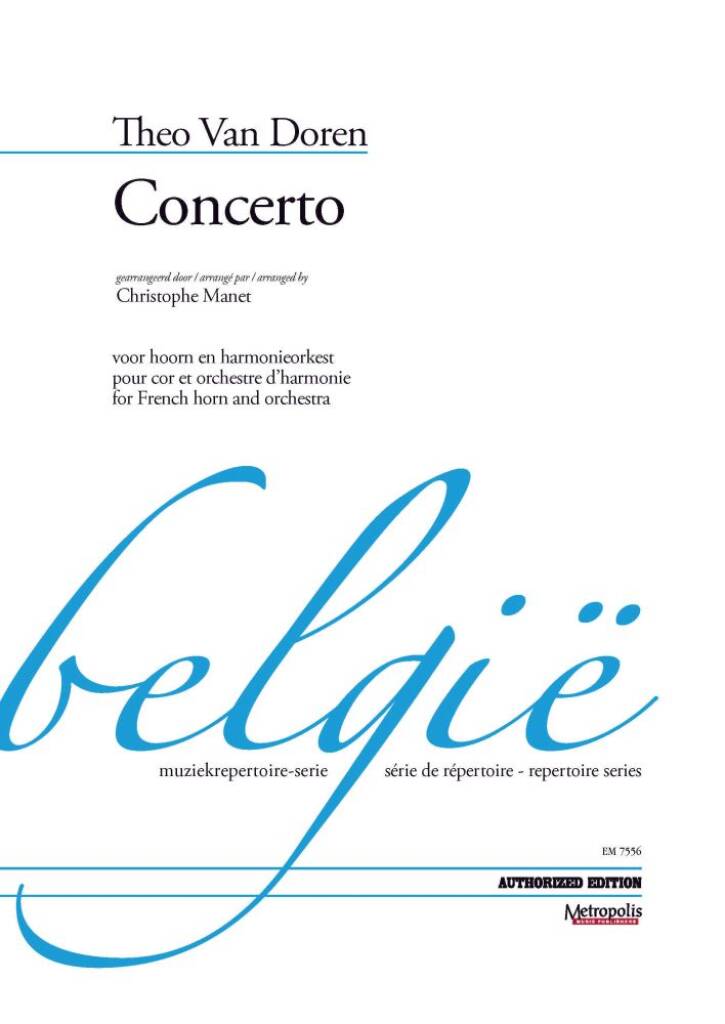
Concerto for French Horn and Wind Band, Op. 29 - Theo van Doren
Theo Van Doren was an Antwerp musician, violinist and composer who, despite many foreign offers, preferred to stay in his own Antwerp. He started his career as a musician in silent movies, then as a soloist, with his own string trio. Later he became solo violinist in the Flanders' Opera Orchestra and conductor. He worked with a.o. Strawinksy, Rubinstein, Stern, etc. He also taught violin for 35 years at the Borgerhout music academy, where he trained many professional musicians.
Estimated dispatch 7-14 working days
-
 £183.20
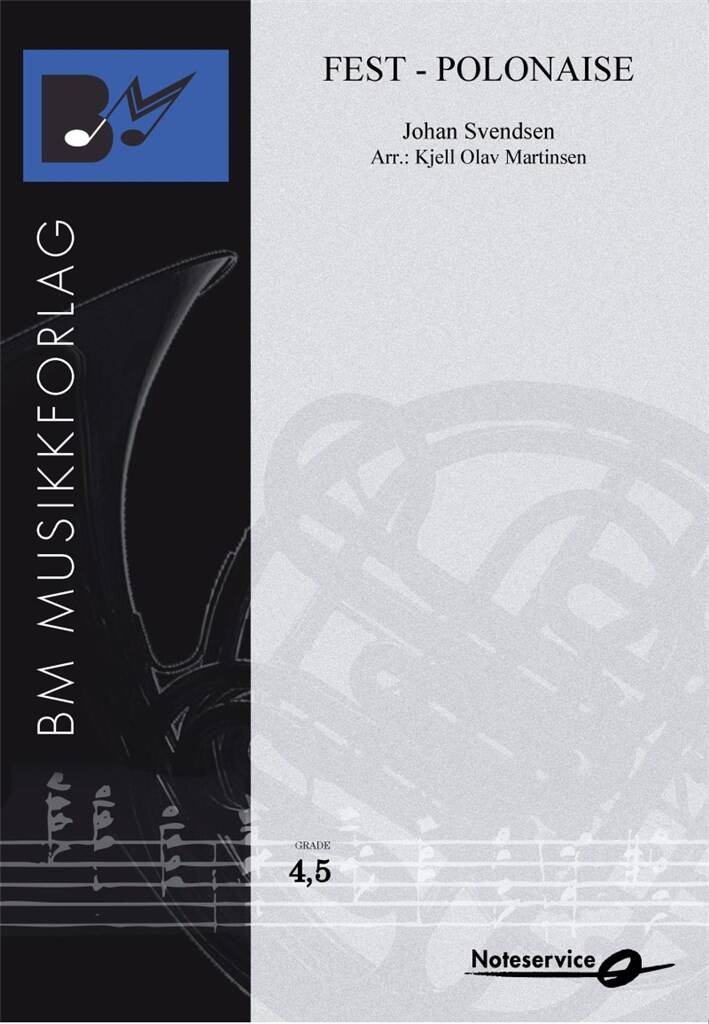
Fest - Polonaise - Johan Svendsen
Johan Svendsen (1840 - 1911) was the first great Norwegian symphonic composer, as well as one of the leading conductors of his time. Next to Edv. Grieg, he was the most prominent figure in Norwegian music life at the end of the 1800's. Although he came from humble beginnings in Chistiania (now Oslo), he was to become a cosmopolitan who felt at home all over Europa. Svendsen spent most of his adult life abroad, living in Copenhagen for 25 years as maestro for the Royal Theatre Orchestra. Nonetheless he retained contact with Norway troughout these years and was a frequent and popular guest in his native country. He wrote his Festival Polonaise for a ball in 1873. This polonaise ina big ABA style
Estimated dispatch 7-14 working days
-
 £149.40
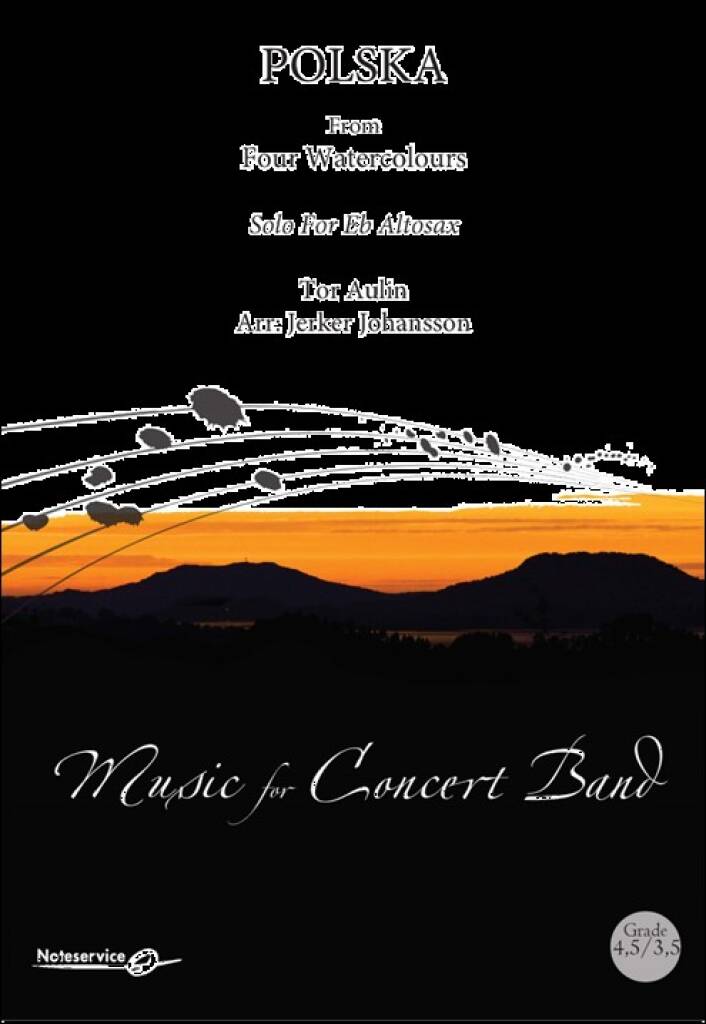
Polska from Four Watercolours - Tor Aulin
Few composers have had such an impact on Swedish music life as Tor Aulin (1866 1914). He studied violin and music theory in Stockholm 1877 83, and in Berlin 1884 86. In 1887 he founded the Aulin Quartet, which for more than 20 years played animportant role in broadening Swedish interest in chamber music. The quartet was often on tour with the composer Wilhelm Stenhammar at the piano.1889 1902 Aulin was the leader of the orchestra at the Royal Opera in Stockholm.At Aulinsinstigation the Concert Association in Stockholm (later The Royal Philharmonic Orchestra) was founded in 1902, and he was its conductor until 1909. From then on he was the conductor of the Gothenburg ConcertAssociation (nowadays The GothenburgSymphony Orchestra).Besides being a first class violinist, Tor Aulin was also an accomplished pianist, and Edvard Grieg was deeply impressed by Aulin's rendering of his piano concerto.Aulins list of works is dominated by his musicfor violin. He wrote three violin concertos, the third of which still has a place in the repertoire.Four Aquarelles for violin and piano from 1899 is his most beloved composition. In 1996 Jerker Johansson arranged this work for soloinstruments, one for each of the four movements, and concert band. The solo instruments being clarinet, trumpet, flute and alto saxophone.
Estimated dispatch 7-14 working days
-
 £149.40
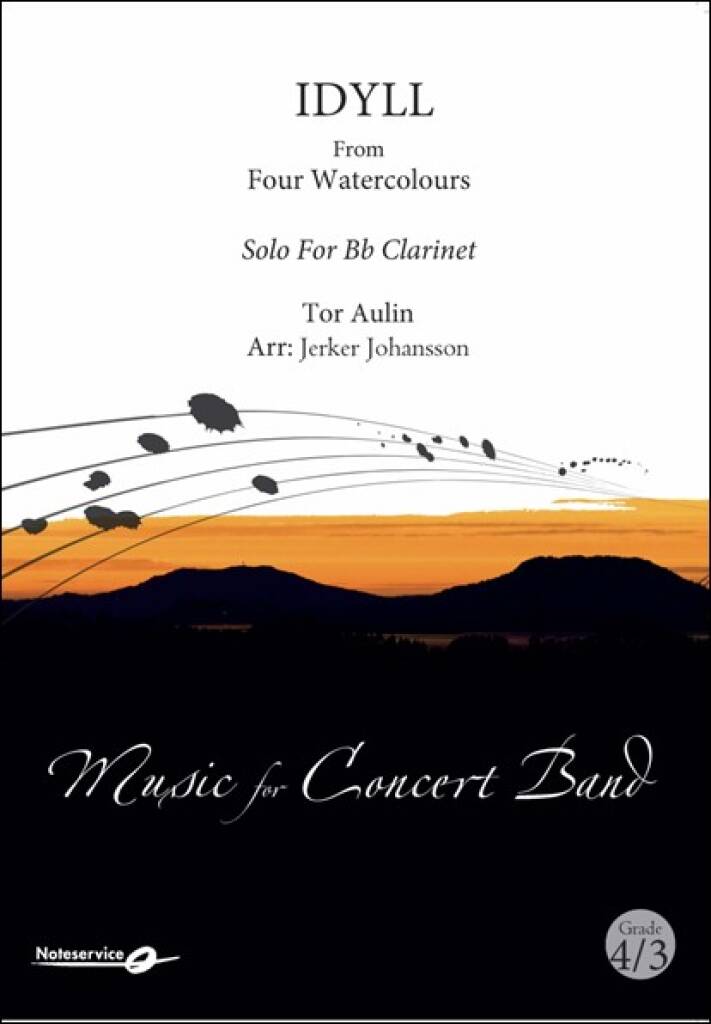
Idyll - Tor Aulin
Few composers have had such an impact on Swedish music life as Tor Aulin (1866 1914). He studied violin and music theory in Stockholm 1877 83, and in Berlin 1884 86. In 1887 he founded the Aulin Quartet, which for more than 20 years played animportant role in broadening Swedish interest in chamber music. The quartet was often on tour with the composer Wilhelm Stenhammar at the piano.1889 1902 Aulin was the leader of the orchestra at the Royal Opera in Stockholm.At Aulinsinstigation the Concert Association in Stockholm (later The Royal Philharmonic Orchestra) was founded in 1902, and he was its conductor until 1909. From then on he was the conductor of the Gothenburg ConcertAssociation (nowadays The GothenburgSymphony Orchestra).Besides being a first class violinist, Tor Aulin was also an accomplished pianist, and Edvard Grieg was deeply impressed by Aulin's rendering of his piano concerto.Aulins list of works is dominated by his musicfor violin. He wrote three violin concertos, the third of which still has a place in the repertoire.Four Aquarelles for violin and piano from 1899 is his most beloved composition. In 1996 Jerker Johansson arranged this work for soloinstruments, one for each of the four movements, and concert band. The solo instruments being clarinet, trumpet, flute and alto saxophone.
Estimated dispatch 7-14 working days
 View Music