
Results
-
 £141.99
Funiculi-Funicula Rhapsody - Luigi Denza
This famous melody was written for the 1880 opening of Mt. Vesuvius' funicular railway, lyrics were by Peppino Turco. Mr. Goto's fantasy commands immediate excitement with unmuffled percussion and bold fanfares that segue into a proper tarantella and trombone soli. Carefully observe relative dynamics throughout the 6/8 section, and give all dotted quarter notes equal treatment. Dynamic contrast is critical to maintaining interest in the returning melodic line. The alto/tenor voiced counter line at G should dominate. Take advantage of the novel woodwinds solis at H emphasizing lower voices. The polyrhythmic feel at J and K is best conducted in one; have all "play to" the melody. Enjoy the romantic potential of section L and do not exceed the indicated tempo. Sections N and O can be decidedly mechanical. Certainly "pull out the stops" at the concluding 6/8, but continue to observe all tempi and dynamics for a most effective finale.
Estimated dispatch 7-14 working days
-
 £84.99
Fanfare prelude: O God our Help in Ages Past - James Curnow
FANFARE PRELUDE: O GOD OUR HELP IN AGES PAST is based on the hymn-tune "St. Anne," which was used by G.F.Handel in the Chandos anthem "O Praise the Lord," and by J.S.Bach in his triple fugue in E-flat "The St. Anne Fugue." James Curnow's FANFARE PRELUDE: O GOD OUR HELP IN AGES PAST captures the thoughts of this magnificent hymn, which speaks of our country's reliance upon God. The unusual 4/4 meter setting with artfully crafted re-harmonizations and lush counterpoint gives each listener cause to reflect on the importance and meaning of this melody to patriotic Americans everywhere.Inspired!
Estimated dispatch 7-14 working days
-
£69.99
Scale Studies for Band - James Curnow
An important part of our Essentials of Musicianship Series, Scale Studies for Band is designed to be used as an instructional aid during your normal daily practice. Written so that the scale studies can be interlaced at appropriate times into your rehearsal, they enable you to address the scale and key considerations of your next piece just before starting that piece. For instance, if the next arrangement you will rehearse has a section in the key of G Major, you can take a moment and review the study in that key (Study Number 7). It's amazing how many wrong notes can be avoided by reviewing the key signature in an interesting and exciting manner, before diving into theperformance piece rehearsal. In the long run, this "key signature review" approach can actually save more rehearsal time than it uses. In addition to the full band aspect of Scale Studies, you may find value in quickly and easily administered "playing tests" using these materials. However you choose to use them, the Scale Studies from the Curnow Music Press Essentials of Musicianship Series will be valuable indeed!
Estimated dispatch 7-14 working days
-
 £94.99
Fantasia for Tuba and Concert Band - James Curnow
The composition begins with the solo tuba stating the four notes (F, Bb, G, C) on which the entire piece is based. All other themes, and much of the harmony, are built on these four notes and their permutations. There are four main sections, with a brief cadenza before the last movement
Estimated dispatch 7-14 working days
-
 £174.99
Et in terra Pax - Jan Van der Roost
This piece was commissioned by the 'Concert Band Vlamertinge' and is a plea for peace: the title translates as 'Peace on Earth'. This is expressed by means of the vocal contribution expected from the performers. In various places of the piece you can recognize, the words 'Et In Terra Pax' - an appeal for peace - at first jumbled together but later more rhythmically structured, developing into synchronized massed voices.The work starts with a pentatonic theme based on the notes D, E, G, A and C (taken from 'ConCErtbAnD VlAmErtinGE' and the name of the conductor, NiCk VAnDEnDriessChe). A somewhat sad melody is developed during an orchestral climax which leads to the firstexplosion of sound (measure 62 onwards). Suddenly the opening measures are recaptured, albeit with a differently colored sound: the words 'Et In Terra Pax' bring the first movement to a close. A restless Allegro follows which abruptly stops and is replaced by a calming cho-rale-like passage. A narrator reads aloud the poem 'Sonnet' by the young poet Charles Hamilton Sorley, who was killed during World War I. This poem fittingly puts into words the cruelty and senselessness of war. After the expanded recapitulation of the allegro, the broad, almost infinite atmosphere of the beginning returns. Clarinet and English horn play the pentatonic opening theme once more, this time broadly, while the words 'Et In Terra... Pax' are repeated again and again by the rest of the orchestra.The composer has purposely avoided all forms of aggression and bombastic sounds regularly used in works about war. Fear of violence and destruction can be heard and felt during the allegro passages. The charged opening makes way in the end for hope: May peacefulness replace cruelty in everyday life, too.
Estimated dispatch 7-14 working days
-
 £88.50
-
 £72.10
-
 £104.99
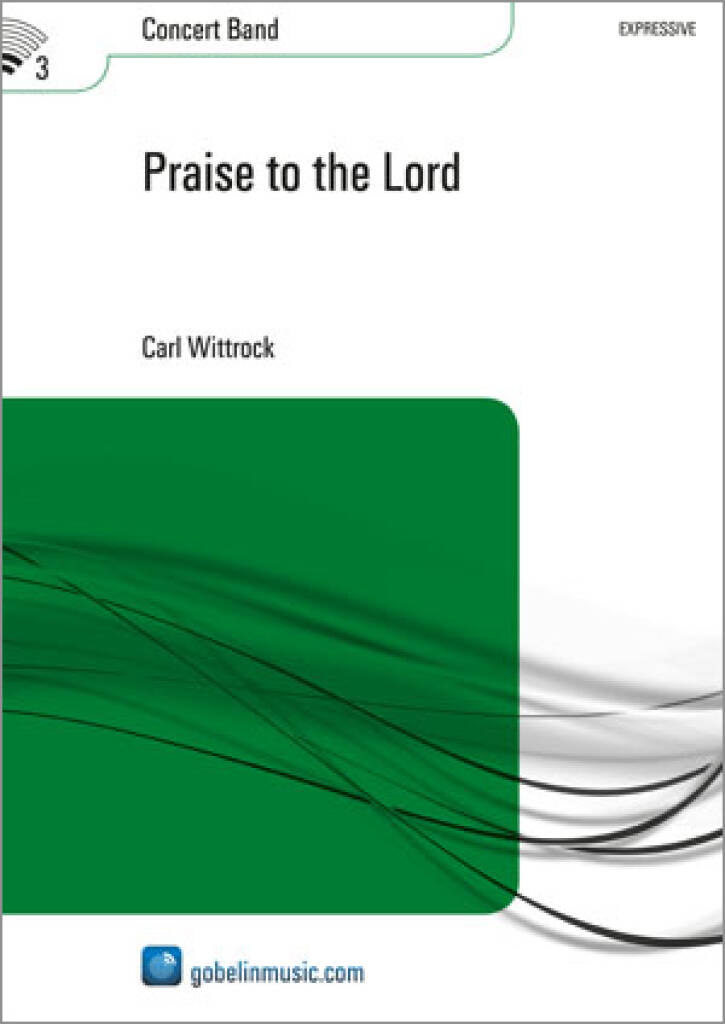
Praise to the Lord - Carl Wittrock
This composition, based on the hymn Praise to the Lord, is comprised of eight separate parts that can be played together as a concert piece or opening work. The A and B sections are different openings, C is four-part arrangement of the hymn, D is a solo for four saxophones, or two trumpets and two trombones, E is a calm intermezzo, F a solo for trumpet or cornet, and G and F finally are a majestic or peaceful closing section. How will you choose to present this piece on stage?
Estimated dispatch 7-14 working days
-
 £286.40
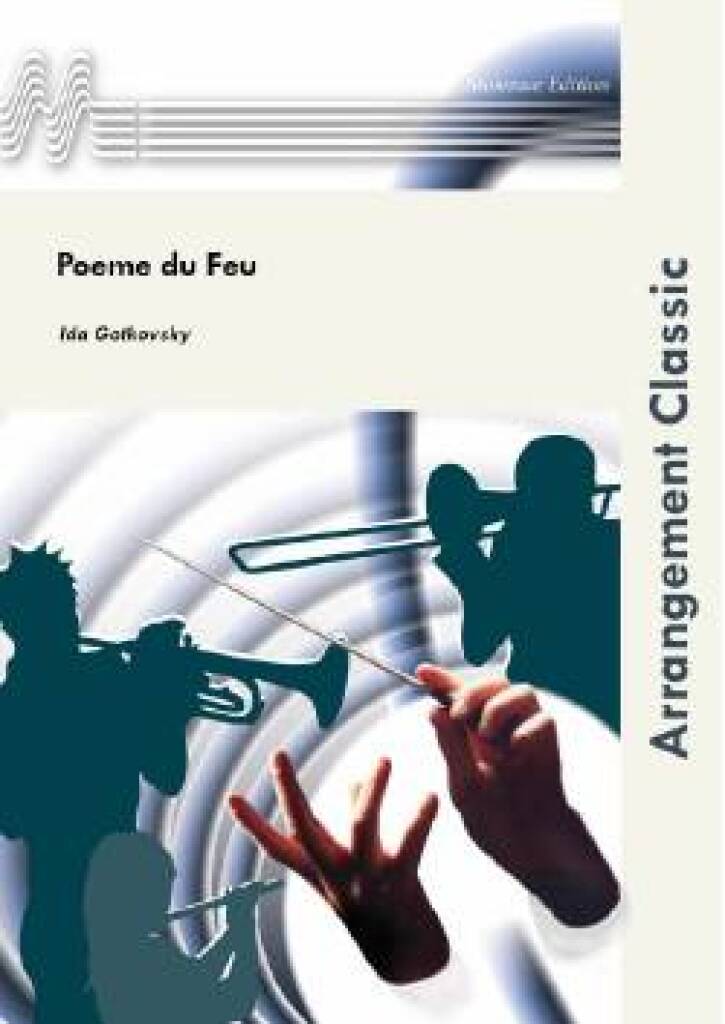
Poeme du Feu - Ida Gotkovsky
Major Albert Fasce, head of the musical department of the French Army, wrote about Pome du Feu:The Pome du Feu by Madame Ida Gotkovski is probably one of the original compostitions for symphonic band which has been most successful in recent years. I have had to conduct this work at concerts with different orchestras, and in particular at Budapest, and each performance was greeted by enthusiastic ovations. Moreover, it is quite rare in contemporary music to achieve, at the same time, the satisfaction of the musicians and success with the public. This is significant. This magnificent work is written remakably for wind instruments. There is no major technical difficulty, but the character of this work calls for meticulous placing and a certain orchestral glow. There is a "key" to be found in the first movement, which is in some way the rhythmic genesis of the work. The metronome marking of the first movement should be absolutely respected, and proper interpretation of the accents and the articulations are imperative. The fortissimi and rallentandi should not be exaggerated. As far as the little "trick" is concerned, this lies in the execution of the double crochets which should be considered in two ways: the first, a rhythmical one for those which arise from the rhythmic genesis, and the second more melodic for those arising in passages.Finally, to unseal the rhythmic origin of the double crochets, it is necessary to proceed by recurrence, starting from the four double crochets of the finale.These four double crochets must be executed very rhythmically in the different times. For the first, they arise:1: from the second bar of the first movement2: from the bar three bars before A for the second3: from the bar from G to the fourth time for the third.These double crochets must be played rhythmcally, while diminishing, however, those three bars before A.All this is of great importance, otherwise the whole execution will be in contradition with the spirit and the rhythmic inspiration of the work. Moreover, this beautiful work could very well support a ballet.As Head of Broadcast Music I must express all our gratitude to Madame Gotkovski for her contribution to constituting a real repertoire for wind ensemble. This articular and sometimes unappreceated band possesses unsuspected riches. This magnificent work is now in the repertoire of Musique de l'Air de France.
Estimated dispatch 7-14 working days
-
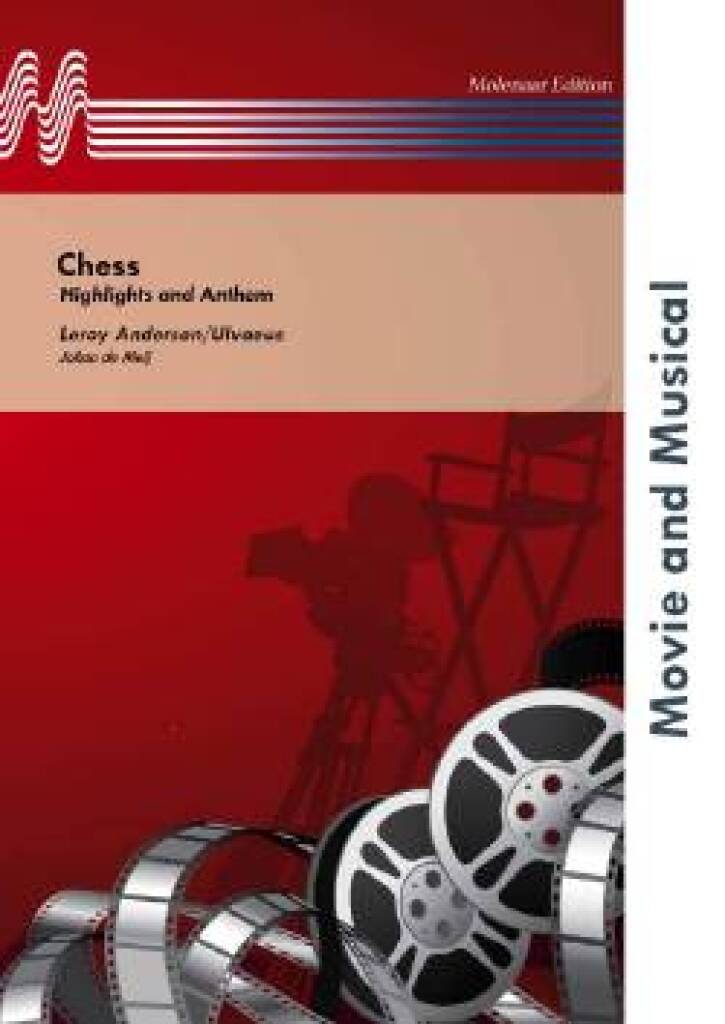 £186.20
Highlights from Chess - Benny Andersson
The composers of the musical Chess, Benny Andersson and Bjrn Ulvaeus, as well as the lyricist Tim Rice had already had a very successful career before they started this huge project. Andersson and Ulvaeus had been the male singers of the popular Swedish group ABBA, whereas Tim Rice had written the lyrics for Lloyd Webber's musicals 'Jesus Christ Superstar' and 'Evita'. The plot of the musical is situated in Merano, a small town in Northern Italy, hosting the Chess World Championships. The protagonists are the American titleholder and his Russian challenger, who are adversaries on both the sports and political level. Nowadays the subject is out of date, as Chess was conceived in 1984 when the political scene was completely different. This might be the reason why this musical did not hold out as long as e. g. 'Les Misrables' or 'Cats'. Anyhow the music remained very popular and songs such as 'Last Night in Bangkok', 'I know him so well' and 'Anthem' belong to the standard repertoire of 'musical classics'. In his 'Chess selection' Johan de Meij used the nice orchestral parts of the soundtrack which gave a kind of symphonic character to this musical.
Estimated dispatch 7-14 working days
 View Music