
Results
-
 £9.95
£9.95Tunes and Toasts for all Times (Db Flute & Piccolo) - Barsotti, Roger
Titles:ENGLISH AIRSA fine old English GentlemanA-hunting we will goBritish GrenadiersCherry ripeClementineCome, lassies and ladsDrink to me onlyDulce DomumDrunken sailor (The)For he's a jolly good fellowFarmer's boy (The)Floral DanceFrothblowers' AnthemGirl I left behind me (The)Here's a health to all good ladiesHere's a health unto her MajestyHere's to the maidenJohn PeelKeel row (The)Love's old sweet songMarch of the Fire BrigadesMistletoe bough (The)On Ilkla MoorPrincess Royal's Red Cross marchRoast beef of old EnglandSir Roger de CoverleySee the conquering hero comesSoldiers of the QueenThere is a tavern in the townNAUTICALHeart of oakHornpipeLife on the ocean waveShenandoahRed, white and blue (The)Rule, BritanniaSCOTTISH AIRSAnnie LaurieAuld lang syneBonnie banks of LochBonnie DundeeBlue-bells of ScotlandCampbells are coming (The)Charlie is my darlingFlowers of the forestHundred pipers (The)Highland LaddieRobin AdairScotch ReelScots wha haeWill ye no come back againYe banks and braesIRISH AIRSCome back to ErinDanny boy (Londonderry air)Harp that once through Tara's hallIrish Washerwoman (The)KillarneyMinstrel boy (The)Oft in the stilly nightOff to PhiladelphiaSt. Patrick's DayWELSH AIRSAll through the nightAsh grove (The)Bells of AberdoveyDavid of the white rockLand of my fathersMen of HarlechAMERICAN AIRSCarry me back to old VirginnyDixieGood-night (shine, shine, moon)John Brown's bodyMarching thro' GeorgiaOld folks at home (The)Star Spangled BannerTramp, tramp, tramp, the boys are marchingWhen Johnny comes marching homeYankee doodleCANADA AlouetteMaple leaf (The)O CanadaAUSTRALIAWaltzing MatildaSACRED AIRS & CAROLS Abide with meEternal Father strong to saveO God our help in ages pastFirst Nowell (The)Good King WenceslasO come all ya faithfulWhile shepherds watchedJerusalemSupreme sacrifice (The)Dead march in SaulPARADES (All organisations)General saluteSlow march or troop "Scipio"Troop "May-blossom"FANFARES, etcDeclamatory No. 1Occasoinal Fanfare No. 2"Reveille""Retrear""Last Post"Galop from "Orpheus in the Underworld"God save the Queen (in B flat)God save the Queen (in F)
Estimated dispatch 7-14 working days
-
 £21.50
Washington's Fanfare - Alexander N. Abbott
Abbott's new flute choir rings true to the best of the presidential fanfares, an original work which evokes the pageantry and honor of its subject. Score and parts are supplied for piccolo, 3 flutes, alto flute, bass flute, contrabass flute, and string bass, with many substitution options.
Estimated dispatch 7-14 working days
-
 £32.95
Sinfonia From Cantata No.29 - Johann Sebastian Bach
Traditionally performed by solo organ, Bach's Sinfonia from Cantata No. 29 is arranged here for flute choir, with the piccolo parts closely following how an organist would perform the music. This arrangement has interesting textural and dynamic contrast, despite few dynamic markings, which Long creates through thoughtful scoring of different flute parts playing in various registers of the flute range. This arrangement was premiered in July of 2009 by the New England Conservatory Summer Metropolitan Flute Festival Orchestra in the New England Conservatory's renowned Jordan Hall. For advanced players.
Estimated dispatch 7-14 working days
-
 £84.99
Flutes Forever - Wim Laseroms
As the title implies this new piece brings the flute section into the limelight. Following a fast introduction by the accompanying band, the flute section follows in three-parts with a rapidly syncopated/staccato theme. After a short interlude by the band, this opening theme appears once again. The second flute theme returns following a short passage in which the band and the soloists alternate and the piece comes to a entertaining conclusion. Let your flute section shine with this playful new work.
Estimated dispatch 7-14 working days
-
 £87.70
Introduction and Rondo Capriccioso - Camille Saint-Saëns
A brilliant transcription of this very famous violin solo, utilizing a more chamber-like wind ensemble scoring in order to maintain the delicate balance between the soloist and ensemble. Instrumentation: Solo Flute, C Flute 1, C Flute 2, Oboe 1, Oboe 2, Clarinet 1, Clarinet 2, Bass Clarinet, Bassoon, Horn 1, Horn 2, Trumpet 1, Trumpet 2, Euphonium (T.C. and B.C.), Tuba, Timpani
Estimated dispatch 7-14 working days
-
 £113.30
Moderate Dances - Angelo Sormani
This piece is a tribute to dance music, especially passionate, intense and meditative dance music. "Moderate Dances" is divided into three movements: a "Tango", a "Slow Waltz" and a "Bossa Nova". Each movement and each dance has its own particular characteristics but, when combined, these different rhythmic beats and times give the piece a feeling of completeness and uniformity. The Tango started to flourish in the suburbs of Buenos Aires in around 1880. There is still some doubt as to its origins, which may be Cuban (Habanera) but are probably African. It was most popular in Argentina and Brazil: here the male protagonist was originally the "gaucho" with his inseparable guitar, later to be replaced by the proud, elegant "compadre". By around 1910 the Tango had spread to Italy and France. New clubs opened, where the upper classes could watch and dance the Tango. Here the dance also underwent some rapid transformations. The exaggerated and extravagant gestures and body movements disappeared. Slow, gliding steps replaced the old rotational movements. The women's red ankle-boots and the partners "staring into each other's eyes" accentuated the erotic nature and sensuality of this dance. So much so that, in 1913, the German government banned soldiers from dancing the Tango. Those who broke the law were immediately discharged from the army. From a strictly musical perspective, the basic instruments were a flute, a harp (the diatonic harp typically played by the Indians of Paraguay) and a violin, or flute, guitar and violin or even clarinet, guitar and violin. These instruments were easy to transport, ideal for playing at parties, in the streets and in courtyards. The musicians played by ear, frequently improvising: there were no scores, no records, which is the main reason why it is impossible to trace the Tango back to its exact origins. However, the Tango's evolution (and growing popularity) was once again fostered by its fundamental ability to absorb "other" cultures, languages and sounds. And it was the arrival of the "bandoneon" (an accordion-like instrument that was invented in Germany and brought to Rio de la Plata by some immigrant), which replaced the flute, that marked the beginning of the Tango's huge success outside Argentina. A number of talented composers, above all the great Astor Piazzola (1921-1992), transformed the bandoneon from a simple accompanying instrument to a solo instrument that was to become the distinguishing feature of the 20th century Tango. The Slow Waltz originated from the Waltz, the typical dance of the Bavarian and Tyrolese peasants in the 1700s. It was composers like Johann Strauss, father and son, who carried the Waltz to its zenith in the 1800s, creating the sensual and melancholy yet joyful and charming dance we are all familiar with. When the Waltz first became popular in Germany, the members of respectable society were shocked at the closeness of the dancing partners, who had always previously danced apart. The main difference between the Waltz and Slow Waltz is that the latter has a slower, more expressive rhythm: the men wear tails and the women wear ball gowns decorated with beads and feathers and couples dance in graceful rotational movements. "Bossa Nova" is the title of the last movement in the piece. Jobim, the great Brazilian musician, described this musical genre as a combination of modern Jazz and Samba. Bossa Nova means "new wave". This was the name of the artistic and musical movement that evolved in Brazil in the late Fifties and was extremely popular throughout the Sixties. The songs are usually about love or social matters, drawing inspiration from the slums of Rio De Janeiro and the lives of their inhabitants. Bossa Nova, with its original compositions and the artistic talent of its musicians, also became hugely popular in the United States and Europe, and top Jazz musicians (Ella Fitzgerald, Stan Getz, Bob Cooper, Charlie Bird, Sonny Rollins, Dexter Gordon, Dizzy Gillespie) started to include Bossa in their repertoires.
Estimated dispatch 7-14 working days
-
 £84.99
Twinkling Flutes - Richard Comello
Composer Richard Comello observed that there is practically no music written for two flutes accompanied by concert band, so he composed this delightful piece convinced that this it will fill this little gap in the repertoire. Following a solemn baroque style introduction, joyful characteristic flute sounds develop with subtle band accompaniment. The two flute parts can be played by more players so enabling this piece to put your complete flute section in the spotlight.
Estimated dispatch 7-14 working days
-
 £96.40
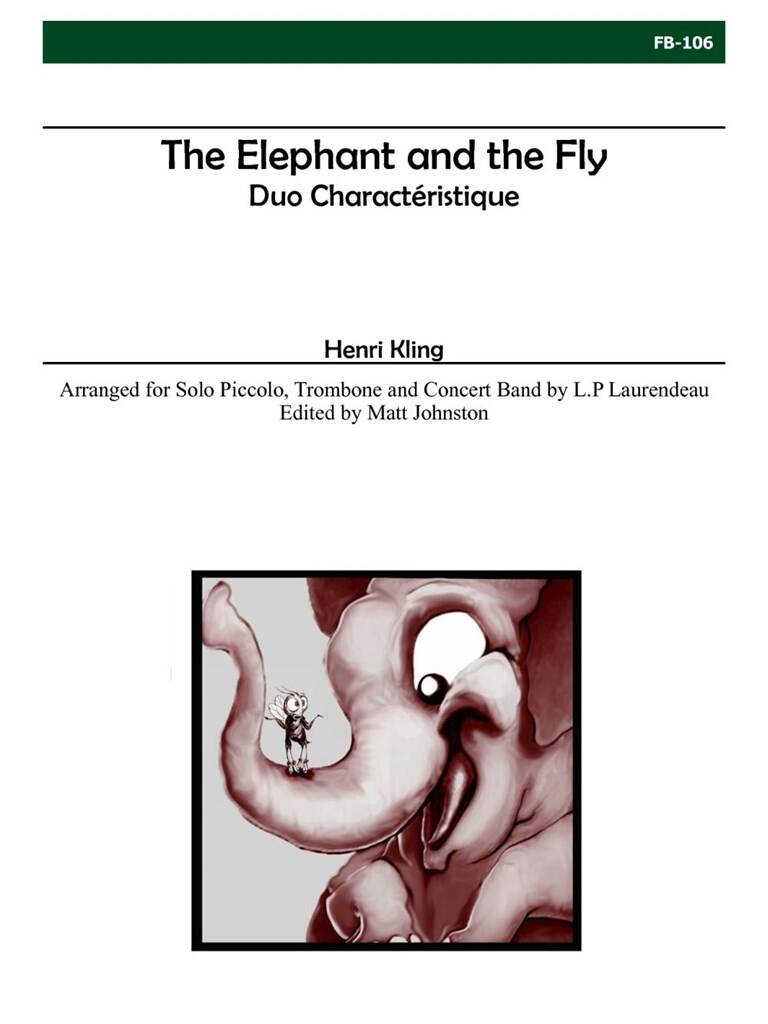
The Elephant and the Fly - Henri Kling
This newly revised edition of perennial favorite "The Elephant and the Fly" is based on the original parts published in 1918. This updated version includes a full score, in addition to a few adaptations/transpositions to accommodate modern band instruments. Lastly, each of the solo parts is transposed into a variety of keys, such that a variety of soloist combinations are now possible. Instrumentation: Solo Piccolo (or Flute/Clarinet/Trumpet), Solo Trombone (or Bassoon/Bass Clarinet/Tuba), Flute 1, Flute 2, Oboe 1/2, E-Flat Clarinet, Clarinet 1, Clarinet 2/3, Bass Clarinet, Soprano Saxophone (or alternate Alto Saxophone), Alto Saxophone, Tenor Saxophone, BaritoneSaxophone, Bassoon, Horn 1/3, Horn 2/4, Solo Cornet, Cornet 1, Cornet 2/3, Trombone 1/2, Bass Trombone, Euphonium, Tuba, Percussion
Estimated dispatch 7-14 working days
-
 £174.99
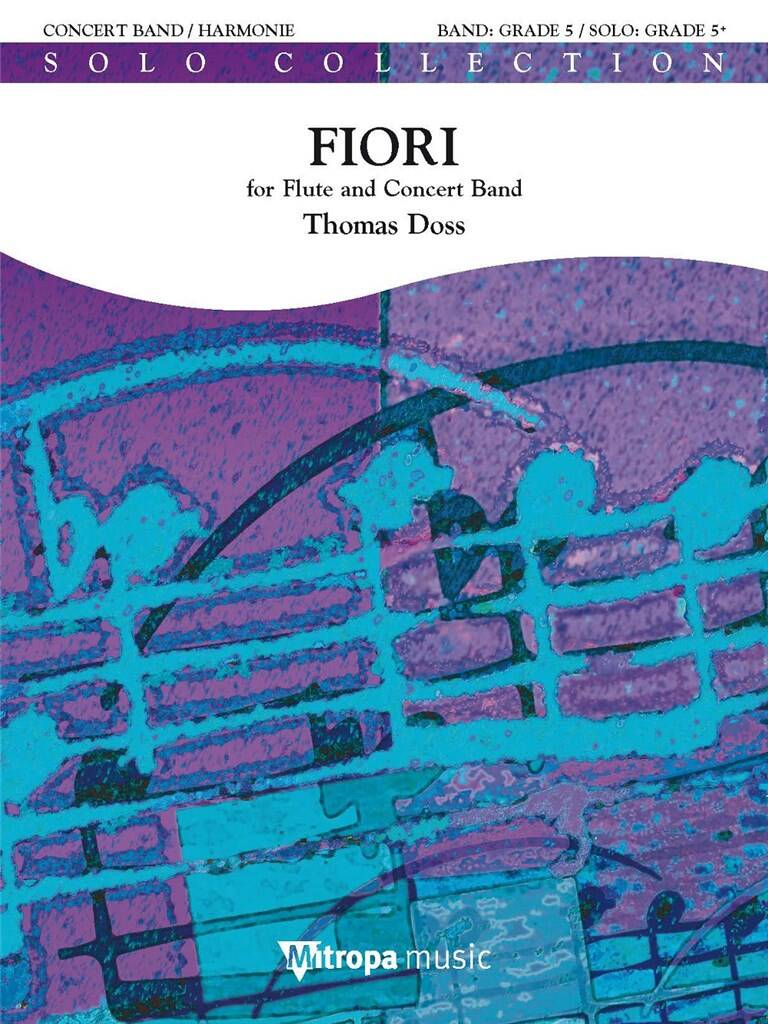
Fiori - Thomas Doss
Fiori finds its genesis in a walk through an impressionistic garden. It expresses not only the atmosphere and mood but also tiny and grotesque scenes between the insects. The flute, as a solo instrument, plays a perfect role in this marvellous micro world. It was a challenge for the composer to integrate the sound of the flute through the "fragrance of flowers and exotic plants that fills the air".
Estimated dispatch 7-14 working days
-
£134.99
Recalls - Ben Haemhouts
Recalls obviously refers to memories. This piece of music is in fact a series of flashbacks, however, it does not highlight the actual memories of specific thoughts, people or events.The composition evolves around the late Frans Steurs, who for manyyears was the inspirational artist behind the brass band that is currently commissioning this work. The main theme of the work is based on the name STEURS". E = mi, U = do, R = re and S = "si" which is Dutch for the note "ti". This idea forms themusical theme for the entire composition and different variations are used throughout. The structure of the work is based on the concept of a story which father Steurs is telling his two daughters, who play the flute and the clarinet. Each part ofthe work has a story-like character:1. Introduction: following a short ominous intro, the main theme is presented for the first time.2. The Story: father Steurs has both his daughters on his knee and he tells them stories from the old days. Trumpetsand trombones play variations of the theme. The story gets very exciting (accelerande, poco a poco agitato) until the tale takes a dramatic turn when the father tells an exciting story at the time of the Second World War. He tells of being hunteddown by the occupying army and these adventurous episodes are related to us musically in part3. Danger, with its skilful references to "vor dem Sturm" from "Eine Alpensinfonie" by Richard Strauss.4. called Fugitives, is about how he fled in the nightfrom the enemy and this is reflected in the bass tones of a new theme. The aggression of the war is illustrated from bar 117 onwards, by a harsh brass section. The main theme is repeated once again and this time up-tempo. The second theme is broughtonce again from bar 149 onwards.5. Dialogues, depicts the conversations between the two daughters and their father. Father speaks (bar 155); the daughters answer (bar 164 - flute, bar 166 - clarinet); bar 178: father answers with the tune of the maintheme to the two daughters. The discussions gradually intensify but ultimately end in peace in the last part called Conclusion.The piece of music "Recalls" is a free interpretation by the composer who consulted the letters between the two daughtersof Steurs and their father and in this respect it is not really music for a programme."
Estimated dispatch 7-14 working days
 View Music