
Results
-
 £80.99
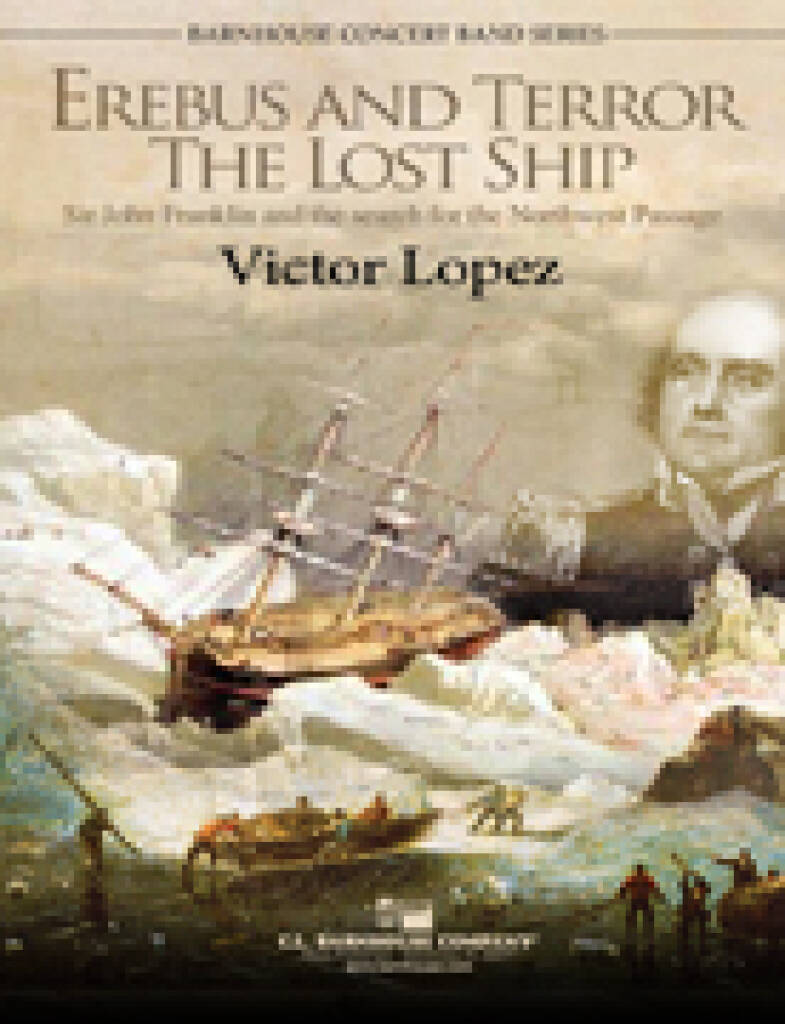
Erebus and Terror: The Lost Ships - Victor Lopez
This Victor Lpez work evokes images of excitement, bravery and sorrow as "Erebus and Terror: The Lost Ships" retells the story of the Sir John Franklin expedition in search of the Northwest Passage. Beginning with anticipation as the explorers depart their homeland, the rousing melodic theme is written for clarinet, horn and alto saxophone. The excitement of the journey turns melancholic for a few moments, as the gravity of their journey sinks in, but their courage is again renewed as the trumpets tell the story. A haunting flute and oboe duet foreshadows the inevitable crash portrayed with strong chromatic dissonances, into the ice and the loss of both ships and their crews. The journey has ended for these men, but their story lives on and Sir John Franklin is remembered as a hero due to his valuable contributions to the development of Canada's north. Highly recommended!
Estimated dispatch 7-14 working days
-
 £7.87
Alfred's Basic Piano Library: Lesson Book 3: Piano Book - Willard A. Palmer, Morton Manus, and Amanda Vick Lethco
This easy step-by-step method emphasizes correct playing habits and note reading through interval recognition. Lesson Book 3 introduces "overlapping pedal"; new time signatures 3/8 and 6/8; and the primary triads in Major and Minor keys. Concepts include: passing one under two and one under three; playing major scales in contrary motion; the chromatic scale; the minor scale. For reinforcement of each principle as it is introduced, supplementary material is carefully coordinated, page for page, at each level of instruction. Coordinating supplemental books for Level 3 include: Classic Themes * Composition * Duet * Ear Training * Ensemble * Fun * Hymn * Merry Christmas * Merry Christmas Ensemble * Musical Concepts * Notespeller * Patriotic Solo * Recital * Repertoire * Sight Reading * Technic * Theory and Solo, Christmas and Duet Book. Songs Include: Alpine Melody * Casey Jones * A Day in Vienna * Enchanted City * Fandango * Festive March * Go Down, Moses * Goodbye, Old Paint * Greensleeves * Hunting Song * Intermezzo * Light and Blue * The Major and the Minor * Make Up Your Mind! * On Top of Old Smoky * Prelude in 18th Century Style * Raisins and Almonds * La Raspa * Roman Holiday * Scarborough Fair * Scherzo * Village Dance * Waltz Pantomime
Estimated dispatch 3-5 working days
-
 £36.95
Summer Song (Concert Band - Score and Parts) - Wiffin, Rob
A gentle song in ABA form catching the spirit of a relaxed summer's day. Early in July 2024 the composer was asked to write a flashy trombone duet of 4 minutes' duration for a summer school. The duet starts with a slower section before moving on to the fireworks. This emerged into the band version of Summer Song - gentle, warm, lyrical and technically undemanding.Duration: 3.30
Estimated dispatch 7-14 working days
-
 £94.95
TOCCATA IN BLUE (Programme Concert Band - Score and Parts) - Stubbs, Duncan
Toccata in Blue was originally written as a duet for 2 pianos, where the incessant movement and improvisatory element seemed particularly well suited. Built around some of the composers favourite blues chords, the piece was an ideal candidate for reworking for wind band. While the overall framework of the piece remains largely similar to the piano duet, the material has been thoroughly re-worked to suit the larger forces and particularly the invaluable addition of percussion.
Estimated dispatch 7-14 working days
-
 £64.35
Double Concerto - Vivaldi, Antonio
This famous Allegro movement from a Vivaldi concerto for two trumpets is presented here in an arrangement loaded with flexibility as to choice of soloists and even the accompanying ensemble. May be performed as a solo or as a duet, and it includes solo/duet parts for Bb instruments: Trumpets or Clarinets; C Instruments: Flutes, Oboes, or Violins; Eb Instruments: Alto Saxophones; F Instruments: Horns; and Bass Clef instruments: Bassoons or Trombones. The accompaniment is cleverly scored so that it is playable by a full, traditional concert band; or by a "chamber wind ensemble" of woodwinds, horns, and timpani (ideal for accompanying upper woodwind soloists.) A great way to feature outstanding soloists from your band!
Estimated dispatch 7-14 working days
-
£64.35
Fandango for Mallet Percussion and Band
A delightful composition which features either a mallet percussion solo or duet with band accompaniment. The lively Latin melodies work well on either marimba or xylophone and it's not too difficult! Duet parts can easily be doubled to include all of those mallet players you have left over from marching season. Full of audience appeal, it's a great change of pace piece for any concert! Exceptional!
Estimated dispatch 7-14 working days
-
£19.95
TOCCATA IN BLUE (Programme Concert Band - Score only) - Stubbs, Duncan
Toccata in Blue was originally written as a duet for 2 pianos, where the incessant movement and improvisatory element seemed particularly well suited. Built around some of the composers favourite blues chords, the piece was an ideal candidate for reworking for wind band. While the overall framework of the piece remains largely similar to the piano duet, the material has been thoroughly re-worked to suit the larger forces and particularly the invaluable addition of percussion.
Estimated dispatch 7-14 working days
-
 £79.95
Variations on 'Was Lebet' (Concert Band - Score and Parts) - Wainwright, Andrew
Variations on 'Was Lebet' is based on the German chorale of the same name, the first line of which translates as 'O worship the Lord in the beauty of holiness!' The opening fanfare figure in the Trumpets should be supported by bold, organ-like sostenuto chords in the lower band. Ensure that the fanfare in the Trumpets and Trombones from bars 25 to 28 is given equal articulation and volume in the antiphonal parts. After this majestic introductory section, the first of five contrasting variations is presented, although the tune is never realised in full form until the final variation, with fragments gradually being revealed as the piece progresses.Variation I is somewhat classical in approach, with its energy coming from a regular contrast between cantabile references to the theme, set against lively staccato figures. Ensuring a lightness of touch will be important here; the music should be poised and never sound frantic. As a result, careful attention should be paid to the tempo marking, being no quicker than 136 beats per minute. Snippets of the chorale come and go, with the last phrase of the hymn completing the movement. This final statement, at bar 95, should be an immediate change in tempo and a separate statement to the music that comes before.Variation II is plaintive in mood, giving the listener the chance to reflect on the following words, which form part of the second verse: 'Comfort thy sorrows and answer thy prayerfulness, Guiding thy steps as may best for thee be.' There is opportunity for rubato in this movement, at the discretion of the conductor.Variation III is somewhat quirky and volatile in nature, and takes its inspiration from the 3rd and 4th verses which describe the fearful times in life that we must entrust to the Lord. Driven by the Percussion section in particular, there are references here to Variation I with its chorale-like figures and hurtling scalic figures, and there is a feeling of a lack of resolution. A somewhat abrupt ending suggests that our sense of completeness in Christ is yet to be resolved. It is important that clarity and tempo are maintained in the bass line between sections L and M. Aim for consistency of line in the bass parts, particularly with the trade-offs between players here.There is a French romantic feel to the waltz in Variation IV, with the opportunity for various soloists to display their musicianship. A sense of ironic humour pervades throughout. The Clarinet and Bassoon duet from section U should be playful and display a lightness of touch, with that sense of style continued throughout the movement.Variation V is fugal in nature, with each section of the band being handed the theme at various points. Again it is important that a steady tempo is set at Y in order to maintain control. The sense of momentum gradually increases to a grandiose presentation of the full theme, beginning at section CC, affirming our completeness in the Lord, with the words of the first and last verses reiterated: O worship the Lord in the beauty of holiness! Bow down before him, his glory proclaim; With gold of obedience and incense of lowliness, Kneel and adore him, the Lord is his name.Duration: 11.45
Estimated dispatch 7-14 working days
-
 £15.95
Variations on 'Was Lebet' (Concert Band - Score only) - Wainwright, Andrew
Variations on 'Was Lebet' is based on the German chorale of the same name, the first line of which translates as 'O worship the Lord in the beauty of holiness!' The opening fanfare figure in the Trumpets should be supported by bold, organ-like sostenuto chords in the lower band. Ensure that the fanfare in the Trumpets and Trombones from bars 25 to 28 is given equal articulation and volume in the antiphonal parts. After this majestic introductory section, the first of five contrasting variations is presented, although the tune is never realised in full form until the final variation, with fragments gradually being revealed as the piece progresses.Variation I is somewhat classical in approach, with its energy coming from a regular contrast between cantabile references to the theme, set against lively staccato figures. Ensuring a lightness of touch will be important here; the music should be poised and never sound frantic. As a result, careful attention should be paid to the tempo marking, being no quicker than 136 beats per minute. Snippets of the chorale come and go, with the last phrase of the hymn completing the movement. This final statement, at bar 95, should be an immediate change in tempo and a separate statement to the music that comes before.Variation II is plaintive in mood, giving the listener the chance to reflect on the following words, which form part of the second verse: 'Comfort thy sorrows and answer thy prayerfulness, Guiding thy steps as may best for thee be.' There is opportunity for rubato in this movement, at the discretion of the conductor.Variation III is somewhat quirky and volatile in nature, and takes its inspiration from the 3rd and 4th verses which describe the fearful times in life that we must entrust to the Lord. Driven by the Percussion section in particular, there are references here to Variation I with its chorale-like figures and hurtling scalic figures, and there is a feeling of a lack of resolution. A somewhat abrupt ending suggests that our sense of completeness in Christ is yet to be resolved. It is important that clarity and tempo are maintained in the bass line between sections L and M. Aim for consistency of line in the bass parts, particularly with the trade-offs between players here.There is a French romantic feel to the waltz in Variation IV, with the opportunity for various soloists to display their musicianship. A sense of ironic humour pervades throughout. The Clarinet and Bassoon duet from section U should be playful and display a lightness of touch, with that sense of style continued throughout the movement.Variation V is fugal in nature, with each section of the band being handed the theme at various points. Again it is important that a steady tempo is set at Y in order to maintain control. The sense of momentum gradually increases to a grandiose presentation of the full theme, beginning at section CC, affirming our completeness in the Lord, with the words of the first and last verses reiterated: O worship the Lord in the beauty of holiness! Bow down before him, his glory proclaim; With gold of obedience and incense of lowliness, Kneel and adore him, the Lord is his name.Duration: 11.45
Estimated dispatch 7-14 working days
-
 £66.95
Walking My Baby Back Home (Flexible Ensemble - Score and Parts) - Ahlert & Turk - Sunde, Inge
One of the most recent versions recorded of this is from 2008, with Natalie Cole singing a virtual duet with her father, Nat King Cole, who made the song a hit more than 50 years earlier, in 1952. The song was composed in 1930 by Roy Turk and Fred E. Ahlert, two famous songwriters in the big band, swing and jazz music of the time. The song was recorded by a large number of artists in the 30s, 40s and 50s, including Louis Armstrong, Bing Crosby, Ella Fitzgerald and Dean Martin.Flexible instrumentation (Flex 5 ShowBlow) makes it playable for small as well as larger ensembles.Duration: 2.45
Estimated dispatch 7-14 working days
 View Music