
Results
-
 £115.60
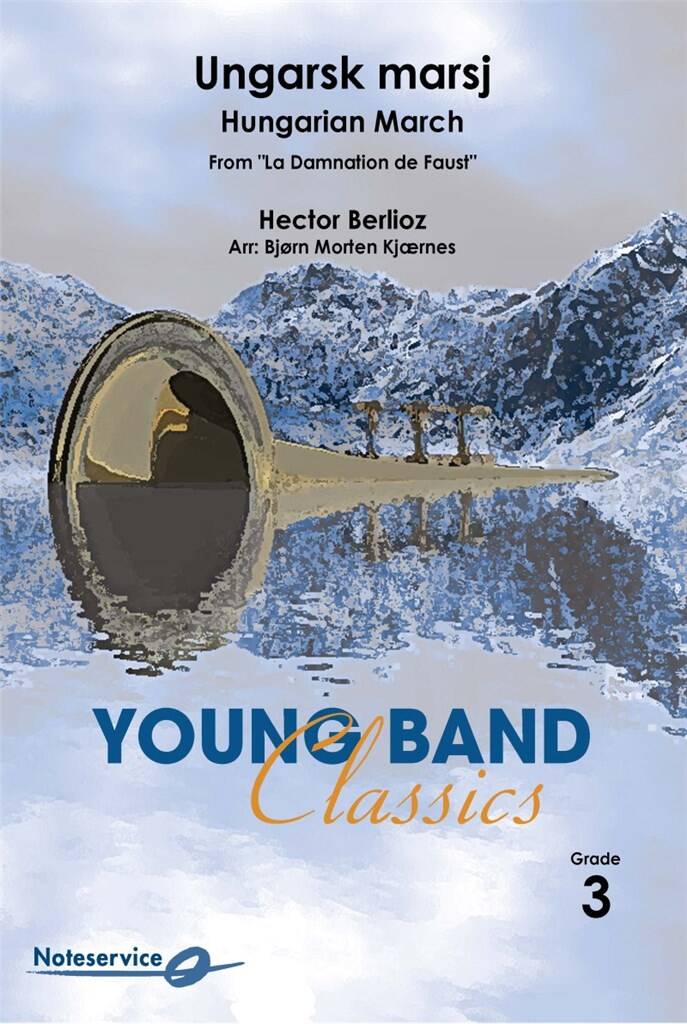
Ungarsk marsj - Hector Berlioz
The "Rkczi March" (Hungarian March) was the unofficial state anthem of Hungary before Ferenc Klcsey wrote the Himnusz which is today the official national anthem of Hungary. The first version of this march-song was probably created around 1730 by one or more anonymous composers, although tradition says that it was the favorite march of Francis Rkczi II. That early version called back Francis Rkczi II to save his people. It was very popular in the 18th century but in the 19th century the more refined Rkczi March became prevalent. Hector Berlioz included the music in his composition "La Damnation de Faust" in 1846, and Franz Liszt wrote a number of arrangements, includinghis Hungarian Rhapsody No. 15, based on the theme. The march gave its name to a 1933 Austrian-Hungarian feature film - Rakoczy-Marsch This arrangement is based on Berlioz instrumentation and phrasing from his Hungarian March, but in the form of the 19th century Rkczi March
Estimated dispatch 7-14 working days
-
£65.99
Glory and Triumph - Hector Berlioz
Freely adapted from the finale of Berlioz "Funeral and Triumphal Symphony for Band," this skillful arrangement makes one of the cornerstones of the wind repertoire accessible to student musicians.
Estimated dispatch 7-14 working days
-
£98.99
Roman Carnival - Hector Berlioz
This magnificent Berlioz overture is equally impressive with band as it is for orchestra. Truly dynamic!
Estimated dispatch 7-14 working days
-
£179.99
Benvenuto Cellini - Hector Berlioz
Hector Berlioz was known for his innovative and creative musical gestures. He composed the opera Benvenuto Cellini in 1838, based on the fascinating life of a 16th century Italian goldsmith of the same name. Unfortunately the work as a whole never gained much popularity however its colourful and exciting overture has, on the other hand, become a firm favourite. Tohru Takahashi has created a stunning concert band arrangement of this well-known overture.
Estimated dispatch 7-14 working days
-
£69.96
Scaff! - Score and Parts - Hector Berlioz
Scaff! is an adaptation of the famous 4th movement of the Symphonie Fantastique by Berlioz in swing style. The story of the March to the Scaffold is a tragic one where the subject, in a depressive state over a love interest, overdoses on opium. He dreams that he has killed his beloved and after his procession to the scaffold is now witnessing his own death. This arrangement doesn't really reflect those tragic circumstances but instead redresses this great tune into a toe-tapping big band number.
Estimated dispatch 7-14 working days
-
£13.95
Scaff! - Score only - Hector Berlioz
Scaff! is an adaptation of the famous 4th movement of the Symphonie Fantastique by Berlioz in swing style. The story of the March to the Scaffold is a tragic one where the subject, in a depressive state over a love interest, overdoses on opium. He dreams that he has killed his beloved and after his procession to the scaffold is now witnessing his own death. This arrangement doesn't really reflect those tragic circumstances but instead redresses this great tune into a toe-tapping big band number.
Estimated dispatch 7-14 working days
-
 £150.00
March to the Scaffold (4th Movement from Symphony Fantastique) (Concert Band - Score and Parts) - Berlioz, Hector - VanDoren, Evan
Berlioz's most famous Romantic Era standard, "Symphony Fantastique" is a colorful, evocative musical masterpiece that continues to withstand the test of time, pleasing all audiences. In this transcription, Evan VanDoren has artfully crafted its fourth movement, "March to the Scaffold", for the modern wind ensemble, taking creative care to present the work in its truest form while maximizing playability! Duration: 4.45
Estimated dispatch 7-14 working days
-
 £59.40
O Canada!/The Star Spangled Banner (Concert Band - Score and Parts) - Berlioz, Hector
Freely adapted from the finale of Berlioz "Funeral and Triumphal Symphony for Band," this skillful arrangement makes one of the cornerstones of the wind repertoire accessible to student musicians.
Estimated dispatch 7-14 working days
-
 £123.20
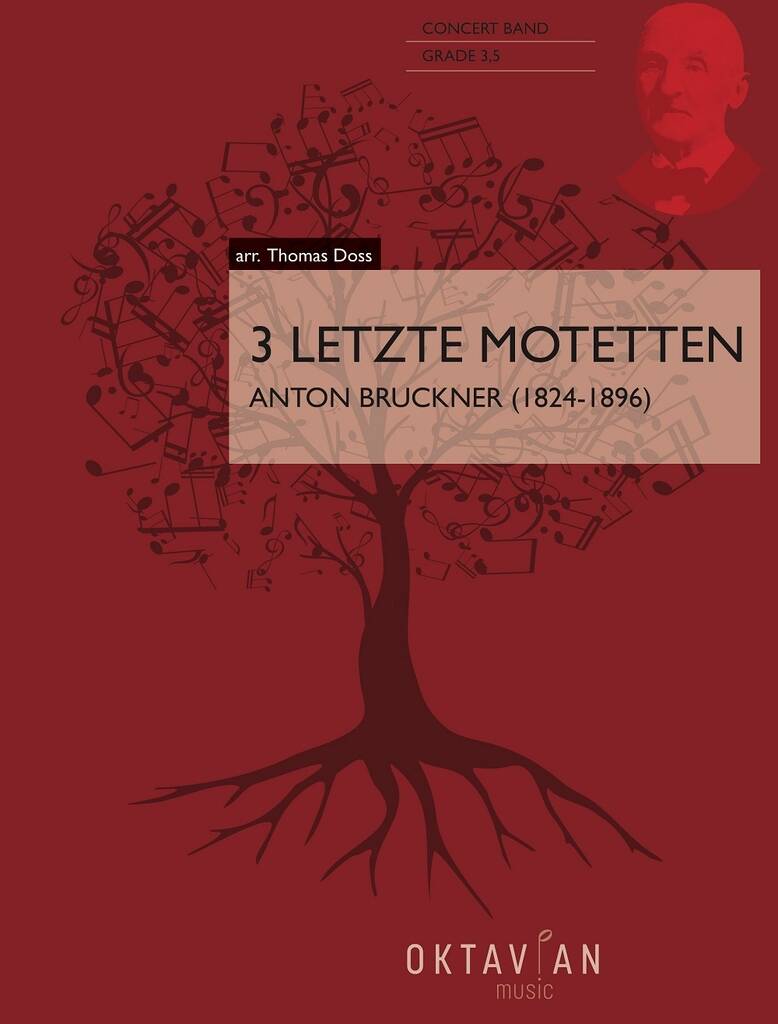
3 Letzte Motetten - Anton Bruckner
Anton Bruckner (b. 4.9.1824, Ansfelden, d. 11.10.1896, Vienna) didn't have it easy. Throughout his life, the Austrian composer was plagued by self-doubt. Anton Bruckner came from a simple, rural background. After the death of his father, he was accepted as a choirboy at the monastery of Sankt Florian in 1837. After several years as a school assistant and his own organ and piano studies, he first worked as organist in St. Florian, then from 1855 as cathedral organist in Linz. Introduced to music theory and instrumentation by Simon Sechter and Otto Kitzler, he discovered Richard Wagner as an artistic role model, whom he admired throughout his life and also visited several times in Bayreuth.In 1868 Anton Bruckner became professor of basso continuo, counterpoint and organ at the Vienna Conservatory; ten years later court organist; and in 1891 finally honorary doctor of the University of Vienna. He was considered an important organ virtuoso of his era, but had to wait a long time for recognition as a composer. It was not until Symphony No.7 in E major, composed between 1881 and 1883, with the famous Adagio written under the effects of Wagner's death, that he achieved the recognition he had hoped for, even if he was reluctant to accept it given his inclination towards scepticism and self-criticism.Anton Bruckner was a loner who did not want to follow a particular school or doctrine. He composed numerous sacred vocal works, such as his three masses, the Missa Solemnis in B flat minor (1854), the Te Deum (1881-84) and numerous motets. As a symphonic composer, he wrote a total of nine symphonies and many symphonic studies from 1863 onwards, tending to revise completed versions several times over. Bruckner's orchestral works were long considered unplayable, but in fact were merely exceptionally bold for the tonal language of their time, uniting traditions from Beethoven through Wagner to folk music, on the threshold between late Romanticism and Modernism.Anton Bruckner composed about 40 motets during his lifetime, the earliest a setting of Pange lingua around 1835, and the last, Vexilla regis, in 1892.Thomas Doss has compiled some of these motets in this volume for symphonic wind orchestra.These motets show many characteristics of personal expression, especially Bruckner's colourful harmony in the earlier works, which is in places aligned with Franz Schubert (changes between major and minor; and movements in thirds). Later works are characterised by many components which, in addition to the expanded stature of the movements, include above all a sense of the instrumentation as an outward phenomenon and the harmony as a compositional feature that works more internally. Some aspects of Bruckner's work are the result of his long period of study, which familiarised him not only with the tradition of his craft, but also gave him insights into the "modernity" of his time in such composers as Wagner, Liszt and Berlioz.From this developed his personal standpoint, which always pursues the connection between the old and the new.
Estimated dispatch 7-14 working days
-
 £256.00
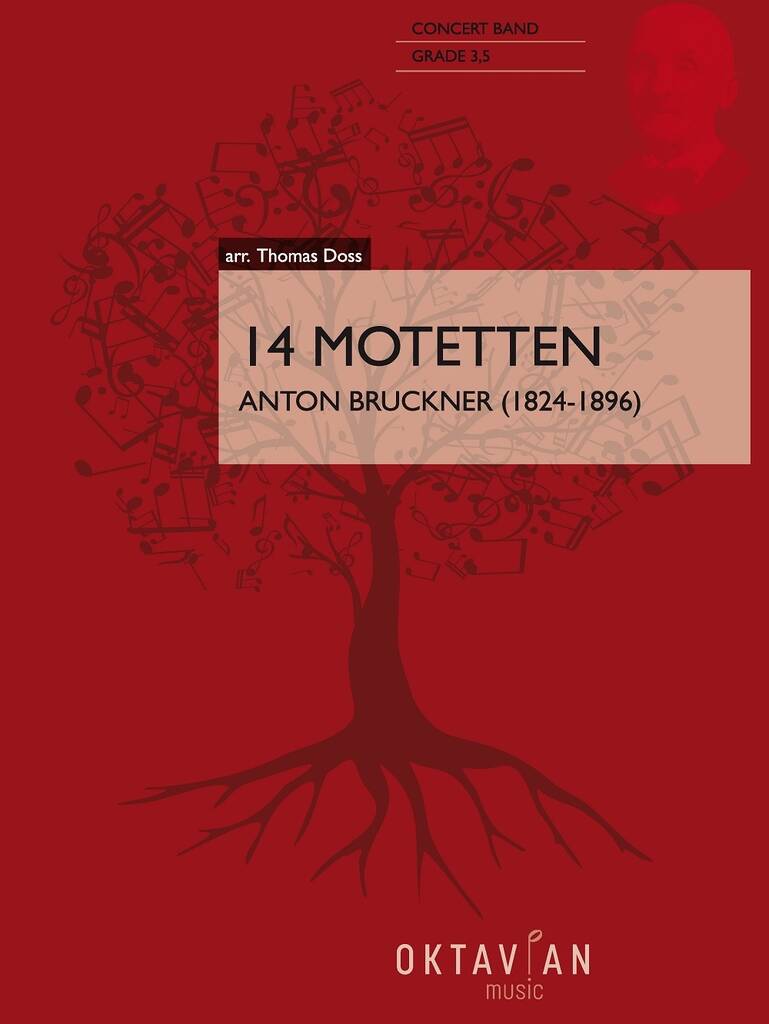
14 Motetten - Anton Bruckner
Anton Bruckner (b. 4.9.1824, Ansfelden, d. 11.10.1896, Vienna) didn't have it easy. Throughout his life, the Austrian composer was plagued by self-doubt. Anton Bruckner came from a simple, rural background. After the death of his father, he was accepted as a choirboy at the monastery of Sankt Florian in 1837. After several years as a school assistant and his own organ and piano studies, he first worked as organist in St. Florian, then from 1855 as cathedral organist in Linz. Introduced to music theory and instrumentation by Simon Sechter and Otto Kitzler, he discovered Richard Wagner as an artistic role model, whom he admired throughout his life and also visited several times in Bayreuth.In 1868 Anton Bruckner became professor of basso continuo, counterpoint and organ at the Vienna Conservatory; ten years later court organist; and in 1891 finally honorary doctor of the University of Vienna. He was considered an important organ virtuoso of his era, but had to wait a long time for recognition as a composer. It was not until Symphony No.7 in E major, composed between 1881 and 1883, with the famous Adagio written under the effects of Wagner's death, that he achieved the recognition he had hoped for, even if he was reluctant to accept it given his inclination towards scepticism and self-criticism.Anton Bruckner was a loner who did not want to follow a particular school or doctrine. He composed numerous sacred vocal works, such as his three masses, the Missa Solemnis in B flat minor (1854), the Te Deum (1881-84) and numerous motets. As a symphonic composer, he wrote a total of nine symphonies and many symphonic studies from 1863 onwards, tending to revise completed versions several times over. Bruckner's orchestral works were long considered unplayable, but in fact were merely exceptionally bold for the tonal language of their time, uniting traditions from Beethoven through Wagner to folk music, on the threshold between late Romanticism and Modernism.Anton Bruckner composed about 40 motets during his lifetime, the earliest a setting of Pange lingua around 1835, and the last, Vexilla regis, in 1892.Thomas Doss has compiled some of these motets in this volume for symphonic wind orchestra.These motets show many characteristics of personal expression, especially Bruckner's colourful harmony in the earlier works, which is in places aligned with Franz Schubert (changes between major and minor; and movements in thirds). Later works are characterised by many components which, in addition to the expanded stature of the movements, include above all a sense of the instrumentation as an outward phenomenon and the harmony as a compositional feature that works more internally. Some aspects of Bruckner's work are the result of his long period of study, which familiarised him not only with the tradition of his craft, but also gave him insights into the "modernity" of his time in such composers as Wagner, Liszt and Berlioz.From this developed his personal standpoint, which always pursues the connection between the old and the new.
Estimated dispatch 7-14 working days
 View Music