
Results
-
 £8.50
£8.50FILM FAVORITES F Horn
Arranged to be played by either full band or by individual soloists with optional CD accompaniment. There is also an optional Piano Accompaniment part. Contents: Pirates of the Caribbean; My Heart Will Go On; The Rainbow Connection; May It Be; You'll Be in My Heart; Accidentally in Love; Also Sprach Zarathustra; Mission:Impossible Theme; Music from Shrek; Zorro's Theme
Estimated dispatch 7-14 working days
-
 £8.50
£8.50FILM FAVORITES Oboe
Arranged to be played by either full band or by individual soloists with optional CD accompaniment. There is also an optional Piano Accompaniment part. Contents: Pirates of the Caribbean; My Heart Will Go On; The Rainbow Connection; May It Be; You'll Be in My Heart; Accidentally in Love; Also Sprach Zarathustra; Mission:Impossible Theme; Music from Shrek; Zorro's Theme
Estimated dispatch 7-14 working days
-
 £8.50
£8.50FILM FAVORITES Trombone BC
Arranged to be played by either full band or by individual soloists with optional CD accompaniment. There is also an optional Piano Accompaniment part. Contents: Pirates of the Caribbean; My Heart Will Go On; The Rainbow Connection; May It Be; You'll Be in My Heart; Accidentally in Love; Also Sprach Zarathustra; Mission:Impossible Theme; Music from Shrek; Zorro's Theme
Estimated dispatch 7-14 working days
-
 £8.50
£8.50FILM FAVORITES Tuba
Arranged to be played by either full band or by individual soloists with optional CD accompaniment. There is also an optional Piano Accompaniment part. Contents: Pirates of the Caribbean; My Heart Will Go On; The Rainbow Connection; May It Be; You'll Be in My Heart; Accidentally in Love; Also Sprach Zarathustra; Mission:Impossible Theme; Music from Shrek; Zorro's Theme
Estimated dispatch 7-14 working days
-
 £279.99
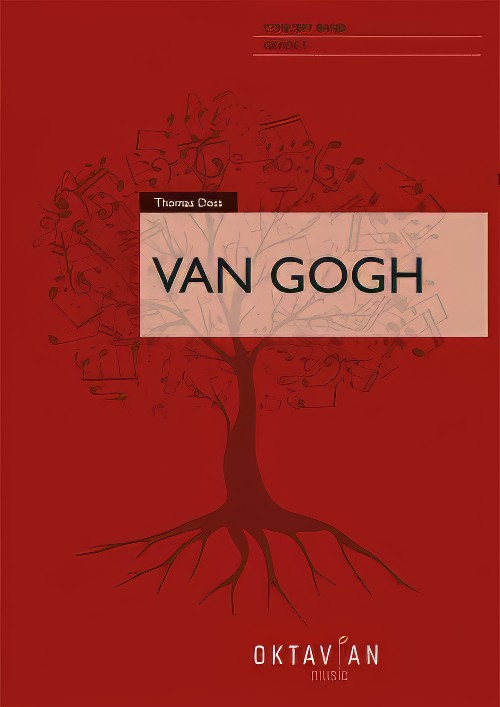
Van Gogh (Concert Band - Score and Parts) - Doss, Thomas
This composition is not a work inspired by the life of the famous painter, but rather an attempt at a pictorial immersion into his world. In addition to Van Gogh's character and tragic life, the technique he employed to create his works, the bright colours of his paintings and his view of nature served as inspiration for this musical work. Point by point, stroke by stroke, Van Gogh brought his own world to life on canvas.On the life of Van Gogh: The Dutch artist Vincent van Gogh was one of the most important pioneers of Modernism, despite being relatively unknown during his own lifetime. As an artist, he chose a life of poverty and seclusion. From today's perspective, his important woks were created from 1880 onwards, when he had already more or less succumbed to madness. While his earlier works could still be classed as contemporary, he matured into a pioneer of Expressionism with his later work indicating an increasing self-awareness. He was just 37 years old when he died but he created over 750 paintings and 1600 drawings in the last ten years of his life.The structure of the work:Start: Brushes and Paints: Van Gogh retired to Arles in southern France where he found his artistic home. The colours and flowering gardens of this landscape awakened in him an unbelievably great creative power.A: A Picture Comes into Being: Van Gogh's psychotic episodes and bouts of depression did not stop him from painting wonderful pictures. Hardly anyone recognised his genius during his lifetime, on the contrary, he often felt misunderstood.C: Paris - Arles: In Paris (from 1886), Van Gogh became inspired by the French art scene. His works found few takers, however. He met and befriended the painter Paul Gauguin, but the lack of success made Van Gogh short tempered, and he began to drink. Eventually, he moved from Paris to Arles in the south of France to establish an artists' collective with Gaugin. Within a few weeks, the two got into such a violent argument that Van Gogh attacked his friend with a knife. The friends parted ways and afterwards Van Gogh cut off his right ear. In 1889 he voluntarily admitted himself into a mental hospital at St. Remy, suffering from hallucinations and fearing that he would lose his mind.G: The Starry Night One of his most famous paintings, created in 1898.H: Death and Brotherly Love Vincent van Gogh accepted an invitation to Auver-sur-Oise in 1890. This was one of his most intensive creative periods. He also went there for treatment, but his mental state hardly improved. After an extended walk, he injured himself fatally with a pistol under mysterious circumstances. Not even to his beloved brother Theo, who had supported him all his life, did he reveal on his deathbed how the accident had occurred.J: Art Market Today, Van Gogh's paintings are among the most expensive paintings on the art market. How ironic, given that he could hardly sell a painting during his lifetime. "I put my heart and soul into my work and lost my mind in the process." (Vincent van Gogh)Duration: 13.15
Estimated dispatch 7-14 working days
-
 £189.99
Godzilla Eats Las Vegas (Concert Band - Score and Parts) - Whitacre, Eric
Note from Composer:It took me seven years to get my bachelor's degree from the University of Nevada, Las Vegas. By the time I graduated I was ready to eat Las Vegas.Tom Leslie asked me to write another piece for the group as I was leaving, and I thought it would be a blast to do something completely ridiculous. The players are called upon to scream in terror, dress like Elvises (Elvi), and play in about thirty different styles from mambo to cheesy lounge music. The audience follows a script that I wrote simulating a campy, over the top Godzilla movie (is there any other kind?).I wrote the bulk of the piece while in my first year at Juilliard, and no kidding, I used to act out the script every morning devouring animal crackers, wreaking havoc all over the breakfast table. The script was originally twice as long, and had an entire subplot devoted to a young scientist and his love interest. As I started to finish the piece, however, it didn't seem that funny and that story (along with an extended Elvis tribute) ended up on the cutting room floor.The idea that this piece is being played all over the world in such serious concert venues is the single funniest thing I have ever heard. It has been played on the steps of the Capitol by the United States Marine Band, by the Scottish National Wind Symphony (they play in kilts, so help me God), and I have a video of a Japanese audience visibly confused and shaken by the whole experience. Can you imagine? I'm laughing my head off even as I write this!Godzilla Eats Las Vegas! was commissioned by the University of Nevada Las Vegas, Thomas G. Leslie, conductor, and received its premiere November 28th, 1996.The performers are encouraged to go crazy: wear showgirl costumes, Elvis costumes, act out scenes on stage, use video and lighting - anything to get a laugh.
Estimated dispatch 7-14 working days
-
 £75.00
Blow, Blow, Thou Winter Wind (from When Icicles Hang) (Concert Band with Optional Choir - Score and Parts) - Rutter, John - Noble, Paul
John Rutter received an early commission for a piece of music that was seasonal for winter, though not necessarily linked to the Christian traditions of Christmas, in the early '70s. The request came from his friend Russell Burgess, a well-known conductor in the English musical scene and head of the Wandsworth School Boys' Choir through the '60s and '70s. Rutter responded with a six-movement work for orchestra, boys' choir, and mixed chorus, called When Icicles Hang. He chose his texts, characteristically, from Elizabethan and other early English poetry, each text dealing with images from the wintery season, be they the cold, ice-bound landscape and its winds; an older man's weariness in the face of the season; or the contrapuntal pleasures of ale and honey love for those safely inside on winter nights. The movements are: I. Icicles; II. Winter Nights; III Good Ale; IV Blow, blow, thou winter winds; V. Winter wakeneth all my care; VI . Hay, ay. With sparkling orchestration which has been faithfully set for Concert/Wind Band, the work may be performed with chorus as originally written, or may be performed effectively by band alone. The work is available as a complete set of six movements, or each movement may be purchased and performed individually.
Estimated dispatch 7-14 working days
-
 £75.00
Good Ale (from When Icicles Hang) (Concert Band with Optional Choir - Score and Parts) - Rutter, John - Noble, Paul
John Rutter received an early commission for a piece of music that was seasonal for winter, though not necessarily linked to the Christian traditions of Christmas, in the early '70s. The request came from his friend Russell Burgess, a well-known conductor in the English musical scene and head of the Wandsworth School Boys' Choir through the '60s and '70s. Rutter responded with a six-movement work for orchestra, boys' choir, and mixed chorus, called When Icicles Hang. He chose his texts, characteristically, from Elizabethan and other early English poetry, each text dealing with images from the wintery season, be they the cold, ice-bound landscape and its winds; an older man's weariness in the face of the season; or the contrapuntal pleasures of ale and honey love for those safely inside on winter nights. The movements are: I. Icicles; II. Winter Nights; III Good Ale; IV Blow, blow, thou winter winds; V. Winter wakeneth all my care; VI . Hay, ay. With sparkling orchestration which has been faithfully set for Concert/Wind Band, the work may be performed with chorus as originally written, or may be performed effectively by band alone. The work is available as a complete set of six movements, or each movement may be purchased and performed individually.
Estimated dispatch 7-14 working days
-
 £75.00
Hay, Ay (from When Icicles Hang) (Concert Band with Optional Choir - Score and Parts) - Rutter, John - Noble, Paul
John Rutter received an early commission for a piece of music that was seasonal for winter, though not necessarily linked to the Christian traditions of Christmas, in the early '70s. The request came from his friend Russell Burgess, a well-known conductor in the English musical scene and head of the Wandsworth School Boys' Choir through the '60s and '70s. Rutter responded with a six-movement work for orchestra, boys' choir, and mixed chorus, called When Icicles Hang. He chose his texts, characteristically, from Elizabethan and other early English poetry, each text dealing with images from the wintery season, be they the cold, ice-bound landscape and its winds; an older man's weariness in the face of the season; or the contrapuntal pleasures of ale and honey love for those safely inside on winter nights. The movements are: I. Icicles; II. Winter Nights; III Good Ale; IV Blow, blow, thou winter winds; V. Winter wakeneth all my care; VI . Hay, ay. With sparkling orchestration which has been faithfully set for Concert/Wind Band, the work may be performed with chorus as originally written, or may be performed effectively by band alone. The work is available as a complete set of six movements, or each movement may be purchased and performed individually.
Estimated dispatch 7-14 working days
-
 £75.00
Icicles (from When Icicles Hang) (Concert Band with Optional Choir - Score and Parts) - Rutter, John - Noble, Paul
John Rutter received an early commission for a piece of music that was seasonal for winter, though not necessarily linked to the Christian traditions of Christmas, in the early '70s. The request came from his friend Russell Burgess, a well-known conductor in the English musical scene and head of the Wandsworth School Boys' Choir through the '60s and '70s. Rutter responded with a six-movement work for orchestra, boys' choir, and mixed chorus, called When Icicles Hang. He chose his texts, characteristically, from Elizabethan and other early English poetry, each text dealing with images from the wintery season, be they the cold, ice-bound landscape and its winds; an older man's weariness in the face of the season; or the contrapuntal pleasures of ale and honey love for those safely inside on winter nights. The movements are: I. Icicles; II. Winter Nights; III Good Ale; IV Blow, blow, thou winter winds; V. Winter wakeneth all my care; VI . Hay, ay. With sparkling orchestration which has been faithfully set for Concert/Wind Band, the work may be performed with chorus as originally written, or may be performed effectively by band alone. The work is available as a complete set of six movements, or each movement may be purchased and performed individually.
Estimated dispatch 7-14 working days
 View Music