
Results
-
 £102.99
A Western Suite Wind Band Set (Score & Parts)
A Western Suite paints the musical picture of a group of gold diggers and adventurers in the Wild West! Opening with an optimistic march, followed by wistful sounds around the campfire, A Western Suite sees an exciting rodeo take place before the main theme brings the piece to an end. Bring the atmosphere of the Wild West onto the concert stage! 07:00
Estimated dispatch 7-14 working days
-
£47.52
The Gold Rush Of 1849 (Concert Band - Score and Parts)
In 1849 a gold rush took place in California that changed America forever. As the news spread, thousands of '49ers traveled with hopes of discovering great wealth that they never dreamed possible! This exciting work begins with a beautiful lyrical melody reminding us of simpler days and propels us forward with the excitement that the '49ers felt discovering gold. A perfect festival work for young bands!
Estimated dispatch 7-14 working days
-
 £124.99
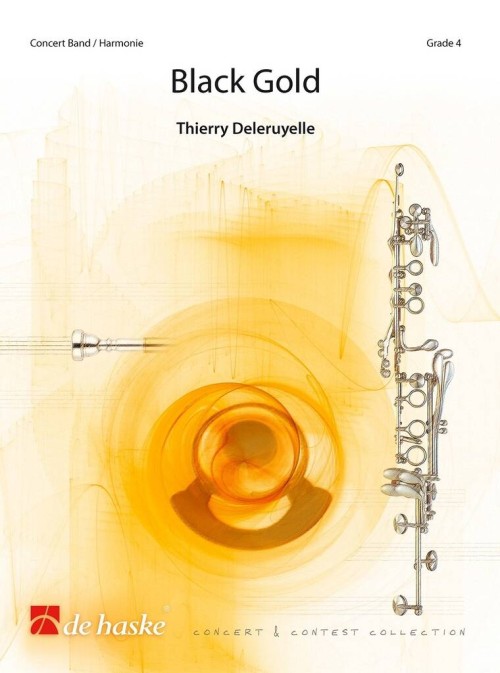
Black Gold (Concert Band - Score and Parts) - Deleruyelle, Thierry
Black Gold was commissioned by Musikverein 1891 "Harmonie" Saarwellingen e.V. (Germany) to mark its 130th anniversary. This composition pictures the history of the mining industry in the town of Saarwellingen and its surrounding region, where the life of the miners as well as their families revolved around coal, or black gold, for centuries on end. The piece is based on motifs from the famous song "Glck auf, Glck auf, der Steiger kommt..." (Good luck, good luck, the mining foreman comes), a veritable anthem for miners the world over.Duration: 11.00
Estimated dispatch 7-14 working days
-
 £89.99
Gold (Concert Band - Score and Parts) - Kemp, Gary - Oud, Thijs
At the beginning of the eighties trendy English boy band, Spandau Ballet, made it big with hits like True and Gold. Millions of records were sold worldwide, and the group became one of the most successful bands of the eighties. Why not bring a little 80's pop magic to any concert with the zesty disco tempo and jazzy chords of this arrangement.Duration: 4:30
Estimated dispatch 7-14 working days
-
 £137.99
Eldorado (Concert Band - Score and Parts) - Deleruyelle, Thierry
The myth of El Dorado ("the golden one") stems from the story of a powerful chief who used to cover himself with gold dust before bathing in a sacred lake where he threw precious objects as offerings to the gods. The myth was soon relayed to the Spanish conquistadors and inspired many expeditions, although the invaders didn't bring back nearly as much gold as they expected, if any at all. Eldorado is a mysterious and dynamic work that illustrates the myth of the golden man and the European expeditions that followed. With a touch of exotic influences, the music is varied and rich. This piece was commissioned by the French Cultural Association Lille 3000 as part of their Eldorado-themed festival in 2019. Duration: 10.30
Estimated dispatch 7-14 working days
-
 £48.95
Alchemy (Concert Band - Score and Parts) - Fagan, Gary
Alchemy is an ancient philosophy that sought to turn iron into gold. The composer saw a parallel in music: taking the notes of a scale and turning them into music seems just as magical. The notes are like iron and the process of turning them into music makes them as precious as gold.Duration: 2.30
Estimated dispatch 7-14 working days
-
 £72.99
From Gold (Concert Band - Score and Parts) - Hazo, Samuel R.
Glistening chords, soaring melodies, broad fanfares and gorgeous chorales will fill your concert hall with this evocative work. Best of all, From Gold sounds much harder than it actually is. Mr. Hazo's background as a music educator is evident in how quickly directors and students will get to the music making. Written entirely in B-flat with few accidentals, the runs are split between instruments for playability, and parts are doubled/cued to build confidence. Young bands will sound mature, and mature bands will be breathtaking.Duration: 4:30
Estimated dispatch 7-14 working days
-
 £79.95
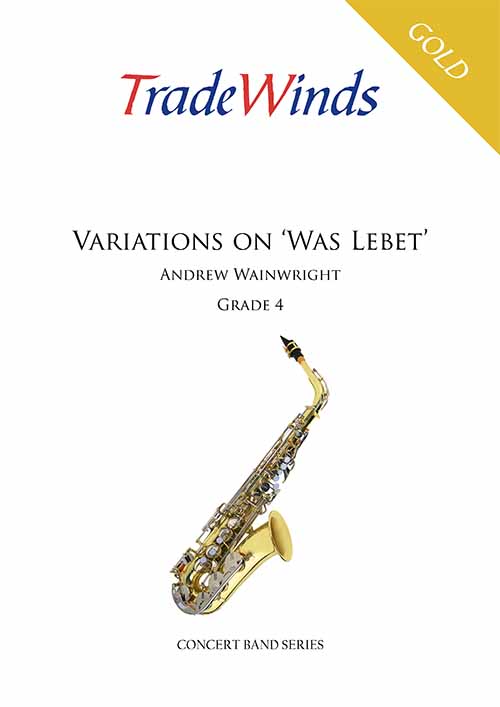
Variations on 'Was Lebet' (Concert Band - Score and Parts) - Wainwright, Andrew
Variations on 'Was Lebet' is based on the German chorale of the same name, the first line of which translates as 'O worship the Lord in the beauty of holiness!' The opening fanfare figure in the Trumpets should be supported by bold, organ-like sostenuto chords in the lower band. Ensure that the fanfare in the Trumpets and Trombones from bars 25 to 28 is given equal articulation and volume in the antiphonal parts. After this majestic introductory section, the first of five contrasting variations is presented, although the tune is never realised in full form until the final variation, with fragments gradually being revealed as the piece progresses.Variation I is somewhat classical in approach, with its energy coming from a regular contrast between cantabile references to the theme, set against lively staccato figures. Ensuring a lightness of touch will be important here; the music should be poised and never sound frantic. As a result, careful attention should be paid to the tempo marking, being no quicker than 136 beats per minute. Snippets of the chorale come and go, with the last phrase of the hymn completing the movement. This final statement, at bar 95, should be an immediate change in tempo and a separate statement to the music that comes before.Variation II is plaintive in mood, giving the listener the chance to reflect on the following words, which form part of the second verse: 'Comfort thy sorrows and answer thy prayerfulness, Guiding thy steps as may best for thee be.' There is opportunity for rubato in this movement, at the discretion of the conductor.Variation III is somewhat quirky and volatile in nature, and takes its inspiration from the 3rd and 4th verses which describe the fearful times in life that we must entrust to the Lord. Driven by the Percussion section in particular, there are references here to Variation I with its chorale-like figures and hurtling scalic figures, and there is a feeling of a lack of resolution. A somewhat abrupt ending suggests that our sense of completeness in Christ is yet to be resolved. It is important that clarity and tempo are maintained in the bass line between sections L and M. Aim for consistency of line in the bass parts, particularly with the trade-offs between players here.There is a French romantic feel to the waltz in Variation IV, with the opportunity for various soloists to display their musicianship. A sense of ironic humour pervades throughout. The Clarinet and Bassoon duet from section U should be playful and display a lightness of touch, with that sense of style continued throughout the movement.Variation V is fugal in nature, with each section of the band being handed the theme at various points. Again it is important that a steady tempo is set at Y in order to maintain control. The sense of momentum gradually increases to a grandiose presentation of the full theme, beginning at section CC, affirming our completeness in the Lord, with the words of the first and last verses reiterated: O worship the Lord in the beauty of holiness! Bow down before him, his glory proclaim; With gold of obedience and incense of lowliness, Kneel and adore him, the Lord is his name.Duration: 11.45
Estimated dispatch 7-14 working days
-
 £15.95
Variations on 'Was Lebet' (Concert Band - Score only) - Wainwright, Andrew
Variations on 'Was Lebet' is based on the German chorale of the same name, the first line of which translates as 'O worship the Lord in the beauty of holiness!' The opening fanfare figure in the Trumpets should be supported by bold, organ-like sostenuto chords in the lower band. Ensure that the fanfare in the Trumpets and Trombones from bars 25 to 28 is given equal articulation and volume in the antiphonal parts. After this majestic introductory section, the first of five contrasting variations is presented, although the tune is never realised in full form until the final variation, with fragments gradually being revealed as the piece progresses.Variation I is somewhat classical in approach, with its energy coming from a regular contrast between cantabile references to the theme, set against lively staccato figures. Ensuring a lightness of touch will be important here; the music should be poised and never sound frantic. As a result, careful attention should be paid to the tempo marking, being no quicker than 136 beats per minute. Snippets of the chorale come and go, with the last phrase of the hymn completing the movement. This final statement, at bar 95, should be an immediate change in tempo and a separate statement to the music that comes before.Variation II is plaintive in mood, giving the listener the chance to reflect on the following words, which form part of the second verse: 'Comfort thy sorrows and answer thy prayerfulness, Guiding thy steps as may best for thee be.' There is opportunity for rubato in this movement, at the discretion of the conductor.Variation III is somewhat quirky and volatile in nature, and takes its inspiration from the 3rd and 4th verses which describe the fearful times in life that we must entrust to the Lord. Driven by the Percussion section in particular, there are references here to Variation I with its chorale-like figures and hurtling scalic figures, and there is a feeling of a lack of resolution. A somewhat abrupt ending suggests that our sense of completeness in Christ is yet to be resolved. It is important that clarity and tempo are maintained in the bass line between sections L and M. Aim for consistency of line in the bass parts, particularly with the trade-offs between players here.There is a French romantic feel to the waltz in Variation IV, with the opportunity for various soloists to display their musicianship. A sense of ironic humour pervades throughout. The Clarinet and Bassoon duet from section U should be playful and display a lightness of touch, with that sense of style continued throughout the movement.Variation V is fugal in nature, with each section of the band being handed the theme at various points. Again it is important that a steady tempo is set at Y in order to maintain control. The sense of momentum gradually increases to a grandiose presentation of the full theme, beginning at section CC, affirming our completeness in the Lord, with the words of the first and last verses reiterated: O worship the Lord in the beauty of holiness! Bow down before him, his glory proclaim; With gold of obedience and incense of lowliness, Kneel and adore him, the Lord is his name.Duration: 11.45
Estimated dispatch 7-14 working days
-
 £75.00
The Twelve Days of Christmas (Concert Band with Optional Choir - Score and Parts) - Noble & Rutter
The Twelve Days of Christmas is an English Christmas carol that enumerates in the manner of a cumulative song a series of increasingly grand gifts given on each of the twelve days of Christmas (the twelve days that make up the Christmas season, starting with Christmas Day). The song, published in England in 1780 without music as a chant or rhyme, is thought to be French in origin. The standard tune now associated with it is derived from a 1909 arrangement of a traditional folk melody by English composer Frederic Austin, who introduced the familiar prolongation of the verse five gold rings. This arrangement represents one in the Series of Band Arrangements compatible with David Willcocks' Carols for Choirs.
Estimated dispatch 7-14 working days
 View Music