Results
-
 £104.99
Klezmeriana - Jan de Haan
Klezmer is actually a conglomeration of different musical styles, including sounds of the Balkans as well as oriental influences and 'gypsy music'. At the end of the last century, klezmer experienced a revival worldwide and is now extremely popular. For this varied concert band composition, Jan de Haan wrote a series of his own melodies in klezmer style.
Estimated dispatch 7-14 working days
-
 £94.99
Czardas (Clarinet solo) - Monti
Vittorio Monti was born on January 6, 1868 in Naples (Italy). His musical education (violin and composition), he enjoyed at the conservatory there. Around his 30's Monti went to Paris. He earned a living as a conductor and wrote several ballets and operettas. In his last years, Monti died in 1922, he devoted himself to teaching and composing. His famous "Czardas" has made his name known even today. Initially the czardas was a Hungarian folk dance , but after the mid-nineteenth century it was even a dance for the upper-class. Czardas begins with a slow introduction, the Lassan (slow and sad), and then the fast part, Friska, follows. Czardas is not, as somany people think typical gypsy music.
Estimated dispatch 7-14 working days
-
£84.50
Glacier Canyon - Mike Forbes
Glacier Canyon is not specifically programmatic, but the piece has programmatic elements.?The work begins with the idea of walking up to and peering into a vast glacial canyon. It?then picks up steam as one imagines white-water rafting through the turbulent waters of the canyon below.?The folkloric middle section of the work evokes a sense of American natural beauty before one last romp through the rapids. A perfect selection to show off the musical skills of your young band at a festival.
Estimated dispatch 7-14 working days
-
£78.95
Alpine March - Joseph Compello
A delightful German-style march with memorable tunes and full-sounding scoring that will make a young band shine. There is a classic fade-out at the end followed by a short forte in the last measure. Great fun to play, Alpine March will make an excellent contest warm-up. Duration: 2'30" Key: Bb Ranges: Trumpet-F, Horn-Bb, Trombone-F
Estimated dispatch 7-14 working days
-
£79.99
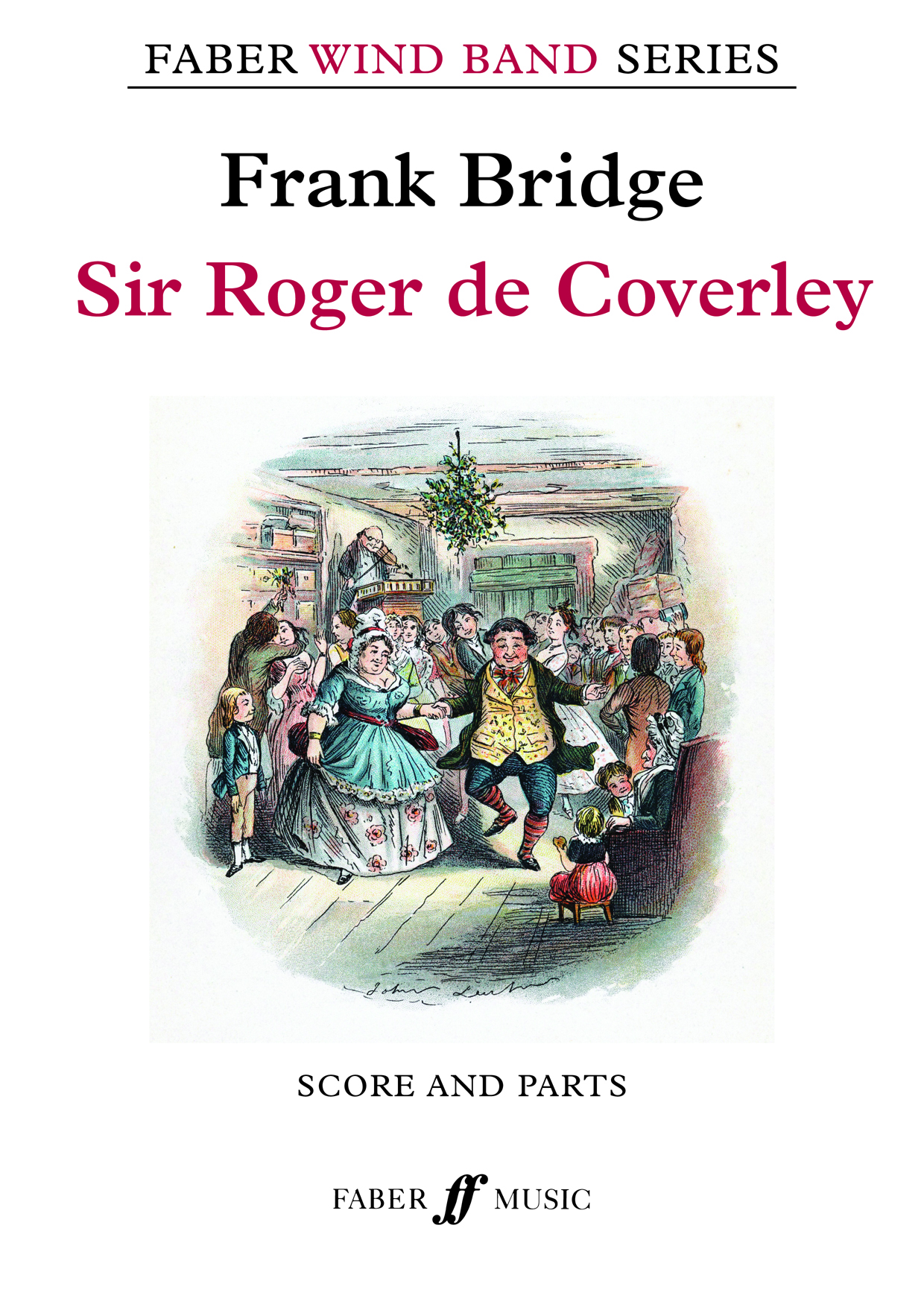
Sir Roger de Coverley - Frank Bridge
Frank Bridge (1879 – 1941) was one of the leading English composers of his time. In October 1922 he adapted his popular string quartet Sir Roger de Coverley for full symphony orchestra and Sir Henry Wood agreed, at the last minute, to include it in the last night of the Queen’s Hall Promenade Concerts at the end of that month. This elaborate and colourful orchestral version has never been widely performed, but has now been brilliantly transcribed by Alastair Wheeler to provide a miniature dance poem for grade 5 level concert band. Bridge’s lively treatment of one of England’s most famous traditional dance melodies will make a fitting end to any concert, with the strains of Auld Lang Syne introduced by Bridge as a nod towards Sir Roger de Coverley’s traditional function as the final dance of a Christmas Ball, as it was in Old Mr. Fezziwig’s party in Dickens’ A Christmas Carol.
Estimated dispatch 7-14 working days
-
£85.00
Sir Roger de Coverley - Frank Bridge
Frank Bridge (1879 - 1941) was one of the leading English composers of his time. In October 1922 he adapted his popular string quartet Sir Roger de Coverley for full symphony orchestra and Sir Henry Wood agreed, at the last minute, to include it in the last night of the Queen's Hall Promenade Concerts at the end of that month. This elaborate and colourful orchestral version has never been widely performed, but has now been brilliantly transcribed by Alastair Wheeler to provide a miniature dance poem for grade 5 level concert band. Bridge's lively treatment of one of England's most famous traditional dance melodies will make a fitting end to any concert, with the strains of Auld Lang Syne introduced by Bridge as a nod towards Sir Roger de Coverley's traditional function as the final dance of a Christmas Ball, as it was in Old Mr. Fezziwig's party in Dickens' A Christmas Carol.
In stock: Estimated delivery 1-3 days
-
 £64.20
Caprice (Euphonium Solo with Concert Band) Andrew Batterham
VIEW SCORE PDF Caprice was written for Matthew van Emmerik, to showcase his virtuosity in an engaging piece of concert music. The work is in theme and variation form, with the primary material being the theme from the last of Paganini's Ventiquattro Capricci per violino solo, a collection of 24 caprices for solo violin. This theme has been the inspiration for similar works by many composers since it was first published, including Liszt, Brahms, Rachmaninov, Benny Goodman and Andrew Lloyd Webber. In this work, the famous theme is treated to a more contemporary approach. The first variation, Capricious, relies on motor rhythms and jagged dialogues between the soloist and the band. It is couched in an organic scale reminiscent of the Phrygian mode. The second variation, Sad, is in direct contrast, acting as a traditional ballad and allowing the soloist to explore the expressive side of the instrument. The third variation, Energetic, is a micro set of variations in itself, designed to display the soloist's innovative technique and stamina. Each section is more challenging than the last, until the work concludes with a whirlwind dance at breakneck speed. Like all of Batterham's recent work, the musical language of Caprice draws upon classical, jazz, funk and ska elements to create a unique sound where anything can happen, and probably will. This arrangement was made possible through Matt's instigation and generosity. To view a video of Matthew van Emmerik performing the version with brass band please visit www.youtube.com/watch?v=D0hsvux_a5o To view a video of Fletcher Mitchell performing the version with piano please visit www.youtube.com/watch?v=NOZ6KRldDVo Sheet music available from : UK: www.wind-band-music.co.uk USA: www.solidbrassmusic.com Instrumentation: Euphonium Soloist Piccolo Flute 1-2 Oboe Bassoon Clarinet in Eb Clarinet in Bb 1-3 Bass Clarinet in Bb Alto Saxophone 1-2 Tenor Saxophone Baritone Saxophone Trumpet in Bb 1-3 Horn in F 1-4 Trombone 1-2 Bass Trombone Euphonium Tuba String Bass Percussion 1-3
In stock: Estimated dispatch 1-3 days
-
£124.95
Sinfonietta - Score and Parts - Rob Wiffin
Program NotesSinfonietta is a challenging, extended work for symphonic wind band. It is in three movements: Dance with the Devil, A Glimpse of Paradise and Reyes Magos. The first two movements are a transition from dark to light; Dance with the Devil is aggressive and occasionally macabre whereas A Glimpse of Paradise is serene. The first and final parts of the second movement were originally written for a sequence in the Royal Military Tattoo 2000, played under the John Magee poem High Flight – ‘Oh I have slipped the surly bonds of Earth...Put out my hand, and touched the face of God’ - with videos of eagle owls in flight dramatically projected onto the buildings of Horse Guards in Whitehall, London.The last movement, Reyes Magos, is the joyous fiesta of the Three Kings. I wrote Sinfonietta while living in Spain and there January 6th, rather than Christmas Day, is the main day of present-giving, marking the Epiphany, the arrival of the Kings from the Orient at the Nativity.Sinfonietta is technically and expressively demanding but is written within the realms of tonal language.
Estimated dispatch 7-14 working days
-
£24.95
Sinfonietta - Score only - Rob Wiffin
Program NotesSinfonietta is a challenging, extended work for symphonic wind band. It is in three movements: Dance with the Devil, A Glimpse of Paradise and Reyes Magos. The first two movements are a transition from dark to light; Dance with the Devil is aggressive and occasionally macabre whereas A Glimpse of Paradise is serene. The first and final parts of the second movement were originally written for a sequence in the Royal Military Tattoo 2000, played under the John Magee poem High Flight – ‘Oh I have slipped the surly bonds of Earth...Put out my hand, and touched the face of God’ - with videos of eagle owls in flight dramatically projected onto the buildings of Horse Guards in Whitehall, London.The last movement, Reyes Magos, is the joyous fiesta of the Three Kings. I wrote Sinfonietta while living in Spain and there January 6th, rather than Christmas Day, is the main day of present-giving, marking the Epiphany, the arrival of the Kings from the Orient at the Nativity.Sinfonietta is technically and expressively demanding but is written within the realms of tonal language.
Estimated dispatch 7-14 working days
-
 £79.95
Variations on 'Was Lebet' (Concert Band - Score and Parts) - Wainwright, Andrew
Variations on 'Was Lebet' is based on the German chorale of the same name, the first line of which translates as 'O worship the Lord in the beauty of holiness!' The opening fanfare figure in the Trumpets should be supported by bold, organ-like sostenuto chords in the lower band. Ensure that the fanfare in the Trumpets and Trombones from bars 25 to 28 is given equal articulation and volume in the antiphonal parts. After this majestic introductory section, the first of five contrasting variations is presented, although the tune is never realised in full form until the final variation, with fragments gradually being revealed as the piece progresses.Variation I is somewhat classical in approach, with its energy coming from a regular contrast between cantabile references to the theme, set against lively staccato figures. Ensuring a lightness of touch will be important here; the music should be poised and never sound frantic. As a result, careful attention should be paid to the tempo marking, being no quicker than 136 beats per minute. Snippets of the chorale come and go, with the last phrase of the hymn completing the movement. This final statement, at bar 95, should be an immediate change in tempo and a separate statement to the music that comes before.Variation II is plaintive in mood, giving the listener the chance to reflect on the following words, which form part of the second verse: 'Comfort thy sorrows and answer thy prayerfulness, Guiding thy steps as may best for thee be.' There is opportunity for rubato in this movement, at the discretion of the conductor.Variation III is somewhat quirky and volatile in nature, and takes its inspiration from the 3rd and 4th verses which describe the fearful times in life that we must entrust to the Lord. Driven by the Percussion section in particular, there are references here to Variation I with its chorale-like figures and hurtling scalic figures, and there is a feeling of a lack of resolution. A somewhat abrupt ending suggests that our sense of completeness in Christ is yet to be resolved. It is important that clarity and tempo are maintained in the bass line between sections L and M. Aim for consistency of line in the bass parts, particularly with the trade-offs between players here.There is a French romantic feel to the waltz in Variation IV, with the opportunity for various soloists to display their musicianship. A sense of ironic humour pervades throughout. The Clarinet and Bassoon duet from section U should be playful and display a lightness of touch, with that sense of style continued throughout the movement.Variation V is fugal in nature, with each section of the band being handed the theme at various points. Again it is important that a steady tempo is set at Y in order to maintain control. The sense of momentum gradually increases to a grandiose presentation of the full theme, beginning at section CC, affirming our completeness in the Lord, with the words of the first and last verses reiterated: O worship the Lord in the beauty of holiness! Bow down before him, his glory proclaim; With gold of obedience and incense of lowliness, Kneel and adore him, the Lord is his name.Duration: 11.45
Estimated dispatch 7-14 working days
 View Music