
Results
-
£168.5060 Warm-up Chorales for Concert Band
During his experience as a band conductor and teacher of wind orchestra conducting at university, Franco Cesarini has dealt with the topic of warm-ups very frequently. Throughout these long years of conducting he has had the opportunity to try many existing methods, evaluating their advantages and disadvantages.After a long time, he has decided to compile a collection of chorales for warm-ups, which are organized according to the criteria that he considers most effective.While working on his60 Warm-up Chorales for Concert Band, Franco Cesarini has always borne in mind that amateur musicians play for pleasure.He feels that it is extremely important that they have satisfaction at every moment of the rehearsal and not to start the rehearsal with needless "punishing" exercises. Nobody is really motivated to start playing with scales, long notes, or tricky rhythmical exercises. There is often a distinguished absentee in band rehearsals, namely music itself!Although this publication does not foresee a specific tempo for the chorales, they should often be performed rather slowly but without dragging.Dynamics are not indicated, so that the conductor has the opportunity to draw the attention of the musicians to his gestures and to make them react according to his indications.Timpani and bell parts have been added with the aim of not leaving the percussionists completely inactive during the warm-up phase, but can also be omitted.The chorales are written in four parts (SATB) and are also playable in smaller groups. The four voices can be played in different combinations of woodwinds or brass quartets or in mixed combinations.The collection includes ten chorales for the following keys: D flat major, A flat major, E flat major, B flat major, F major and C major.With his 60 Warm-up Chorales Franco Cesarini would like to convey the message to play the chorales in a musical way, thus raising the musicians' awareness of phrasing, the right interpretation of cadences, rubato and agogic.Above all, never do anything without putting the musical aspect in the foreground. 60 Warm-up Chorales for Concert Band: A perfect collection to warm-up and improve tuning of a concert band!
Estimated dispatch 7-14 working days
-
£123.203 Letzte Motetten - Anton Bruckner
Anton Bruckner (b. 4.9.1824, Ansfelden, d. 11.10.1896, Vienna) didn't have it easy. Throughout his life, the Austrian composer was plagued by self-doubt. Anton Bruckner came from a simple, rural background. After the death of his father, he was accepted as a choirboy at the monastery of Sankt Florian in 1837. After several years as a school assistant and his own organ and piano studies, he first worked as organist in St. Florian, then from 1855 as cathedral organist in Linz. Introduced to music theory and instrumentation by Simon Sechter and Otto Kitzler, he discovered Richard Wagner as an artistic role model, whom he admired throughout his life and also visited several times in Bayreuth.In 1868 Anton Bruckner became professor of basso continuo, counterpoint and organ at the Vienna Conservatory; ten years later court organist; and in 1891 finally honorary doctor of the University of Vienna. He was considered an important organ virtuoso of his era, but had to wait a long time for recognition as a composer. It was not until Symphony No.7 in E major, composed between 1881 and 1883, with the famous Adagio written under the effects of Wagner's death, that he achieved the recognition he had hoped for, even if he was reluctant to accept it given his inclination towards scepticism and self-criticism.Anton Bruckner was a loner who did not want to follow a particular school or doctrine. He composed numerous sacred vocal works, such as his three masses, the Missa Solemnis in B flat minor (1854), the Te Deum (1881-84) and numerous motets. As a symphonic composer, he wrote a total of nine symphonies and many symphonic studies from 1863 onwards, tending to revise completed versions several times over. Bruckner's orchestral works were long considered unplayable, but in fact were merely exceptionally bold for the tonal language of their time, uniting traditions from Beethoven through Wagner to folk music, on the threshold between late Romanticism and Modernism.Anton Bruckner composed about 40 motets during his lifetime, the earliest a setting of Pange lingua around 1835, and the last, Vexilla regis, in 1892.Thomas Doss has compiled some of these motets in this volume for symphonic wind orchestra.These motets show many characteristics of personal expression, especially Bruckner's colourful harmony in the earlier works, which is in places aligned with Franz Schubert (changes between major and minor; and movements in thirds). Later works are characterised by many components which, in addition to the expanded stature of the movements, include above all a sense of the instrumentation as an outward phenomenon and the harmony as a compositional feature that works more internally. Some aspects of Bruckner's work are the result of his long period of study, which familiarised him not only with the tradition of his craft, but also gave him insights into the "modernity" of his time in such composers as Wagner, Liszt and Berlioz.From this developed his personal standpoint, which always pursues the connection between the old and the new.
Estimated dispatch 7-14 working days
-
£256.0014 Motetten - Anton Bruckner
Anton Bruckner (b. 4.9.1824, Ansfelden, d. 11.10.1896, Vienna) didn't have it easy. Throughout his life, the Austrian composer was plagued by self-doubt. Anton Bruckner came from a simple, rural background. After the death of his father, he was accepted as a choirboy at the monastery of Sankt Florian in 1837. After several years as a school assistant and his own organ and piano studies, he first worked as organist in St. Florian, then from 1855 as cathedral organist in Linz. Introduced to music theory and instrumentation by Simon Sechter and Otto Kitzler, he discovered Richard Wagner as an artistic role model, whom he admired throughout his life and also visited several times in Bayreuth.In 1868 Anton Bruckner became professor of basso continuo, counterpoint and organ at the Vienna Conservatory; ten years later court organist; and in 1891 finally honorary doctor of the University of Vienna. He was considered an important organ virtuoso of his era, but had to wait a long time for recognition as a composer. It was not until Symphony No.7 in E major, composed between 1881 and 1883, with the famous Adagio written under the effects of Wagner's death, that he achieved the recognition he had hoped for, even if he was reluctant to accept it given his inclination towards scepticism and self-criticism.Anton Bruckner was a loner who did not want to follow a particular school or doctrine. He composed numerous sacred vocal works, such as his three masses, the Missa Solemnis in B flat minor (1854), the Te Deum (1881-84) and numerous motets. As a symphonic composer, he wrote a total of nine symphonies and many symphonic studies from 1863 onwards, tending to revise completed versions several times over. Bruckner's orchestral works were long considered unplayable, but in fact were merely exceptionally bold for the tonal language of their time, uniting traditions from Beethoven through Wagner to folk music, on the threshold between late Romanticism and Modernism.Anton Bruckner composed about 40 motets during his lifetime, the earliest a setting of Pange lingua around 1835, and the last, Vexilla regis, in 1892.Thomas Doss has compiled some of these motets in this volume for symphonic wind orchestra.These motets show many characteristics of personal expression, especially Bruckner's colourful harmony in the earlier works, which is in places aligned with Franz Schubert (changes between major and minor; and movements in thirds). Later works are characterised by many components which, in addition to the expanded stature of the movements, include above all a sense of the instrumentation as an outward phenomenon and the harmony as a compositional feature that works more internally. Some aspects of Bruckner's work are the result of his long period of study, which familiarised him not only with the tradition of his craft, but also gave him insights into the "modernity" of his time in such composers as Wagner, Liszt and Berlioz.From this developed his personal standpoint, which always pursues the connection between the old and the new.
Estimated dispatch 7-14 working days
-
£264.99Panoptikum - Thomas Doss
Armin Schaer commissioned this work in his search for a new piece for the tuba. More specifically, he wanted a work that showed off the versatility of this splendid instrument, written in a musical style that is both fresh and modern, while not banishing the orchestra to a simple supporting role. Taking all these specifications into account, Thomas Doss created a work that allows stylistic leaps and is fun, exciting, romantic, and virtuosic, but does not lose sight of the thread that connects the opening measures to the very last.Armin Schaer describes his Panoptikum as follows:Panoptikum is a show of appreciation for my beautiful home and community at LakeConstance, an eventful life, the people that have enriched this life, and a fascinating instrument: the tuba. This work musically embodies the many different moods found around theBodensee - cheerfulness and melancholy, departures and longing, calm and agitation. The roles of the soloist and the orchestra were consciously crafted in a way that does not follow the usual conventions of the genre. The work should spark emotions, address broad segments of listeners, and persuade them of the tuba's ability to be a solo instrument as well as the richness symphonic wind ensembles have to offer. I hope this work enriches the lives of all the soloists and orchestras that cross its path, as well as everyone in the audience who gets to partake!
Estimated dispatch 7-14 working days
-
£75.50The Dream of Tiberius - David Campo
The Roman Emperor Tiberius was born in 42 BCE to Tiberius Claudius Nero and Livia Drusilla, both descendants of prestigious political families, at a time when Rome was undergoing significant political upheaval. Julius Caesar had begun a brutal civil war in 49 BCE to end Rome's rule as a Republic and consolidate his power as supreme ruler. Following Caeser's assassination in 44 BCE, Tiberius' father backed the forces wishing to return Rome to a Republic, but they were defeated by Caesarian loyalists led by Caeser's heir Octavian. As a result, Tiberius' early life was spent on the run and in political exile with his parents. In 27 BCE, Octavian would become the first Emporer of Rome and assume the name Augustus. Augustus forced Tiberius' parents to divorce and took Tiberius' mother as his new bride, separating the family and forcing Tiberius to live with his father. Upon his father's death, Tiberius went to live with his mother and Emporer Augustus, a situation Tiberius found extremely uncomfortable but one over which he had no control. Having been adopted by the Emperor, Tiberius assumed the military and political life thrust upon him. He proved to be an outstanding military and political leader, and with his marriage to Vipsania Agrippina his life took on a heretofore unknown stability. However, Augustus would intervene in Tiberius' life once more, forcing him to abandon his happy marriage and take Augustus' daughter Julia (Tiberius' step sister) as his new wife. This arrangement, while securing Tiberius' place as Augustus' heir and ensuring he would one day be Emperor of Rome, was disastrous. Julia's drunken licentiousness was a constant source of scandal and embarrassment for Tiberius (and her father, the Emperor) and she was eventually exiled by her father Augustus. Tiberius was named Emperor of Rome upon the death of Augustus in AD 14, assuming his position as the most powerful man on Earth. However, no matter how powerful he had become, Tiberius never felt as if he had ever had any control over his life, having been manipulated from childhood through adulthood by the whims of Augustus. As Emperor, he soon became disgusted with the political intrigue of the Roman Senate and by AD 26 left Rome and took up residence on the island of Capri, where he lived out the rest of his life. History does not regard Tiberius fondly and by all accounts towards the end of his reclusive life on Capri, he had become a miserable, sick and mentally unstable old man reveling in debauchery and cruelty. It is also informative to note that he was Emperor of Rome when Jesus of Nazareth was crucified, and while there is no indication that Tiberius was even aware of the existence of Jesus, as Emperor he was responsible for the appointment of Pontius Pilate as Governor of Judea. Even considering this, it is difficult to look on the life of the Emperor Tiberius and not feel some sympathy and pity. It's in this spirit that I composed "The Dream of Tiberius." I imagine the man sitting in thoughtful seclusion on the beautiful island of Capri imagining what his life might have happily been had not power been thrust upon him: husband, father and humble servant of the people.
Estimated dispatch 7-14 working days
-
£154.60Den store dagen - Benny Borg
This beautiful song contains a huge contrast between the hopeful and the disappointing. A mother has her birthday and is waiting her children to celebrate it. Each verse starts optimistically, but the short chorus is characterized by the disappointment, that everyone calls, and cannot come. This has been tried recreated musically, mostly in the last two choruses, as it dawns on her that she will not receive a visit. It's a beautiful tune, but with a serious message that it's easy to take someone for granted.One of the elements the musicians came up with after rehearsal, was that they really liked the change between the ballad parts with even eights and the swing parts. This also gives the piece a sense of "parlando" character, which tells a story, and is therefore important to focus. It is not quite simple, as the melody also in those parts with even eights has some triplet rhythms. Therefore, this is a topic you can work on.Regarding instrumentation, Flugelhorn, Alto Saxophone and Euphonium have important roles, in addition to the rest of the first parts in the Band. The arrangement is written so you are not depending on "special" instruments. Important details are also often duplicated so you can use the arrangement for a smaller Wind Band.It is also possible to use a vocal soloist, but then you must soften the instruments that holds the melody.
Estimated dispatch 7-14 working days
-
£199.99Fanfare No. 1 - Wataru Hokoyama
Fanfare No. 1 (1995) In the summer of 1995 before his departure to the United States, a request from his high school band friends for a good concert opener sparked 19 year old Hokoyama to write his very first wind band composition.To capture the excitement of the rising curtain, the piece begins with magnificent brass ascending in 4th and 5th intervals. This is followed by the energetic entrance of the full ensemble like celebratory cannon fire. The following melody has many notes, yet is still simple. Do not overestimate it, just perform with driving momentum.In the slower middle section, utilize an instinctive vision of a scorching midsummer sun shimmering on the horizon. (Likely this shimmering sunset image was scored unconsciously, being composed in midsummer. A more applicable mood might be "Indian sunset". Perhaps this Indian style came from a capricious feeling of youthfulness.)The bright tempo and melody return for the last section. The climactic volley of musical display is like explosive fireworks as the last sounds echo throughout the concert hall.The composer wishes for performers to play from their hearts and not be limited by an analytic approach to the score-absolute accuracy is not required. Above all, the deepest pleasure for the composer is to know that teachers and students share the joy of music making with the intention of sharing it with others all over the world.With deepest gratitude, thank you for performing this work.
Estimated dispatch 7-14 working days
-
£154.95
Two Poems of Robert Frost - David Campo
Robert Frost (1874 - 1963) was one of the most popular, widely read and honored American poets of the 20th century; the two of his poems arguably most popular in the mainstream are "Stopping By Woods On A Snowy Evening" and "The Road Not Taken." On the surface, these two poems appear quite different; "Stopping By Woods On A Snowy Evening" is contemplative, set in the quietude of a winter night's snow, while "The Road Not Taken" is decisive, kinetic and brightly lit by a morning sun. These similarities and differences resonated deeply with the composer, and the opportunity to set recurring themes and melodies in such contrasting musical environments was the impetus and inspiration for this two movement work. Both movements conjure the remarkably different atmospheres of the respective poems but are interconnected thematically, giving the work cohesion and depth. Both are strikingly colorful and evocative. While the poems are not set literally, there are recurring allusions to the words present in the rhythm, particularly in the phrase "and miles to go before I sleep," as this line seems to especially reflect the physical and spiritual duality of both poems.
Estimated dispatch 7-14 working days
-
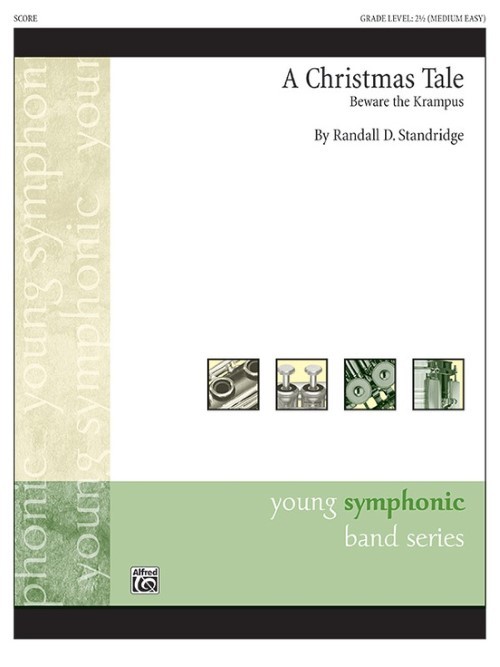
£179.99Outback - Thomas Doss
This work was commissioned by the "-sterreichische Blasmusikjugend" (Austrian Brass Band Association - Young Musicians).The Aboriginal indigenous people of Australia are among the oldest surviving human cultures. The arrival of the Europeans markedtheir decline and endangered their existence. The many secrets the Aborigines hold served as inspiration for this work. Aboriginal SpiritOver many centuries, the Aboriginal people have cultivated a unique ability to live in harmony with theworld around them. Maintaining the delicate balance between their trinity - nature, man, and creation - is an important factor for bliss and happiness.Primeval Sound and Dreamtime The tens of thousands-year-old stories from the era calledDreamtime - the Aborigines' creation myth - play an important role in not only their beliefs, but their everyday lives and laws as well. Ancestral worship and various other rituals and ceremonies are still held in high regard to this veryday.Running HunterThe Aborigines are extremely skilful hunters and are able to run for extended periods of time when chasing their prey. Hunting weapons, such as the boomerang, exemplify their abilities.Uluru (Red Rock)Uluru, also knownas Ayers Rock, is a natural sandstone "inselberg" rising 348m above Australia's plains, and is one of the country's most recognisable icons. Uluru is also a sacred place for the local Aborigines. Its history stretches back to Dreamtime, although itdid not exist in its current state at that time.Encounter with the White MenUnfortunately, the "White Men" did not realize the significance and importance of the Aborigines and their culture until the end of the 20th century. Before then, theywere unaware that the Aborigines were quite possibly one of the oldest known cultures on earth, with a seamless history stretching back to creation itself; Dreamtime. BushfireFire has been present on the Australian continent for millions ofyears. Many of the indigenous flora and fauna have needed to adapt to fire, and evolution has led to unique solutions for survival. Over time, a complex symbiotic relationship has grown between life and the continually returning bushfire.
Estimated dispatch 7-14 working days
-
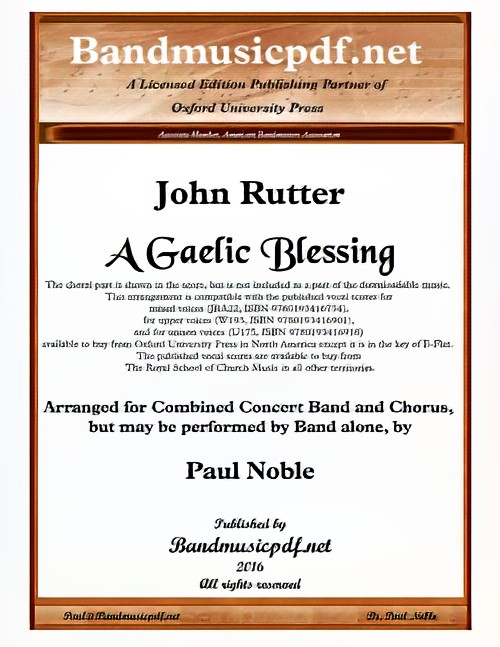
£159.99Ouverture To The Three Angels - Jelle Tasseyns
This overture was written in 2000 and pays homage to the composer Paul Hindemith. The composition is based on "Es sungen drei Engel. The song dates back to the 12th century and was originally a Christmas carol. Mahler used this melody in his 'Des Knaben Wunderhorn' and in the finale of his third symphony. Paul Hindemith also uses this melody as a chorale in the 'Engelkonzert' of his 'Mathis der Maler' symphony. This melody is not only used extensively in the 'Overture to The Three Angels', it also forms the main theme of the entire central piece. In this central piece, the melody can first be heard as a fugue by the woodwind instruments and then by the brass instruments andultimately ends in a grand tutti which features all the themes of the entire work. The first and the last part of the composition are not based directly on the chorale melody but constitute a contemporary commentary of the central part. These are not literal references but rather the sounds of the heralds.
Estimated dispatch 7-14 working days
