Searching for Brass Band Music? Visit the Brass Band Music Shop
We've found 65 matches for your search

Results

  • £79.50

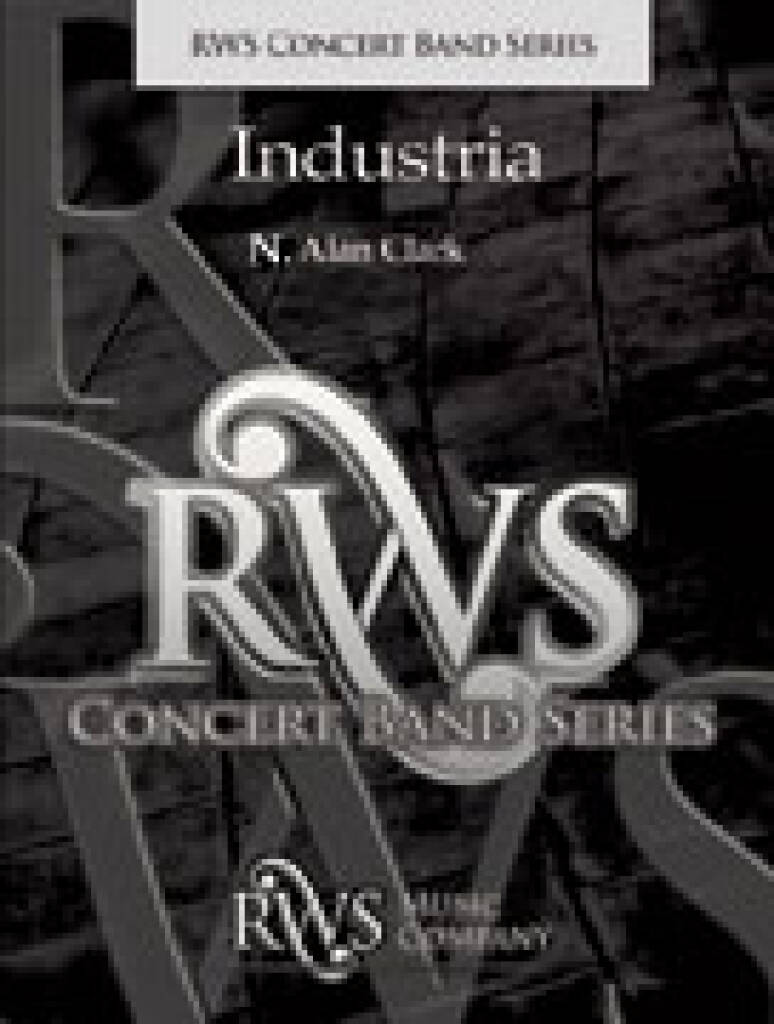
    Industria - N. Alan Clark

    Get your percussionists excited with this high energy feature for concert band. Primal wooden and industrial metallic sounds highlight this high energy work. Available as a section feature or for a soloist with band accompaniment, "Industria" will bring out the best in any percussion section.

    Estimated dispatch 7-14 working days

     PDF View Music

  • £78.95

    Side by Side - John N. Klohr

    John Klohr is best known for his famous Billboard March, but there is a lesser-known treasure that he specifically wrote for younger bands. Side by Side is a delightful march in standard form and has been expertly adapted for today's young bands by Laurie LAfterty.

    Estimated dispatch 7-14 working days
  • £459.10

    A Wine Symphony (Symphony N 4) - Derek Bourgeois

    Estimated dispatch 7-14 working days
  • £234.60

    A Night On Culbin Sands Op. 38 N 1 - Alexander Comitas

    Estimated dispatch 7-14 working days
  • £64.60

    Mambo N.5 (A little Bit of) - Damaso Perez Prado

    Estimated dispatch 7-14 working days
  • £80.00

    Palustrus (Percussion Ensemble with Concert Band - Score and Parts) - Clark, N. Alan

    Palustrus, for percussion ensemble and band, is based on two musical ideas. The first, a figure of two 16th notes, is introduced alluding to tiny seedlings as they sprout from the fertile earth. This figure quickly grows in frequency and density, then spreads into the second idea using a series of diatonic patterns. "Palustrus" is a medium-difficult, but attainable technical challenge in a diatonic setting. Splashes of dissonance in the winds support the active and exciting percussion ensemble statements throughout. Highly recommended for programs with a larger percussion section! Duration: 2.45

    Estimated dispatch 7-14 working days

     PDF View Music

  • £70.99

    Non, Non, Rien N'a Chang

    Estimated dispatch 10-14 working days
  • £202.99

    The Wind Rises - Joe Hisaishi

    This beautiful, lyrical melody is so colorful in the film, without having an imposing image. "The Wind Rises" (2013) does not dominate the visual, and perhaps is an ideal form of film music considering this is director Miyazaki's final production. Chamber ensembles with solos and strings are frequently used in the soundtrack, so the sound is mellow and soft. As you listen more and more, you still recognize the tradition of Ghibli music.When I arrange, I try not to visualize the image of a film. I may think of characters and story line but is it important to write music that alone is appealing and fascinating. Trying not to "overstate" the film is not needed here. If you can bring out the most appealing parts of the soundtrack, excess can be forgiven. Of course, I have not changed the musical elements of the original.I asked Mr. Tomoki Ubata (band director at Ina Gakuen Sr. High School) whom I have worked with numerous times to assist with layout. He came up with a heartwarming medley with two main parts; leading boy Jiro's gift for aeronautical design and his romance with the heroine, Natsuko.The following themes are contained in the arrangement:1. Nahoko (A Rainbow) Beginning2. Caproni (An Aeronautical Designer's Dream) C3. A Journey (An Encounter at Karuizawa) H4. The Falcon I5. Prototype 8 N6. A Journey (A Parting) & A Journey (A Dream of Flight) PIt is quite remarkable, looking back on 30 years of Studio Ghibli's achievements.(Kazuhiro Morita)

    Estimated dispatch 7-14 working days
  • £154.99

    Symphonic Variations - Jacob de Haan

    This composition is based on a passacaglia theme, in which artistic perfection, symphonic drama and oriental melody lines play a role. The passacaglia is originally a dance made up of a series of variations above a bass line constantly present as an ostinato. It is not in this sense that the "Symphonic Variations" are in the passacaglia form but in the sense of the open form of the variations. Jacob de Haan, himself originally an organist, took his inspiration for this piece from the famous passacaglia for organ in C-minor by J.S. Bach. Following the introduction of the passacaglia theme (in the bass) the entry by the trumpets and trombones forms the majestic start to amusical adventure, in which this theme (often fragmentary) returns in variations. Then there follow two faster movements with dramatic contrasts and virtuose passages. Particularly striking here is the use of two characteristic intervals from the beginning of the theme namely the minor second and the augmented fourth. An apause in the composition comes in the slow bridge where a syncopated bourdon (perfect fifth) is constantly repeated. The tension grows in dynamics and harmony, and the oriental-flavour becomes obvious in the melody. We arrive at a faster movement via an accelerando, in which a perpetuum mobile based on the passacaglia theme is central. Finally the whole flows into a martial theme, in which the ostinato accompaniment n the descant derives from the passacaglia theme.

    Estimated dispatch 7-14 working days
  • £264.99

    Diferencias on an Old Spanish Song - Yasuhide Ito

    I am immensely happy that my Gloriosa, symphonic poem for band (1990), has been performed by so many bands in the last thirty years.During this period, the growth of the internet has made it much easier to access information.When I composed Gloriosa, I only had limited information about the period when Christianity and Western music was first introduced to Japan, and had to rely a lot on my imagination.However, nowadays, it is easy to obtain various source materials and to read interesting studies on the music of the past.In recent years, the music of Luis de Narvez (born ca.1500 - died between 1555-1560), Spanish composer and vihuela player, has become increasingly known, and several CDs of his music are now available.Narvez composed the earliest-known set of diferencias, a forerunner of the variation form. One of his works is Seys diferencias sobre el himno "O gloriosa domina" [Six diferencias on the hymn "O gloriosa domina"] (1538), based on the Spanish Marian hymn, and it was this melody I used in the first movement of my Gloriosa.Western music has been my musical roots since childhood, and throughout my career as a composer, it has continued to fascinate me. One could say that this has provided the inspiration for Diferencias on an Old Spanish Song, my own take on the diferencias form.Actually, such music from the early sixteenth century could sound fresh to our modern ears. So I decided to quote the melody from Narvez's Sey diferencias at the beginning and end of the piece, in order that people can get the feel for the period.The main section (bars 42-390) is formed of 13 diferencias, similar to the first movement of the Gloriosa.In the middle section, which begins after the eighth diferencia(from bar 187), one should be totally absorbed in the tranquility and the beauty of the music. Although it's in the style of a sarabande, it should be taken slower and played as pianissimo as possible.This is followed by folk-style dance music. (As only standard percussion instruments are used, try to be creative with tonal colours and sense of rhythm).The structure of the work is simple, but be aware of the connection between the sections when constructing the whole.Also, think about the tonality. Overall, the work is in F minor. The main section is basically in D minor, but from bar 102, it modulates to A flat minor and G minor, and then in the middle section it suddenly switches to A flat major (which is the furthest key from D minor, and the relative major of F minor). From bar 219, it modulates to F minor and then to C minor, then back to F minor by way of A minor.N.B. The Oboe II part can be substituted by the English Horn (as indicated in the parts). One can choose according to the player's skills or preference.Recent new compositions for wind band are often full of rhythm, dynamism, and tonal colour, and compositional techniques and orchestration have also evolved greatly. Yet on the other hand, they tend to feature fewer melodic or expressive elements. Since this work is the test piece for WMC Kerkrade 2022, I had to think about what "tests" or "challenges" to set, and I decided to compose something that doesn't involve a lot of technical display, but requires beautiful sounds and harmonies, and above all, musical expressivity. I didn't put many expression markings in the score, because I wanted the performers to think about how best to express this music. If it is played merely as notated, it's not going to sound very interesting.Christianity was introduced to Japan in the mid-16th century, but it was subsequently banned and Japan entered a period of national isolation, which meant that there was hardly any international exchange for two hundred years. As a result, the Christian hymns that were introduced prior to the isolation became almost unrecognizable over the centuries. This was the theme I explored in my Gloriosa thirty years ago.Now, in 2021, the whole world has been forced to "isolate" due to the Covid-19 pandemic. In such times, it seems pertinent that I've written a work using this melody again. I sincerely hope that people will be able to gather in Kerkrade in 2022.(English Translation:Nahoko Gotoh)

    Estimated dispatch 7-14 working days

     PDF View Music