
Results
-
 £87.50
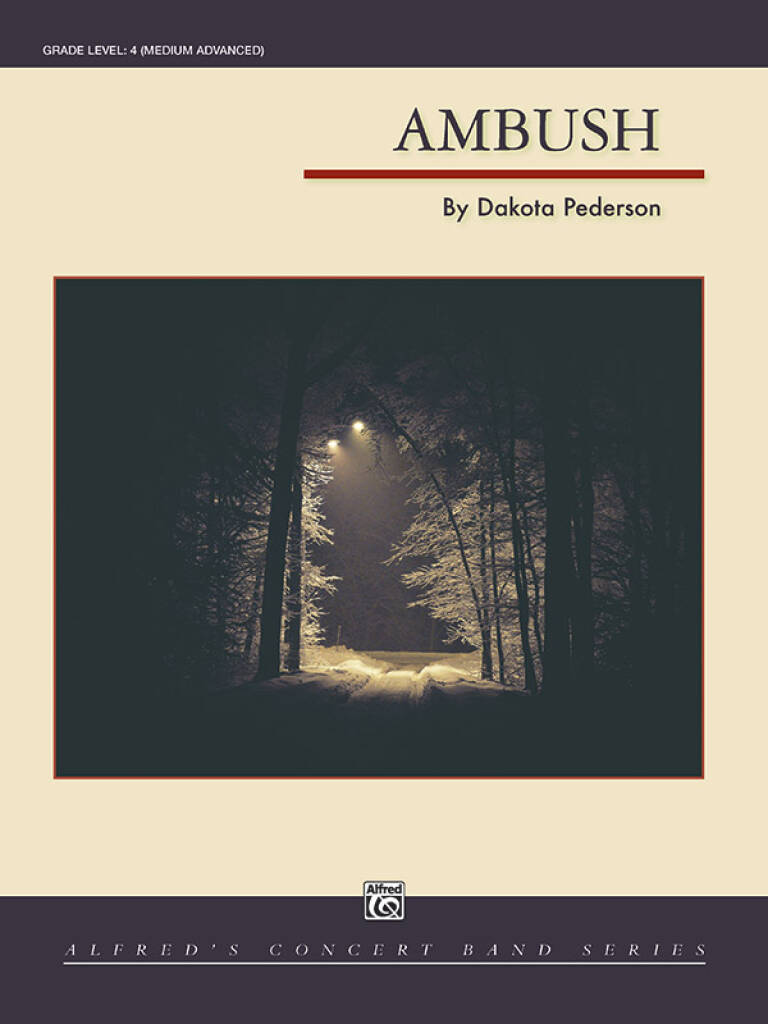
Ambush - Dakota Pederson
Ambush by Dakota Pederson is a work that describes the fight of war and recounts a flanking ambush set out by soldiers as they close in on a victory. A fiery chord opens the work and is followed by a relentless melody, which is expressed through precise articulation. The work challenges performers to focus on articulation and expression, while giving the percussion section a driving rhythm to maintain the energy. Strong harmonies in the brass and bold melodies throughout make this piece a fierce statement of war and victory. (4:12)
Estimated dispatch 7-14 working days
-
 £183.99
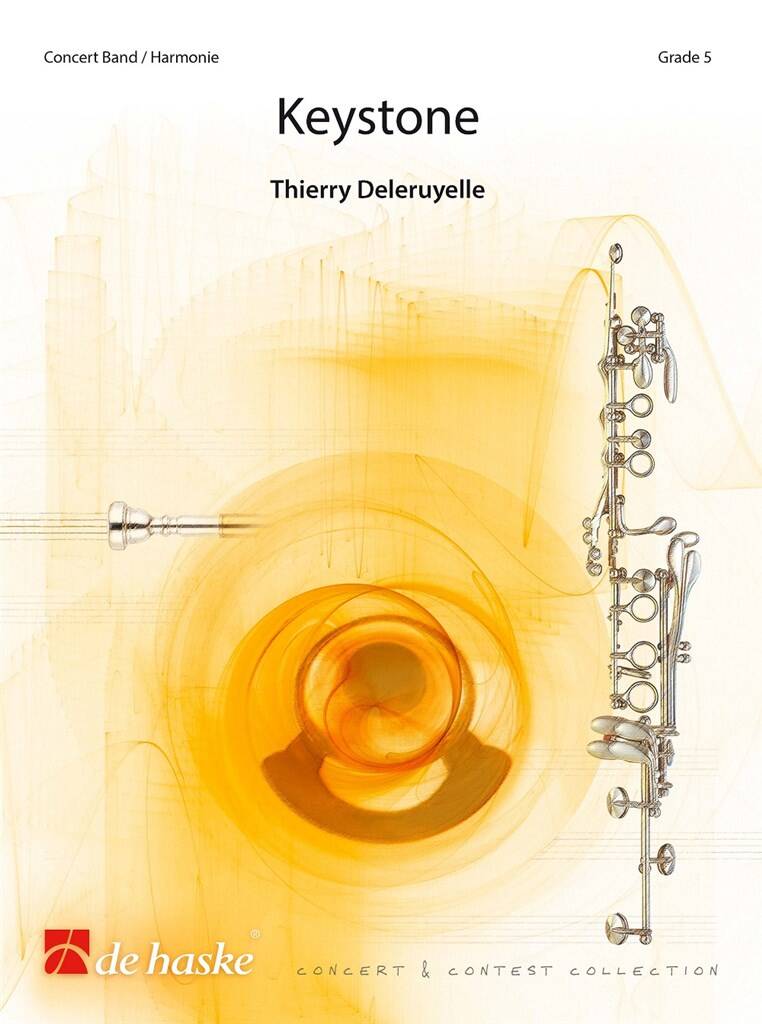
Keystone - Thierry Deleruyelle
Keystone tells the story of the Odeon of Vriezenveen, a town in the Netherlands. "Odeon" is the name of ancient Greek and Roman buildings used for activities such as singing, music and poetry. This was the name chosen in 1998 by several members of the 'Vriezenveense Harmonie' for the cultural centre they decided to have built. The piece starts slowly with the bass instruments, then speeds up in a counterpoint passage where the main motif moves from one set of instruments to another. After a slower section, the music speeds up again to reach a majestic chorale symbolising the splendid Odeon.
Estimated dispatch 7-14 working days
-
 £171.00
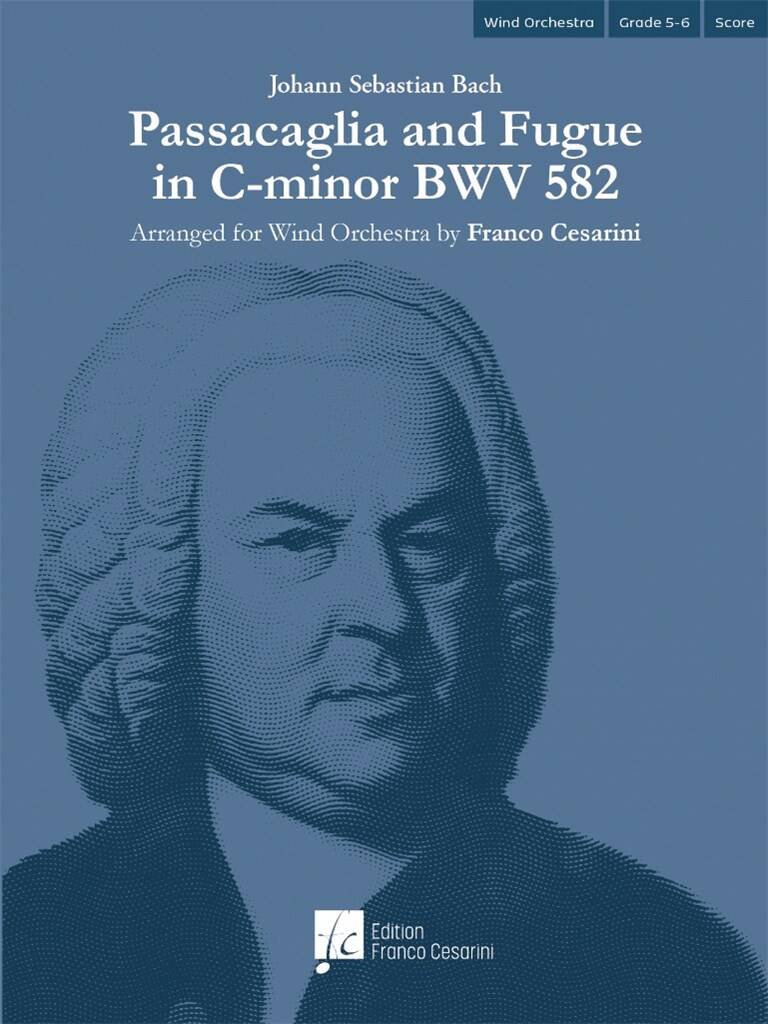
Passacaglia and Fugue in C-minor BWV 582 - Johann Sebastian Bach
The Passacaglia is a set of instrumental variations based on an ostinato bass. Bach's Passacaglia and Fugue in C-minor for organ represents the pinnacle of what had been achieved in this compositional form at that time. In Franco Cesarini's arrangement for large wind orchestra, the particularly careful interpretation of the original piece enables him to exploit all the sound colors at his disposal, and in this sumptuous guise Bach's work also takes on a grandiose dimension, albeit tinged with late-Romanticism. The exposition of the beautiful theme begins in the bass part, immediately creating a solemn and serious atmosphere which is accentuated by the intensely pathetic character of the first variations. Up to the tenth variation it remains confined to the bass, but in subsequent ones it also passes to the soprano and alto register. The integrity of the theme is also embellished with elegant arpeggios, in whose lower and higher extensions the theme can be distinguished. Towards the end it returns to the bass in an impressive thickening of the polyphonic texture that swiftly re-establishes the key of C-minor. The "Thema fugatum" which follows immediately does not constitute a Fugue in its own right, rather it is nothing but the twenty-first and most extensive variation of the Passacaglia. This time Bach uses only the first half of the theme, superimposing a rhythmic countersubject that considerably enlivens the entire development of the composition. The polyphonic discourse becomes increasingly dense, until the building tension peaks in a powerful "Neapolitan sixth" chord, followed by a sudden pause. This culminating moment then leads to the coda and final cadence on a bright C-major chord.
Estimated dispatch 7-14 working days
-
 £260.99
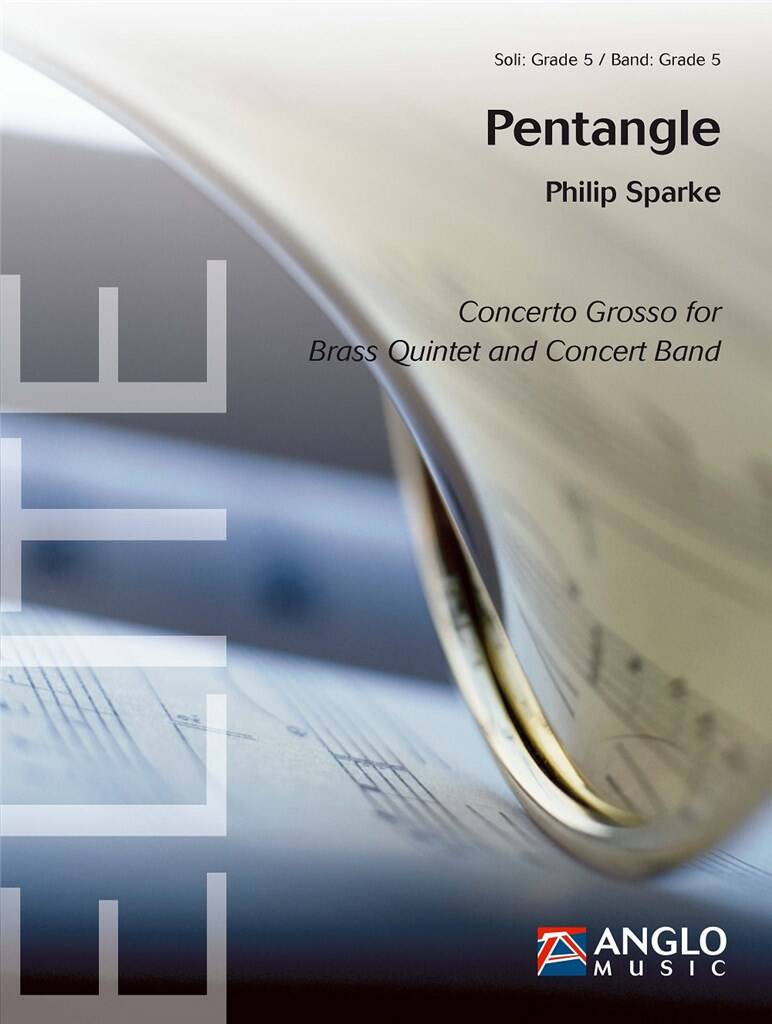
Pentangle - Philip Sparke
Pentangle, set in three movements without a break, uses the traditional concept of the baroque concerto grosso as its model, treating the brass quintet and accompanying concert band as separate but equal ensembles. Interplay between the two, and frequent use of the quintet players as soloists, permeates the work in various combinations, making it a captivating composition full of variety.
Estimated dispatch 7-14 working days
-
 £91.99
Guardians of the Waves - Philip Sparke
Guardians of the Waves was commissioned by the Japan Coast Guard Band to celebrate their 30th anniversary in 2018. They gave the premiere as part of a 30th anniversary concert on November 8th that year. Set in traditional march form, Guardians of the Waves opens with a short introduction, which leads to the main theme, played initially by the brass and then repeated with a florid woodwind descant. The theme is extended and morphs into a second theme, first played tutti and then quietly repeated by bassoon, tenor sax and euphonium. This leads to a conventional 'bass strain', played twice with varying accompaniments. A quieter trio section follows, delicately scored and featuring the tenor instruments of the band. Taken up by the full band, this leads back to a recall of the introduction and a return to the main two themes, which lead to a triumphal close.Recorded by the Kobe College Wind Orchestra and its conductor Osama Matsuura
Estimated dispatch 7-14 working days
-
 £102.99
Three Blind Mice - Bert Appermont
This composition is based on the children's song 'Three Blind Mice', of which the melody is featured in a range of variations: in a canon, in inversion, in minor, transformed, with changing harmonisations and orchestrations, and in different times and tempi. The work consists of three continuous, contrasting movements: 1) Mouse March: The mice cheerfully set off while the original melody is presented as a march. - 2) Hymn: In a tuneful hymn, the wonderful praises of the life of mice are sung. - 3) Catch Me If You Can: In an animated chase, the farmer's wife is trying to catch the mice. Following a stirring acceleration, she cuts off their tails in accordance with the lyrics of the song. I hope this work, with its humorous touch, will be a welcome contribution to the expansion of interesting repertoire for the lower divisions. - Bert Appermont
Estimated dispatch 7-14 working days
-
 £76.99
Stars on Fire - Marc Jeanbourquin
"To be born under a lucky star", "To have stars in your eyes", "To be someone's lucky star", as well as "To be all fired up", "To set the world on fire" and "To be on fire with love" - all of these are expressions that inspired Marc Jeanbourquin to compose Stars on Fire. Indeed, combining fire and stars could only produce a piece full of positive energy, of good vibrations, with a sparkling theme that is heard right from the first bars all the way up to its explosive finale. This makes Stars on Fire an ideal piece to open a concert.
Estimated dispatch 7-14 working days
-
 £60.99
Themes From The Crown
From the masterful Netflix series on British royalty, here are two of the iconic musical themes skillfully set for concert band with rich textures and haunting melodies.
Estimated dispatch 7-14 working days
-
 £127.30
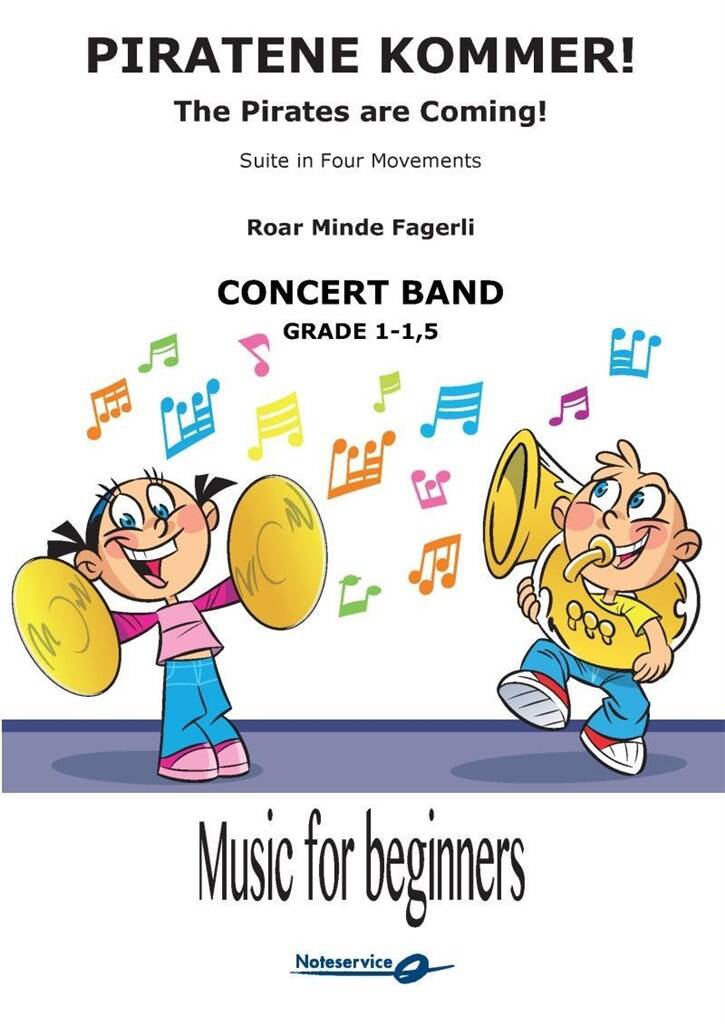
Piratene Kommer! - Roar Minde Fagerli
The Pirates are comming! is a four movement suite of music originally composed for a summer course arranged by The Norwegian Band Federation. The four movments describes the pirates tale. In the first movement they set the sails for new adventures. In the second movememt we meet the pirates early one morning when the sun rises. I the third movememt the pirates are looking for a treasure map at the Isle of the Dead. In the fourth and last movememt, they hunt the teasure! The Composer has been inspired by TV-series and films with pirate themes. The Music is written especially for beginners.
Estimated dispatch 7-14 working days
-
 £118.99
Goodnight Moon - Eric Whitacre
Over the past few years I must have read Goodnight Moon to my son a thousand times - maybe more. Somewhere around reading number 500, I began hearing little musical fragments as I read, and over time those fragments began toblossom into a simple, sweet lullaby. I knew it was a long shot, but I asked my manager, Claire Long, to contact HarperCollins and see if they would allow the text to be set to music. To my surprise and delight they agreed - thefirst time they had ever allowed Goodnight Moon to be used in such a way. I composed the piece relatively quickly, originally setting the text for harp, string orchestra, and my son's mother, soprano Hila Plitmann. I laterarranged Goodnight Moon for SATB choir and piano. More recently, my dear friend Verena Msenbichler-Bryant arranged the piece for wind ensemble and soloist. The melody of Goodnight Moon will forever make me think of those quietnights, reading my son to sleep. -Eric Whitacre
Estimated dispatch 7-14 working days
 View Music