
Results
-
 £105.00
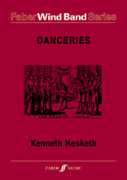
Danceries (Set I) (Concert Band - Score and Parts) - Hesketh, Kenneth
The term 'Danceries' can be found in a copy of Playford's Dancing Master, an extensive collection of folk and popular tunes of the seventeenth century (and no doubt earlier). This publication was used by master fiddle players to teach the various dance steps of the day to a nobleman's house or a king's court. Whilst this present set of 'Danceries' cannot be said to be an aid to terpsichorean agility, it will at least set feet tapping! The melodies themselves are a mixture of new and old--well, nearly. Where the old occurs it has been adapted in mood and composition and is often interspersed with completely new material. The harmonies and rhythms bring a breath of the new into these themes and add to the drama of the set.Movement 1: Lull me beyond thee. Gentle and lilting, almost a barcarole, this movement is very much a reverie. The original tune had the name 'Poor Robin's Maggot' - a rather disconcerting title; maggot, however, in seventeenth-century parlance meant whim or fancy. This theme can also be found in The Beggar's Opera by John Gay (first performed in 1728) under the title 'Would you have a young lady' (Air 21).Movement 2: Catching of Quails. A colourful, buoyant scherzo on an original melody. The thematic material is shuttled around the band to contrast with full-bodied tuttis. The last few bars fade away to almost nothing before a final surprise!Movement 3: My Lady's Rest. A tender pavane, also on an original theme, with Moorish leanings. Solos for principal winds and brass contrast with warmer tutti passages. The movement culminates with a final presentation of the theme before evaporating in held flute and trumpet chords.Movement 4: Quodling's delight. The final movement to the set combining one of the melodies from Playford's Dancing Master ('Goddesses') with an original contrasting melody. A dramatic and exuberant ending to the set of 'Danceries'.Duration: 12.00
Estimated dispatch 7-14 working days
-
 £224.99
Les Marteaux de la Marine Wind Band Set (Score & Parts)
Les Marteaux de La Marine was composed in 1999 as a commission by the Marine Band of the Royal Netherlands Navy. The composition contains three static elements which interchange. Static in this case means that development of the material is not pursued (by the composer). The first element with which the piece begins is tranquil and colourful. The second element is sharp and incisive, while the third expresses energy. In all elements a repeated tone is the starting point which explains the hammers in the works title.The instrumentation is richly variegated with a harp also determining the palette of colours in the slower movements. The composition opens with an atmospheric Larghetto containing fine harmonies in the soft and subtly moving wood-winds. The introduction breathes an impressionistic atmosphere in which expressive cantilenas and soloistic agile motifs stand out. A strong setting is followed by an Allegro virtuoso containing fast motifs contrasted with short and rhythmic stars of the various instrumental sections. Trumpets and horns add a virtuoso bugle-call motif. After a short stringendosection, the transparent Larghetto returns with a varied setting of the opening elements. The beautiful leading roles in this section are reserved for cornet (trumpet) and horn. Subsequently, the flashing Vivo starts with continuous movements in triplets from both wood-winds and brass. Next, the opening Allegro re-appears once again and thus Les Marteaux de la Marine ends with a fast and virtuoso climax. Les Marteaux de La Marine was selected as a compulsory grade 6 contest piece for symphonic bands in the Netherlands. 17:45
Estimated dispatch 7-14 working days
-
£179.99
Outback (Concert Band - Score and Parts)
This work was commissioned by the "?sterreichische Blasmusikjugend" (Austrian Brass Band Association - Young Musicians).The Aboriginal indigenous people of Australia are among the oldest surviving human cultures. The arrival of the Europeans marked their decline and endangered their existence. The many secrets the Aborigines hold served as inspiration for this work. Aboriginal SpiritOver many centuries, the Aboriginal people have cultivated a unique ability to live in harmony with the world around them. Maintaining the deli?cate balance between their trinity - nature, man, and creation - is an important factor for bliss and happiness.Primeval Sound and Dreamtime The tens of thousands-year-old stories from the era called Dreamtime - the Aborigines' creation myth - play an important role in not only their be?liefs, but their everyday lives and laws as well. Ancestral worship and various other rituals and ceremonies are still held in high regard to this very day.Running HunterThe Aborigines are extremely skilful hunters and are able to run for extended periods of time when chasing their prey. Hunting weapons, such as the boomerang, exemplify their abilities.Uluru (Red Rock)Uluru, also known as Ayers Rock, is a natural sandstone "inselberg" rising 348m above Australia's plains, and is one of the country's most recognisable icons. Uluru is also a sacred place for the local Aborigines. Its history stretches back to Dreamtime, although it did not exist in its current state at that time.Encounter with the White MenUnfortunately, the "White Men" did not realize the significance and importance of the Aborigines and their culture until the end of the 20th century. Before then, they were unaware that the Aborigines were quite possibly one of the oldest known cultures on earth, with a seamless history stretching back to creation itself; Dreamtime. BushfireFire has been present on the Australian continent for millions of years. Many of the indigenous flora and fauna have needed to adapt to fire, and evolution has led to unique solutions for survival. Over time, a complex symbiotic relationship has grown between life and the continually returning bushfire. 11:55
Estimated dispatch 7-14 working days
-
 £204.99
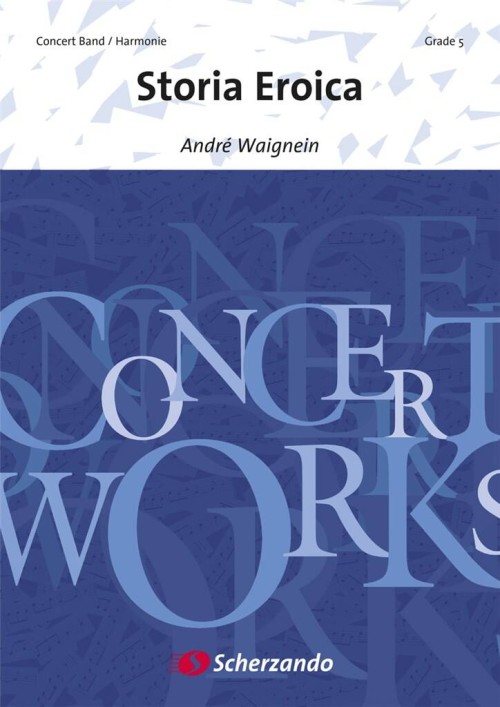
Storia Eroica (Concert Band - Score and Parts) - Waignein, Andre
This composition was commissioned by the "Municipal Brass Band of Luxembourg-Bonnevoie". It was premiered in presence of the Grand-Duke Heir Henri on January 24, 1998 with this orchestra, and with the composer as director. This work is a musical evocation describing this magnificent Luxembourgian region and her inhabitants. The overture evokes the serenity met in this region. An orchestrale development, as rhythmic as sound, propels the orchestra in a "military" atmosphere putting in evidence all the registers of the orchestra. This tension is maintained until the general explosion of the whole. One cantilena appears in all the innocence. Gradually, the orchestration suppresses, until the exhaustion. The passage which follows represents the tempestuous events which took place through ages. A spectacular cadence, by the clarinet or by the soprano saxophone, terminates this disorder. An ample and lyric theme reflects the generosity which always played an important role. Then, having found some of initial themes, work ends in an atmosphere of enjoyment, developed in rich and eclectic one variety which proves the sphere of influence of the sound colour at Andr Waignein.Duration: 14:00
Estimated dispatch 7-14 working days
-
 £85.00
Rondo (from Incidental Suite) (Flexible Ensemble - Score and Parts) - Smith, Claude T. - Earp, Joseph Benjamin
Rondo from Incidental Suite is the third movement of this suite originally scored for concert band. This work is rhythmically engaging from beginning to end as the percussion establish the rhythmic motives that move and transform throughout. This flexible arrangement allows ensembles to perform the work with as few as thirteen musicians providing accessibility and flexibility for numerous instrumentation needs, while still allowing a full ensemble sound.*The posted recording is based on the full band scoring but aligns with the suggested preferences for either woodwinds/strings or brass suggested in the score.
Estimated dispatch 7-14 working days
-
 £110.00
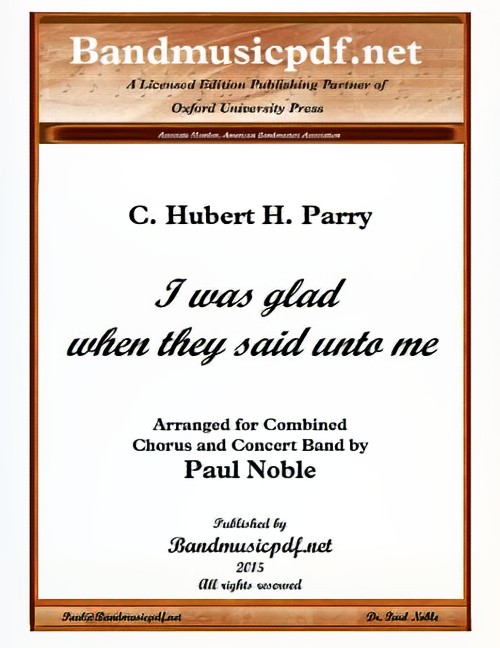
I Was Glad When They Said Unto Me (Choir with Concert Band - Score and Parts) - Parry, Hubert C. - Noble, Paul
I Was Glad is an introit commonly used in the Anglican Church, and also used as an anthem traditionally sung at the coronation of the British monarch. Its most famous setting was written in 1902 by Sir Hubert Parry. Parry's version was composed for the coronation of King Edward VII in 1902, and revised in 1911 for that of King George V, when the familiar introduction was added. This setting employs antiphonal choir effects and brass fanfares. Apart from the imperial splendour of the music, the chief innovation is the incorporation in the central section of the acclamations Vivat Rex... or Vivat Regina... (Long live King/Queen...) with which the King's or Queen's Scholars of Westminster School have traditionally greeted the entrance of the monarch since the coronation of King James II in 1685. This section is generally omitted when the anthem is performed on other occasions. At the last coronation, that of Elizabeth II in 1953, the acclamation took the form of Vivat Regina Elizabetha. Parry's setting of I Was Glad was performed on 29 April 2011 at the Westminster Abbey wedding of Prince William, Duke of Cambridge and Catherine, Duchess of Cambridge (formerly Kate Middleton) as the processional music for the bride and her father and the bridal attendants. It had previously been performed at the wedding of the Duke's parents, Charles, Prince of Wales and Diana, Princess of Wales in 1981.
Estimated dispatch 7-14 working days
-
 £183.99
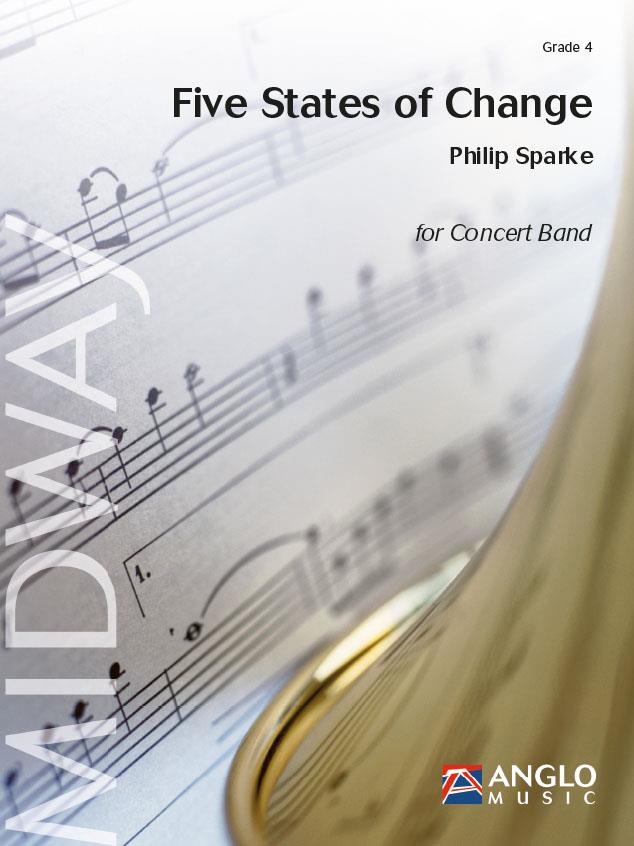
Five States of Change (Concert Band - Score and Parts) - Sparke, Philip
Five States of Change was commissioned by Kunstfactor for the 4th section of the Dutch National Brass Band Championships (NBK) 2011. It is dedicated to Jappie Dijkstra and the Music Information Centre (MUI), Arnhem, Holland, in acknowledgement of their outstanding work in developing band repertoire.The composer writes:The idea for the piece came when I was reading an article about a branch of Chinese philosophy which is abbreviated as Wu Xing*, which has no exact translation but can mean, for example, five elements, five phases or five states of change. It is central to all elements of Chinese thought, including science, philosophy, medicine and astrology, and in simple terms tries to create various cyclic relationships between five elements in all walks of life. An example is: Earth - Metal - Water - Wood - Fire - (Earth) etc. where (in one cycle) earth bears metal, metal changes to liquid (water) when heated, water helps trees grow, wood burns to create fire, fire produces ash (earth) and the cycle continues. I was particularly interested in the cycle of emotions:- Meditation - Sorrow - Fear - Anger - Joy - (Meditation) etc. and thought this cyclic principle would provide an effective emotional journey for a piece of music. So Five States of Change has five equal sections which loosely characterise this emotional cycle. I have tried to make the music grow organically, with minimal repetition, and each movement evolves from the musical elements at the end of the previous one, with the opening material appearing, transformed, at the end of the piece to complete the cycle.*in full Wu zhong liu xing zhi chi or the five types of chi dominating at different times.- Philip SparkeDuration: 12:15
Estimated dispatch 7-14 working days
-
 £82.95
Russian Christmas Music (Concert Band - Score and Parts) - Reed, Alfred
The theme carefully explored by Alfred Reed in this repertoire standard is "Carol of the Little Russian Children" which is an ancient Russian Christmas carol. You can hear four distinct sections originally called "Children's Carol," "Antiphonal Chant," "Village Song" and "Cathedral Chorus" all joined in this continuous contemporary setting. The almost overwhelming sound picture with varied tone colours and brilliant brass choir sounds is a classic in every sense. "Russian Christmas Music" by Alfred Reed is a worthy addition to the Belwin Classic Band series.
Estimated dispatch 7-14 working days
-
 £89.99
Mercury (Concert Band - Score and Parts) - Van der Roost, Jan
Mercury is a concert march composed in a typically British idiom. In 1990, Jan Van der Roost wrote this piece on the occasion of the 15-year anniversary of his own band: Brass Band Midden Brabant. Like many British marches, the main theme is written in a minor key. Powerful and virtuoso themes characterise the first part of this march, while the trio melody is much more melodical, offering the tenor register to display its lyrical skills. Follows a dynamic passage for trombones and trumpets/cornets, leading to a "grandioso" version of the main trio melody and thus concluding this march in a magnificent way.Duration: 3.00
Estimated dispatch 7-14 working days
-
£71.28
El Arco De Los Cabos
This exciting paso doble is named for the famous "Arch of Los Cabos" found at the southernmost tip of the Baja California Peninsula. This natural stone arch is a landmark where the Pacific Ocean and the Sea of Cortez meet. Commissioned for the Five-States Honor Band in Guymon, Oklahoma, this work features bold brass statements contrasted with lyrical woodwind lines and dynamic Latin percussion reinforcement. "El Arco de Los Cabos" is destined to become a paso doble standard in contemporary band literature. Great contest or concert opener/closer!
Estimated dispatch 7-14 working days
 View Music