Results
-
£204.99Credentium Wind Band Set (Score & Parts)
A spectacular dive via an extended chromatic scale immediately submerges us in a charged and somewhat archaic-feeling atmosphere. Trumpets, horns and trombones resound in rhythmic patterns, buttressed by restless motifs in the percussion. A second theme, in the woodwinds, begins much calmer but is quickly pushed aside by that same brass offensive. This introduction is the musical expression of the sometimes tumultuous early history of the town of Peer in Belgium. It closes with a D scale played over two octaves and repeated three times, symbolizing the church steeples that dominate the townscape. Peer has the credentials of a town, and people should know about it.There follows a rhythmic, turbulent passage: in the course of history, Peer has not been spared the ravages of war, arson, occupation, epidemic and other evils. In contrast, a slow, pastoral, lyrical part expresses the periods of peace and prosperity the town has known, as well as the serene geographic setting that still characterizes the place. Various instruments in groups are developed in solo style while the accompaniment displays vast, painterly images of sound. Now and then an exotic intonation is heard: a variety of peoples and cultures have left their mark on the town.This episode of tranquility and peacefulness comes to a sudden end when, via a surprising, almost chaotic transitional passage, we are in effect transported back to our own time. A hopeful, festive march expresses the confidence in the future that the Royal Concert Band of Peer exudes. This confidence is wholly justified: under the direction of conductor Willy Fransen, the 95 members of the concert band have experienced an extended period of good fortune, and the 75 musicians of the youth band - and the 45 little musicians of the mini-band - are involved in thriving operations. 0:13:15
Estimated dispatch 7-14 working days
-
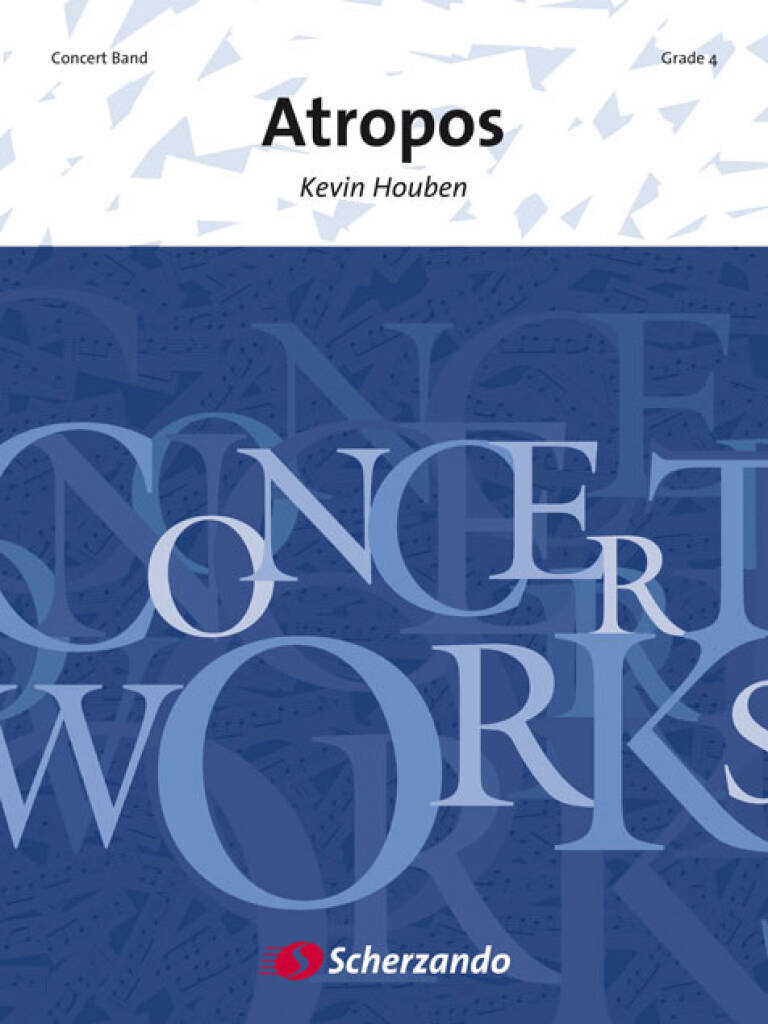
£193.20CASTRVM - Lionel Beltrán-Cecilia
CASTRVM is a symphonic episode inspired by four of the main civilizations that have coexisted over time in Ulldecona's Castle. With its melodies and sound effects, the composer tries to transport the listener through a trip to four uninterrupted movements, from the beginnings of this small settlement, creating a natural atmosphere recreated by the voice and the singing of birds to take us into the history with the first inhabitants, the Iberians, giving strength to the introduction of the composition, to move on to the time of the Andalusians, which with a melody in the form of a dance marked by percussion will transport us to take a walk in the surroundings of its circular tower. Next, and with strength, we arrive at the medieval and Christian period, marked in the score by the brass instruments, in this fragment we find moments that take us into the church of "Santa Mara de los ngeles", with melodies that evoke resonance and pomposity, continuing until we find the immense square tower, symbol of the fortress and homage, finally used as a prison and arsenal of those times. Then, there is a small slow march that will move us to some measures of strong stridency to finish with the whole section of low brass having its great moment of prominence, down to we reach the last part, Qna, a name that is recited during the musical piece and one of the names given in the past to the area that could be seen from the castle, where the change of location of the new town is recreated leaving the castle site, but always looking at it with respect and admiration as at the beginning of what is now the current Ulldecona, in this part, the composer plays a bit with a very well-known and significant melody for the inhabitants of Ulldecona, the "Jota Vieja", first making a reflex effect of all its melody and then only with the first six notes of this one, which builds a bridge until reaching the march and, later, the grand finale of this symphonic episode. The work was commissioned by Ulldecona Town Council and the Ulldecona Music Band, led by its conductor Joan Nadal i Girona, to commemorate the 800th anniversary of the donation of the Town Charter of Ulldecona "the old" (1222-2022), as part of the PATRIMONIUM 20.22 programme, "La Banda (Sonora) del Castell" (The soundtrack of the Castle).CASTRVM consists of: I.Iberians: stone and ironII.AndalusiansIII.The square tower: fortress and homageIV.Qna
Estimated dispatch 7-14 working days
-
£204.99
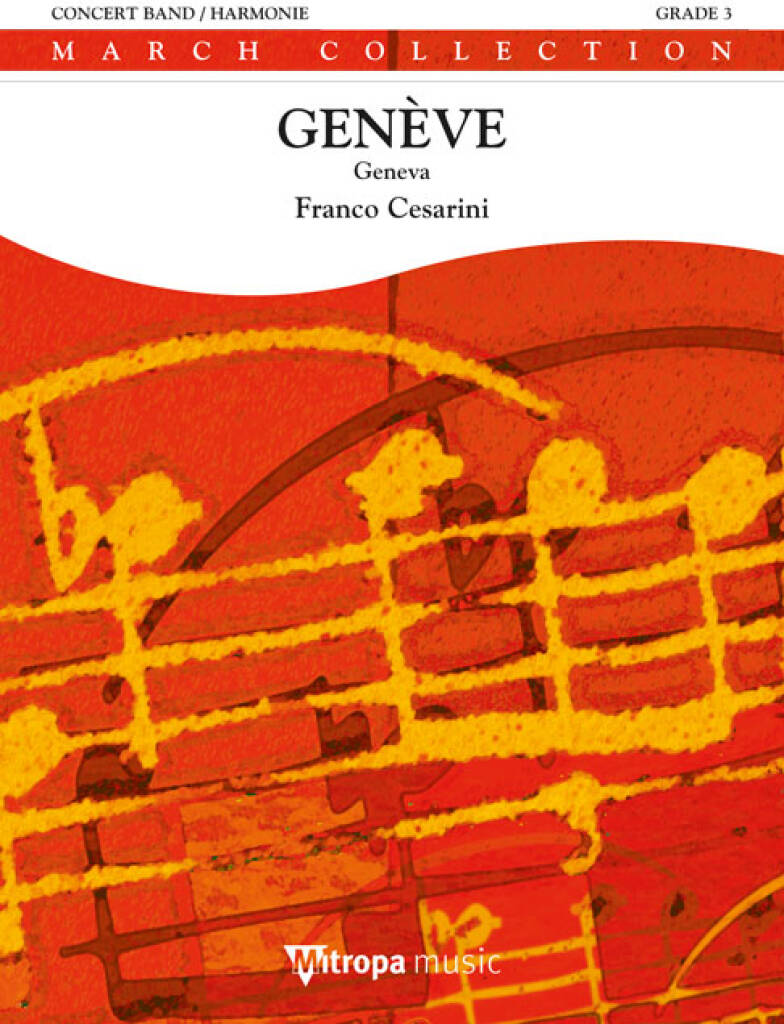
Credentium - Jan van der Roost
A spectacular dive via an extended chromatic scale immediately submerges us in a charged and somewhat archaic-feeling atmosphere. Trumpets, horns and trombones resound in rhythmic patterns, buttressed by restless motifs in the percussion. A second theme, in the woodwinds, begins much calmer but is quickly pushed aside by that same brass offensive. This introduction is the musical expression of the sometimes tumultuous early history of the town of Peer in Belgium. It closes with a D scale played over two octaves and repeated three times, symbolizing the church steeples that dominate the townscape. Peer has the credentials of a town, and people should know about it.There followsa rhythmic, turbulent passage: in the course of history, Peer has not been spared the ravages of war, arson, occupation, epidemic and other evils. In contrast, a slow, pastoral, lyrical part expresses the periods of peace and prosperity the town has known, as well as the serene geographic setting that still characterizes the place. Various instruments in groups are developed in solo style while the accompaniment displays vast, painterly images of sound. Now and then an exotic intonation is heard: a variety of peoples and cultures have left their mark on the town.This episode of tranquility and peacefulness comes to a sudden end when, via a surprising, almost chaotic transitional passage, we are in effect transported back to our own time. A hopeful, festive march expresses the confidence in the future that the Royal Concert Band of Peer exudes. This confidence is wholly justified: under the direction of conductor Willy Fransen, the 95 members of the concert band have experienced an extended period of good fortune, and the 75 musicians of the youth band - and the 45 little musicians of the mini-band - are involved in thriving operations.
Estimated dispatch 7-14 working days
-
£184.99
Il Cantico - Oliver Waespi
Commissioned by the Stadtharmonie Zurich Oerlikon-Seebach for the 2005 WASBE Conference in Singapore"Il Cantico" was inspired by the poem "Cantico di Frate Sole" (Canticle of Brother Sun) by St. Francis of Assisi. In this famous mystic poem, St. Francis expresses his gratitude to God for the creation of nature, the sun, the earth and the living beings."Il Cantico" is based on specific parts of St. Francis's poem. A slow, dreamlike song in the flute leads gradually to the appearance of the sun, the light energy of which is expressed by radiant, powerful music in the brass instruments. The next, slower part of the work is dedicated to the moon (sora luna), a sort of mirror of thesun, and to the stars (le stelle). The music becomes more thoughtful, leads to a calm sound field in the woodwinds and later to a mystic horn solo. Still during the slow part, several chord fragments flash up, thereby announcing the fast ultimate part of the work. This part is about the fire (frate focu) illuminating the night, some sort of representative of the sun on earth. Towards the end of the work, the sun theme is combined with the fire theme.Besides these images, a purely musical structure guides the development of Il Cantico. Almost the entire piece evolves from a basic four-tone cell which appears in the horns and flute at the beginning. Consequently, the work is mainly monothematic and structured in the form of a metamorphosis. The basic cell gradually leads to a rich melodic and harmonic development. This basic material is later completed by a new chord series belonging to the fire theme. In the conclusion both approaches are combined.
Estimated dispatch 7-14 working days
-
£39.95
Hammond - Score and Parts - Kenneth Downie
Program NotesThe hymn tune arrangement Hammond is a setting of a beautiful song 'In the Love of Jesus' with a melody by William Hammond and words by Ivy Mawby. The beautiful sequential curves of the melodic line are exploited in this arrangement to produce a full and rich texture, which will sound immensely satisfying once balanced and refined.The words that are associated with this tune are as follows:In the love of Jesus there is all I need,While I follow closely where my Lord may lead;By his Grace forgiven,In his presence blest,In the love of Jesus,In the love of Jesus, is perfect rest.
Estimated dispatch 7-14 working days
-
£7.95
Hammond - Score only - Kenneth Downie
Program NotesThe hymn tune arrangement Hammond is a setting of a beautiful song 'In the Love of Jesus' with a melody by William Hammond and words by Ivy Mawby. The beautiful sequential curves of the melodic line are exploited in this arrangement to produce a full and rich texture, which will sound immensely satisfying once balanced and refined.The words that are associated with this tune are as follows:In the love of Jesus there is all I need,While I follow closely where my Lord may lead;By his Grace forgiven,In his presence blest,In the love of Jesus,In the love of Jesus, is perfect rest.
Estimated dispatch 7-14 working days
-
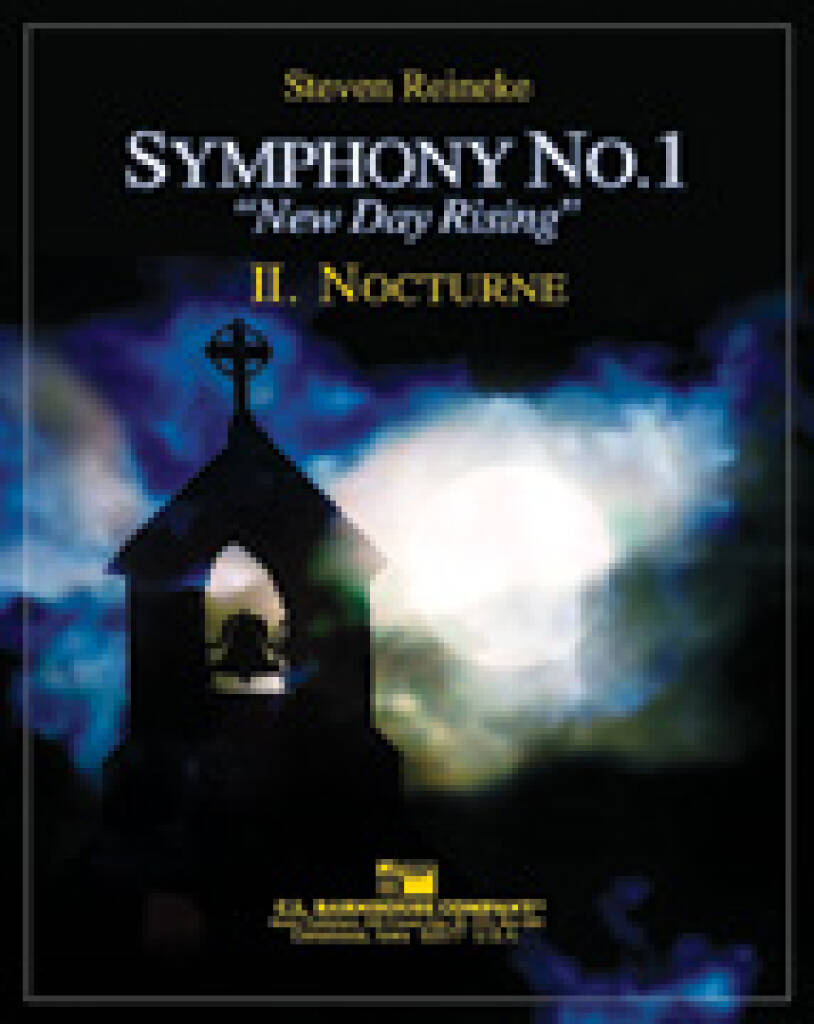
£63.60Caprice (Euphonium Solo with Concert Band) Andrew Batterham
VIEW SCORE PDF Caprice was written for Matthew van Emmerik, to showcase his virtuosity in an engaging piece of concert music. The work is in theme and variation form, with the primary material being the theme from the last of Paganini's Ventiquattro Capricci per violino solo, a collection of 24 caprices for solo violin. This theme has been the inspiration for similar works by many composers since it was first published, including Liszt, Brahms, Rachmaninov, Benny Goodman and Andrew Lloyd Webber. In this work, the famous theme is treated to a more contemporary approach. The first variation, Capricious, relies on motor rhythms and jagged dialogues between the soloist and the band. It is couched in an organic scale reminiscent of the Phrygian mode. The second variation, Sad, is in direct contrast, acting as a traditional ballad and allowing the soloist to explore the expressive side of the instrument. The third variation, Energetic, is a micro set of variations in itself, designed to display the soloist's innovative technique and stamina. Each section is more challenging than the last, until the work concludes with a whirlwind dance at breakneck speed. Like all of Batterham's recent work, the musical language of Caprice draws upon classical, jazz, funk and ska elements to create a unique sound where anything can happen, and probably will. This arrangement was made possible through Matt's instigation and generosity. To view a video of Matthew van Emmerik performing the version with brass band please visit www.youtube.com/watch?v=D0hsvux_a5o To view a video of Fletcher Mitchell performing the version with piano please visit www.youtube.com/watch?v=NOZ6KRldDVo Sheet music available from : UK: www.wind-band-music.co.uk USA: www.solidbrassmusic.com Instrumentation: Euphonium Soloist Piccolo Flute 1-2 Oboe Bassoon Clarinet in Eb Clarinet in Bb 1-3 Bass Clarinet in Bb Alto Saxophone 1-2 Tenor Saxophone Baritone Saxophone Trumpet in Bb 1-3 Horn in F 1-4 Trombone 1-2 Bass Trombone Euphonium Tuba String Bass Percussion 1-3
In stock: Estimated dispatch 1-3 days
-
£53.00Castlebay
This fresh new setting of two traditional Scottish folk songs, Will Ye No Come Back Again and Keel Row, was written in honor of its namesake, the Scottish village Castlebay. Composer Gene Milford has crafted a well-scored offering for contest/festival performance that is reminiscent of English-style band pieces. After the striking opening, the piece moves to the more fiddle-like Keel Row in a lilting 6/8. All of the sections of the ensemble get to shine and the band will sound formidable with this piece.
Estimated dispatch 12-14 working days
-
£32.00Error Detection - Student's Edition - Robert Spradling
The Error Detection: Exercises for the Instrumental Conductor texts are designed to improve the critical listening skills of the conducting student through real music excerpts that contain planted errors in the parts for the conductor to find. Both books contain 54 excerpts from standard band literature from grades 2 to grade 6 so students gain knowledge of real music they can use later, not just non-musical etudes. The teacher's edition contains over 350 pages of materials with analysis sheets and answer keys to help the conducting teacher to easily evaluate the student's progress. The teacher's edition also comes with a CD-ROM containing all of the instrumental parts for all of the musical excerpts as PDF files, so the teacher can just print the amount of parts needed for each example, and the examples are arranged to sound satisfying with as little as five players. The Error Detection program has been tested for over 3 years at major university programs like the University of Minnesota, Illinois State University, and the College-Conservatory of Music at the University of Cincinnati.
Estimated dispatch 12-14 working days
-
£146.00Error Detection - Teacher's Edition - Robert Spradling
The Error Detection: Exercises for the Instrumental Conductor texts are designed to improve the critical listening skills of the conducting student through real music excerpts that contain planted errors in the parts for the conductor to find. Both books contain 54 excerpts from standard band literature from grades 2 to grade 6 so students gain knowledge of real music they can use later, not just non-musical etudes. The teacher's edition contains over 350 pages of materials with analysis sheets and answer keys to help the conducting teacher to easily evaluate the student's progress. The teacher's edition also comes with a CD-ROM containing all of the instrumental parts for all of the musical excerpts as PDF files, so the teacher can just print the amount of parts needed for each example, and the examples are arranged to sound satisfying with as little as five players. The Error Detection program has been tested for over 3 years at major university programs like the University of Minnesota, Illinois State University, and the College-Conservatory of Music at the University of Cincinnati.
Estimated dispatch 12-14 working days