
Results
-
 £84.99
La Canzone della Fantasia (Concert Band - Score and Parts) - Oswald, Gerald
The chorale La Canzone della Fantasia is suitable for every wind band, thanks to its careful instrumentation. It is especially suitable as an exercise for your orchestra. Above all this piece serves as an ideal point of rest in any concert programme, allowing your audience to forget the hectic nature of everyday life.Duration: 3.30
Estimated dispatch 7-14 working days
-
 £64.99
Into the Woods, Highlights from (Concert Band - Score and Parts) - Sondheim, Stephen - Brown, Michael
Stephen Sondheim's masterful Broadway musical struck a resounding chord with a new audience thanks to the recent movie adaptation and all-star cast. This impressive and well-paced medley for band includes?Into the Woods, Giants in the Sky, Children Will Listen, Last Midnight, and?No One is Alone
Estimated dispatch 7-14 working days
-
 £53.50
Livin' on a Prayer (Concert Band - Score and Parts) - Murtha, Paul
Originally released in 1986, Livin' on a Prayer has become the signature song for rock group Bon Jovi. Thanks to continued usage in pop culture, sporting events and video games, this classic rock tune remains as popular today as ever. Here's a hard-hitting arrangement for the concert stage
Estimated dispatch 7-14 working days
-
 £149.99
Hungarian Rhapsody No.2 (Concert Band - Score and Parts) - Liszt, Franz - Cesarini, Franco
Franz Liszt's 19 Hungarian Rhapsodies are characterised by melancholy, great expressiveness and wonderful gypsy rhythms. No.2 is the best known of all, mainly thanks to the use of various passages for cartoon characters such as Tom and Jerry, Woody Woodpecker and Bugs Bunny. The whirling, billowing music is accessible to a broad audience. This excellent arrangement for wind band by Franco Cesarini will doubtless enrich any concert.Duration: 12:30
Estimated dispatch 7-14 working days
-
 £188.00
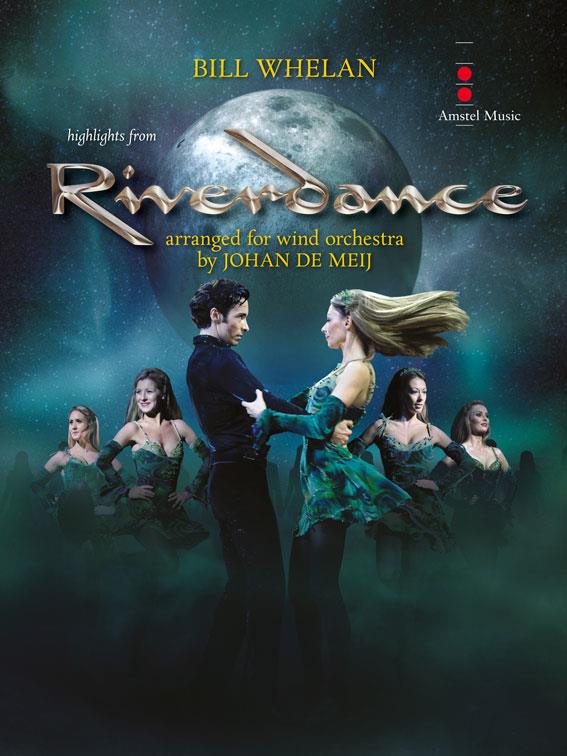
Riverdance, Highlights from (Concert Band - Score and Parts) - Whelan, Bill - De Meij, Johan
The premiere of Riverdance took place on April 30, 1994 during a seven-minute pause in the Eurovision Song Contest at the Point Theatre, Dublin. Thanks to 10,000 performances on four continents, TV audiences in the millions and sales of CDs and videos by the bucket-load, Riverdance has since become one of the most successful shows on Earth. This Riverdance arrangement for concert band is, after The Seville Suite, the second collaboration between Bill Whelan and Johan de Meij.Medley includesCloudsongFiredanceLift the WingsDance of the River WomanRiverdanceDuration: 11.15
Estimated dispatch 7-14 working days
-
 £38.50
Forget You (Concert Band - Score and Parts) - Longfield, Robert
Originally recorded by Cee Lo Green and made even more popular thanks to Gwyneth Paltrow and the cast of Glee, this is an entertaining and solid arrangement for very young players.
Estimated dispatch 7-14 working days
-
 £69.99
Funeral March (Flexible Ensemble - Score and Parts) - Beringen, Robert van
Robert van Beringen chose a classical theme for this funeral march. For this reason, within the trio of this melancholy piece we find echoes of Albinoni's Adagio which - according to the latest research was actually composed by his biographer Remo Giazotto. Thanks to the four-part variable instrumentation (with ad lib. drums) this funeral march can be played by pretty much any ensemble - whether at a funeral on the way from the church to the cemetery, in the church itself or indeed on stage as part of a memorial concert.Duration: 6.15
Estimated dispatch 7-14 working days
-
 £69.99
Call of the Buffalo (Concert Band - Score and Parts) - Oswald, Gerald
In this work, the composer Gerald Oswald tells of the song and dance of the medicine man Buffalo. His songs and the sound of the drums are heard far off on the prairie. This ceremony serves to give thanks to Buffalo, who ensures the survival of the tribe.Duration: 3:15
Estimated dispatch 7-14 working days
-
 £47.50
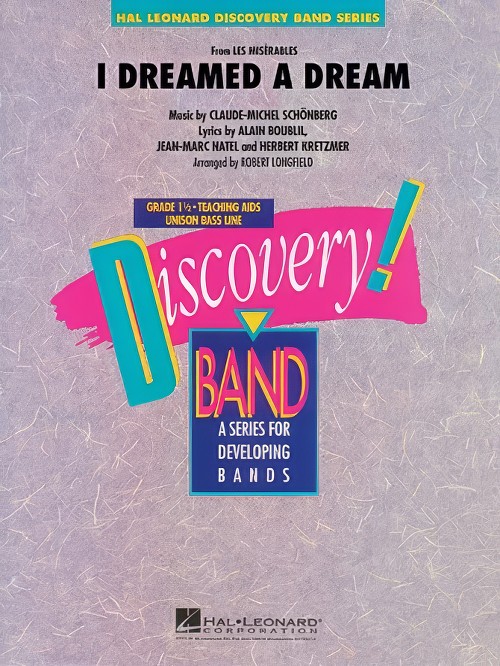
I Dreamed a Dream (from Les Miserables) (Concert Band - Score and Parts) - Longfield, Robert
This stunningly beautiful ballad from the Broadway musical Les Miserables has enjoyed renewed popularity thanks to Susan Boyle, and also the TV show Glee. Robert's arrangement makes this accessible to even very young players.
Estimated dispatch 7-14 working days
-
 £104.99
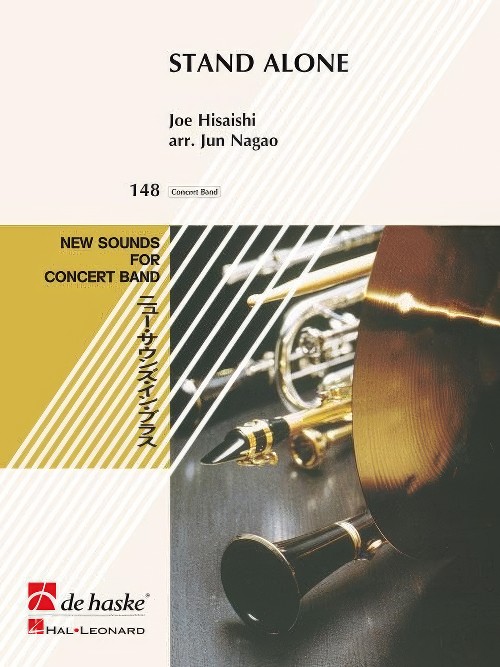
Stand Alone (Concert Band - Score and Parts) - Hisaishi, Joe - Nagao, Jun
Joe Hisaishi is a highly sought-after film score composer in his home country of Japan. Among his numerous movie scores are several for anime fi lms. Anyone who watched the 1998 Nagano Winter Olympics heard his work, whether they knew it or not, as he composed the music for the opening ceremony. Stand Alone is an emotional song written for a Japanese TV-series, recorded by none other than Sarah Brightman. (She even sung in Japanese!) Joe Hisaishi's music can now be enjoyed by an even wider audience thanks to this arrangement by fellow countryman Jun Nagao.Duration: 4:45
Estimated dispatch 7-14 working days
 View Music