
Results
-
 £60.99
Nearer My God to Thee - Luther Henderson
If your band enjoyed the popular 'Just A Closer Walk,' here's another Canadian Brass favorite, carefully scored for full band by Calvin Custer. It begins with a slow 3/4 version, in a New Orleans 'street band' style, and then kicks into snazzy Dixieland, with small band features and roaring full band sections. Another classic from the masters of showmanship.
Estimated dispatch 7-14 working days
-
 £106.99
Ten Chorale Preludes - Max Reger
During his short lifetime Max Reger (1873-1916) was a prolific composer with many of his best known works being composed for organ. The ten chorale preludes in this selection are from his set of Thirty Short Chorale Preludes Op.135a composed as short voluntaries for liturgical use rather than for recitals in these arrangements Philip Sparke has kept this in mind and each prelude can be performed with minimal instrumentation for those occasions where a small band is needed. They also make great pieces for band warm-ups or studies in intonation, sound and balance.
Estimated dispatch 7-14 working days
-
 £76.99
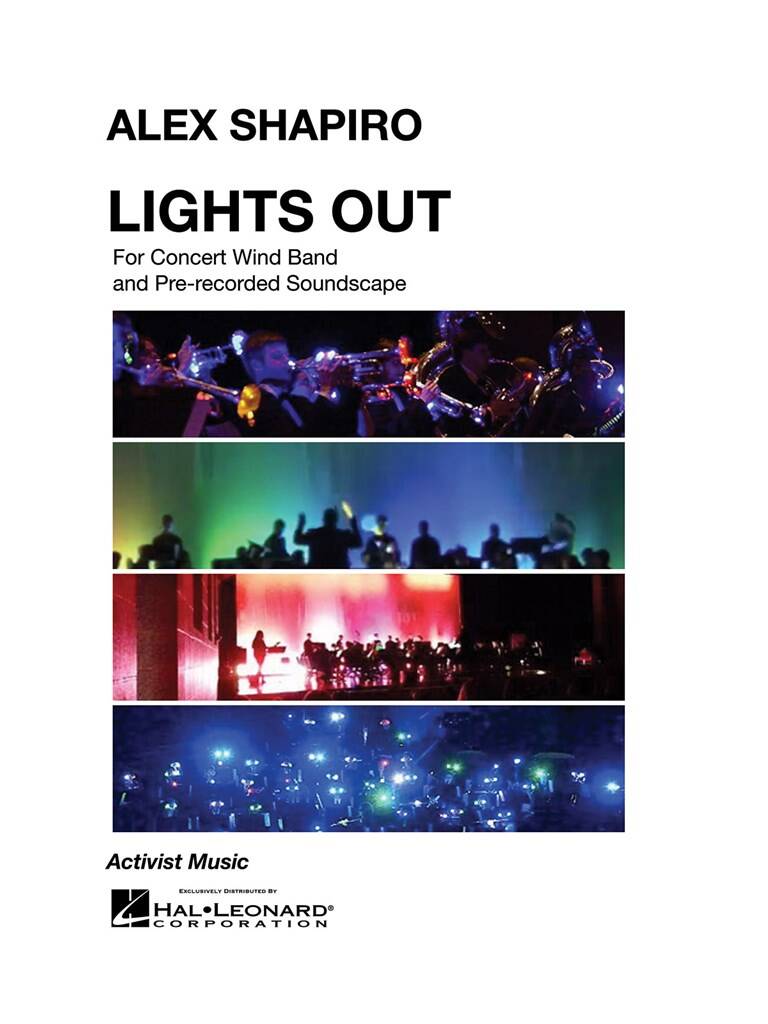
Lights Out - Alex Shapiro
The renowned composer of Paper Cut and Tight Squeeze has created a love child from these two popular works. The result is Lights Out, an audience-wowing excursion into a new realm of opto-electro-acoustic wind band repertoire that incorporates visual and physical elements into an exhilarating piece. The music itself is stunning, but for the full effect you'll want to devise a performance that plunges the audience into darkness and suddenly surrounds them with glowing colors of LEDs and glowsticks. A very physical approach to connecting band music to life - and to light! To perform the piece, you'll need an audio system capable of playing the prerecorded audio tracks from a laptop computer via a small digital audio interface connected to an audio mixer. Download information is provided in the printed piece.
Estimated dispatch 7-14 working days
-
 £57.50
Carrying You from "Laputa: Castle in the Sky" - Joe Hisaishi
New Sounds in Concert Band Series(NSB) for small band with 2-part choir Duration: approx.4'10" Arranged by Eiji Suzuki"Carrying You" was composed as a theme song to Castle in the Sky, an animated film produced by Studio Ghibli and directed by Hayao Miyazaki, released in 1986. The composer for Castle in the Sky was originally not Joe Hisaishi, but the director Miyazaki strongly requested him. The director told Hisaishi his vision for the film, and based on the world he imagined, Hisaishi made a collection of music called the Image Album. The melody that later becomes the basis for "Carrying You" was born from this album. However, the director Miyazaki was not planning on including a theme song in this film. Isao Takahata, the producer, proposed including a song, for the audience to think over the film at the end. He wanted the audience to think, "While the protagonists sought for the treasure, they didn't obtain any treasure. What did they obtain instead?" They thought, if they are going to create a theme song, it should be something organically connected with the entire film. Takahata requested the director Miyazaki to write the lyrics for the theme song. And to Hisaishi, he gave instructions to create a melody for the theme song using an instrumental piece called "Pazu and Sheeta" from the image album mentioned above. Director Miyazaki handed a piece of memo with lyrics to Takahata. "Carrying You" we hear now is this lyrics with some changes, set to Hisaishi's music. The melody is used at the opening of the film as well as the scene where Laputa is destroyed, and the song is used for the ending. Performance Advice from Arranger Suzuki: This is an extremely simple arrangement that can be performed by lower grade bands and singers. Of course, it can be played without singers and chorus, but the contents of the lyrics are very tasty so if possible, we recommend that you perform using the voices. Depending on your resources, the voice parts can be done as all solo, all female chorus, and so on.
Estimated dispatch 7-14 working days
-
 £76.99
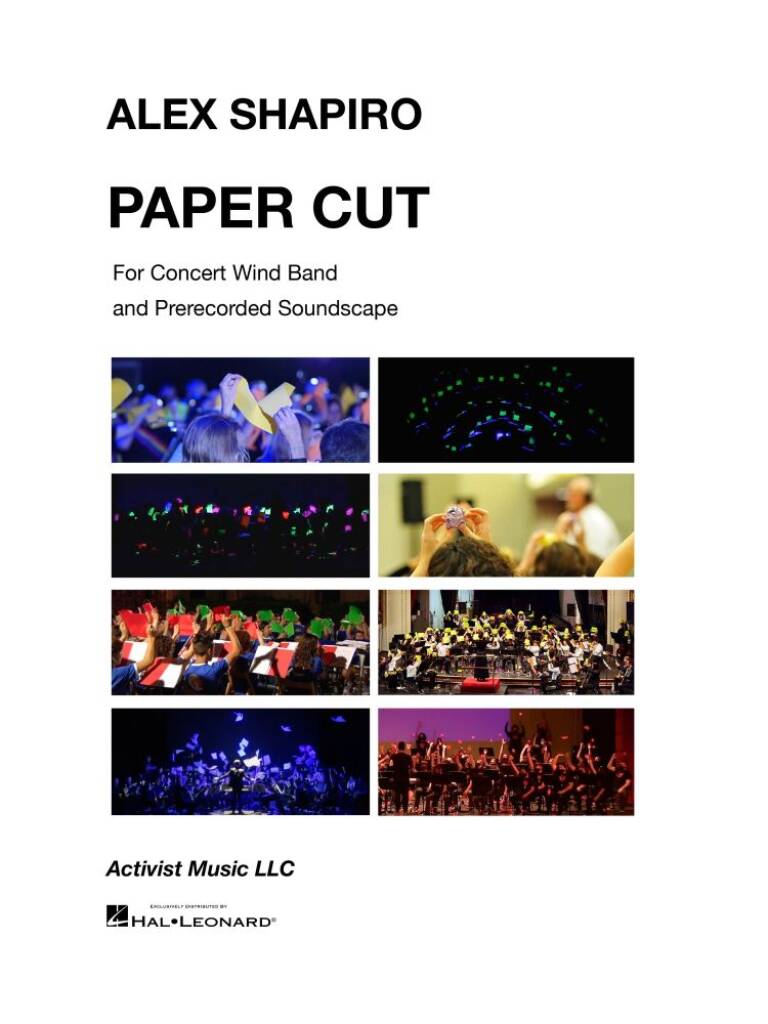
Paper Cut - Alex Shapiro
Composer Alex Shapiro's piece Paper Cut is reminiscent of a movie soundtrack to which the musicians can imagine their own dramatic scene. Paper Cut is written to make the players themselves part of the action with choreographed maneuvers that look as compelling as they sound. In fact, the band members don't even play their instruments until halfway into the piece - instead they play paper along with a prerecorded track! The unusual element of paper and the myriad sounds that can emerge from something so simple offers a fresh view of what music-making can be and opens everyone's ears to the sonic possibilities found among everyday objects. Although Paper Cut was composed with middle schoolers in mind, it's also suited to more advanced musicians, since the paper techniques and the skill of playing against a prerecorded track are interesting for all ages. To perform the piece, you'll need an audio system capable of playing the prerecorded audio tracks from a laptop computer via a small digital audio interface connected to an audio mixer. Download information is provided in the printed piece. A free downloadable interdisciplinary curriculum for teaching Paper Cut is also available for download at www.BandQuest.org. Learn more on YouTube!. Bandquest, an exciting series of new music and accompanying curricula for band, is a program published by the American Composers Forum. The series was started as a response to feedback from music educators that there is a pressing need for new, fresh band music. The heart of this program is new works written by a diverse group of leading American composers who have created challenging pieces that are a true departure from standard middle school repertoire. Every BandQuest project includes a residency component in which the composer works collaboratively with a middle school as they create their new piece.Many BandQuest pieces are accompanied by an interdisciplinary curriculum designed to assist students as they learn the music and to integrate each piece with non-music studies. Visit www.bandquest.org to learn more about this innovative series, and email [email protected] to request a free downloadable audio catalog.
Estimated dispatch 7-14 working days
-
 £99.99
It's a Small World (Concert Band with Optional Choir - Score and Parts) - Sherman & Sherman - Mashima, Toshio
It's a Small World is the name of one of the most popular attractions at the many different Disney Parks throughout the world. The ride features a multitude of electronically animated figures in the style of children of the world singing the ride's title track in many languages, depicting a theme of global peace. The message is simple, but just as convincing as the music - the world is small and everyone must work together! An extremely catchy arrangement for concert band with optional children's choir available separately by Toshio Mashima.Duration: 4:15
Estimated dispatch 7-14 working days
-
£23.99
It's a Small World (2 Part Choral Octavo - Pack of 25) - Sherman & Sherman - Mashima, Toshio
It's a Small World is the name of one of the most popular attractions atthe many different Disney Parks throughout the world. The ride featuresa multitude of electronically animated figures in the style of children ofthe world singing the ride's title track in many languages, depicting atheme of global peace. The message is simple, but just as convincingas the music - the world is small and everyone must work together! Anextremely catchy arrangement for concert band by Toshio Mashima.
Estimated dispatch 7-14 working days
-
 £66.95
In tantum lux (Concert Band - Score and Parts) - Stalter, Todd
"In tantum lux" (The only light) was written as a memorial and celebration honouring the life of a music educator and her faith, who taught in a small school her entire career and persevered through the challenges and unique demands that teaching small school bands present. The piece also serves as a celebration of every band student and teacher in small schools everywhere who may not have the resources to have a full ensemble, yet strive every day to experience the joy of making music to the fullest just the same.Duration: 4:00
Estimated dispatch 7-14 working days
-
 £110.00
Lyric Dances (Concert Band - Score and Parts) - Lane, Philip - Noble, Paul
Lyric Dances is one of Philip Lane's more recent compositions (2008). Since the movements relate so directly to each other, and are not practically stand-alone movements, the composer suggested that they be offered as a unit. Lyric Dances encompasses a variety of moods: inquisitive, somber, joyful, dramatic, to frivolous. The original score was written for small orchestra; the band version therefore has considerable doubling of parts, yet remaining true to the composer's colourful orchestration. Small to large bands should be very successful with this piece, and it is sure to have both educational value and audience appeal.
Estimated dispatch 7-14 working days
-
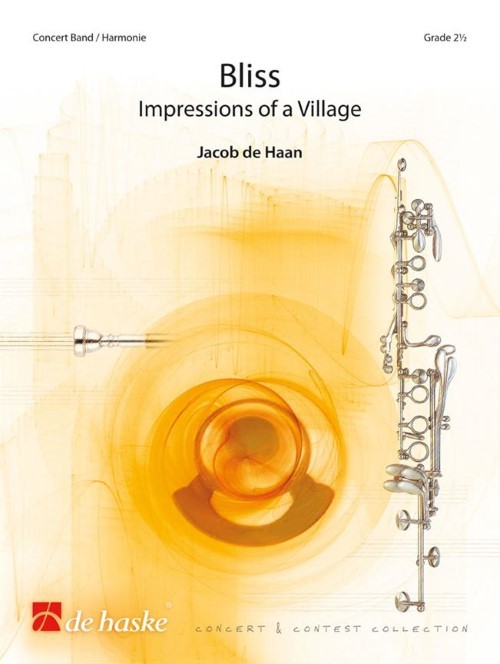 £104.99
Bliss (Concert Band - Score and Parts) - De Haan, Jacob
Bliss: Impressions of a Village contains three impressions of a village in the beautiful Brabant province in the Netherlands. The first movement is in a very 'classical style' and, appropriately, captures the village's history. Saxophones and a glockenspiel follow the path of a small, playful river. The entire band join in as the small river approaches an ancient castle. The third movement contains lots of interesting rhythms portraying the hustle and bustle of everyday life in the village.Duration: 6:45
Estimated dispatch 7-14 working days
 View Music