Results
-
 £117.00
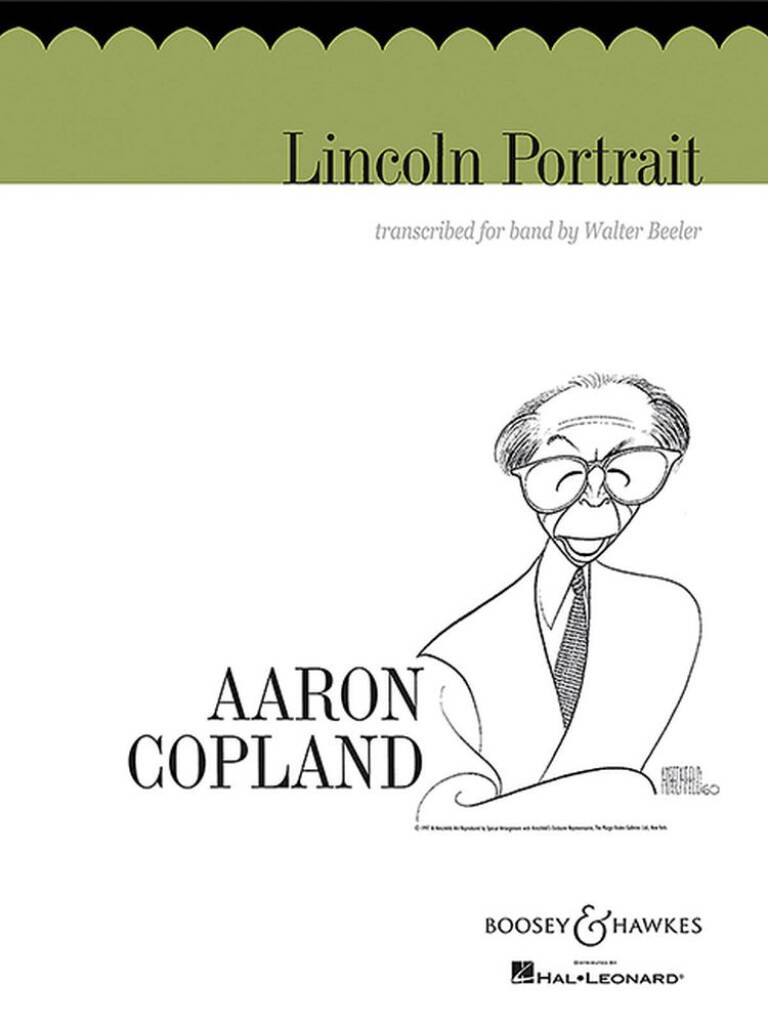
Lincoln Portrait - Aaron Copland
Lincoln Portrait was commissioned by Andre Kostelanetz for the Cincinnati Symphony Orchestra in 1942. A stirring tribute to an eminent American, it includes fragments of songs from the Civil War era, sweeping original themes, anda narration drawn from Lincoln's own words. This transcription by Walter Beeler has become a staple in the repertoire for wind bands, and provides an impressive way to help celebrate the 200th anniversary of Lincoln's birth. Audioused with permission from the Mark Records CD: Northshore Concert Band Live at the 2001 Midwest Clinic - John Lynch, conductor - Dr. William Warfield, narrator (Score Only - 48006216/$15.50)
Estimated dispatch 7-14 working days
-
 £140.00
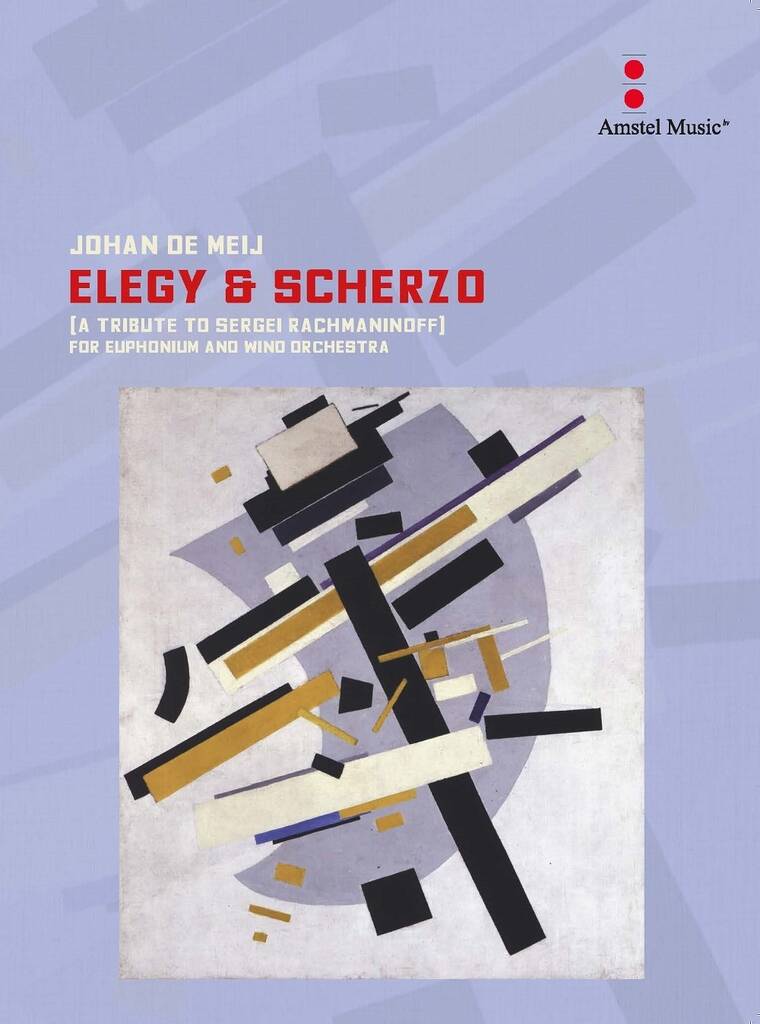
Elegy & Scherzo - Johan de Meij
Elegy & Scherzo was written at the request of cellist Yuki Ito, to commemorate the 150th birthyear in 2023 of Russian composer Sergei Rachmaninoff (1873 - 1943). Composer Johan de Meij used some hints and quotes from Rachmaninoff's 2nd Symphony (opus 27) and the Symphonic Dances (opus 45), to embrace the sound world of the Russian master. Elegy & Scherzo was premiered on October 27, 2023, in the Cankarjev Dom in Ljubljana, Slovenia by the Band of the Slovenian Armed Forces, with Yuki Ito as the cello soloist. Soon after the premiere, the work was adapted for solo euphonium and wind orchestra. It received its premiere during the ITEC, the International Tuba- and Euphonium Conference 2025 in Valencia, Spain, with Shoichiro Hokazono as the soloist, and the composer conducting.
Estimated dispatch 7-14 working days
-
 £104.99
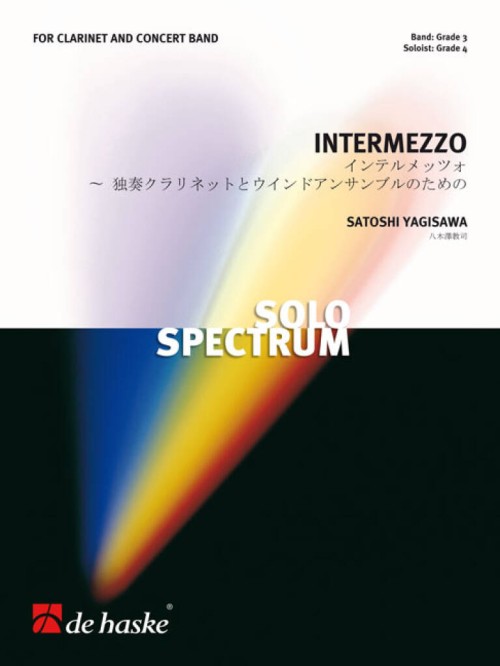
Intermezzo (Clarinet Solo with Concert Band - Score and Parts) - Yagisawa, Satoshi
Intermezzo is the second movement of Satoshi Yagisawa's Clarinet Concerto. The concerto was first performed by Higashi-Hiroshima Wind Ensemble in Hiroshima, Japan in 2010 with guest performer Shinsuke Hashimoto, clarinettist with the Hiroshima Symphony Orchestra and was conducted by Atsushi Kageyama. Inspiration for this work came from the fact that both Satoshi Yagisawa and Shinsuke Hashimoto graduated from Musashino Academia Musicae. Clarinet Concerto is the pinnacle of Satoshi Yagisawa's Concerto Series which also features his Suite Concertante for Piano and Wind Orchestra, Trumpet Concerto, Trombone Concerto, Saxophone Concertino, and Concertino for Solo Percussion and Wind Orchestra. Yagisawa's characteristic heartfelt theme in the second movement is especially popular and consequently, entitled Intermezzo, it is often performed independently.Duration: 5.00
Estimated dispatch 7-14 working days
-
 £72.99
Triglav (Concert Band - Score and Parts) - Fucik, Julius - Van der Beek, Wil
Julius Fucik wrote over 100 compositions: chamber music and piano pieces as well as works for symphony orchestra and choir. Aside from this he created countless compositions for wind band, earning himself the nickname 'Bohemian Sousa'. Triglav (opus 72) is an original march for wind band from 1900, named after the highest peak of Slovenia. Wil van der Beek has arranged this march for modern wind band instrumentation.Duration: 2:50
Estimated dispatch 7-14 working days
-
 £55.00
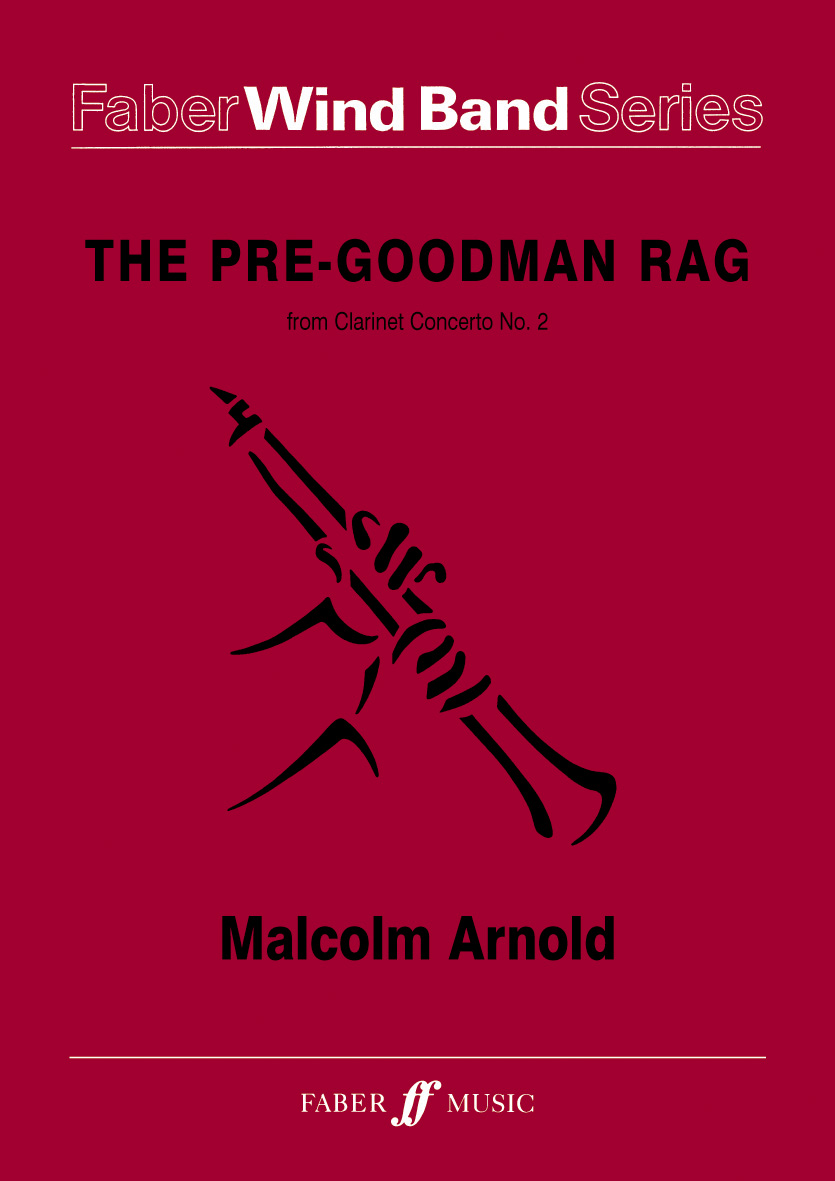
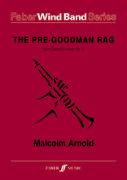
The Pre-Goodman Rag (Clarinet Solo with Concert Band - Score and Parts) - Arnold, Malcolm - Woolfenden, Guy
Malcolm Arnold's Clarinet Concerto No. 2, Op. 115, was dedicated to Benny Goodman, and first performed by him as part of the Red Rocks Music Festival with the Denver Symphony Orchestra conducted by Brian Priestman on 17 August 1974. The third movement, known affectionately as 'The Pre-Goodman Rag', is an outrageous ragtime parody with a hauntingly wistful middle section. The work has now been made more widely available in this transcription for wind band.Duration: 2:20Recorded on QPRM137D LINDA MERRICK - CLARINET (Royal Northern College of Wind Orchestra)
Estimated dispatch 7-14 working days
-
 £65.00
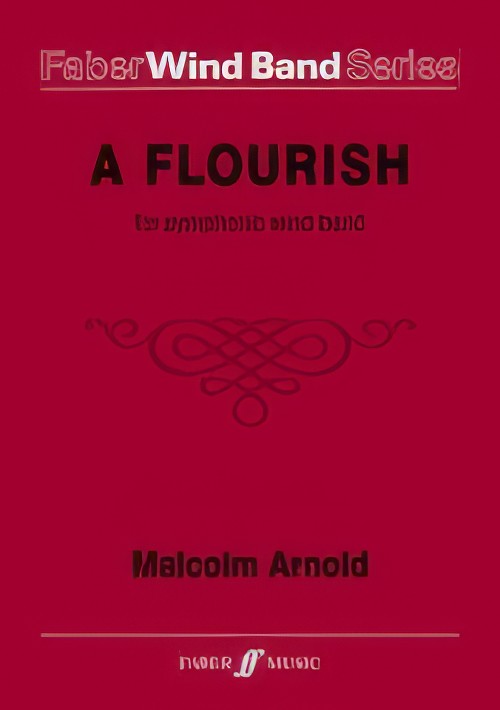
A Flourish (Concert Band - Score and Parts) - Arnold, Malcolm - Woolfenden, Guy
Flourish for Wind Band was arranged by Guy Woolfenden from Arnold's Flourish for Orchestra (Op.112), which was written to celebrate the 500th anniversary of the granting of a Charter to the City of Bristol. It was first performed by the Bournemouth Symphony Orchestra. Duration: 4 minutes
Estimated dispatch 7-14 working days
-
 £123.20
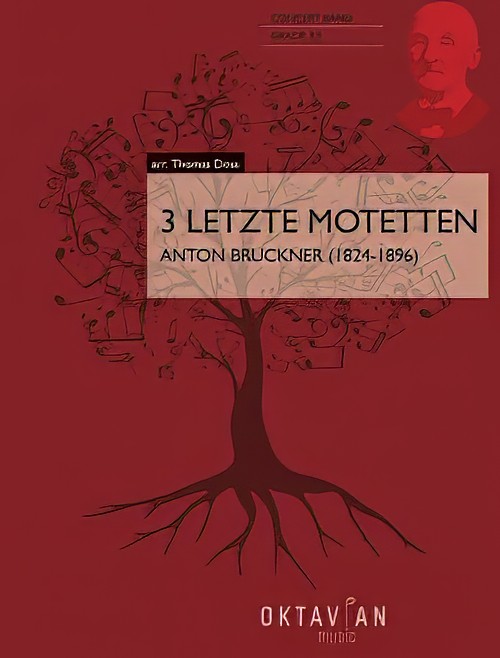
3 Letzte Motetten (Concert Band - Score and Parts) - Bruckner, Anton - Doss, Thomas
Anton Bruckner (b. 4.9.1824, Ansfelden, d. 11.10.1896, Vienna) didn't have it easy. Throughout his life, the Austrian composer was plagued by self-doubt. Anton Bruckner came from a simple, rural background. After the death of his father, he was accepted as a choirboy at the monastery of Sankt Florian in 1837. After several years as a school assistant and his own organ and piano studies, he first worked as organist in St. Florian, then from 1855 as cathedral organist in Linz. Introduced to music theory and instrumentation by Simon Sechter and Otto Kitzler, he discovered Richard Wagner as an artistic role model, whom he admired throughout his life and also visited several times in Bayreuth. In 1868 Anton Bruckner became professor of basso continuo, counterpoint and organ at the Vienna Conservatory; ten years later court organist; and in 1891 finally honorary doctor of the University of Vienna. He was considered an important organ virtuoso of his era, but had to wait a long time for recognition as a composer. It was not until Symphony No.7 in E major, composed between 1881 and 1883, with the famous Adagio written under the effects of Wagner's death, that he achieved the recognition he had hoped for, even if he was reluctant to accept it given his inclination towards scepticism and self-criticism. Anton Bruckner was a loner who did not want to follow a particular school or doctrine. He composed numerous sacred vocal works, such as his three masses, the Missa Solemnis in B flat minor (1854), the Te Deum (1881-84) and numerous motets. As a symphonic composer, he wrote a total of nine symphonies and many symphonic studies from 1863 onwards, tending to revise completed versions several times over. Bruckner's orchestral works were long considered unplayable, but in fact were merely exceptionally bold for the tonal language of their time, uniting traditions from Beethoven through Wagner to folk music, on the threshold between late Romanticism and Modernism. Anton Bruckner composed about 40 motets during his lifetime, the earliest a setting of Pange lingua around 1835, and the last, Vexilla regis, in 1892. Thomas Doss has compiled some of these motets in this volume for symphonic wind orchestra. These motets show many characteristics of personal expression, especially Bruckner's colourful harmony in the earlier works, which is in places aligned with Franz Schubert (changes between major and minor; and movements in thirds). Later works are characterised by many components which, in addition to the expanded stature of the movements, include above all a sense of the instrumentation as an outward phenomenon and the harmony as a compositional feature that works more internally. Some aspects of Bruckner's work are the result of his long period of study, which familiarised him not only with the tradition of his craft, but also gave him insights into the "modernity" of his time in such composers as Wagner, Liszt and Berlioz. From this developed his personal standpoint, which always pursues the connection between the old and the new.Duration: 14.00
Estimated dispatch 7-14 working days
-
 £256.00
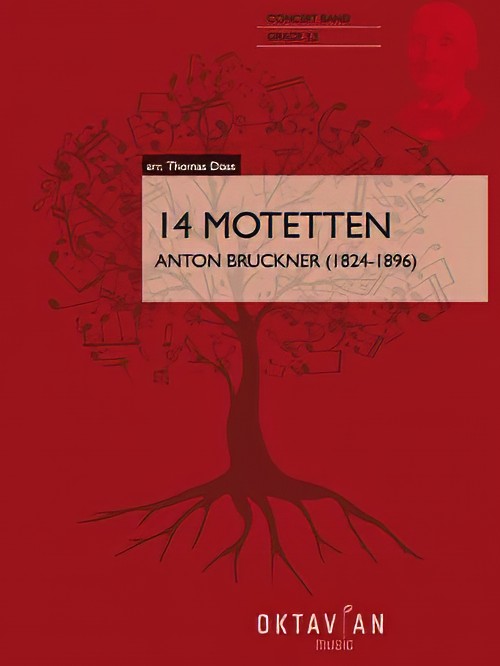
14 Motetten (Concert Band - Score and Parts) - Bruckner, Anton - Doss, Thomas
Anton Bruckner (b. 4.9.1824, Ansfelden, d. 11.10.1896, Vienna) didn't have it easy. Throughout his life, the Austrian composer was plagued by self-doubt. Anton Bruckner came from a simple, rural background. After the death of his father, he was accepted as a choirboy at the monastery of Sankt Florian in 1837. After several years as a school assistant and his own organ and piano studies, he first worked as organist in St. Florian, then from 1855 as cathedral organist in Linz. Introduced to music theory and instrumentation by Simon Sechter and Otto Kitzler, he discovered Richard Wagner as an artistic role model, whom he admired throughout his life and also visited several times in Bayreuth. In 1868 Anton Bruckner became professor of basso continuo, counterpoint and organ at the Vienna Conservatory; ten years later court organist; and in 1891 finally honorary doctor of the University of Vienna. He was considered an important organ virtuoso of his era, but had to wait a long time for recognition as a composer. It was not until Symphony No.7 in E major, composed between 1881 and 1883, with the famous Adagio written under the effects of Wagner's death, that he achieved the recognition he had hoped for, even if he was reluctant to accept it given his inclination towards scepticism and self-criticism. Anton Bruckner was a loner who did not want to follow a particular school or doctrine. He composed numerous sacred vocal works, such as his three masses, the Missa Solemnis in B flat minor (1854), the Te Deum (1881-84) and numerous motets. As a symphonic composer, he wrote a total of nine symphonies and many symphonic studies from 1863 onwards, tending to revise completed versions several times over. Bruckner's orchestral works were long considered unplayable, but in fact were merely exceptionally bold for the tonal language of their time, uniting traditions from Beethoven through Wagner to folk music, on the threshold between late Romanticism and Modernism. Anton Bruckner composed about 40 motets during his lifetime, the earliest a setting of Pange lingua around 1835, and the last, Vexilla regis, in 1892. Thomas Doss has compiled some of these motets in this volume for symphonic wind orchestra. These motets show many characteristics of personal expression, especially Bruckner's colourful harmony in the earlier works, which is in places aligned with Franz Schubert (changes between major and minor; and movements in thirds). Later works are characterised by many components which, in addition to the expanded stature of the movements, include above all a sense of the instrumentation as an outward phenomenon and the harmony as a compositional feature that works more internally. Some aspects of Bruckner's work are the result of his long period of study, which familiarised him not only with the tradition of his craft, but also gave him insights into the modernity of his time in such composers as Wagner, Liszt and Berlioz. From this developed his personal standpoint, which always pursues the connection between the old and the new.Duration: 39.00
Estimated dispatch 7-14 working days
-
£55.00
The Pre-Goodman Rag - Malcolm Arnold
Malcolm Arnold's Clarinet Concerto No. 2, Op. 115, was dedicated to Benny Goodman, and first performed by him as part of the Red Rocks Music Festival with the Denver Symphony Orchestra conducted by Brian Priestman on 17 August 1974. The third movement, known affectionately as 'The Pre-Goodman Rag', is an outrageous ragtime parody with a hauntingly wistful middle section. The work has now been made more widely available in this transcription for wind band.
In stock: Estimated delivery 1-3 days
-
 £252.10
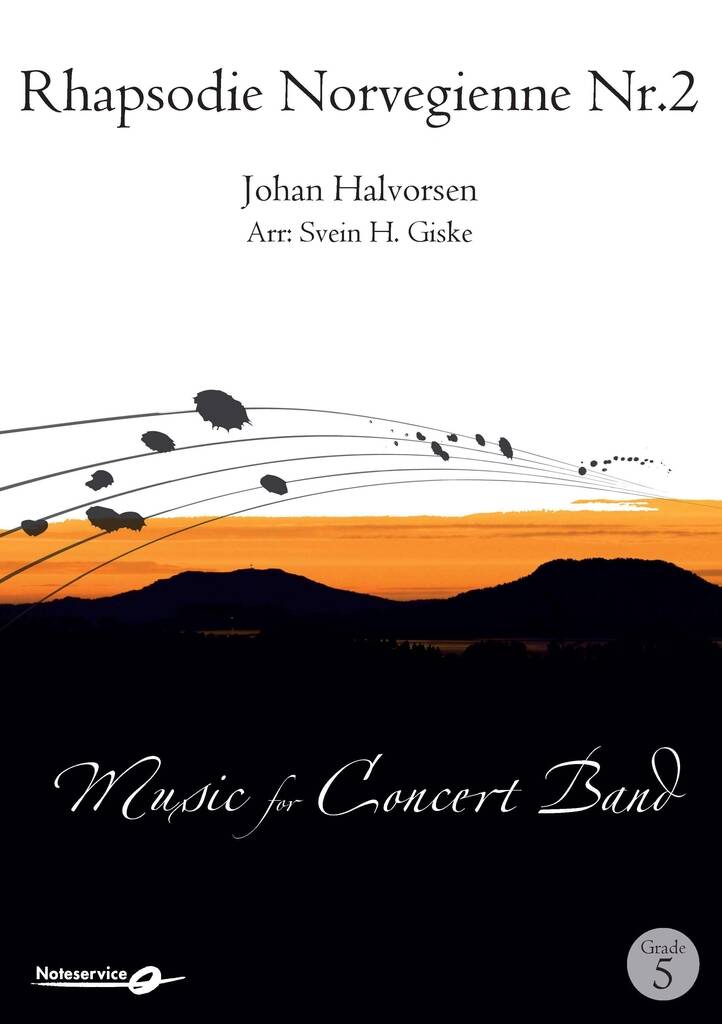
Rhapsodie Norvegienne Nr.2 - Johan Halvorsen
This arrangement was written for Dragefjellets Musikkorps Bergen for their performance at the Norwegian Wind Band Championships in 2019.The original orchestral work is one of our country's greatest national works for symphony orchestra.It combines Norwegian folk music with the symphonic tradition, but on a slightly different way than Edvard Grieg.Compared to the original score, I have made parts of the work more chamber-music like by making the instrumentation a bit thinner. By doing this, I hope the span in dynamics will benefit the tutti sections as well. Unlike the symphony orchestra, concert bands do not have the large string section to enrich the soundscape.- Svein H. Giske -
Estimated dispatch 7-14 working days
 View Music