
Results
-
£139.99
Singapore Rhapsody - Jacob de Haan
Singapore Rhapsody is an exciting work in two movements based on popular Malaysian folksongs. The songs that occur in the first movement are Rasa Sayang eh (a love song), Gelang Sipaku Gelang (a song about community spirit), Suriram (a song about a girl proclaiming her virtues) and Di-Tanjung Katong (a love song that takes place at the Cape Katong on the southeast coast of Singapore). The second movement features Lenggang Kangkung, which literally means "The swaying of the watercress," Katang Lompat (a moralistic song about the symbolism of the frog) and finally Kenek kenek-lah Udang (a wedding song). Each movement of this enchanting work can be performed separately but acomplete performance will be the crowning moment of any concert.
Estimated dispatch 7-14 working days
-
 £73.60
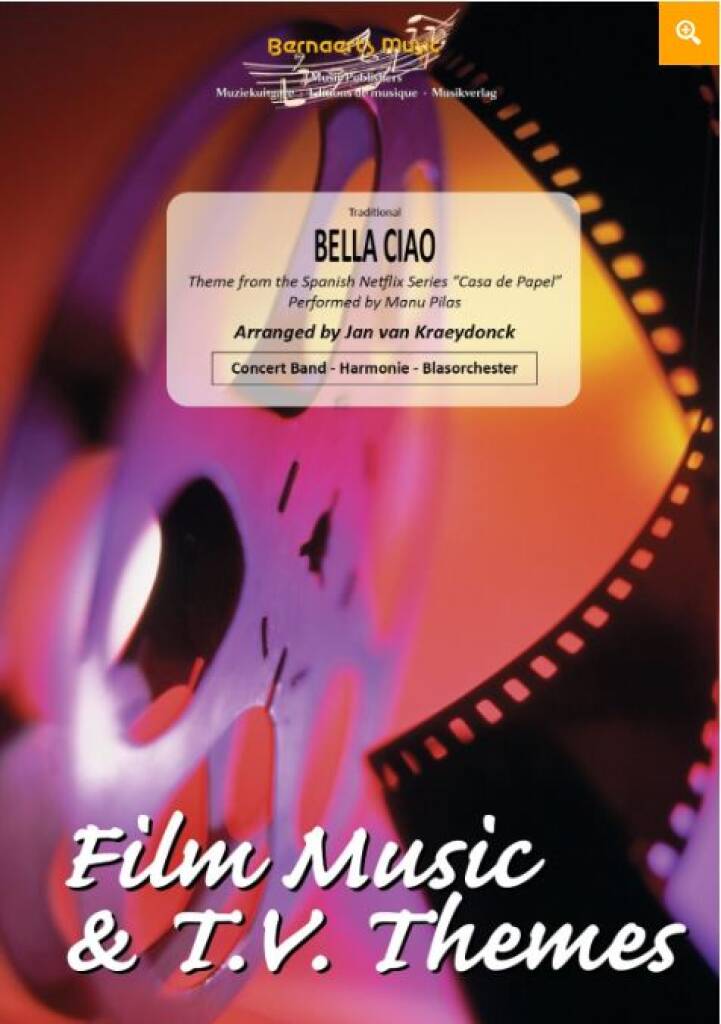
Bella Ciao - Manu Pilas
Bella Ciao is an Italian battle song, which became popular in Italy during World War II among partisans resisting fascism and national socialism. The song became a global resistance song against oppressive powers. In 2018, the song became known again through the Spanish Netflix series La Casa de Papel, in which the song was used multiple times. Jan van Kraeydonck wrote a skillful arrangement for concert band, fanfare and brass band.
Estimated dispatch 7-14 working days
-
 £115.60
Vise ved vintersolkverv - Tore Bruvoll
The beautiful song "Song at Winter Solstice" has within short time been highly loved by listeners all around Norway. It's performed by folk-rock band "Hekla Stlstrenga" who released their first album "Hekla Stlstrenga" in 2008. This album was nominated for "Spellemansprisen" (the Norwegian equivalent to Grammy) in the folk music / traditional music category. "Song at Winter Solstice" was released as single record in 2013. To the conductor: In this band arrangement you can choose whether to perform with or without repetition of the melody. If you want to use a song soloist, play the piece as is with all the verses that belong. As instrumental you can choose to go straight in the2nd house to make the song shorter.
Estimated dispatch 7-14 working days
-
 £94.99
O Christmas Tree
The tradition of the Christmas tree in Western Europe dates back to a time long before any Christianization had taken place. During the severely cold winter nights, so it was believed, evil spirits tried to 'kill' nature. Needle-leaved trees were the only ones which kept their green colour throughout the year, and therefore became symbols of immortality. These 'living' trees, said to be the work of benign spirits, were brought into people's houses to ward off evil, life-threatening powers. In the 14th century people first started to decorate Christmas trees. It was a pagan custom, originated by the inhabitants of Alsace. This custom was taken over by the Church inthe course of the 15th and 16th century. At first the decoration consisted mainly of edibles, such as apples and wafers, but later small presents were added. Legend has it that the reformer Martin Luther was the first person to decorate a Christmas tree with candles. The flickering candle flames were meant to create the image of a starry sky in which Christ's apparition could be recognized. The German organ-player Ernst Anschtz from Leipzig was the first person to notate the song 'O Tannenbaum', the melody being a well-known folk song. Next to 'Stille Nacht' 'O Tannenbaum' is the most famous German Christmas song, now known throughout the world. In the United States of America the melody of 'O Tannenbaum' has even been used in four States (among which the State of Maryland) for their State song. In David Well's arrangement the song is first heard as many of us know it. After this introduction, however, it is transformed into a solid rock version, and the beat has been changed. In the second part the familiar three-four time is back, but here the rhythm is different from the original. After the richly ornamented rock beat the basic theme can be heard once again and the composition is concluded in a festive manner.
Estimated dispatch 7-14 working days
-
 £159.60
Suite Acadienne - Bernhard Bogisch
1. La belle Franoise.This song tells the story of the beautiful Franoise, who is visited by her lover on the eve of his departure. She helps him prepare for his voyage and they talk for the last time at the foot of a rock, which has been their trysting place. The next day, when he has left the harbour, he hears the sound of a bell. It is the bell that tolls for Franoise, who is being carried to her grave.2. Le Prince Eugne.At least two versions of this song are in existence, both of which are represented here. It tells of the prince Eugne, who, on his way to Paris, encounters twenty of his worst enemies. He manages to kill fourteen of them before his sword breaks. He then asks his page to get him another sword, but the lad is too afraid for his own life. This being the case the prince tells him to tell his wife to take care of his son, who 'will have his revenge by lighting a candle in Paris'.3. Pinson et Cendrouille.This song deals with the marriage of two not further specified animals, who have nothing with which to prepare a wedding feast, and need help from the other animals. But when the rat comes in carrying a fiddle, he is chased away.4. Le Dpart de l'Amant.At least two versions of this song are known, both of which are represented here. It is one of many songs dealing with departure, and is of Canadian origin. The lover is warned of the charms of the pretty 'canadiennes' which among Acadiens refers to French Canadians from Qubec. 'Be true to me save your heart. When I return from my voyage I will make you happy'.5. Le Remde son Talon.This, like many children's/folk songs is a bit of a nonsense song. Marguerite has trouble with the heel of her shoe, and asks her mother for help. Mom suggests various things, such as an onion (too round), a tomato (too flat) etc. In the end it turns out that a bachelor is her best bet.
Estimated dispatch 7-14 working days
-
 £115.60
Hard to Say I'm Sorry - Peter Cetera
"Hard to Say I'm Sorry" is one of the greatest hits by US rock band Chicago. It was the first single record from the "Chicago 16"-album (1982). The song went to no. 1 on the Billboard charts and stayed there for two weeks. Produced by David Foster, the song was given a typical early 80's sound with synthesizers and heavy guitars dominating the sound. The album-version of the song included a part two of the song, "Get Away", a up-tempo song featuring the famous horn-section of the band.
Estimated dispatch 7-14 working days
-
 £115.60
Our Last Summer - Benny Andersson
An exciting arrangement where almost all players have a bit of the melody line. There are many opportunities to give individual musicians soloistic challenges. Any bandmember should find something interesting in this piece. It will be possible to add vocals to the arrangement. A lovely melody with great expressions.Our Last Summer" is a song by the Swedish pop group ABBA from their seventh studio album, "Super Trouper," released in 1980. The song is indeed featured in the musical "Mamma Mia!", a little bit shortened and with small changes in the lyrics. The musical premiered in London's West End in 1999 and is a duet performed by the characters Harry Bright and Donna Sheridan, reflecting on their past romance during a summer spent in Paris.The song is primarily sung by Bjrn Ulvaeus, with backing vocals provided by Agnetha Fltskog and Anni-Frid Lyngstad, the female members of ABBA. Their harmonies contribute to the song's nostalgic and wistful atmosphere. The lyrics vividly describe the memories of the summer spent together, including scenes of walking along the Seine River in Paris and listening to French songs. The song also touches on the passage of time and the realization that the summer romance has ended.While not released as an official single in most countries, "Our Last Summer" still received considerable airplay and became a fan favorite. It charted in some European countries and has remained popular among ABBA fans over the years.
Estimated dispatch 7-14 working days
-
 £126.00
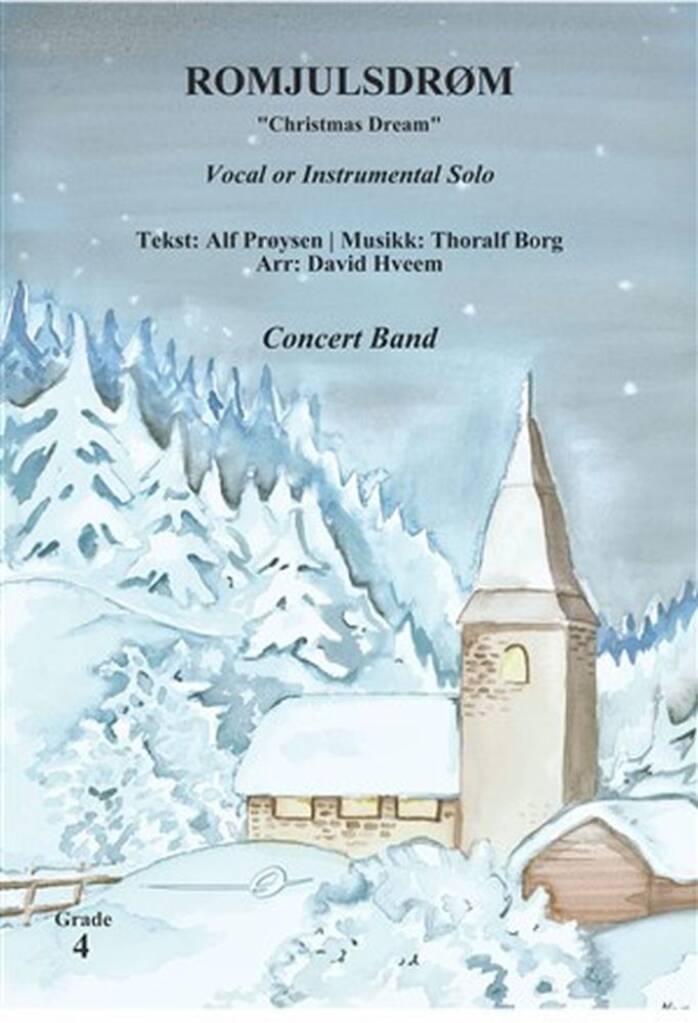
Romjulsdrm - Thoralf Borg
The poem Romjulsdrm ("Christmas Dream") was first published in Arbeiderbladet on January 3rd 1959, and became known when Thoralf Borg set a melody to it in 1968. Up until this, Alf Prysen had used a melody quite similar to the song Lijan uti dalen, when he sang the song in the TV program Ei vise vil jeg synge in 1964. At the same time that Borg's melody was written, the last four lines of text were also added to the poem, and the song took on the form we know today.The form and structure of this arrangement originates from a version for big band and vocals commissioned by stre Toten Storband, written in 2018 for one of their traditional midnight concerts on the day before Christmas. In an attempt to give the arrangement a nice calm and the text a lot of room, as is often the case in songs like this, it ended up in a relatively narrative style where the variation in tempo and the shifts between swing and straight eighth notes are particularly central.The song is about family, friendship and the quiet days of the Christmas holidays, which hopefully is something most people can recognise. The arrangement for the aforementioned midnight concert was ordered because my sister was to be the soloist for the concert, and since my father also played lead trombone - as he has done in this big band for as long as I can remember - it was natural to add a small trombone solo as well. It's always special to write and arrange music for people I know and appreciate, but it's extra special when it's also for two of my great role models.- David Stre Hveem -
Estimated dispatch 7-14 working days
-
£68.99
Fairy Tail Suite - Tsutomu Tajima
This work was complete in January 2013 to commemoration the 50th anniversary of the Iwate Prefecture Band Association. Conditions at the request were as follows:1: Does not have to be particularly relating to Iwate. It should be something that would be widely familiar to the whole country. 2: Should suit the contest piece requirements. 3: Must be a song that can be used at a graduation ceremony for student procession and recessional.4: Must include vocal parts with a beautiful melody.5: Must be a march.6: Must be a song that would be loved by many.They are difficult requests. I hope to satisfy at least one of them.We selected Yanagida Kunio's book "Tono Monogatari" as the cornerstone of the work, chose four stories that fit the image, and stuck close to the source of the story. Then, "prelude music" was added, making it a suite consisting of five movements.I. "Prelude" What kind of story will it be? An exciting opening expresses such a feeling.II. "Zashikiwarashi" Spirit that brings good fortune and wealth. It appears at midnight and makes mischief, something silly, not serious. Zashikiwarashi moves quickly, dances, plays its games, hiding and reappearing often. These characteristics are considered cute and the music depicts such a mischievous Zashikiwasi.III. "Oshirasama" A girl and her horse love each other. Her father forbids this, and kills the horse. The beautiful daughter clings to the horse and cries. Eventually, the daughter and the horse rise to heaven, slowly and gradually, remembering former happy days. The music captures this ascension to heaven.IV. "Yamanba (Mountain witch)" Run away, run away, its chasing, still chasing. Run away, and still chasing. The girls hides. Yamanba searches. It keeps chasing, endlessly, following her everywhere. Chasing, chasing, and finally... Seriously and comically depicting the chase situation in fugue style.V. "Kappa" Staring into the distance. It looks gallant. What is it looking at? Staring beyond the mountain? Perhaps it is longing for hope and happiness. This is an homage, a march, and cheering song for Kappa who never gives up and embraces dreams and hope.It is my wish that many people become familiar with this song.(2013.3.31 Tsushima Tashima)
Estimated dispatch 7-14 working days
-
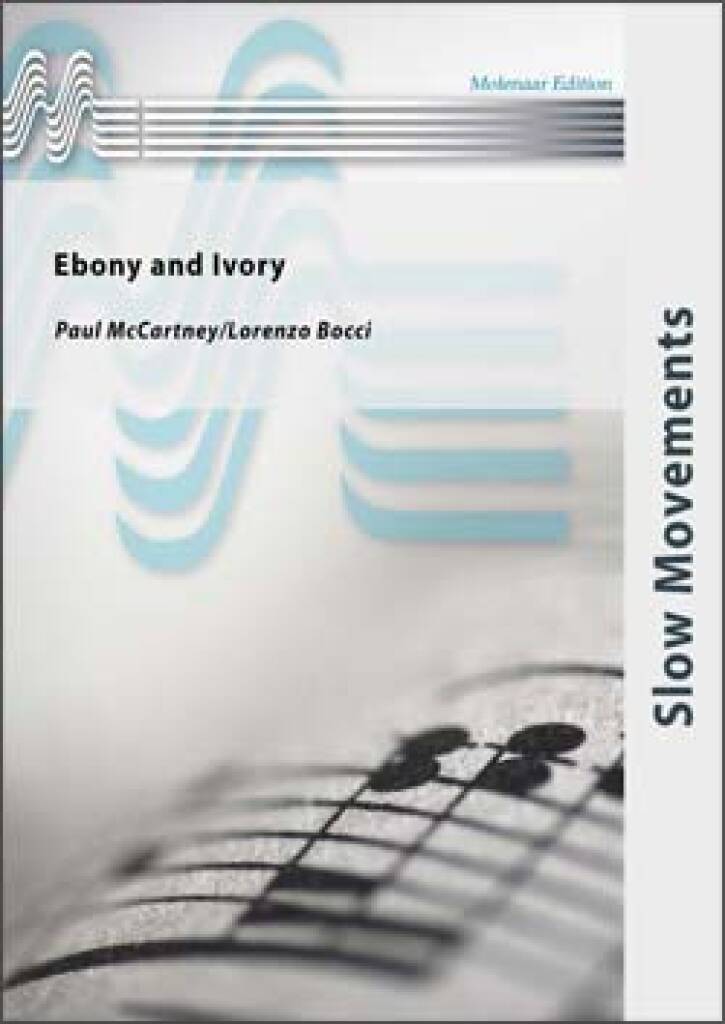 £83.80
Ebony and Ivory - Paul McCartney
Ebony and Ivory is a 1982 number-one single by Paul McCartney and Stevie Wonder. The song is featured on McCartney's album Tug of War. The song reached number one on both the UK and the U.S. charts. For McCartney, the song's run atop the chart was the longest of any of his post-Beatles works, and second longest career (behind Hey Jude) for Wonder, it was his longest-running chart-topper. In 2013, Billboard Magazine ranked the song as the 69th biggest hit of all-time on the Billboard Hot 100 charts.
Estimated dispatch 7-14 working days
 View Music