
Results
-
£95.00
To The Stars! - Nigel Hess
'To the Stars!' is the fruit of a unique collaboration between Nigel Hess and the children of several Bedfordshire schools who were asked to contribute ideas for a libretto based on the themes of space travel and exploration. The work was then performed during a concert at the Royal Albert Hall showcasing the work of Bedfordshire County Music Services. The unusual combination of children's choir and symphonic wind band is wonderfully exciting, and To the Stars! provides an incomparable performing experience for both band and choir, and is also technically demanding and challenging. After a rousing introduction, we hear a countdown to our rocket's 'blast off', and suddenly we are heading out to the planets where we meet aliens with blue eyes and pink ears! After a brief but terrifying skirmish with a black hole we head off to a 'world of many wonders', and as we leave our solar system behind, the piece finishes with a spectacular shout of 'Fly with us - to the stars!'.
In stock: Estimated delivery 1-3 days
-
 £164.95
Amphibiosity (Concert Band - Score and Parts) - Ellerby, Martin
Amphibiosity was commissioned by the Royal Marines Band Service with funds made available by the Royal Navy and Royal Marines Charities for the 2014 Mountbatten Festival of Music held at the Royal Albert Hall in London.The work was written in celebration of the 350th Anniversary of the Royal Marines Corps and utilises many familiar tunes associated with them. Although the piece is cast in one continuous movement it falls into an introductions, ten sections and a coda.The Introduction sets the tone with the Amphibiosity mofif - a call to attention, it is of serious intent. During the course of the work it returns as a point of reference. The first section makes use of The Globe and Laurel (Original Regimental Slow March of the Royal Marines, the tune (Early One Morning) making an apt appearance, it has been played in the minor and like much of the quotational material in the piece is of a referenced nature being symbolic in meaning. However it soon turns to the major to provide a less sombre aspect to the introduction proper. There follows an interlude, the Amphibiosity motif returning rather like a ritornello to give cohesion to the structure and act as a point of change.Section two presents Sarie Marais (Regimental March Past of the Royal Marine Commandoes), the first half of the tune used as a fugal subject (placed in the minor) and as such providing the impression of a building up of activity. The ensuing third section is light-hearted commencing with an original hornpipe leading into the fourth section, Seascape, representing the fleet at sea. Another interlude follows, the Amphibiosity motif reappearing as a woodwind fanfare making way for the fifth section. Anticipation, serious matters lie ahead, there is trouble in the papers, the Corps will be placed on standby.Section six is subtitled Preparation, all hands-on deck, time to get set: A Life on the Ocean Wave (Regimental March of the Royal Marines) is alluded to. On reaching section seven, Assault, the landing goes ahead. Within this section there is an internal interlude reflecting on things past: other men have been in this position before. It is a taut and trying situation, training must pay off!Section eight is named Victory, but not gung-ho, and here the Seascape music is revisited. The penultimate ninth section is called Rememberances, although all made it this time, it was not always the case in times past and the Naval Hymn (Eternal Father) provides a moment of tribute to the fallen of previous generations.The Finale (section ten) delivers By Land and Sea (Slow March of the Royal Marines) in a bright and positive orchestration, the mood being celebratory. In a brief Code, the Amphibiosity motif makes a last triumphant appearance.Duration: 10.30
Estimated dispatch 7-14 working days
-
 £32.95
Amphibiosity (Concert Band - Score only) - Ellerby, Martin
Amphibiosity was commissioned by the Royal Marines Band Service with funds made available by the Royal Navy and Royal Marines Charities for the 2014 Mountbatten Festival of Music held at the Royal Albert Hall in London.The work was written in celebration of the 350th Anniversary of the Royal Marines Corps and utilises many familiar tunes associated with them. Although the piece is cast in one continuous movement it falls into an introductions, ten sections and a coda.The Introduction sets the tone with the Amphibiosity mofif - a call to attention, it is of serious intent. During the course of the work it returns as a point of reference. The first section makes use of The Globe and Laurel (Original Regimental Slow March of the Royal Marines, the tune (Early One Morning) making an apt appearance, it has been played in the minor and like much of the quotational material in the piece is of a referenced nature being symbolic in meaning. However it soon turns to the major to provide a less sombre aspect to the introduction proper. There follows an interlude, the Amphibiosity motif returning rather like a ritornello to give cohesion to the structure and act as a point of change.Section two presents Sarie Marais (Regimental March Past of the Royal Marine Commandoes), the first half of the tune used as a fugal subject (placed in the minor) and as such providing the impression of a building up of activity. The ensuing third section is light-hearted commencing with an original hornpipe leading into the fourth section, Seascape, representing the fleet at sea. Another interlude follows, the Amphibiosity motif reappearing as a woodwind fanfare making way for the fifth section. Anticipation, serious matters lie ahead, there is trouble in the papers, the Corps will be placed on standby.Section six is subtitled Preparation, all hands-on deck, time to get set: A Life on the Ocean Wave (Regimental March of the Royal Marines) is alluded to. On reaching section seven, Assault, the landing goes ahead. Within this section there is an internal interlude reflecting on things past: other men have been in this position before. It is a taut and trying situation, training must pay off!Section eight is named Victory, but not gung-ho, and here the Seascape music is revisited. The penultimate ninth section is called Rememberances, although all made it this time, it was not always the case in times past and the Naval Hymn (Eternal Father) provides a moment of tribute to the fallen of previous generations.The Finale (section ten) delivers By Land and Sea (Slow March of the Royal Marines) in a bright and positive orchestration, the mood being celebratory. In a brief Code, the Amphibiosity motif makes a last triumphant appearance.Duration: 10.30
Estimated dispatch 7-14 working days
-
 £13.95
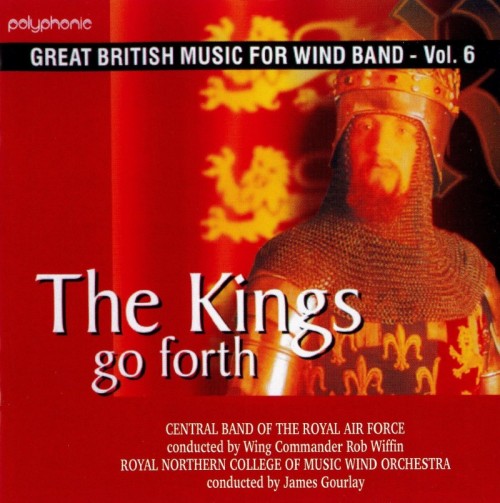
The Kings Go Forth (Concert Band CD)
Great British Music for Wind Band Vol.6The Central Band of the Royal Air Force conducted by Wing Commander Rob Wiffin with the Royal Northern College of Music Wind Orchestra conducted by James Gourlay1Fiesta!Philip SparkeCentral Band of the Royal Air Force7.092Diversions - Variations on a Swiss Folk SongPhilip SparkeCentral Band of the Royal Air Force15.553-6New World DancesMartin EllerbyCentral Band of the Royal Air Force8.39 Earth Dance 2.08 Moon Dance 3.25 Sun Dance 3.066-8Sinfonietta No.1Philip SparkeCentral Band of the Royal Air Force14.05 Overture 2.41 Aria 5.32 Scherzo 5.259-11The Kings Go ForthEdward GregsonRoyal Northern College of Music Wind Orchestra17.17 The Church 4.27 The People 4.42 The State 8.05
Estimated dispatch 7-14 working days
-
 £13.95
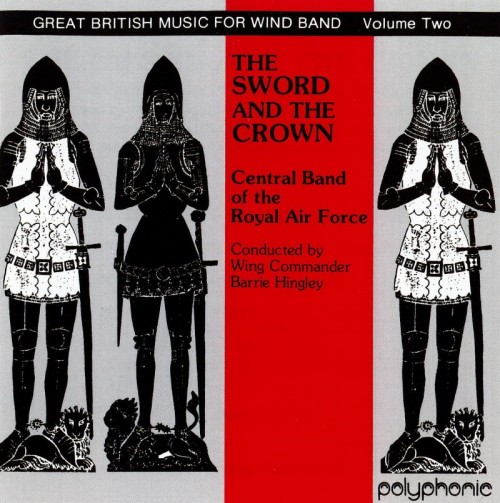
The Sword and the Crown (Concert Band CD)
Great British Music for Wind Band - Volume 2The Central Band of the Royal Air Force conducted by Wing Commander Barrie Hingley1A Pittsburgh OverturePhilip SparkeThe Central Band of the Royal Air Force5.592The Sword and the CrownEdward GregsonThe Central Band of the Royal Air Force13.543Ballad for BandGordon JacobThe Central Band of the Royal Air Force7.224-7A Derbyshire SuiteMichael ShortThe Central Band of the Royal Air Force16.27 On Stanton Moor 5.05 The Cat and the Fiddle 3.04 Lord Musgrave's Dining Room 4.41 Well Dressing 3.328CelebrationPhilip SparkeThe Central Band of the Royal Air Force10.54
Estimated dispatch 7-14 working days
-
 £64.95
The Dam Busters (Concert Band - Score and Parts) - Coates, Eric - Duthoit, W. J.
March from the Associated British Picture "The Dam Busters"Army Journal 787Recorded on Polyphonic QPRM125D FESTIVAL OF MUSIC 1996, Massed Bands of the Royal Air ForceQPRM126D FESTIVAL OF MUSIC 1997, Massed Band of the Royal Air ForceQPRM128D THE ROYAL AIR FORCE 80TH ANNIVERSARY CONCERT, Central Band of the Royal Air Force and The Band of the Royal Air Force RegimentQPRM130D FIESTA, Central Band of the Royal Air Force.
Estimated dispatch 7-14 working days
-
 £74.95
Soldiers Of The Sea (March) (Concert Band - Score and Parts) - Dunn, Vivian
This quick march was written for HMS Bulwark, the Royal Navy's first Commando Carrier in which 42 Commando Royal Marines was embarked. It was first performed in June 1960 at the ceremony of Beating Retreat performed by the Massed Bands of HM Royal Marines, at which the salute was taken by His Royal Highness The Prince Philip, Duke of Edinburgh, Captain General Royal Marines.
Estimated dispatch 7-14 working days
-
£14.95
Soldiers Of The Sea (March) (Concert Band - Score Only) - Dunn, Vivian
This quick march was written for HMS Bulwark, the Royal Navy's first Commando Carrier in which 42 Commando Royal Marines was embarked. It was first performed in June 1960 at the ceremony of Beating Retreat performed by the Massed Bands of HM Royal Marines, at which the salute was taken by His Royal Highness The Prince Philip, Duke of Edinburgh, Captain General Royal Marines.
Estimated dispatch 7-14 working days
-
 £124.95
SWORD AND THE CROWN, The (Prestige Concert Band - Score and Parts) - Gregson, Edward
In 1988 I was commissioned by the Royal Shakespeare Company to write the music for The Plantagenets trilogy, directed by Adrian Noble in Stratford-upon-Avon. These plays take us from the death of Henry V to the death of Richard III. Later, in 1991, I wrote the music for Henry IV parts 1 and 2, again in Stratford. All of these plays are concerned with the struggle for power (the crown) through the use of force (the sword) and they portray one of the most turbulent periods in the history of the British monarchy.This work quickly became established in the mainstream repertoire and has received performances worldwide as well as five commercial recordings and many broadcasts. In 2002 I was approached by the Parc and Dare Band regarding their summer festival and commissioned to do a version for brass band. This was given its first performance in Treorchy Hall by the combined bands of Black Dyke and Parc and Dare conducted by Nicholas Childs.When the Royal Air Force Music Services commissioned me to write a work especially for their British tour in 1991 I immediately thought of turning to this music and transforming some of it into a three-movement suite for symphonic band.The first movement opens with a brief fanfare for two antiphonal trumpets (off-stage), but this only acts as a preface to a Requiem aeternam (the death of Henry V) before changing mood to the English army on the march to France; this subsides into a French victory march, but the English army music returns in counterpoint. Finally, a brief reminder of the Requiem music leads to the triumphal music for Richard Plantagenet, Duke of York, father of Edward IV and Richard III (the opening fanfare transformed).The second movement takes music from the Welsh Court in Henry IV (part 1) which is tranquil in mood; distant fanfares foreboding battles to come are heard, but the folktune is heard three times in different variations and the movement ends as it began with alto flute and gentle percussion.The final movement starts with two sets of antiphonally placed timpani, drums and tam-tam, portraying the 'war machine' and savagery of battle. Trumpet fanfares and horn calls herald an heroic battle theme which, by the end of the movement, transforms itself into a triumphant hymn for Henry IV's defeat of the rebellious forces.- Edward GregsonPerformance time 13'54"Recorded on QPRM117D FESTIVAL OF MUSIC 1991, Massed Bands of the Royal Air ForceRecorded on QPRM120D THE SWORD AND THE CROWN, Central Band of the Royal Air Force'Finale' recorded on QPRM142D FESTIVAL OF MUSIC 2002, Massed Bands of the Royal Air Force)
Estimated dispatch 7-14 working days
-
£24.95
SWORD AND THE CROWN, The (Prestige Concert Band - Score only) - Gregson, Edward
Extra Score. Commissioned by Royal Air Force Music Services and based on the composer's music for the Royal Shakespeare Company. Written for large forces, the score includes harp, piano, alto flute, hand bells, descant and treble recorders, rauschpfeifen (a medieval antecedent of the oboe) and a huge battery of percussion on top of the usual wind band instrumentation (please note: no saxophones). Performance time 13'54" (Recorded on QPRM117D FESTIVAL OF MUSIC 1991, Massed Bands of the Royal Air Force - Recorded on QPRM120D THE SWORD AND THE CROWN, Central Band of the Royal Air Force - 'Finale' recorded on QPRM142D FESTIVAL OF MUSIC 2002, Massed Bands of the Royal Air Force)
Estimated dispatch 7-14 working days
 View Music