
Results
-
 £19.95
HIGH SPIRITS (Prestige Concert Band Extra Score) - Wiffin, Rob
Extra Score. This concert overture is ideal for that lighter moment in a concert programme. The musical language is unambiguously tonal and the piece sets out to be attractive and joyful throughout, being upbeat in both style and tempo. There are several themes running through the piece but there is a unifying factor in the close link between the first main theme and the central slow section, and then the return of the opening idea which brings the work to its conclusion. Duration: 8:30
Estimated dispatch 7-14 working days
-
£99.95
HIGH SPIRITS (Prestige Concert Band Set) - Wiffin, Rob
Score and Parts. This concert overture is ideal for that lighter moment in a concert programme. The musical language is unambiguously tonal and the piece sets out to be attractive and joyful throughout, being upbeat in both style and tempo. There are several themes running through the piece but there is a unifying factor in the close link between the first main theme and the central slow section, and then the return of the opening idea which brings the work to its conclusion. Duration: 8:30
Estimated dispatch 7-14 working days
-
 £104.99
Il Presidente (Concert Band - Score and Parts)
Il Presidente is a humorous march depicting a president's appearance before his people! The president's convoy is accompanied by a grand fanfare as he pulls up in his car. The people cheer and wave as the president starts to deliver his speech. Slowly their mood begins to shift and they become restless. Finally bored, the people begin to drift away. The finale accompanies people as they return to the city in search of more interesting ways in which to spend their time. An amusing tongue-in-cheek piece that will add a little joy to any concert! 05:30
Estimated dispatch 7-14 working days
-
 £214.95
JOURNEY THROUGH A JAPANESE LANDSCAPE (Percussion Solo with Concert Band - Score and Parts) - Musgrave, Thea
Concerto for Solo Marimba and Wind Orchestra. The four movements of Journey through a Japanese Landscape are based on a series of haiku which represents an emotional journey through the four seasons. The three haiku chosen for each of the seasons provide a setting and an event; thus, the gently undulating spring sea is the background for the free, improvisatory character of the skylark. The summer grasses have buried the glorious dreams of ancient warriors and after a violent storm, a distant memory of a march is heard. An autumnal fog envelops a colossal Buddha and a lonely watcher sounds one gong after another while a cricket acts as a grave keeper. Glass wind chimes introduce the frozen winter landscape. The march returns, then sleet and snow build to a big storm. Out of the silence that follows, echoes of the first movement suggest the return of spring and so, rebirth. (Grade 4) Duration: 23:00
Estimated dispatch 7-14 working days
-
£49.95
JOURNEY THROUGH A JAPANESE LANDSCAPE (Percussion Solo with Concert Band - Score only) - Musgrave, Thea
Concerto for Solo Marimba and Wind Orchestra. The four movements of Journey through a Japanese Landscape are based on a series of haiku which represents an emotional journey through the four seasons. The three haiku chosen for each of the seasons provide a setting and an event; thus, the gently undulating spring sea is the background for the free, improvisatory character of the skylark. The summer grasses have buried the glorious dreams of ancient warriors and after a violent storm, a distant memory of a march is heard. An autumnal fog envelops a colossal Buddha and a lonely watcher sounds one gong after another while a cricket acts as a grave keeper. Glass wind chimes introduce the frozen winter landscape. The march returns, then sleet and snow build to a big storm. Out of the silence that follows, echoes of the first movement suggest the return of spring and so, rebirth. (Grade 4) Duration: 23:00
Estimated dispatch 7-14 working days
-
 £36.95
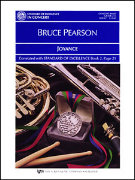
JOYANCE (Concert Band) - Pearson, Bruce
An exultant 18th century hymn-tune provides the melodic inspiration for Joyance. Written in ternary form, the work opens with a hymn-based maestoso introduction in Eb Major. Following the Allegro A section (also based melodically on the hymn), the mood becomes plaintive as the B Section is presented featuring a relative minor version of hymn motives. Following a return of the Eb Major A section, the work concludes with a coda, during which a victorious exclamation of the complete Darwall composition is heard.
Estimated dispatch 7-14 working days
-
£144.99
Jungle (Concert Band - Score and Parts)
In this fascinating piece we experience an exciting adventure in the jungle. The entrance into the "green hell" turns out to be very dangerous with wild monkeys and the roaring of elephants accompanying our way through the dark forest. There seems to be something lurking behind every tree and all of a sudden, a horde of savage cannibals appears. A wild hunt sets off and we escape at the last second by jumping from a cliff into the savage water below. Exotic birds welcome us in a new landscape and from somewhere in the distance we can hear a bamboo flute playing. This is a journey of no return.... The effects (elephants, wild monkeys, exotic birds and rain) should be produced with much creativity - individual ideas are always desirable and welcome. 08:00
Estimated dispatch 7-14 working days
-
£144.99
Magic Overture (Concert Band - Score and Parts)
Magic Overture was written as an anniversary present for the B?rgermusik G?tzis in Austria.The magic of the music and landscape in the Austrian region of Vorarlberg are in abundance in the charming village of G?tzis.Visiting a place as wonderful as this helps one appreciate local traditions and experience the joy of living. Once touched by the magic, every visitor will gladly return time after time. This new overture reflects the carefree cheerful atmosphere, taking the band on a walk through the village on an icy winters night to participate in the sparkling celebrations of the villagers. 07:45
Estimated dispatch 7-14 working days
-
£59.40
Manatee Lyric
A sparkling introduction heralds the opening of this bright and colorful work. The main theme follows quietly, building in intensity, then giving way to a poignantly reflective melody. A brief transition climaxes in a return to a festival atmosphere.
Estimated dispatch 7-14 working days
-
 £13.95
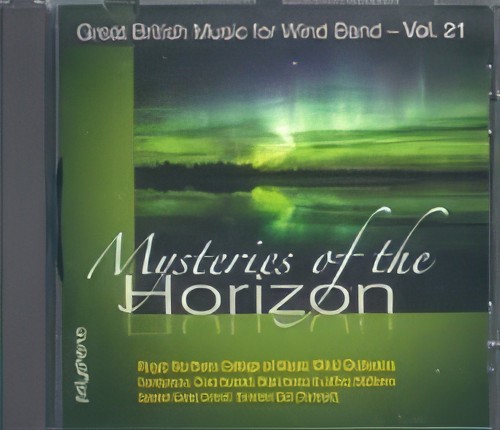
MYSTERIES OF THE HORIZON (Royal Northern College of Music Wind Orchestra) (Wind Band CD)
Great British Music for Wind Band Vol.21. Royal Northern College of Music Wind Orchestra. Conductors: Clark Rundell, Mark Heron & Jeffrey Mathews. Special Guest Soloist: Brendan Ball (Trumpet)MAJESTY (Rob Wiffin) 3:29 (A Little Ceremonial Music No.1)A MAN FOR ALL SEASONS (Martin Ellerby) 13:00Parts 1: Spring Steps (4:32)Part 2: Winter Tales/Autumn Memories (5:25)Part 3 Indian Summer (3:03)TOCCATA IN BLUE Duncan Stubbs (4:08)MYSTERIES OF THE HORIZON Nigel Clarke 21:05(Concerto for Trumpet and Wind Orchestra - Solo Trumpet: Brendan Ball)1. The Menace Assasin (6:29)2. The Dominion of Light (2.15)3 The Flavour of Tears (6:31)4. The Discovery of Fire (5:5)A STAR DANCED (Y Seren Delawns) (Nichola Renshaw) 5:54CLOUD DRIFT (Rob Wiffin) 4:14Solo Bassoon: Andres Yauri AndoquiaWATERLOO 200 (A Commemorative Suite) (Martin Ellerby) 16:311. Overture: Return of the Emperor (3:13)2. Intermezzo: At the Duchess of Richmond's Ball (2:39)3. Scenario: On the Field of Waterloo (7:17)4. Finale: Thine Be the Glory (3:22)
Estimated dispatch 7-14 working days
 View Music