
Results
-
 £53.95
Dialogues (Concert Band - Score and Parts) - Wagner, Douglas E.
One voice listens to another, hears and responds... So begins the 'Notes to the Conductor' from this musical investigation of communication. The choirs within the ensemble state their comments and then interweave and give response. Sensitive dynamic structuring underlines the programmatic and educational significance of this fascinating work. Duration: 3.00
Estimated dispatch 7-14 working days
-
 £193.20
CASTRVM - Lionel Beltrán-Cecilia
CASTRVM is a symphonic episode inspired by four of the main civilizations that have coexisted over time in Ulldecona's Castle. With its melodies and sound effects, the composer tries to transport the listener through a trip to four uninterrupted movements, from the beginnings of this small settlement, creating a natural atmosphere recreated by the voice and the singing of birds to take us into the history with the first inhabitants, the Iberians, giving strength to the introduction of the composition, to move on to the time of the Andalusians, which with a melody in the form of a dance marked by percussion will transport us to take a walk in the surroundings of its circular tower. Next, and with strength, we arrive at the medieval and Christian period, marked in the score by the brass instruments, in this fragment we find moments that take us into the church of "Santa Mara de los ngeles", with melodies that evoke resonance and pomposity, continuing until we find the immense square tower, symbol of the fortress and homage, finally used as a prison and arsenal of those times. Then, there is a small slow march that will move us to some measures of strong stridency to finish with the whole section of low brass having its great moment of prominence, down to we reach the last part, Qna, a name that is recited during the musical piece and one of the names given in the past to the area that could be seen from the castle, where the change of location of the new town is recreated leaving the castle site, but always looking at it with respect and admiration as at the beginning of what is now the current Ulldecona, in this part, the composer plays a bit with a very well-known and significant melody for the inhabitants of Ulldecona, the "Jota Vieja", first making a reflex effect of all its melody and then only with the first six notes of this one, which builds a bridge until reaching the march and, later, the grand finale of this symphonic episode. The work was commissioned by Ulldecona Town Council and the Ulldecona Music Band, led by its conductor Joan Nadal i Girona, to commemorate the 800th anniversary of the donation of the Town Charter of Ulldecona "the old" (1222-2022), as part of the PATRIMONIUM 20.22 programme, "La Banda (Sonora) del Castell" (The soundtrack of the Castle).CASTRVM consists of: I.Iberians: stone and ironII.AndalusiansIII.The square tower: fortress and homageIV.Qna
Estimated dispatch 7-14 working days
-
 £435.40
Goldberg 2012 - Svein H. Giske
The first time I heard Bach's Goldberg Variations was in the movie Silence of the lambs, in the early 1990s. I noticed the beautiful background music in one of the scenes, but at that time I didn't know what it was. A few years later, when I was studiying at the Grieg Academy, I got to know the entire piece. For me, this is a piece of music which I can listen to countless times. I think it sounds as fresh today as it did more than 15 years ago and it never ceases to inspire me. Both Bach's composition and Glenn Gould's famous 1955 recording (which was the first one I heard) still makes a great impression on me. Before Gould recorded it at age 22, it wasn't a highly ranked piece amongst pianists and Bach was by many viewed as a bit old-fashioned. The young Canadian turned all this around. He managed to portray Bach in a reformed way, producing fine nuances in phrasing and making the many layers in Bach's music more transparent than anyone before him. Thus he plunged both himself and Bach (back) onto the international music scene. When The Norwegian Band Federation (NMF) asked me to write the test piece for NM in 2012, it was only natural for me to use the Goldberg Variations as a starting point and inspiration for my work. Since I was a teenager at NMF's summer courses in the mid eighties I've always listened to many different styles of music. Growing up in Sunnmre with the Brazz Brothers as teachers and mentors, jazz-, pop/rock- and folk music were early on a natural part of my musical background. I also have my classical education from the Grieg Academy on trumpet. As the title of my piece implies, I've wanted to bring Bach to the present and put his music into various modern musical landscapes. I think you can bring about a special kind of energy when music from different genres are mixed and I've tried to do this by mixing Bach with artists and musical styles from the present. In Goldberg 2012, the music is often constructed by several layers, which in a way are living parallel musical lives. They are seemingly moving or floating freely, almost unaware of each other, but bound together by the same basic pulse. The rythms, however, are often notated on a different rythmic subdivision level than the usual 8th- or 16th note levels. By doing this, I hope to achieve transparent sounds that rythmically are perceived as more free and detached from each other. In large sections of the piece, pop/jazz is fusioned with elements from Bach. I guess you could have this little scene as a synopsis for the piece: picture a group of musicians meeting: some are classical performers, some are jazz. They start to improvise together, each in their own voice or musical dialect and I'm sort of in the middle, trying to write down what they are playing. This is what I feel much of Goldberg 2012 is about. The foundation of the piece, in addition to Bach and references from pop/jazz music, lies also in my own material. This material, basically two chords, is heard in it's purest form in the 1st movement. I use these chords to create scales, new chords and different motifs which contribute to blend together the different moods of the piece. It has not been my intention to copy Bach's form (theme and 30 variations), but rather to use the bits and pieces that I like the most as an inspiration for my own variations. The 1st movement, Aria 2, is for my 3rd son, Olav, who was born on the 21st of April 2011, and the 5th movement, From long ago, is dedicated to the memory of my father, Svein J. Giske, who passed away on the 6th of June 2011. -Svein H. Giske, January 2012-
Estimated dispatch 7-14 working days
-
£83.50
An Impulse To Soar - Patrick J. Burns
An exciting take-off flight for any concert! This piece truly soars as every player adds their voice in this joyful tribute to following hopes and dreams! Inspired by Helen Keller's quote: "One can never consent to creep when one feels an impulse to soar." Breathtaking!
Estimated dispatch 7-14 working days
-
 £122.50
Bryan Adams
Bryan Adams is one of the most successful rock singers of modern times with his raspy voice and his ability to sing rock songs as skilfully as expressive ballads contributed to his fame. Wolfgang Wssner, a great fan of Bryan Adams, has made a selection of the most appealing and successful songs by the Canadian singer and arranged them to form a medley for concert band. The medley includes the following titles: Everything I Do, I Do it for You from the movie Robin Hood, The Best of Me, Please Forgive Me and Summer of '69. This mixture of ballads and rock songs will ensure everyone will leave your concert humming one of their favourite Bryan Adams hits.
Estimated dispatch 7-14 working days
-
£514.99
The Venetian Collection
The Venetian Collection by Johan de Meij consists of four movements which are all a musical reflection of the four paintings of the same names from the Peggy Guggenheim Museum in Venice.Voice of Space is the first movement of The Venetian Collection. The picture on which the music is based on was painted by the Belgian surrealist artist Ren Magritte. Along with Ensor, Permeke and Delvaux he was one of the most important painters of the 20th century.The Red Tower was inspired by the painting of the same name (La Torre Rossa) by the Italian artist Giorgio de Chirico, and was awarded first prize in the International Composition Contest in Oman. One of the towers of the mediaevalwalls of the Italian town of Soncino (home to the band for whom Johan de Meij wrote the work for) shows a remarkable resemblance to the tower in the work of De Chirico. Magic Garden contrasts starkly with the other movements of the cycle. As with the painting, Johan de Meij has tried to reflect the colourful, naive dream world of Paul Klee. The transparent texture, in which the woods play an important role, makes a striking impression throughout this serene movement.Empire of Light is also based on a work by Ren Magritte. He was a versatile and productive artist producing over 1100 paintings and 700 gouaches. Johan de Meij used the painting Empire of Light as his theme for the last movement of his Venetian Collection.
Estimated dispatch 7-14 working days
-
 £159.20
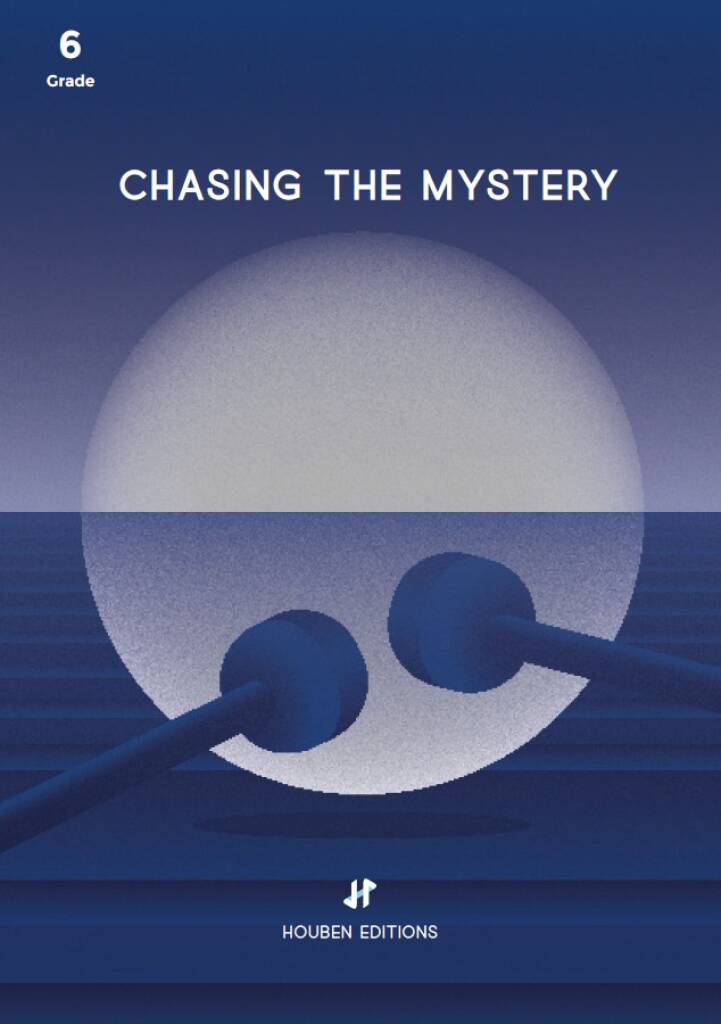
Chasing the Mystery - Kevin Houben
Commissioned by KU Leuven on the occasion of the 600th anniversary of KU Leuven.Chasing the MysteryKevin HoubenDedicated to the Wind Orchestra Universitair Harmonieorkest (UHO) of KU Leuven.Chasing the Mystery is the final movement of the triptych Beyond the Horizon of Thought.On the occasion of KU Leuven's 600th anniversary in 2025, the university commissioned Kevin Houben to compose a new work tailored to the Universitair Symfonisch Orkest, the Universitair Harmonieorkest and the Leuvens Universitair Koor. Maud Vanhauwaert, writer-in-residence during the 2023-2024 academic year, provided a poetic libretto.With Beyond the Horizon of Thought, Kevin Houben created not only a unique anniversary composition for more than 250 student musicians. The composition also conveys a universal message that perfectly reflects the spirit of the celebrating university: keep searching, keep developing yourself and keep hoping - even in turbulent times.From a compositional perspective, the work is built around themes and motifs with a clear symbolism. Kevin Houben explains: "I use a technique in which letters are converted into musical notes - a method also used by great masters such as Bach, Bartk and Shostakovich. This musical signature forms the basis of the melodic structure. In this way, 'KUL600' is represented by the notes D - G - E - F (re - sol - mi - fa)."The composition is conceived as a triptych: three movements that flow seamlessly into one another and are performed by different orchestral formations, yet together form a single whole. The work opens with the symphony orchestra, where the thematic 'KUL600' cells are introduced and explored. In this movement, Awakening the Wonder, several highlights establish a musical connection with the following movements.In the second movement, The Urge of Search, the choir sings a cappella to the poem Het is het by Maud Vanhauwaert, in which she reflects on the tireless quest for knowledge that has characterized the university for 600 years. Classical Gregorian techniques and traditional voice leading enter into dialogue with contemporary techniques, as the singers alternately whisper, call out and proclaim.Finally, the wind orchestra introduces the third movement, Chasing the Mystery. With a searching and anticipatory character, the orchestra presents the thematic cells in soloistic fashion, based on the main melody of the choral movement. References once again appear to the rhythmic 'KUL600' cells, which ultimately culminate in a grand apotheosis. A solitary soprano saxophone opens the finale with the 'KUL600' theme in its most intimate and meditative form. The expanded choir then joins the orchestra for an impressive final chord, musically preparing KU Leuven for the next 600 years.Beyond the Horizon of Thought premiered on Wednesday 23 and Thursday 24 April 2025 at LUCA Campus Lemmens, and was also performed on 9 May 2025 at Concertgebouw Brugge on the occasion of the 600th anniversary of KU Leuven. More than 250 musicians from the Universitair Symfonisch Orkest (USO) conducted by Edmond Saveniers, the Leuvens Universitair Koor (LUK) conducted by Kevin Hendrickx, and the Universitair Harmonieorkest (UHO) conducted by Erwin Scheltjens shared the stage.Cover illustration design: Grotezk Studio.
Estimated dispatch 7-14 working days
-
 £74.99
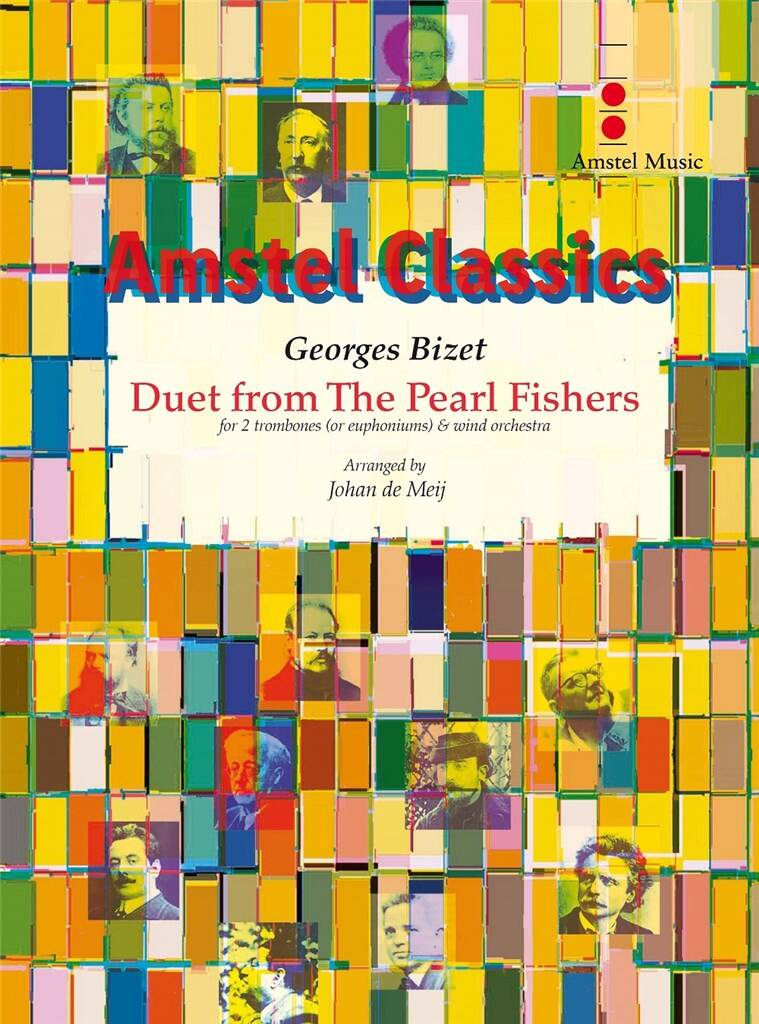
Duet From The Pearl Fishers - Georges Bizet
Les pcheurs de perles (The Pearl Fishers) is an opera in three acts by French composer Georges Bizet, who particularly made his fame with his opera Carmen. The friendship duet Au fond du temple saint, generally known as ThePearl Fishers Duet, is one of the best known in the opera literature. This arrangement for two trombones was written for and dedicated to trombone legends Joseph Alessi and Jrgen van Rijen. It serves as a possible encore piece in combinationwith Two-Bone Concerto, which was also written for them. The duet can also be performed by two euphoniums, or as the original vocal duet for tenor and baritone voice.
Estimated dispatch 7-14 working days
-
 £137.70
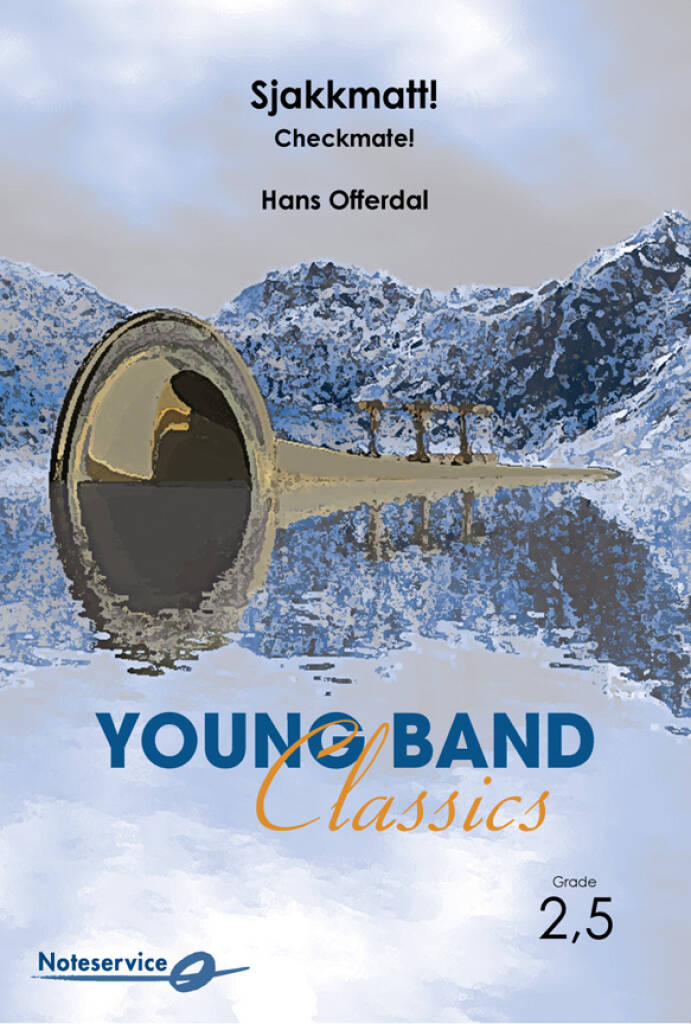
Sjakkmatt! - Hans Offerdal
How do you experience the final thrilling minutes of a chess game when your opponent has taken the upper hand? And how does it actually feel being beaten checkmate? This piece gives you the answers! There are challenges in use of dynamics, articulation, intensity and gradually increasing tempo. Dissonances are present several places, but the voice leading is diatonic and often in repeating patterns. The whole piece is based on one single scale: Bb major scale with augmented fourth and minor seventh. It is notated as a concert Bb major scale with two accidentals. Feel free to use it during warm-up!
Estimated dispatch 7-14 working days
-
 £66.00
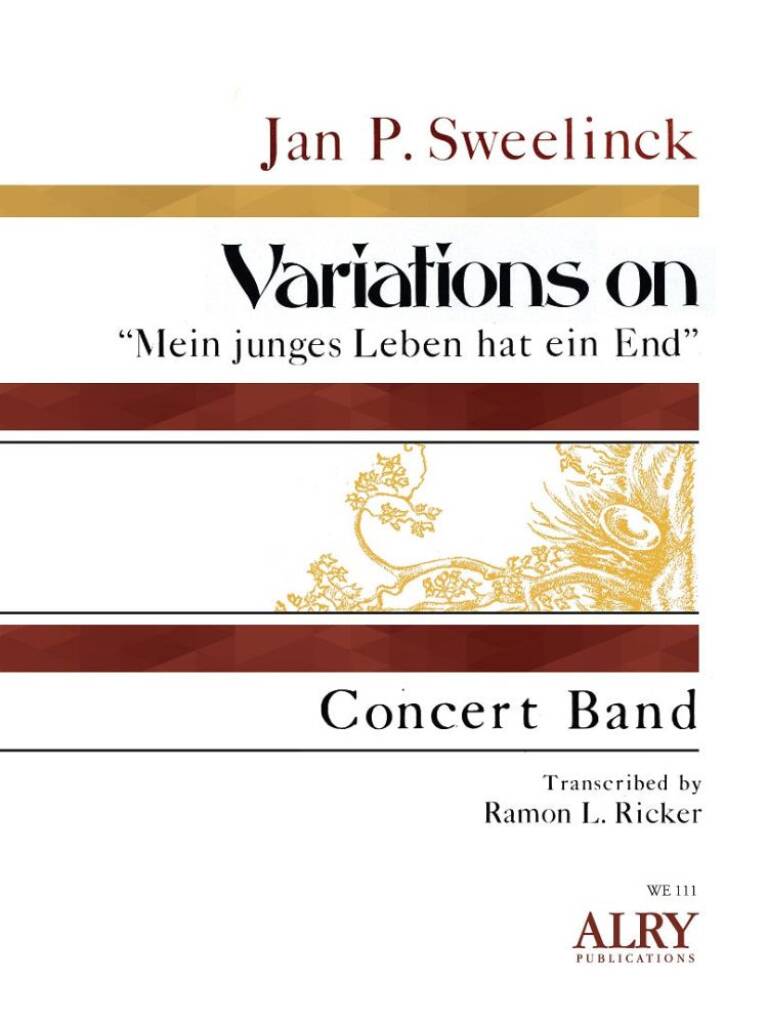
Variations on Mein junges Leben hat ein End - Jan Pieterszoon Sweelinck
Jan Pieterszoon Sweelinck - Variations on "Mein junges Leben hat ein End" for Concert Band, arranged by Ramon L. Ricker. Jan Pieterszoon Sweelinck, informally known during his lifetime as the "Orpheus of Amsterdam," might be considered one of the great masters of keyboard development pre-J.S. Bach. A deep understanding of contrapuntal writing, grown from the composition of more than 250 works for voices, underscore Sweelinck's keyboard innovations: the developed fugue, the organ pedal as a full fugal voice, the level of variation form reached, and the new levels or richly contrapuntal keyboard writing that incorporated various styles and ornamentations of the day.
Estimated dispatch 7-14 working days
 View Music