
Results
-
£67.95
Invictus Rex - Matthew N. Putnam
Invictus Rex is the Latin phrase for an invincible or undefeatable king. It calls to mind a paragon of strength, boldness, and confidence in the face of challenges and adversity. Audiences will imagine a medieval king attired in heavy armor confidently leading his men into battle, assured in the idea that, though the battle is to be long and arduous, they will ultimately reign victorious. New composer Matthew Putnam draws on his experience as a music educator to provide us with this piece that students will absolutely love to play.
Estimated dispatch 7-14 working days
-
 £139.99
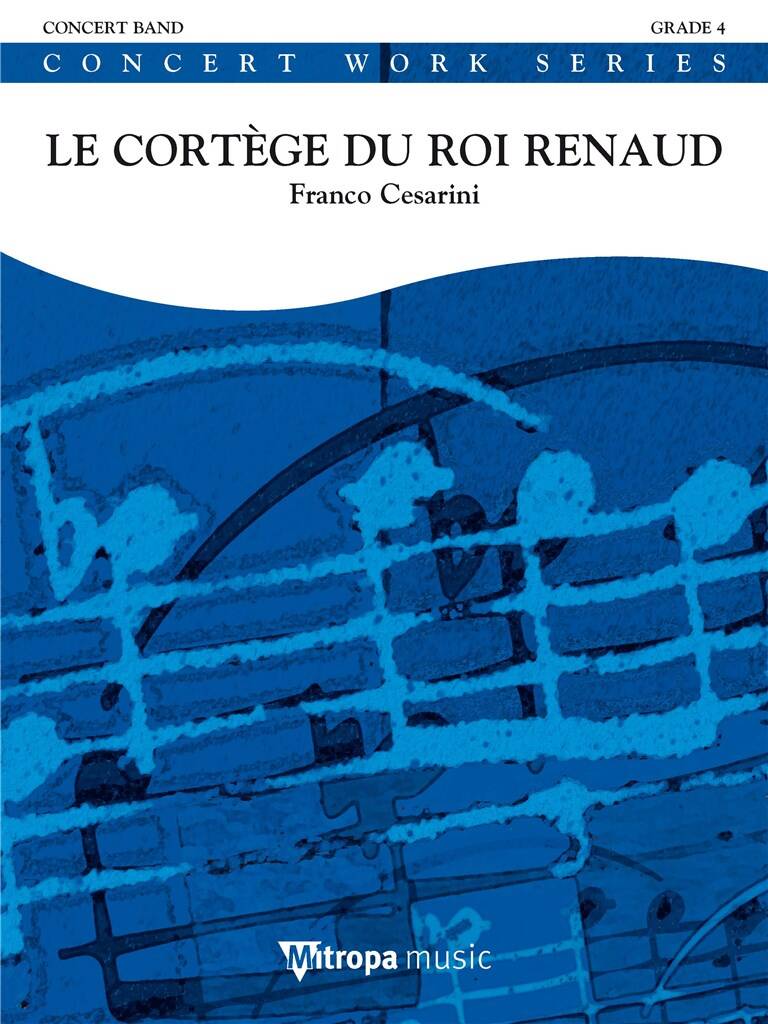
Le Cortge du Roi Renaud - Franco Cesarini
Le cortge du roi Renaud is a suite in five parts. It is based on tales that originated in southern European folk songs, dating back as far as the 16th century. A large portion of these songs are of the genre "Complaintes" songs in which the text gives a detailed description of events having a generally criminal or macabre character. The most familiar song to feature the tales of Roi Renaud is "Fualdes", consisting of 48 verses.The first part of the suite is based on the song "La Porcheronne" (The Swineherd). It telis the story of a young woman forced by her mother-in-law to tend pigs while her husband is away fighting in the war. She is freed only when her husband returns sevenyears later.The next part tells the story of "La mrquise Empoisonne" (The Poisoned Marquise). A marquise is coerced by her king to become his mistress. The jealous queen poisons her by means of a bouquet of deadly scented fiowers.Despite having the character of a merry dance, the third part, "La maumarie vengee" (The Avenged Wedding), expresses the touching story of Queen Clotilde, persecuted for her refusal to live according to the Aryan beliefs."La belle engloutie" (The Swallowed Beauty) relates the tale of the young wife of King Renaud. She cannot imagine a life without her husband, who was mortally wounded in the war, and begs the earth to open and swallow her up so thst she may rejoin her love.The gruesome content of the final part,"Le tueur de femmes" (The Wife Killer), bears a strong resembiance to the tale of Bluebeard. The story is about a young wife in danger of being drowned in a pond by her husband, which is what happened to her 13 predecessors. Thanks to her cunning, she manages to turn the tables and contrive her husband's demise.
Estimated dispatch 7-14 working days
-
 £89.99
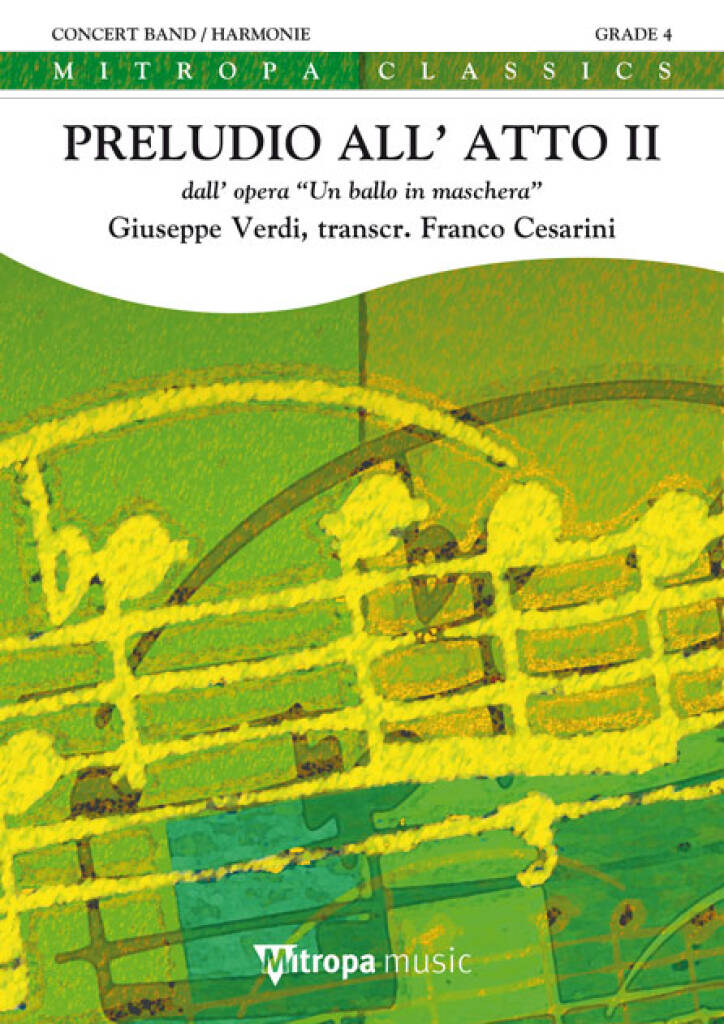
Preludio all' atto II - Giuseppe Verdi
For the first draft of the libretto of Un ballo in maschera (1859), Giuseppe Verdi drew his inspiration from the grand-opra Gustave III by Auber, an opera performed for the first time in Paris in 1833 that depicted the assassination of the King of Sweden. However, censorship, first in Naples and then in Rome, intervened and imposed heavy modifications. Perhaps because it was too demanding, Verdi showed no intransigence with the requests coming from Naples and refused to alter the libretto. On the other hand, he yielded to the requests of the Roman authorities and agreed to change the site of the action and the identity of the protagonists. Consequently, the scene movedfrom Stockholm to Boston and King Gustav became the Count of Warwick, Governor of Massachusetts.The prelude to the second act is very short and introduces the scene at the place where the scaffold stands. In only a few measures, Verdi skillfully succeeds in condensing the interior restlessness of the protagonists, alongside a prayer of hope.
Estimated dispatch 7-14 working days
-
 £66.95
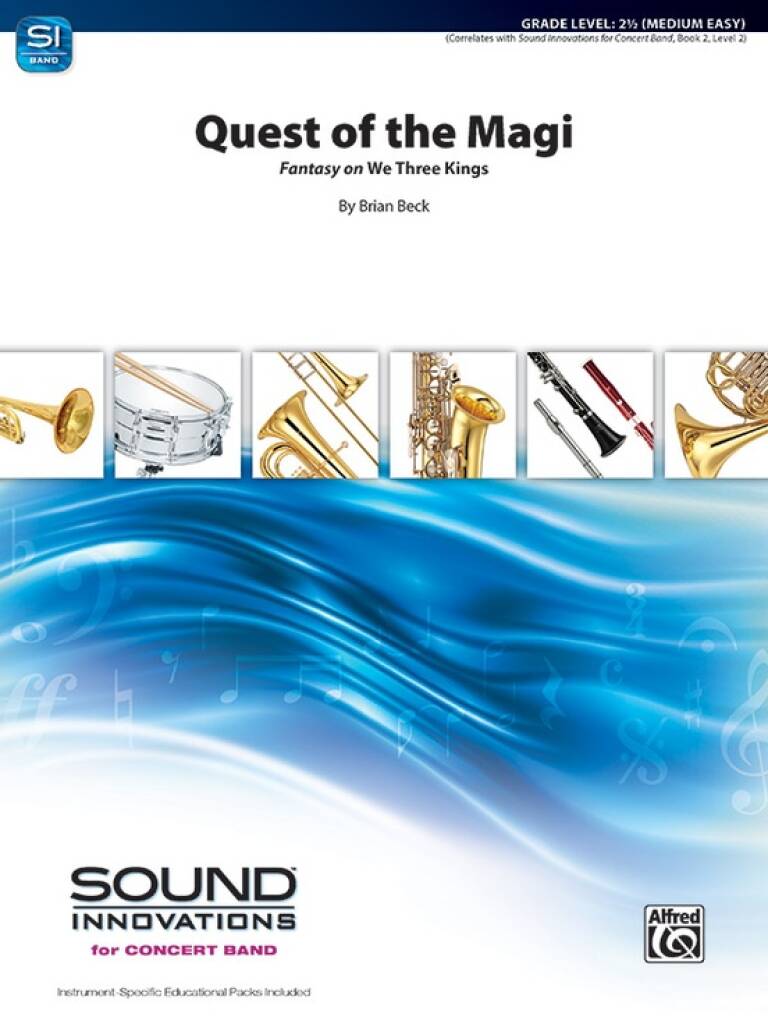
Quest of the Magi - Brian Beck
The Quest of the Magi was one of the working titles for John Henry Hopkins Jr.'s famous carol, "We Three Kings." Written in 1857 for a Christmas pageant in New York City, "We Three Kings" tells the tale of the Magis' journey to find a newly born king in a faraway land and the precious gifts they brought with them. This piece focuses more on the journey of "following yonder star." Traveling across many countries in the first century was a perilous task, full of danger, thievery, and possible death, not to mention these men were traveling with some of the most precious and expensive cargo one could possess. This piece chronicles the magi acquiring myrrh, frankincense, and gold for their journey. Each treasure is represented by its own motif and woven into Hopkins' original carol. (2:45)
Estimated dispatch 7-14 working days
-
 £50.50
Holiday Party Mix
Get the party started with this energetic, upbeat medley of holiday favorites arranged by William Owens! Featuring "Jingle Bells," "Jolly Old Saint Nicholas," "Good King Wenceslas," "Up on the Housetop," and "Ode to Joy," the music may play very easy, but it grooves really hard!
Estimated dispatch 7-14 working days
-
 £127.30
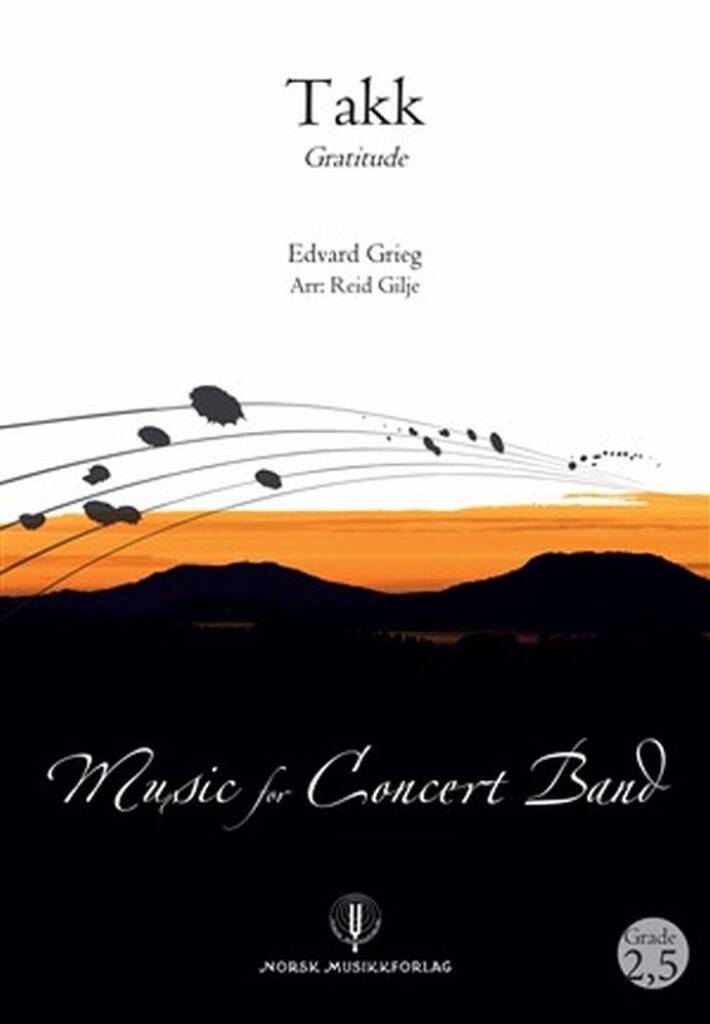
Takk - Edvard Grieg
"Gratitude" is one of Grieg's beautiful lyrical pieces, Op. 62 No. 2.Eva Knardahl made a beautiful recording that I well remember was used as background for a picture cavalcade by the Norwegian Broadcasting Corporation during the passing of His Majesty King Olav V of Norway in 1991.In this arrangement for band, I have tried to vary the instrumentation, both for the sake of more colours and to emphasize the drama.This piece should be played rubato with elastic phrasing. The form can be described as AABACoda. The most dramatic section is the B part from measure 25, which peaks just before measure 38. The last four measures (from measure 53) can be done a bit 'meno' in tempo.Reid Gilje
Estimated dispatch 7-14 working days
-
 £139.00
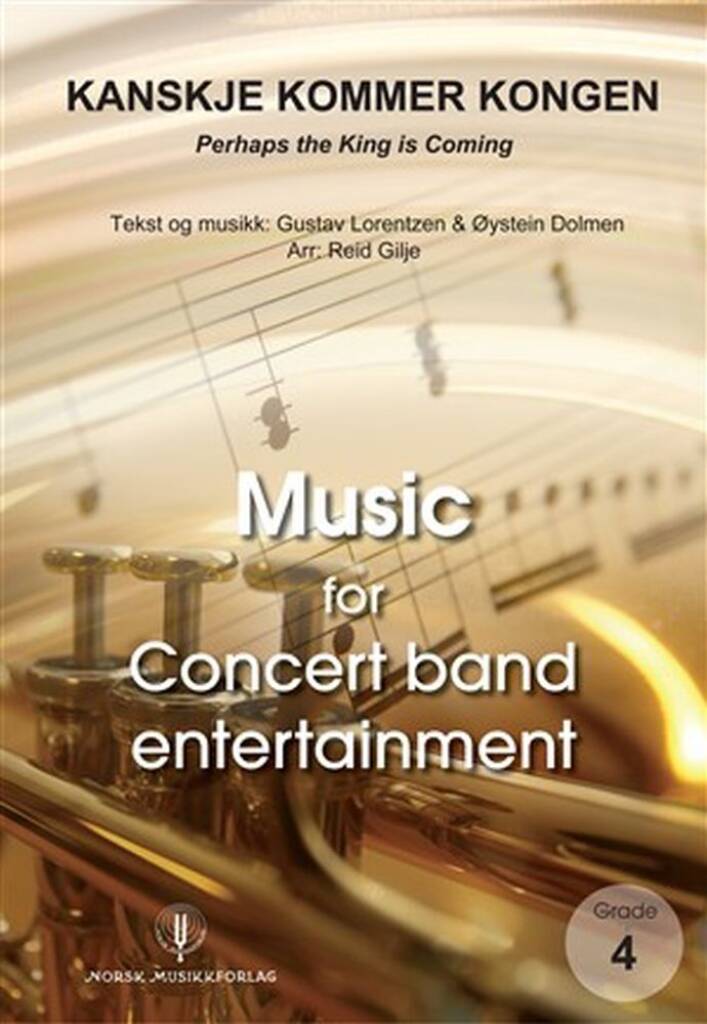
Kanskje kommer Kongen - Øystein Dolmen
"Kanskje kommer Kongen" ("Perhaps the King is Coming") is yet another example of Knutsen and Ludvigsen's creativity and imagination.The arrangement begins with a short fanfare in the introduction. From letter B, the melody is carried by horn and trombone with a majestic character.Ensure good precision in the accompaniment. From letter C, the style is Latin-inspired, resembling Samba. Alternative percussion solutions are possible here.From letter D, there is a pizzicato effect in 8th-notes, with sonorous melodic lines. The style becomes majestic and elevated again from letter E,then returns to the Latin style from letter F until the end.Reid Gilje
Estimated dispatch 7-14 working days
-
 £76.99
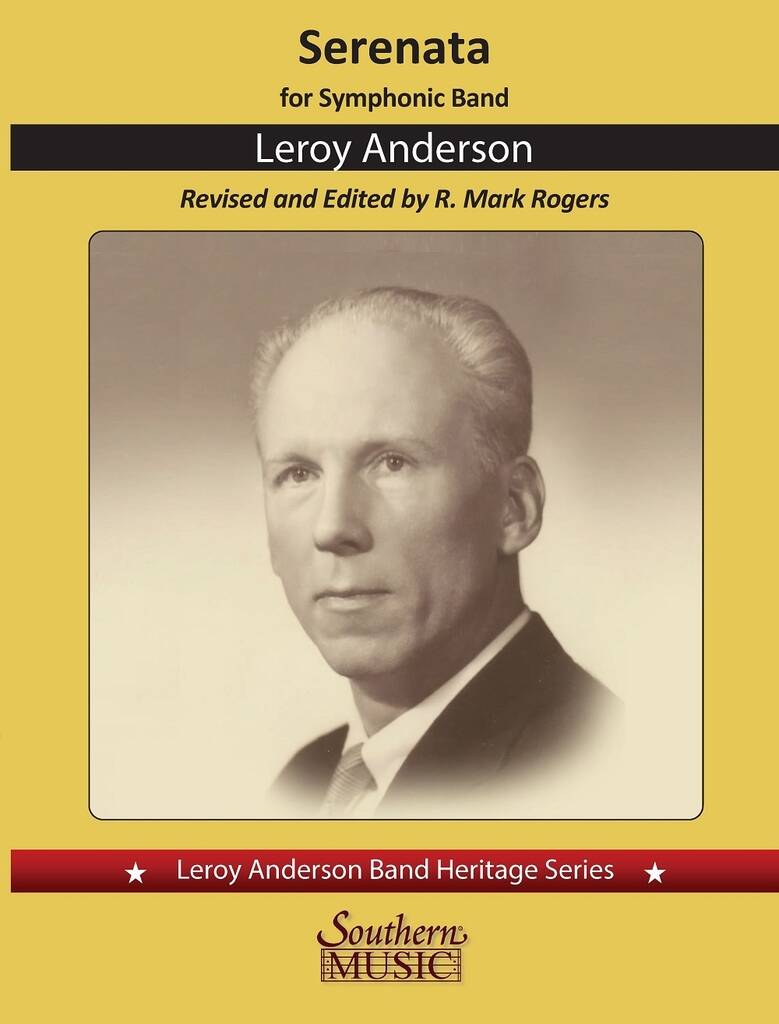
Serenata - Leroy Anderson
Serenata was first performed on May 10, 1947 as an encore at the Boston Pops, with Arthur Fiedler conducting. Fiedler would later praise the piece as among the conductor's favorites. Lyrics were added by Mitchell Parish in 1950, which would lead to recordings by the likes of Sarah Vaughan and Nat King Cole. With a beguine rhythm as a background, Anderson's inspiration from the Latin-American serenade would give the piece its title. This publication is the first-ever to offer a full score, edited by Mark Rogers, offering Anderson's enchanting work to new generations of audiences.
Estimated dispatch 7-14 working days
-
 £67.50
Wedding March - Felix Mendelssohn Bartholdy
Felix Mendelssohn Bartholdy (1809 - 1847) composed the music for William Shakespeare's play A Midsummer Night's Dream at two different times. In 1826, at the age of 16, he wrote a concert overture (Op. 21). Sixteen years later, in 1842, he composed the incidental music (opus 61) for King Frederick William IV of Prussia, in which he incorporated the existing overture. The overture premiered in Stettin (then in Prussia, now Szczecin, Poland) on February 20, 1827, conducted by Carl Loewe. Mendelssohn had to travel 80 miles through a raging snowstorm to get to the concert, which became his first public appearance. The interlude between the 4th and 5th acts of the incidental music is the famous Wedding March, Mendelssohn's most popular and most performed work.
Estimated dispatch 7-14 working days
-
 £152.99
A Midsummer Night's Dream - Felix Mendelssohn Bartholdy
Felix Mendelssohn Bartholdy (1809 - 1847) composed the music for William Shakespeare's play A Midsummer Night's Dream at two different times. In 1826, at the age of 16, he wrote a concert overture (Op. 21). Sixteen years later, in 1842, he composed the incidental music (opus 61) for King Frederick William IV of Prussia, in which he incorporated the existing overture. The overture premiered in Stettin (then in Prussia, now Szczecin, Poland) on February 20, 1827, conducted by Carl Loewe. Mendelssohn had to travel 80 miles through a raging snowstorm to get to the concert, which became his first public appearance. The first British performance of the overture was conducted by Mendelssohn himself on June 24, 1829, at the Argyll Rooms in London. After the concert, Thomas Attwood was given the score of the overture for safekeeping, but left it in a taxi and was never found. Mendelssohn later rewrote the overture entirely from memory.
Estimated dispatch 7-14 working days
 View Music