
Results
-
 £140.80
 -
 £38.20
 -
 £159.60
 -
 £115.60
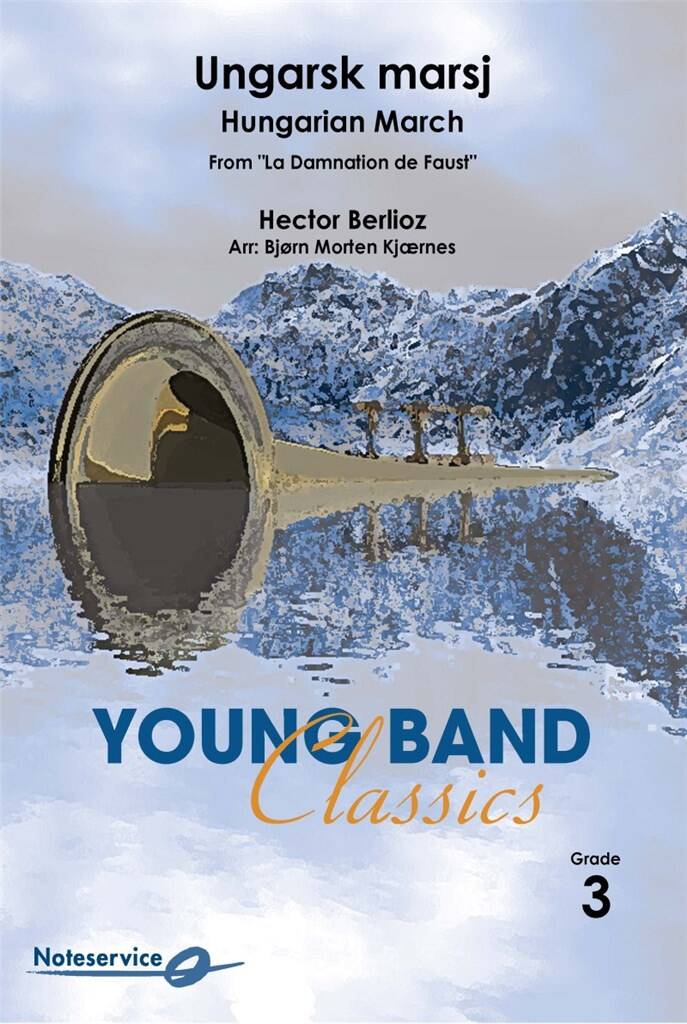
Ungarsk marsj - Hector Berlioz
The "Rkczi March" (Hungarian March) was the unofficial state anthem of Hungary before Ferenc Klcsey wrote the Himnusz which is today the official national anthem of Hungary. The first version of this march-song was probably created around 1730 by one or more anonymous composers, although tradition says that it was the favorite march of Francis Rkczi II. That early version called back Francis Rkczi II to save his people. It was very popular in the 18th century but in the 19th century the more refined Rkczi March became prevalent. Hector Berlioz included the music in his composition "La Damnation de Faust" in 1846, and Franz Liszt wrote a number of arrangements, includinghis Hungarian Rhapsody No. 15, based on the theme. The march gave its name to a 1933 Austrian-Hungarian feature film - Rakoczy-Marsch This arrangement is based on Berlioz instrumentation and phrasing from his Hungarian March, but in the form of the 19th century Rkczi March
Estimated dispatch 7-14 working days
-
 £76.80
 -
£137.99
Three Onegin Dances - Pyotr Ilyich Tchaikovsky
Tchaikovsky is best known for his purely instrumental compositions. However, we must not underestimate him as a composer of operas. Many of his operas such as Pique Dame and Eugene Onegin are still performed regularly throughout the world. Eugene Onegin (also called Jevgeny Onegin), composed in 1877-1878, was not called an opera by Tchaikovsky himself, but "lyric scenes". The work is entirely dominated by lyricism. However, there are two moments that contrast sharply with this lyricism: two ball scenes, for which Tchaikovsky wrote a waltz and a polonaise.After opening with a less well-known allegro dansant, this arrangement features the aforementioned waltz, which can beconsidered a beautiful Russian equivalent of the Faust Waltz by Charles Gounod. In the opera, this waltz is actually played by a military band. The arrangement concludes with the pompous polonaise (also mentioned above) which opens the last act: the ideal music to characterize high aristocracy in the salon of a palace in St. Petersburg.
Estimated dispatch 7-14 working days
-
£104.99
Nocturne - Pyotr Ilyich Tchaikovsky
Tchaikovsky is best known for his purely instrumental compositions. However, we must not underestimate him as a composer of operas. Many of his operas such as Pique Dame and Eugene Onegin are still performed regularly throughout the world. Eugene Onegin (also called Jevgeny Onegin), composed in 1877-1878, was not called an opera by Tchaikovsky himself, but "lyric scenes". The work is entirely dominated by lyricism. However, there are two moments that contrast sharply with this lyricism: two ball scenes, for which Tchaikovsky wrote a waltz and a polonaise.After opening with a less well-known allegro dansant, this arrangement features the aforementioned waltz, which can beconsidered a beautiful Russian equivalent of the Faust Waltz by Charles Gounod. In the opera, this waltz is actually played by a military band. The arrangement concludes with the pompous polonaise (also mentioned above) which opens the last act: the ideal music to characterize high aristocracy in the salon of a palace in St. Petersburg.
Estimated dispatch 7-14 working days
-
 £94.99
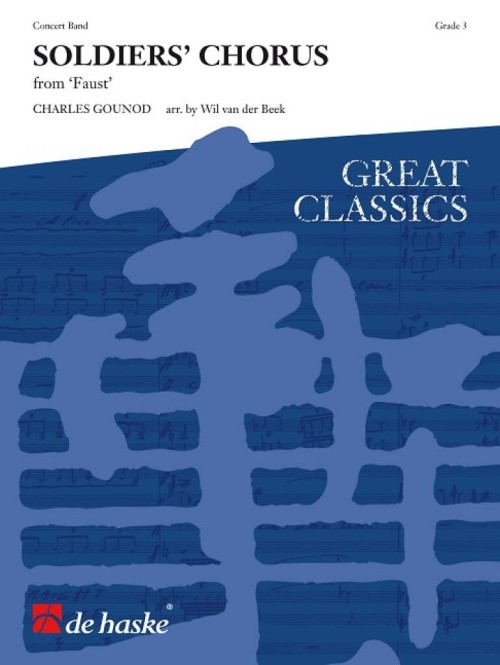
Soldiers' Chorus (Concert Band - Score and Parts) - Gounod, Charles - Van der Beek, Wil
The tale of Faust, who sold his soul to the devil in exchange for knowledge and power, has been a source of inspiration for many authors, poets, film directors and composers. Among these is the French composer Charles Gounod whose opera Faust was first performed in 1859. This charming Soldiers' Chorus is one of the most famous melodies from the opera. Its musical simplicity and beauty fits any concert programme that needs a well-known classical arrangement. The tale of Faust, who sold his soul to the devil in exchange for knowledge and power, has been a source of inspiration for many authors, poets, film directors and composers. Among these is the French composer Charles Gounod whose opera Faust was first performed in 1859. This charming Soldiers' Chorus is one of the most famous melodies from the opera. Its musical simplicity and beauty fits any concert programme that needs a well-known classical arrangement.Duration: 3.15
Estimated dispatch 7-14 working days
-
 £141.99
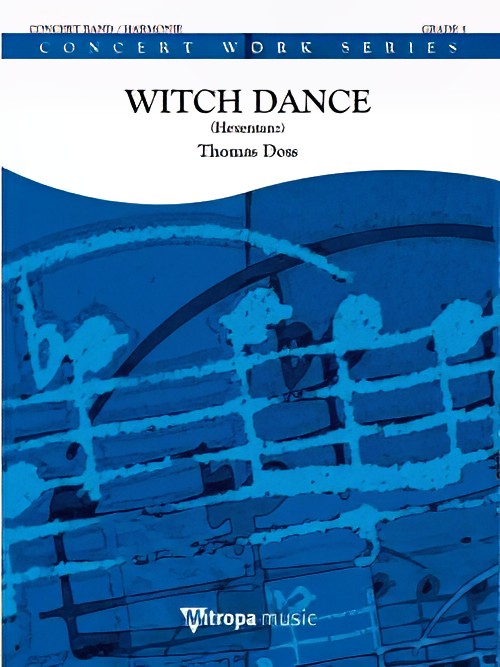
Witch Dance (Hexentanz) (Concert Band - Score and Parts) - Doss, Thomas
Witch Dance is a work commissioned by the Stadtkapelle Rottenburg on the occasion of its 150th anniversary. Thomas Doss based the musical material on melodies from the Rottenburger Narrenmarsch and incorporated the text of the Witch Kitchen scene from Goethe's Faust. The composition, which initially describes an idyllic townscape a few days before the annual carnival, culminates in a terrifying haunting. Reality, customs and fantasy combine to form a dangerous mixture.Duration: 9.45
Estimated dispatch 7-14 working days
-
 £104.99
Nocturne (Clarinet Solo with Concert Band - Score and Parts) - Tchaikovsky, Peter Ilyich - Van der Beek, Wil
Tchaikovsky is best known for his purely instrumental compositions. However, we must not underestimate him as a composer of operas. Many of his operas such as Pique Dame and Eugene Onegin are still performed regularly throughout the world. Eugene Onegin (also called Jevgeny Onegin), composed in 1877-1878, was not called an opera by Tchaikovsky himself, but lyric scenes. The work is entirely dominated by lyricism. However, there are two moments that contrast sharply with this lyricism: two ball scenes, for which Tchaikovsky wrote a waltz and a polonaise. After opening with a less well-known allegro dansant, this arrangement features the aforementioned waltz, which can be considered a beautiful Russian equivalent of the Faust Waltz by Charles Gounod. In the opera, this waltz is actually played by a military band. The arrangement concludes with the pompous polonaise (also mentioned above) which opens the last act: the ideal music to characterize high aristocracy in the salon of a palace in St. Petersburg.Duration: 3:30
Estimated dispatch 7-14 working days
 View Music