
Results
-
 £53.50
Big Foot Stomp - Robert Buckley
Bigfoot Stomp is a quirky, animated piece that is a unique change of pace for your band and audience. According to legend, Bigfoot is a tall, hairy, ape-like creature that lives in the wilderness of Northwest America and leaves huge footprints. This music imagines a group of them gathering together and stamping their massive feet in a wild, barbaric dance.
Estimated dispatch 7-14 working days
-
 £106.99
Desert Dances - Philip Sparke
Henderson is a city in Clark County, Nevada, just southeast of Las Vegas and surrounded by desert: this was the inspiration for the title. Desert Dances opens with a lively introduction, mostly in 3/4, which pervades the faster sections of the piece. This subsides to introduce a slower dance which expands to a full-band climax. The introduction soon returns and leads to the main theme of the piece, a waltz-like melody played by the full ensemble. A short bridge passage follows, which leads to a legato central theme. This is played twice and heralds the return of the main theme and a short coda which closes the work. An imaginative work for concert or contest with nice featuresthroughout all groups of the band.
Estimated dispatch 7-14 working days
-
 £79.99
Serpent Sea - Robert Buckley
The fourth movement of Robert Buckley's grandly cinematic suite describing impressions of the seas of the moon, Serpent Sea is animated, exuberant and somewhat over-the-top. It was inspired by the idea of two huge winged serpentsrising out of the waves and frolicking together in a wild, barbaric dance. The pair do, however, show a more graceful side every once in a while - represented by an exotic theme that starts in the clarinet and flute. The movementends with a wild flurry as the serpents vanish back into the sea. Dur: 3:50
Estimated dispatch 7-14 working days
-
 £57.50
Fantasy on Korean Folk Songs
Exploring some of the most well-known traditional folk tunes from Korea, here is an appealing and well-paced suite for young players. Let's Sing and Dance starts slowly then gradually speeds up similar to how it is usually sung.The Gate is a song and game played by Korean children, and this is followed by the beautiful ballad Bellflowers. Finally The Palace completes the set in a bold and optimistic style. Dur: 3:55
Estimated dispatch 7-14 working days
-
 £109.95
Tarantella - Stephen Lias
Attending a workshop in New York City, Lias took an evening excursion to the American Ballet Theatre, where he was exposed to what he terms "the evocative and inflammatory music of the tarantella." This art form captured his imagination, and he has crafted a wind ensemble dance of punchy rhythms and swirling touches. Tarantella was commissioned for the Stephen F. Austin Wind Ensemble and was premiered by those forces under the baton of Fred J. Allen at the 2008 TMEA annual convention. A recording of the premiere performance can be heard at their website.
Estimated dispatch 7-14 working days
-
 £252.10
Tales and Myths of Gothia - Jerker Johansson
Jerker Johansson has lived in Gothenburg, on the Swedish West Coast, since 1984, and is deeply interested in the history of the country. Gothia is the most southern part of Sweden, and Gothenburg, which was founded in 1621, is since many years an important centre for trade and shipping. Old paintings of the harbour with its gigantic sailing ships gave impulse to the heroic character of the piece. The opening fanfare is followed by a lively allegro, which eventually leads to a calm section, containing reminiscences of the fanfare. The flutes introduce a cantabile theme, and a dance reminding of the Renaissance precede a recapitulation of the allegro theme. Gothia ends withthe fanfare, the cantabile theme and the dancelike Renaissance music. Tales and Myths of Gothia was premiered on 8 September 2017 by Gothenburg Wind Orchestra conducted by Niklas Willn.
Estimated dispatch 7-14 working days
-
 £76.99
Bella Ciao
Bella Ciao is a traditional song of uncertain origin. Many versions have appeared over the years: the song now enjoys new popularity because of a dance version, and as the theme for the NETFLIX Series La Casa del Papel. This dynamic arrangement was created by band director Tom Stanford.
Estimated dispatch 7-14 working days
-
 £149.40
Hoppesltt - Øystein Olsen Vadsten
This is an original piece of music composed by ystein Olsen Vadsten, inspired by old Norwegian folk dances. "Jumpety Jump" actually started out as a "reinlender" (Norwegian Folk Dance) which origins from Rhinland. The reinlender is well disguised in this arrangement by adding the shuffle- and swing style to it. The piece is first of all meant as a "happy go lucky" tune, but is full of rhythmical and technical challenges. Its put up as a jazz-tune, first presenting the melody, then "improvisasations" by the different instrument groups, before going back to the first theme. The title "Jumpety Jump" refers to the kind of jumping feeling the shuffle groove gives.
Estimated dispatch 7-14 working days
-
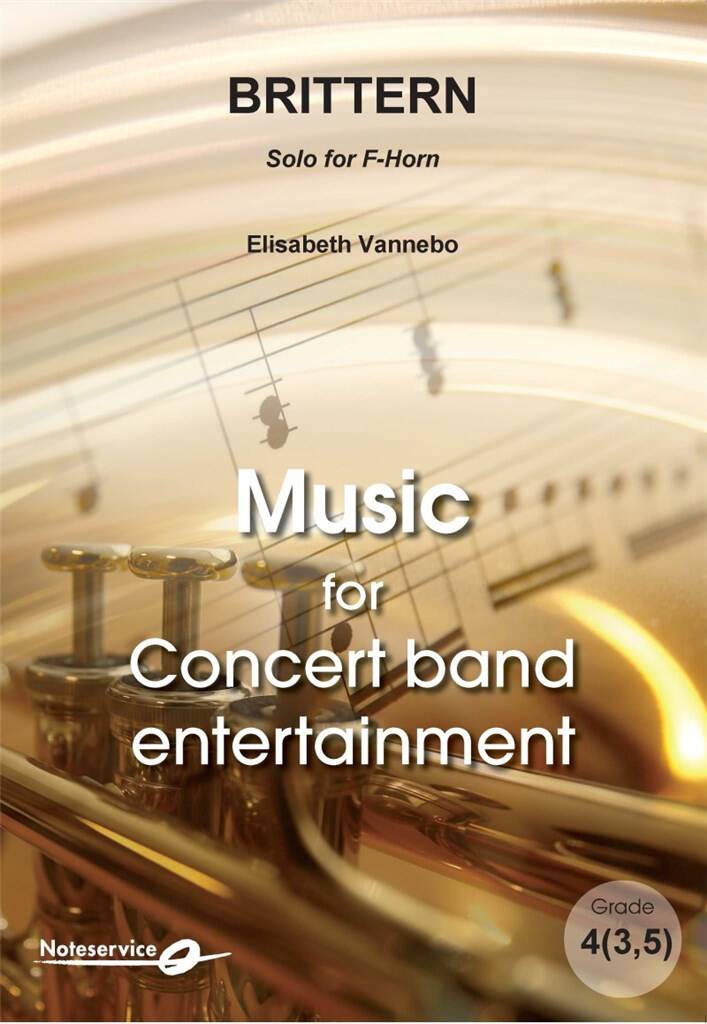 £127.30
Brittern - Solo for F-Horn - Elisabeth Vannebo
"Brittern" was written for my good friend, Brit Johnsrud to her Solo-CD recording "Light Blue Outfit". Brit is a former hornist with the Stavanger Symphony Orchestra and works today with the professional Navy Band in Bergen. This solo piece is inspired by traditional, Norwegian folk music. The slurs of the music it intended to make character to the "Halling" (A traditional Norwegian dance). The music also include trills, but for these the soloist may vary and decide where to play these. The tempo are approx. quarter note=88. Chords appears at letter E in solo part. This part of the piece may be improvised. If improvised, please omit some of the parts (are marked with May beomitted).
Estimated dispatch 7-14 working days
-
£72.95
Chant Variations - Andrew Yozviak
The flutes alone introduce the main theme, which sounds very much like a medieval hymn. The other instruments layer on, and Yozviak builds his dance to a satisfying conclusion.
Estimated dispatch 7-14 working days
 View Music