Searching for Brass Band Music? Visit the Brass Band Music Shop
We've found 90 matches for your search

Results

  • £90.30

    The Belly Dancers - Bob Gay

    Estimated dispatch 7-14 working days

     PDF View Music

  • £159.60

    Suite for Wind Band - Bob Vos

    Estimated dispatch 7-14 working days

     PDF View Music

  • £113.30

    Moderate Dances - Angelo Sormani

    This piece is a tribute to dance music, especially passionate, intense and meditative dance music. "Moderate Dances" is divided into three movements: a "Tango", a "Slow Waltz" and a "Bossa Nova". Each movement and each dance has its own particular characteristics but, when combined, these different rhythmic beats and times give the piece a feeling of completeness and uniformity. The Tango started to flourish in the suburbs of Buenos Aires in around 1880. There is still some doubt as to its origins, which may be Cuban (Habanera) but are probably African. It was most popular in Argentina and Brazil: here the male protagonist was originally the "gaucho" with his inseparable guitar, later to be replaced by the proud, elegant "compadre". By around 1910 the Tango had spread to Italy and France. New clubs opened, where the upper classes could watch and dance the Tango. Here the dance also underwent some rapid transformations. The exaggerated and extravagant gestures and body movements disappeared. Slow, gliding steps replaced the old rotational movements. The women's red ankle-boots and the partners "staring into each other's eyes" accentuated the erotic nature and sensuality of this dance. So much so that, in 1913, the German government banned soldiers from dancing the Tango. Those who broke the law were immediately discharged from the army. From a strictly musical perspective, the basic instruments were a flute, a harp (the diatonic harp typically played by the Indians of Paraguay) and a violin, or flute, guitar and violin or even clarinet, guitar and violin. These instruments were easy to transport, ideal for playing at parties, in the streets and in courtyards. The musicians played by ear, frequently improvising: there were no scores, no records, which is the main reason why it is impossible to trace the Tango back to its exact origins. However, the Tango's evolution (and growing popularity) was once again fostered by its fundamental ability to absorb "other" cultures, languages and sounds. And it was the arrival of the "bandoneon" (an accordion-like instrument that was invented in Germany and brought to Rio de la Plata by some immigrant), which replaced the flute, that marked the beginning of the Tango's huge success outside Argentina. A number of talented composers, above all the great Astor Piazzola (1921-1992), transformed the bandoneon from a simple accompanying instrument to a solo instrument that was to become the distinguishing feature of the 20th century Tango. The Slow Waltz originated from the Waltz, the typical dance of the Bavarian and Tyrolese peasants in the 1700s. It was composers like Johann Strauss, father and son, who carried the Waltz to its zenith in the 1800s, creating the sensual and melancholy yet joyful and charming dance we are all familiar with. When the Waltz first became popular in Germany, the members of respectable society were shocked at the closeness of the dancing partners, who had always previously danced apart. The main difference between the Waltz and Slow Waltz is that the latter has a slower, more expressive rhythm: the men wear tails and the women wear ball gowns decorated with beads and feathers and couples dance in graceful rotational movements. "Bossa Nova" is the title of the last movement in the piece. Jobim, the great Brazilian musician, described this musical genre as a combination of modern Jazz and Samba. Bossa Nova means "new wave". This was the name of the artistic and musical movement that evolved in Brazil in the late Fifties and was extremely popular throughout the Sixties. The songs are usually about love or social matters, drawing inspiration from the slums of Rio De Janeiro and the lives of their inhabitants. Bossa Nova, with its original compositions and the artistic talent of its musicians, also became hugely popular in the United States and Europe, and top Jazz musicians (Ella Fitzgerald, Stan Getz, Bob Cooper, Charlie Bird, Sonny Rollins, Dexter Gordon, Dizzy Gillespie) started to include Bossa in their repertoires.

    Estimated dispatch 7-14 working days
  • £84.99

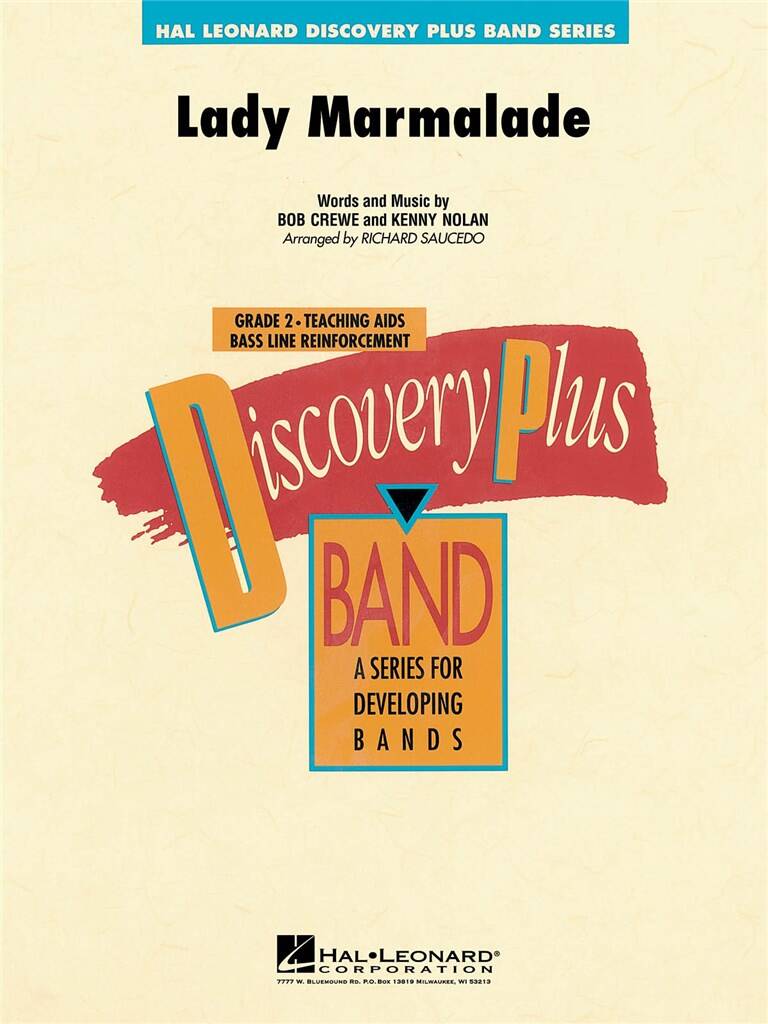
    Lady Marmalade - Bob Crewe

    "Voulez-vous coucher avec moi (ce soir)"... this suggestive lyric is surely the best known of Lady Marmalade, which has often been covered since soul singer Patti LaBelle's original. Up till now, however, there was no top-notch arrangement for concert band - a situation that Aidan Thomas, well known for his pop and funk arrangements, has now put right.

    Estimated dispatch 7-14 working days

     PDF View Music

  • £76.99

    Do They Know It's Christmas - Bob Geldof

    Estimated dispatch 7-14 working days

     PDF View Music

  • £90.30

    Can't Take My Eyes Off You - Bob Gaudio

    Estimated dispatch 7-14 working days

     PDF View Music

  • £76.00

    One Love - Bob Marley

    Estimated dispatch 7-14 working days
  • £60.99

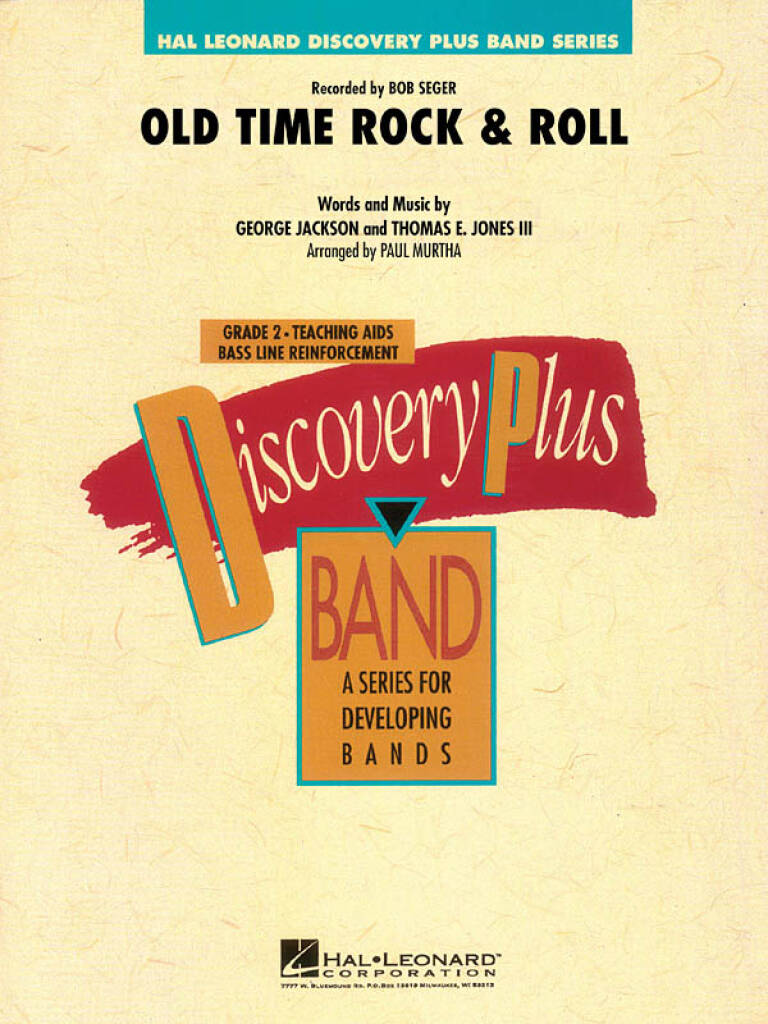
    Old Time Rock & Roll - George Jackson

    Recorded by Bob Seger and the Silver Bullet Band on their 1978 album Stranger in Town, this classic rock hit is probably best known for its inclusion in the Tom Cruise movie Risky Business. Over the years it has become a part ofpop culture, and a tune audiences of all ages are sure to enjoy.

    Estimated dispatch 7-14 working days
  • £124.20

    Cette Anne-L - Gaudio Bob

    Estimated dispatch 7-14 working days
  • £70.00

    The Ringing Isle - Jonathan Dove

    Handel called Britain 'the ringing isle' because when he moved to London, he heard bells ringing everywhere: great bells in church towers, and handbells in some of the first private houses he visited. The sound of people 'ringing the changes' is a peculiarly British sound of celebration, and it seems a good starting point for a piece celebrating British musical life. Within The Ringing Isle, Dove incorporates some traditional change-ringing patterns, from 'Grandsire Doubles', 'Oxford Treble Bob Minor' and his own version of 'Plain Bob Major'. Handel's phrase also conjures up an image of a magical island, and so this is how Dove envisaged how it must have been to approach Britain from an ocean voyage.

    In stock: Estimated delivery 1-3 days