
Results
-
 £60.99
Magic Sevens - Richard L. Saucedo
Not only is this an effective learning piece for teaching 7/8, Magic Sevens is a great-sounding concert piece with engaging melodies, rhythmic drive, and built-in variety. The consistency in how the rhytmic figures are treated makes this sound harder than it really is. Dur: ca. 2:00
Estimated dispatch 7-14 working days
-
 £53.50
Epic Journey - Robert Buckley
Epic Journey takes us on a heroic, cinematic odyssey using a sudden shift in dynamics and an unexpected key change to create drama and excitement. With a sophistication beyond what you'd expect at this grade level, everyone in the ensemble gets a chance to star in this exciting mini-movie score. Dur: 2:30
Estimated dispatch 7-14 working days
-
 £53.50
Gentle Song and Jubilation - Richard L. Saucedo
Providing a great opportunity to teach two distinct styles to young players, Gentle Song and Jubilation is also an appealing festival or concert piece. The opening lyric section uses the mallet percussion to anchor the pulse accompanying a flowing melody, while the fast, marcato section features the percussion driving the excitement and energy for the full ensemble. Dur: 2:40
Estimated dispatch 7-14 working days
-
 £105.80
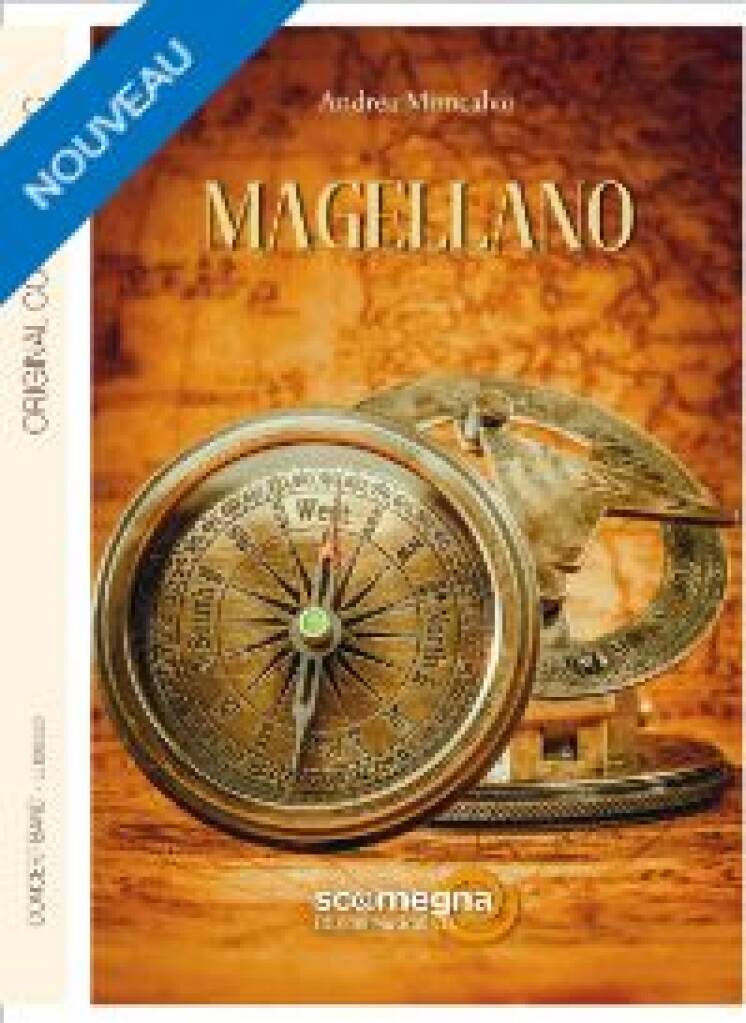
Magellano - Andrea Moncalvo
This composition was written on the occasion of the 500th anniversary of the death of Ferdinand Magellan, a Portuguese explorer (1480 - 1521), who embarked on what would have become the first circumnavigation of the globe. Unfortunately, he did not complete it because, in 1521, he was killed in the region that is today the Philippines. This adventure triggered various images in the author's mind; evocations that the composer elaborated in this piece, which is in a tripartite form (A B A) and is introduced and concluded by a solemn fanfare evoking the departure of the expedition, consisting of 5 ships with a total of 234 crewmen. The first part (Allegro) presents a main theme with a cantabile character that describes the fleet that, intrepid, plows the ocean. This initial melody is then contrasted by a more rhythmic and syncopated theme in a minor key, which instead refers to the indigenous peoples they have encountered during the journey. The central section (Adagio) is an oasis of reflection because, as in other great adventures, this too has tragic aspects: mutinies, shipwrecks, clashes with indigenous peoples, up to the disappearance of those who had desired and planned this enterprise. The last part proposes the themes of the first section but in reverse order, to describe the return to the homeland. The solemn fanfare welcomes the arrival of the Victoria, the only surviving ship with only 18 men on board, which returns to the port of departure after completing the circumnavigation of the earth in 2 years, 11 months, and 17 days.
Estimated dispatch 7-14 working days
-
 £62.95
Twilight Waltz - Randall D. Standridge
Spectral melodies and varied orchestration abound in Twilight Waltz by Randall D. Standridge. This work begins with the mallet percussion setting an eerie mood and grows into a dark dance of harmony and color. Lyrical but not slow, this cinematic piece is sure to engage your performers and audience. Haunting! (2:33)
Estimated dispatch 7-14 working days
-
 £54.95
Two Movements from William Byrd Suite - Gordon Jacob
Of all of Gordon Jacob's major contributions to the British wind band repertoire, the William Byrd Suite (written in 1923) stands as his most-often programmed work. Though originally based on six movements from William Byrd's Fitzwilliam Virginal Book, this setting for developing band incorporates two contrasting movements including "The Earle of Oxford's Marche" and "Wolsey's Wilde." Like Jacob's wind band work, the music is not a mere transcription from the original keyboard collection, but rather stylized with his own inventive musical spirit for modern concert band. A wealth of material here that opens doors to teachable moments as musical textures---dynamic contrasts, articulations, scoring options---are continually changing. Bravo! (2:33) This title is available in SmartMusic.
Estimated dispatch 7-14 working days
-
 £56.50
The Pines of the Appian Way - Ottorino Respighi
Completed in 1924 Respighi's masterwork consists of four contrasting movements. The final movement, "The Pines of the Appian Way," depicts the advancement of the Roman Legion as it gradually marches towards the listener. It is one of the most glorious and stunning orchestral crescendos in all of classical music. Perfectly arranged for young band by Michael Story! (2:29) This title is available in SmartMusic.
Estimated dispatch 7-14 working days
-
 £61.95
Dance of the Garden Gnomes - Patrick Roszell
Taking a page from the humorous and energetic movie, Gnomeo & Juliet, this fun piece depicts the famous garden gnomes of England dancing and entertaining in their flower and vegetable gardens. A perfect concert or contest piece! (2:18)
Estimated dispatch 7-14 working days
-
 £50.50
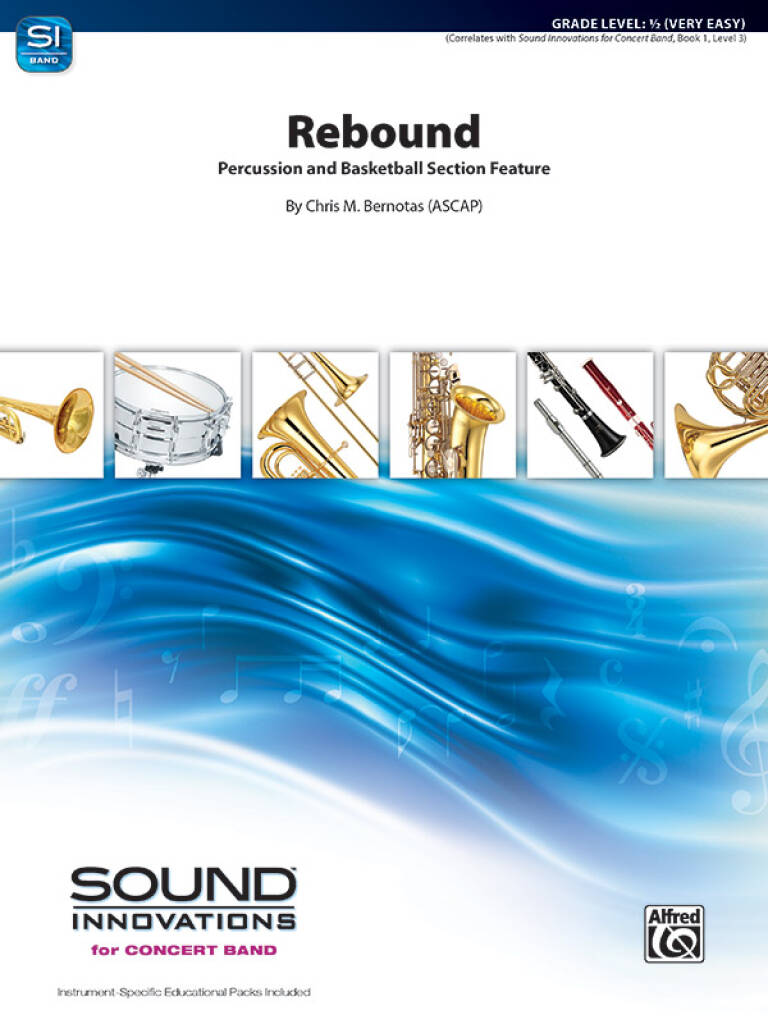
Rebound - Chris M. Bernotas
Rebound by Chris M. Bernotas is an innovative piece that will place your first-year percussion students in the spotlight. Faculty members, parents, and other students are given the opportunity to perform as members of the Basketball Percussion Section! This piece focuses on the first six notes students learn and includes choreography for the basketball stars. (2:35) Correlated to Sound Innovations, Book 1, Level 3.
Estimated dispatch 7-14 working days
-
 £53.95
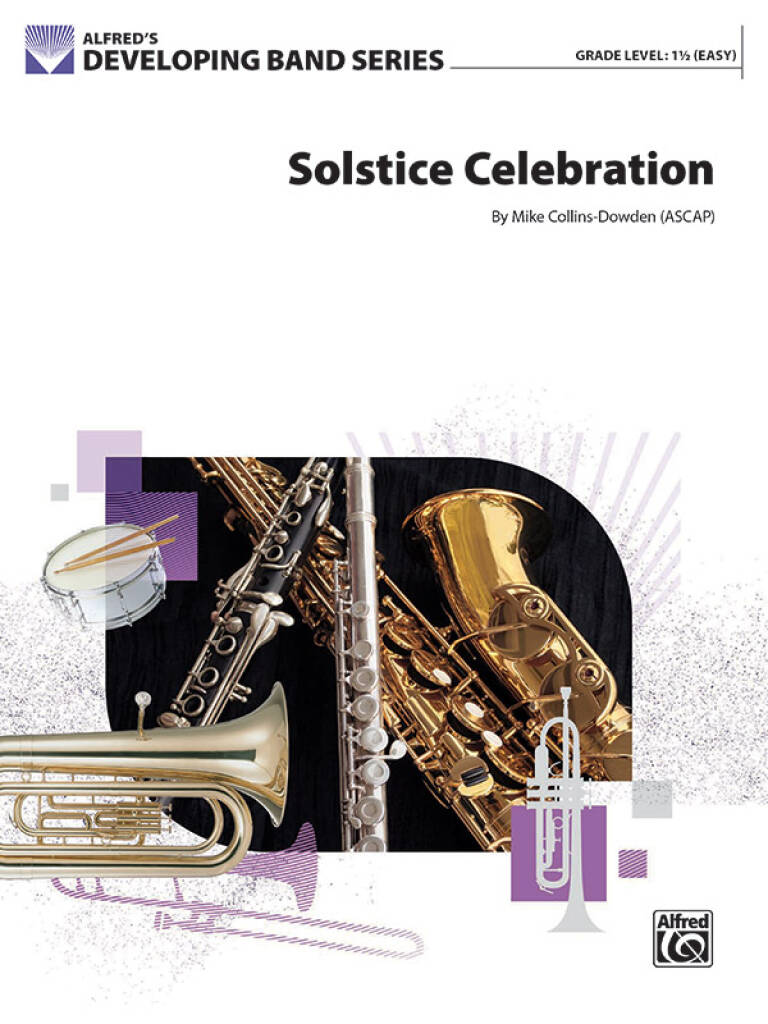
Solstice Celebration - Mike Collins-Dowden
Solstice Celebration by composer Mike Collins-Dowden depicts the spirit of these celebrations through a joyous, energetic melody passed between all sections of the ensemble, and with a more somber, reflective interlude. (2:13)
Estimated dispatch 7-14 working days