
Results
-
 £72.99
Odysseus and the Sirens - Dana Wilson
The Odyssey was written by Homer about 2700 years ago and tells of the adventures of the Greek hero Odysseus during his harrowing return trip home after fighting the Trojan Wars. This work is suggestive of his dramatic encounter with the sirens, famous for luring sailors to their death with their beguiling wind-like song. In this descriptive piece you can hear the wind-song becoming evermore insistent, the rocking of the ship, Odysseus' screams, and finally the sirens plunging to their death as they fail in their attempt to lure Odysseus. Learn more on YouTube! BandQuest, an exciting series of new music and accompanying curricula for band, is a program published by the American Composers Forum. The series was started as a response to feedback from music educators that there is a pressing need for new, fresh band music. The heart of this program is new works written by a diverse group of leading American composers who have created challenging pieces that are a true departure from standard middle school repertoire. Every BandQuest project includes a residency component in which the composer works collaboratively with a middle school as they create their new piece.Many BandQuest pieces are accompanied by an interdisciplinary curriculum designed to assist students as they learn the music and to integrate each piece with non-music studies. Visit www.bandquest.org to learn more about this innovative series, and email [email protected] to request a free downloadable audio catalog.
Estimated dispatch 7-14 working days
-
 £76.99
American Barndance - Richard L. Saucedo
Rhythmic and energetic, this lively work contains elements of an early American character but also features a poignant, calmer section with a lighter texture and interlaced lyric motifs. The piece builds to a dramatic peak with apowerful and majestic statement by the full ensemble. The final segment, however, becomes more and more frenzied with mixed meters and relentless percussion figures as it races to an exciting conclusion. Filled with humor andcreativity, this unique composition will easily find a place in your contest or festival repertoire. Dur: 3:35 (Grade 4)
Estimated dispatch 7-14 working days
-
 £60.99
Pulsation - Richard L. Saucedo
Written entirely in one tempo, but with the meter alternating between 4/4 and 6/8 throughout, Richard Saucedo creates an ingenious effect of pulsating motion along with layers of textures and sounds. Starting with a soloisticdialogue between flute and clarinet the work progresses to thicker sonorities and percussive effects including clapping and shouting. Definitely an enjoyable work that is off the beaten path! Dur: 2:35 (Grade 2-1/2)
Estimated dispatch 7-14 working days
-
 £57.50
Ghost Walk - Chris Brubeck
Composer Chris Brubeck wrote Ghost Walk as part of his BandQuest residency at West Rocks Middle School in Connecticut. The piece combines Brubeck's lifelong experiences with both jazz and classical idioms, creating a work that's as fun to play as it is to hear. The title was inspired by the wedding of Brubeck's son at Gettysburg College, which hosts a ghost walk, as well as the minor mode and haunting atmosphere of the piece. Learn more on YouTube! BandQuest, an exciting series of new music and accompanying curricula for band, is a program published by the American Composers Forum. The series was started as a response to feedback from music educators that there is a pressing need for new, fresh band music. The heart of this program is new works written by a diverse group of leading American composers who have created challenging pieces that are a true departure from standard middle school repertoire. Every BandQuest project includes a residency component in which the composer works collaboratively with a middle school as they create their new piece.Many BandQuest pieces are accompanied by an interdisciplinary curriculum designed to assist students as they learn the music and to integrate each piece with non-music studies. Visit www.bandquest.org to learn more about this innovative series, and email [email protected] to request a free downloadable audio catalog.
Estimated dispatch 7-14 working days
-
 £76.99
Earthdance - Michael Sweeney
In celebration of mankind's connection to our planet, Michael has created an extraordinary work for band using an intriguing array of composition devices and captivating melodies.Listeners are immersed in a simulated rainstorm, the sounds of world drumming, overlapping tone clusters and textures, and finally a dance of jubilation as the piece comes to a satisfying and rewarding finish. Dur: 7:30
Estimated dispatch 7-14 working days
-
 £42.50
Little Red in the Hood - Michael Sweeney
In the style of an overwrought melodrama, here is a descriptive soundtrack for the fairy tale Little Red Riding Hood. From an innocent walk in the woods, to a frightening encounter, and finally the heroic rescue, your audiencewill have no trouble following the story with this entertaining musical adventure. (Or you could have dramatically inclined faculty or students act it out!) Dur: 3:10
Estimated dispatch 7-14 working days
-
 £76.99
Discover the Wild - Kenneth Fuchs
Composed in the form of a three-part orchestral overture, this powerful work opens with the horn section stating the main theme, which is based on the interval of a perfect fourth. A beautiful and lyrical middle theme creates amesmerizing and calming effect before the opening theme and faster pace makes a return for the dramatic finish. Concisely scored with an intriguing variety of textures, this is an impressive work for contest or festival. Dur: 4:40(Grade 4)
Estimated dispatch 7-14 working days
-
 £60.99
The Lost Lady Found (from Lincolnshire Posy) - Percy Aldridge Grainger
The final movement of Percy Grainger's masterwork Lincolnshire Posy is arranged here for younger bands with reduced instrumentation.Similar to his earlier adaptation of "Horkstow Grange", Michael Sweeney carefully maintains the structural and harmonic integrity of the original while providing an authentic-sounding version at an easy level. Certain to become a "must have" for the young band repertoire. (Grade 2.5) Dur: 2:50
Estimated dispatch 7-14 working days
-
 £53.50
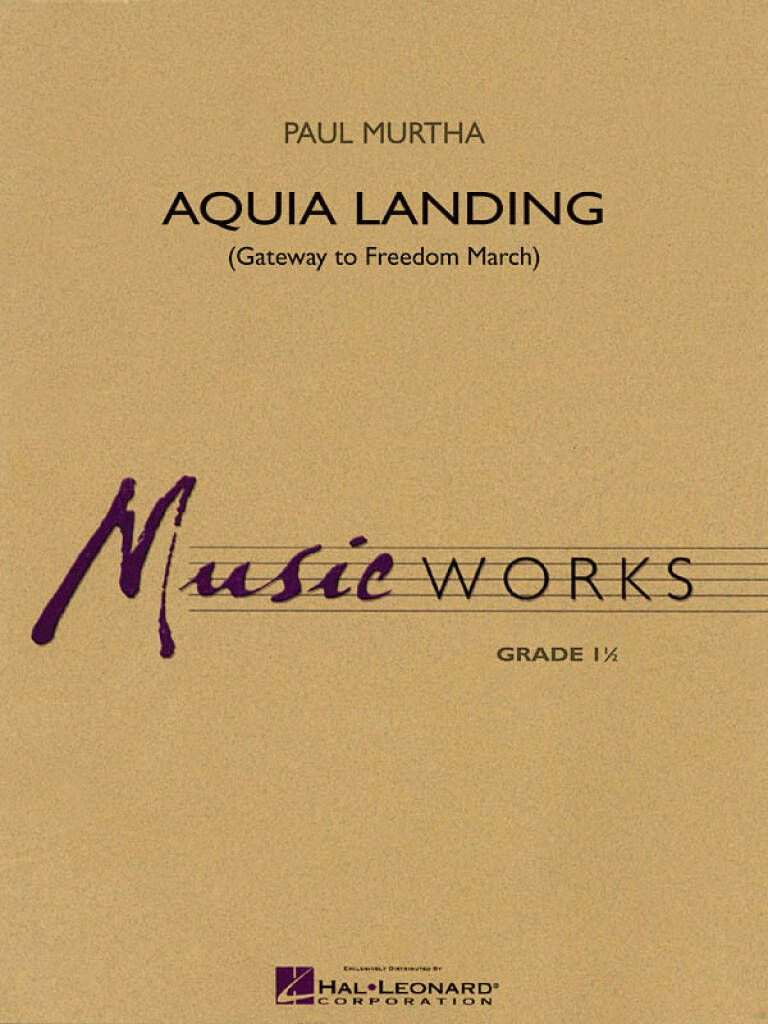
Aquia Landing (Gateway to Freedom March) - Paul Murtha
During the Civil War, this pivotal transportation point located on the Potomac River and Aquia Creek was an important hub for both north and south. In addition, it was a key link in the network of freedom for fugitive slaves. PaulMurtha pays tribute to this historical site with this great-sounding Sousa style march at an easy level.
Estimated dispatch 7-14 working days
-
 £72.99
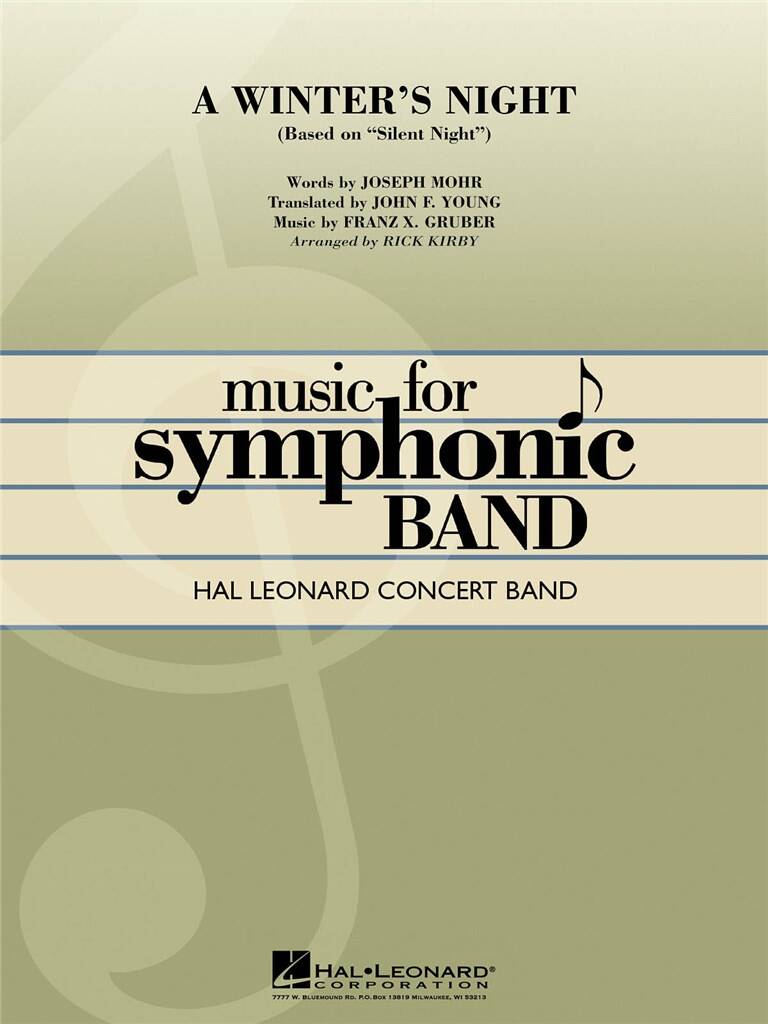
A Winter's Night (based on Silent Night)
Though Silent Night has been arranged for band many times before, this unique setting by Rick Kirby deserves special attention. An oboe solo (cued for alto sax) accompanied by piano sets the stage for an impressive rhapsodicapproach that includes lush full ensemble passages with harmonic twists, solos for recorder (flute), bassoon (tenor sax) and euphonium. Rick's beautiful rendering ends with the band singing Silent Night in unison. Sure to become aholiday highlight.
Estimated dispatch 7-14 working days